Number 1, 1950 by Jackson Pollock.
There is a lot of controversy surrounding a recent collection of Jackson Pollock's work. Read more about the paintings to be attributed to him. Provenance

Your Custom Text Here
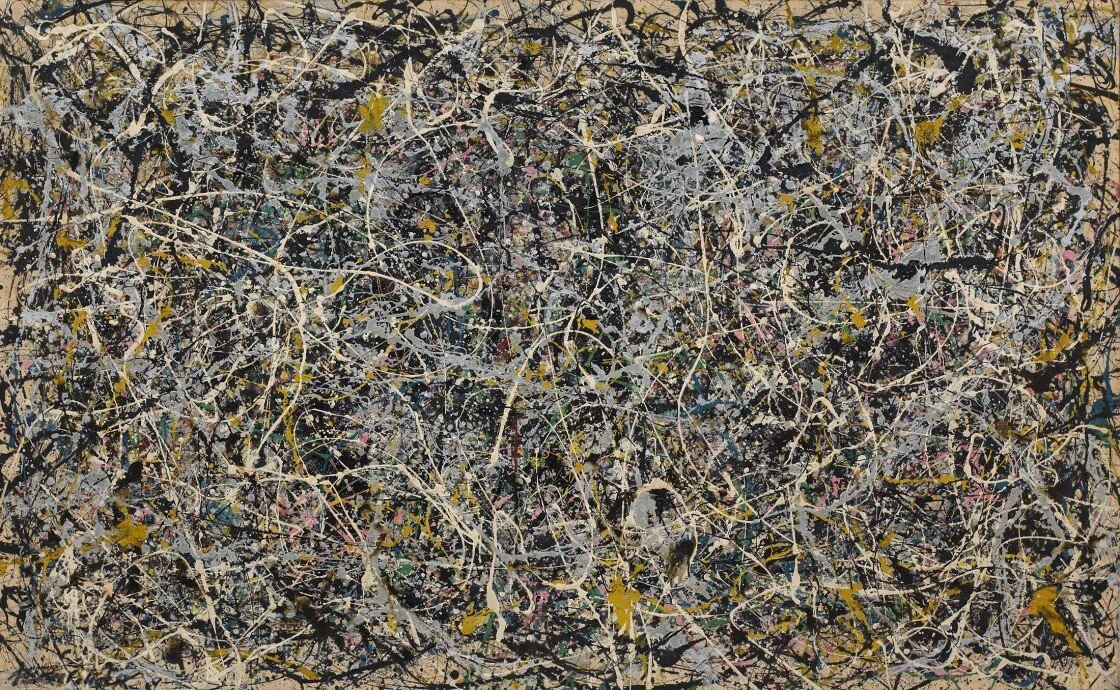
Number 1, 1950 by Jackson Pollock.
There is a lot of controversy surrounding a recent collection of Jackson Pollock's work. Read more about the paintings to be attributed to him. Provenance
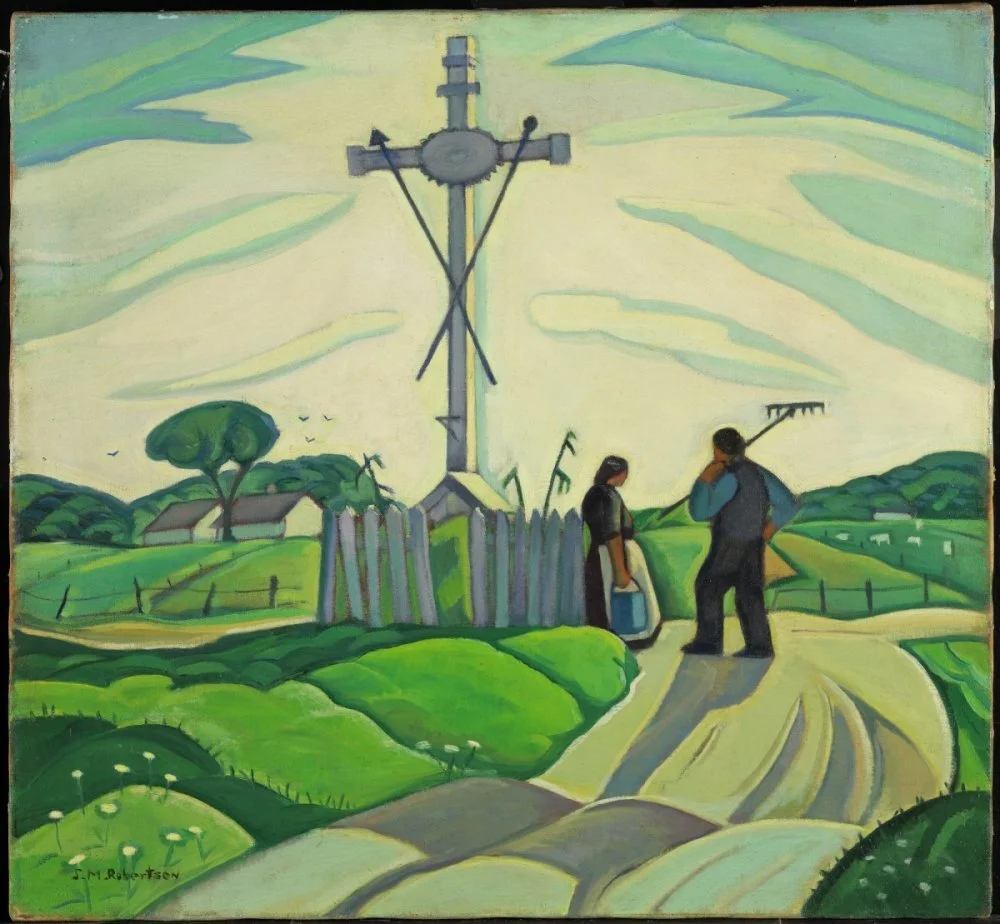
Joseph and Marie-Louise by Sarah Robertson.
Sarah Robertson was a Canadian artist and member of the woman's painting group known as the Beaver Hall Group . They were friends and contemporaries of the men's group "The Seven" but never achieved the same level of recognition. Wayside crosses.
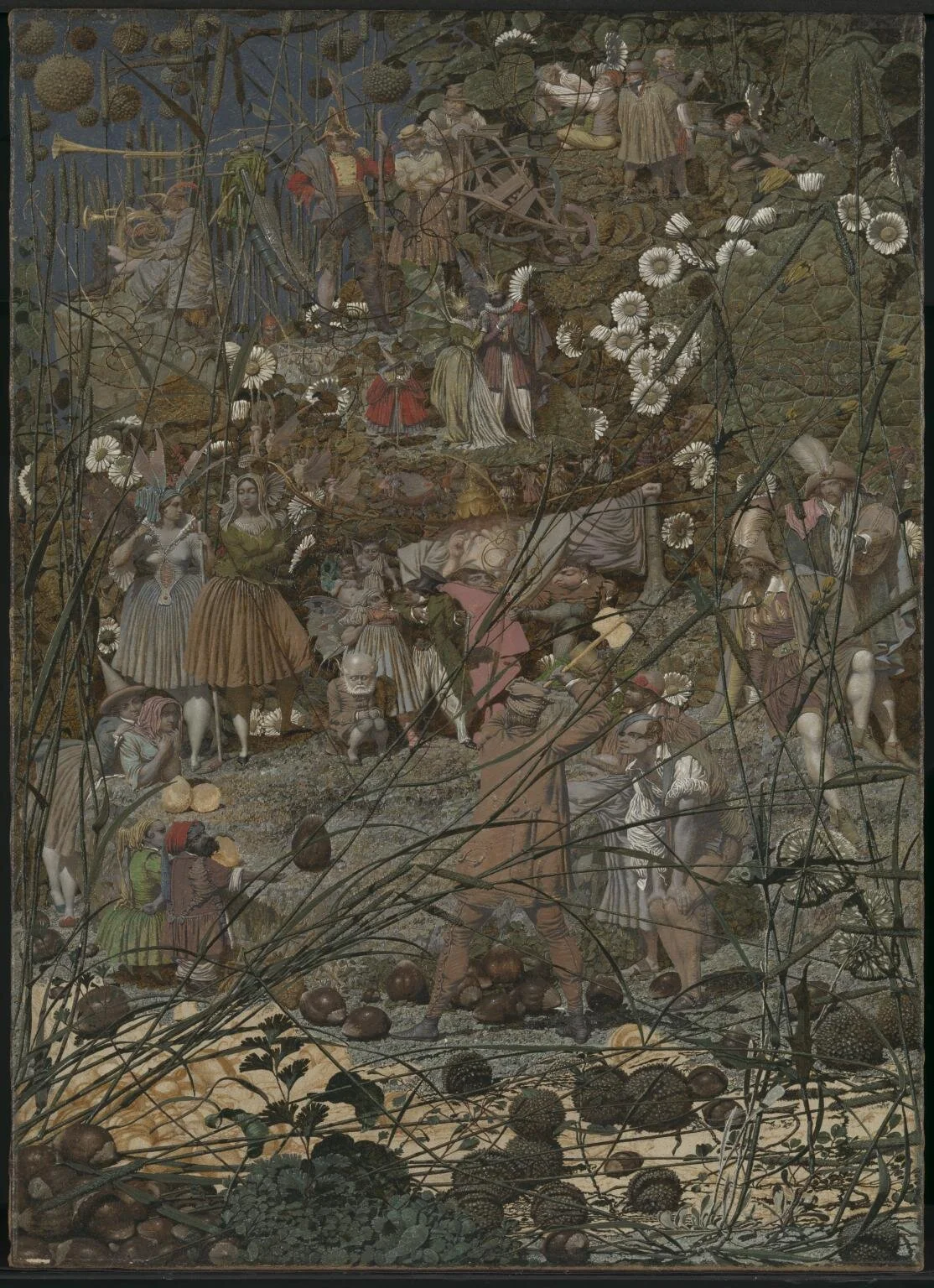
The Fairy Feller's Master-Stroke, 1855-64 by Richard Dadd.
Richard Dadd was known as "Mad Dadd" he spent much of his life in an insane asylum after murdering his father whom he was convinced was the devil. His intricate paintings took him years to complete.
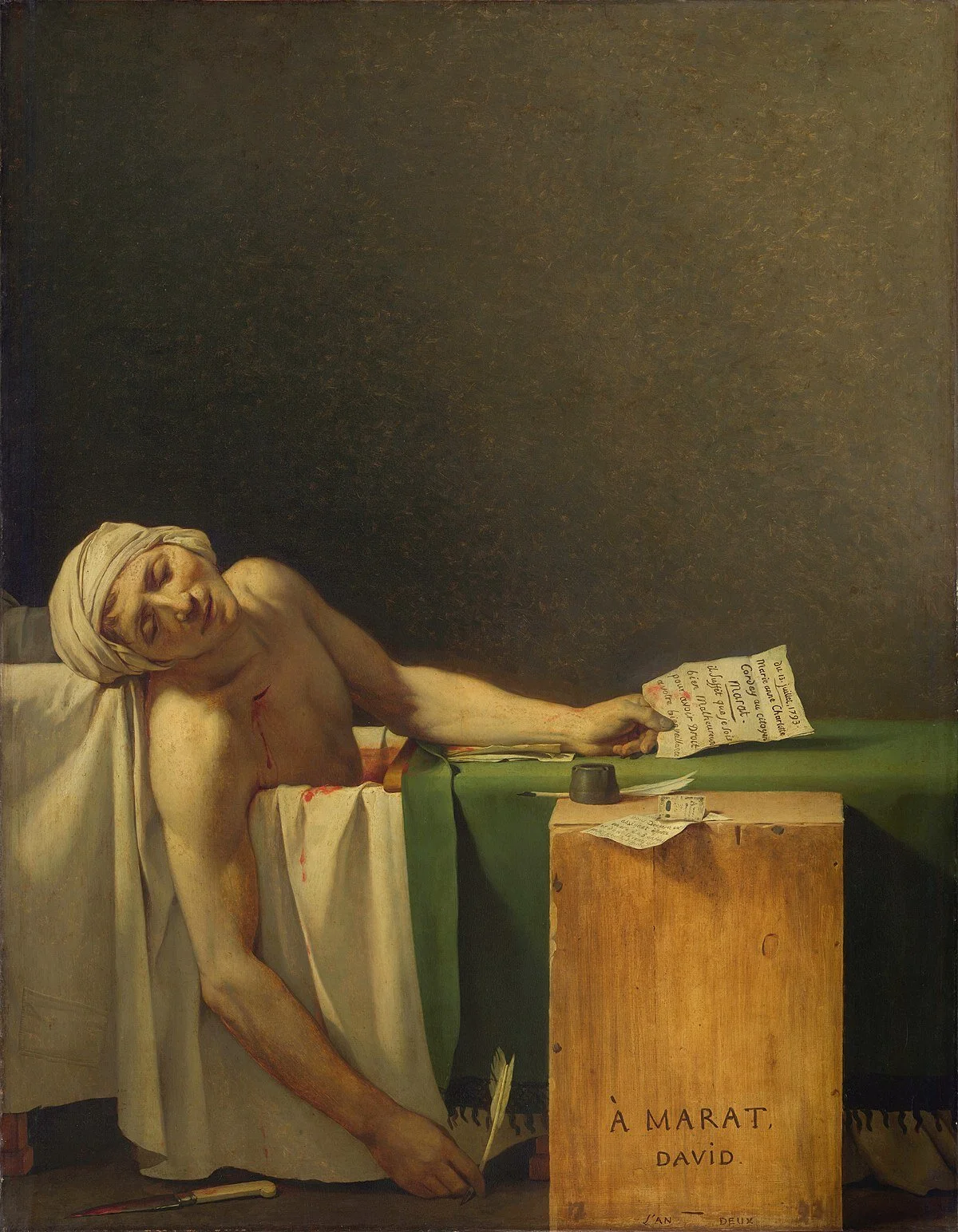
Death of Marat by Jacques-Louis David.
David ushered in a return to classical ideals and away from the Rococo with this homage to the death of his friend. Marat was an outspoken leader of the French Revolution and was murdered in his bath after receiving a letter of admission into his home for the murderer. David's stark scene conveys the shock and sadness he felt after learning Maret had been killed.
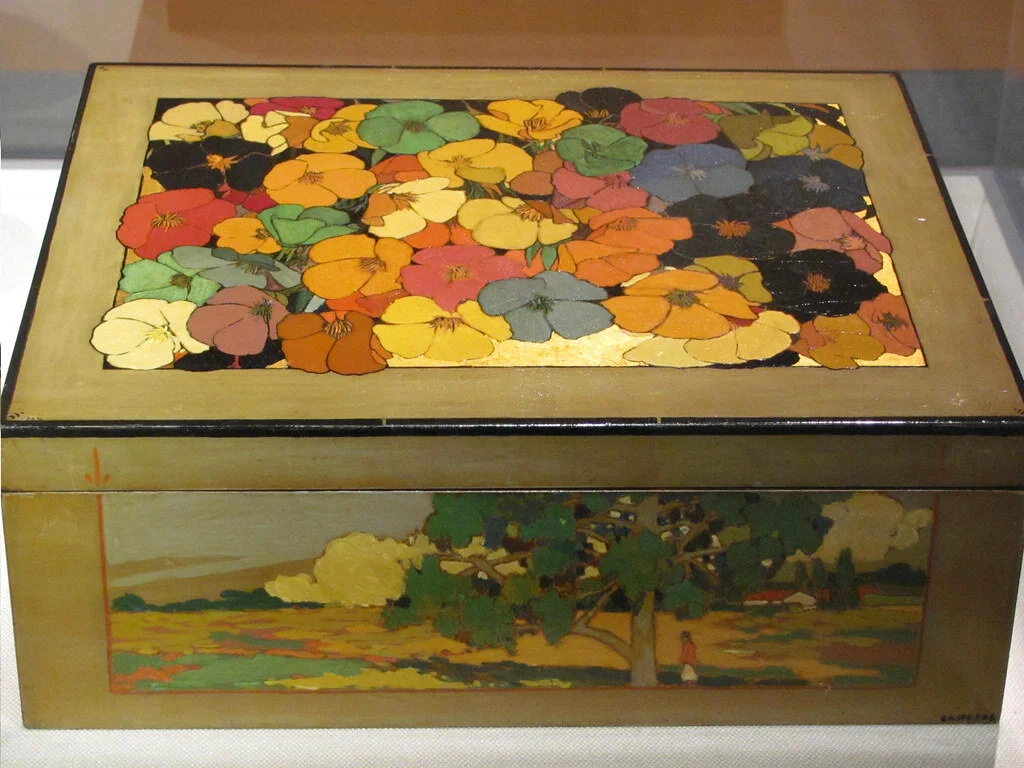
Covered Box by Lucia K. Mathews.
The Arts & Crafts movement began in England in the late 19th century and became popular in the United States a few years later. The followers of the movement sought-out the hand-made production methods of the past, as a reaction to the industrial age. California had their own take on the Arts & Crafts philosophy which manifested itself in the architecture of Greene & Greene and the work of many small artisans like Mathews.
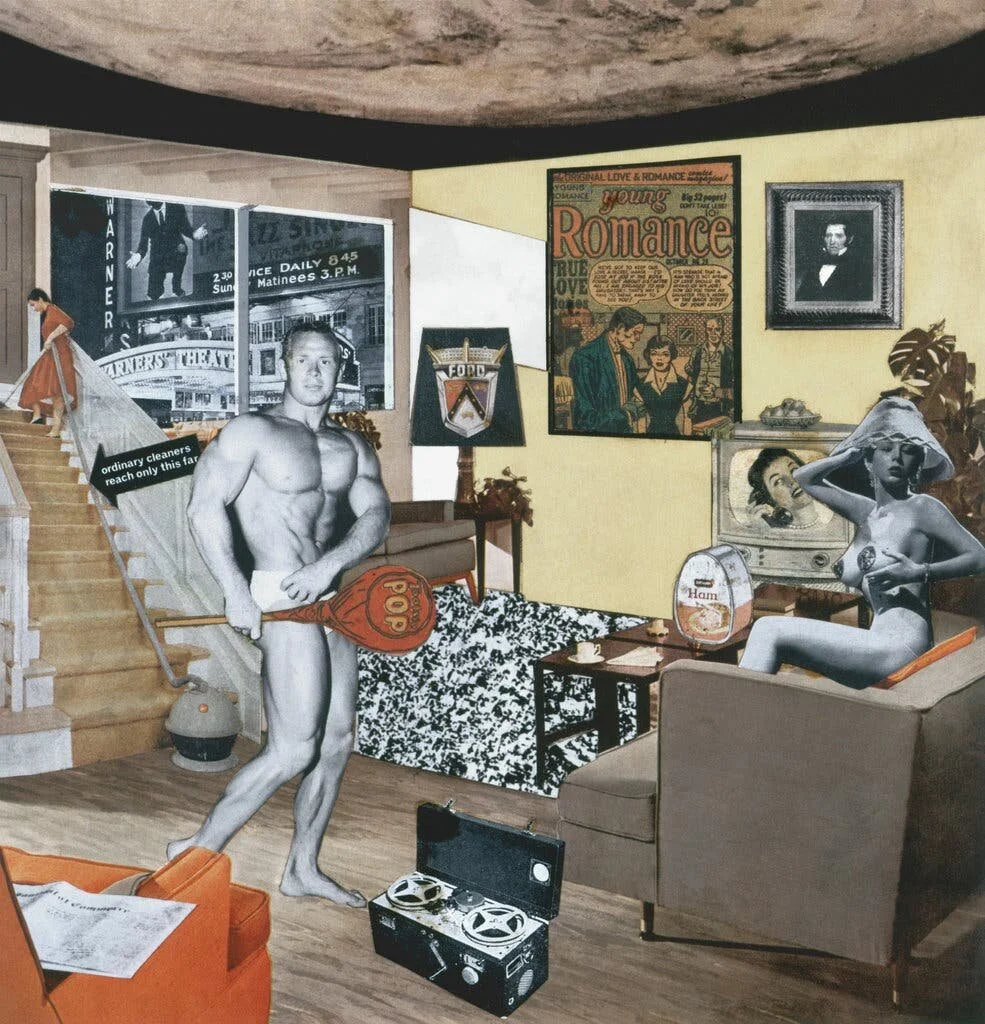
Just What Makes Today's Homes, So Different, So Appealing? , 1956 by Richard Hamilton.
Hamilton's collage about overblown 1950's consumerism also hailed the use of the word Pop in reference to art. He is still an innovator, creating his new art with computers.

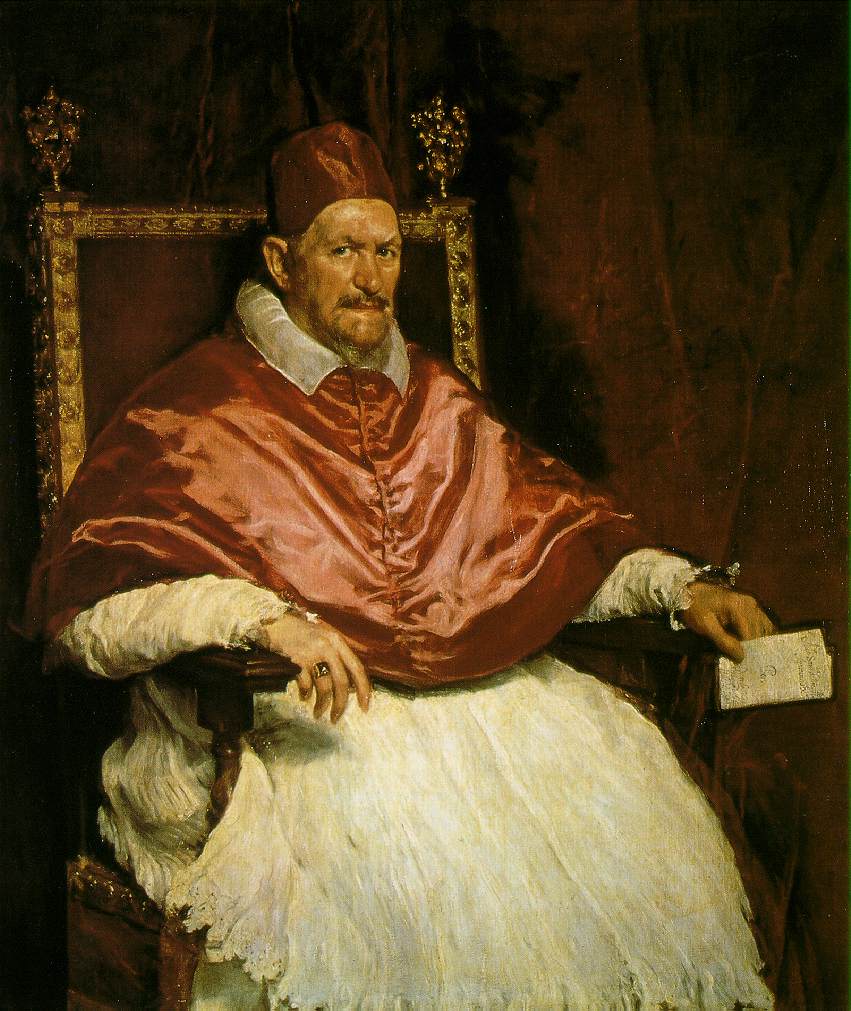
Figure with Meat by Francis Bacon, 1954.
Bacon deliberately subverted painting familiar traditions such as the portrait, in order to make his work even more disturbing . This work of a Pope with two sides of beef is a deliberate homage to the court artist Velazquez.
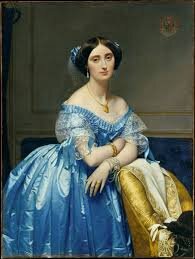
Princesse Albert de Broglie, née Joséphine-Eléonore-Marie-Pauline de Galard de Brassac de Béarn, 1853 by Jean-Auguste-Dominique Ingres.
Ingres portraits are some of the most amazing studies of people and how we adorn ourselves. His skill at rendering the faces and capturing his sitters makes him among the finest portraitists ever.
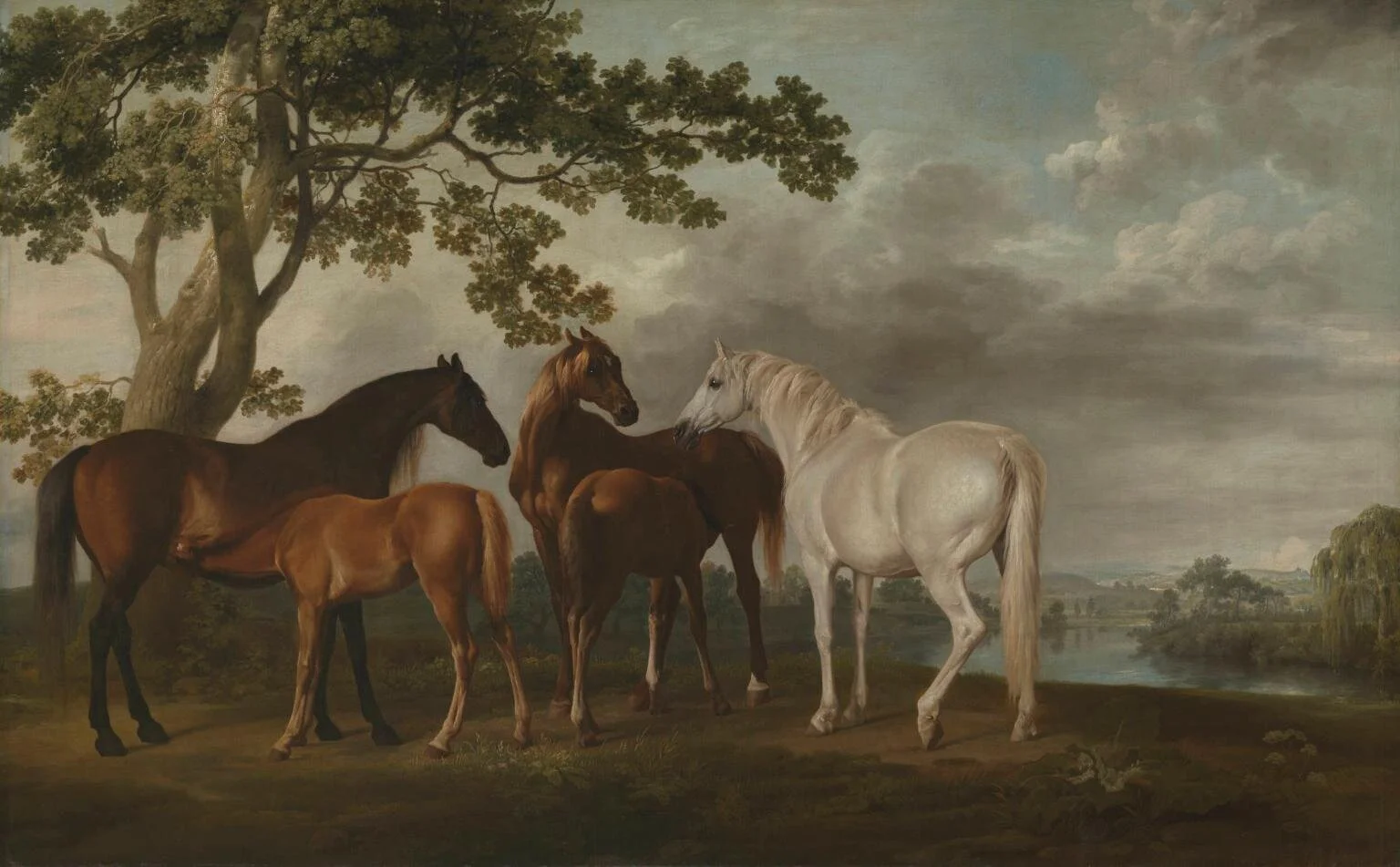
Mares and Foals in a River Landscape, 1763-8 by George Stubbs.
Stubbs spent hours studying the musculature and skeletal structures of the animals he painted in order so that his portrayals would be as life-like as possible.

Venus with a Mirror, c. 1555 by Titian
During the Renaissance paintings of nude women were often titled "Venus" as in excuse to portray nudes by claiming the image is a portrayal of the Roman goddess.
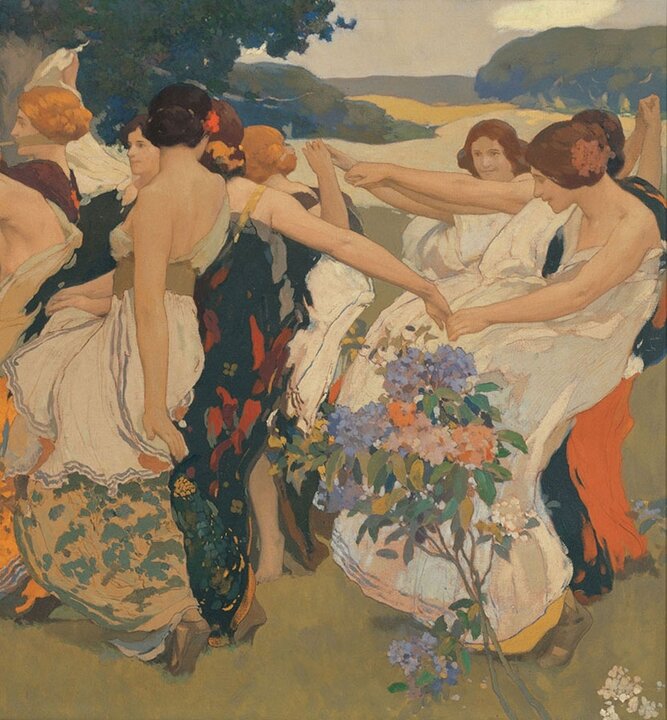
Arthur Frank Mathews, Spring Dance c. 1917.
Mathews and his wife Lucia were followers of the Arts and Crafts movement as it manifested in California. His training as both an artist and an architect led to beautiful painting surrounded by equally beautiful frames of his design.
I restarted this blog a year ago when lockdown started. I am thankful to be getting my second shot in two weeks, that my husband was able to work from home, that neither of us has gotten sick, etc. This year has been unbelievable. It feels like we have turned a corner but we still need to be careful. Stay safe.
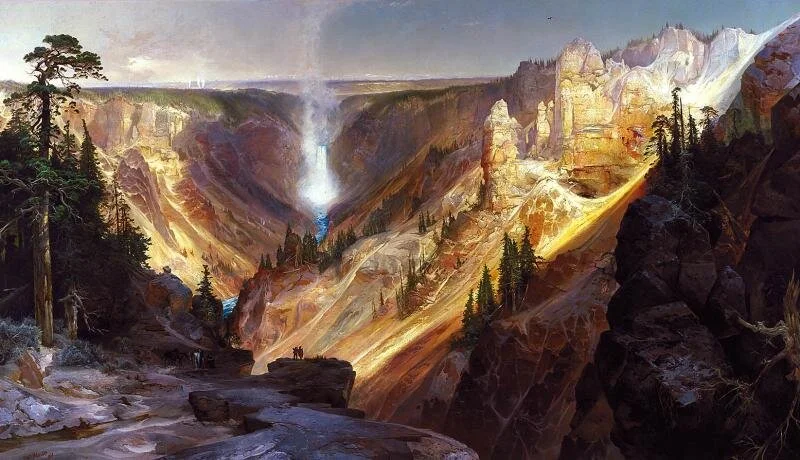
Grand Canyon of the Yellowstone, 1872 by Thomas Moran, Yellowstone National Park Museum.
Moran was another artist working in the same vein as Bierstadt. His paintings of the American West were even more idealized. His work was presented to Congress as evidence that Yellowstone needed to be protected as a National Park which caused them to establish the National Park Service in 1916.

The Travelling Companions by Augustus Leopold Egg.
Egg was an actor and his dramatic training shows in his artwork. He painted subjects from literature. He was a close friend of Charles Dickens and performed in his stage productions.
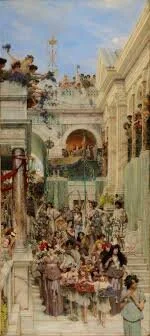
Spring, 1895 byLawrence Alma Tadema, The J. Paul Getty Museum, Malibu CA
In a land of clear colours and stories,
In a region of shadowless hours,
Where Earth has a garment of glories
And a murmur of musical flowers.
This poem by Algernon Swinburne (a favorite of Victorian painters especially the Pre-Raphaelites) is engraved on the frame of the painting.
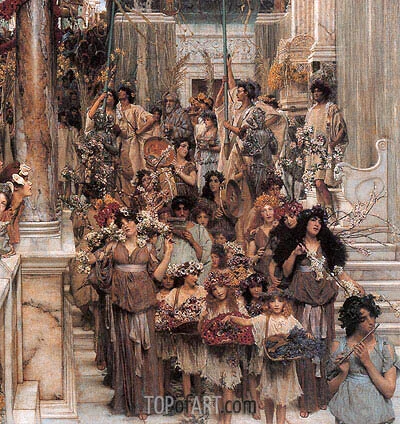
Spring, Lawrence Alma-Tadema (detail)
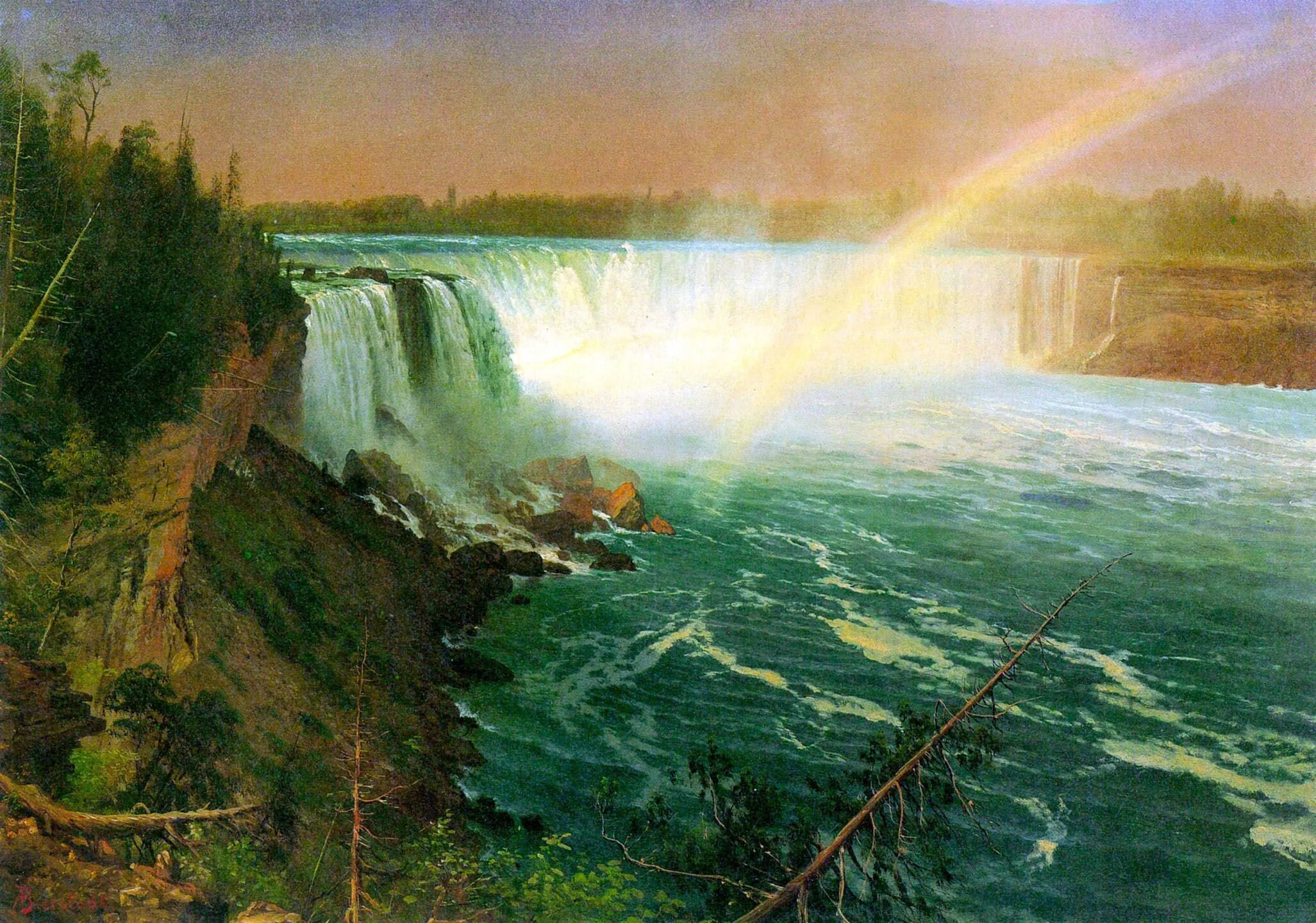
Niagra Falls, by Albert Bierstadt.
Bierstadt painted panoramic, idealized scenes of the United States. His main subjects were places in the the American West which was being touted as the promised land and his beautiful landscapes helped to sell it as the place to explore and settle. Manifest Destiny
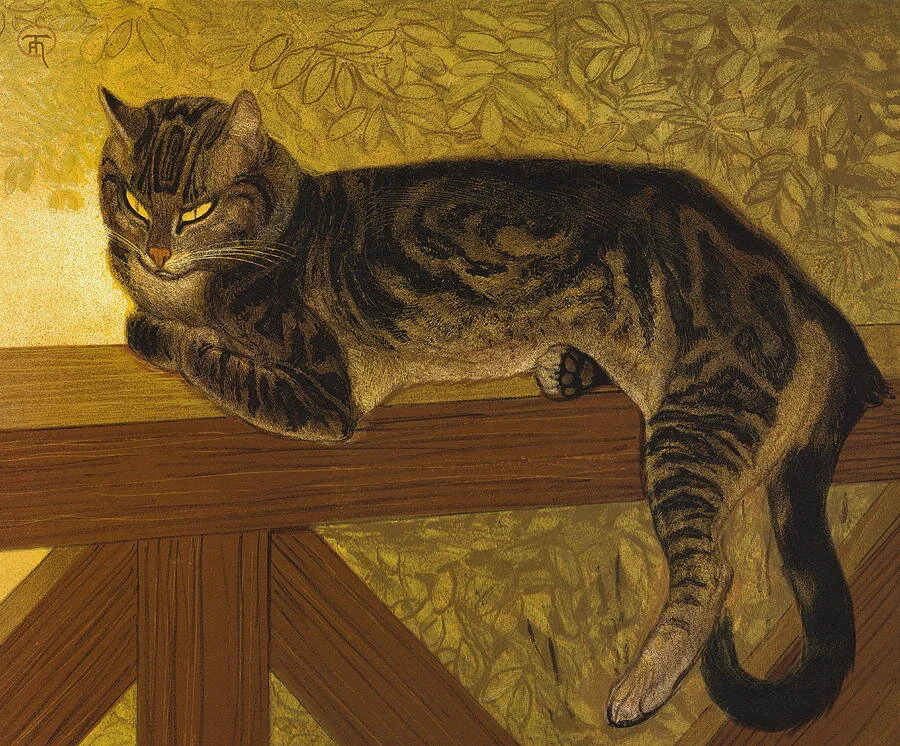
Cat on a Balustrade:Summer, 1896 by Theophile A. Steinlen.
Steinlen loved cats and used them as subjects for a great many of his posters. He began as an apprentice in a textile factory and later took up graphic arts and created a great many posters both for consumer goods and political statements.
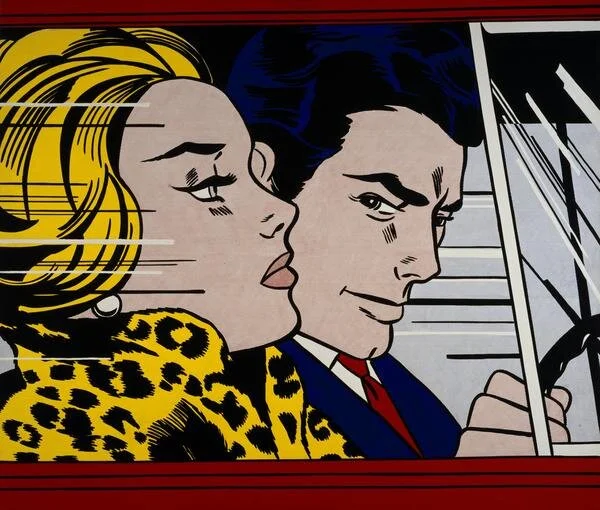
In the Car by Roy Lichtenstein, Scottish National Gallery of Modern Art, Edinburgh.
A member of the Pop Art movement of the 1960's Lichtenstein found influence in the American comic book which he transferred to a large scale including the use of the printing process. Comic book illustrations are made up of millions of small dots in a process known as Ben Day.
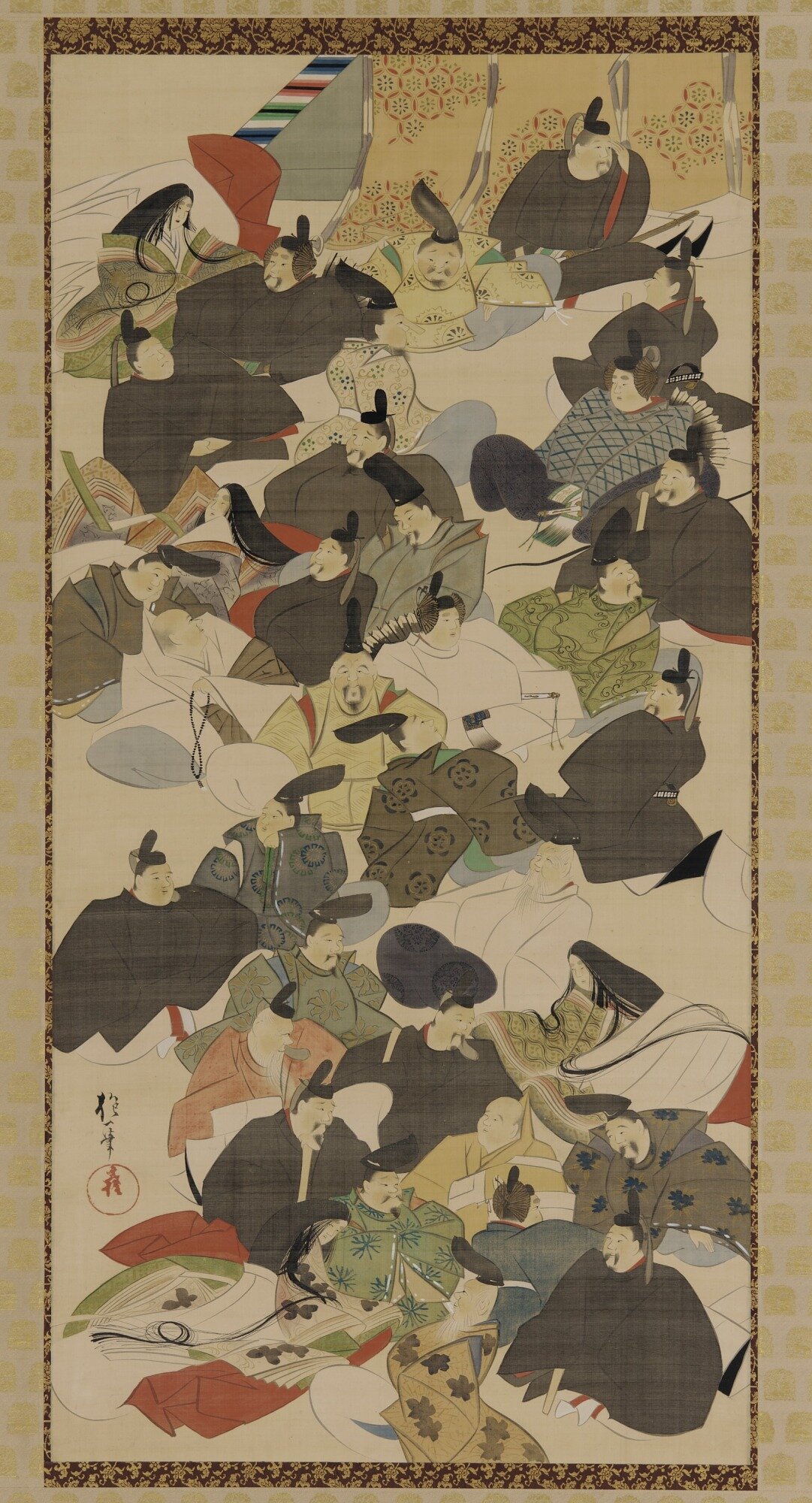
The Thirty-Six Master Poets, 1828 by Saki Hōitsu.
Created during the Edo period, this work is intentionally irreverent while at the same time paying tribute to revered poets of the 7th - 11th centuries.
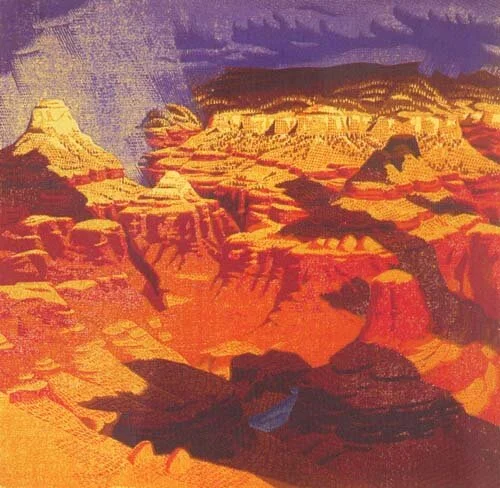
Grand Canyon, 1919 by Gustave Baumann, various collections.
Baumann visited the Taos New Mexico art community early in his career while still studying art and returned at the end of his career to retire there.