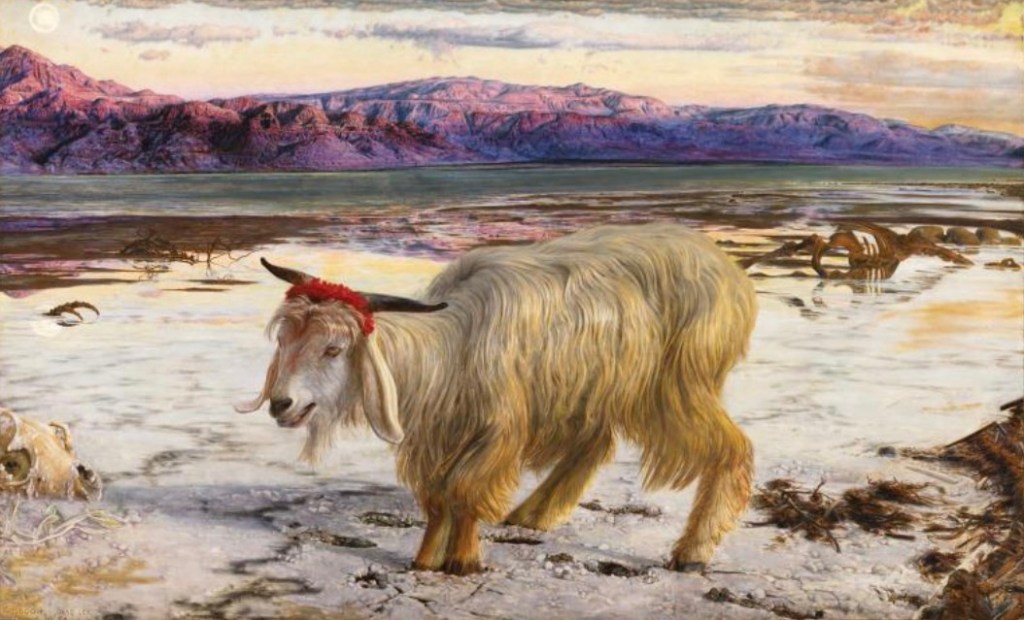
In light of the constant blaming and obfuscation that is constantly being fed to us, I thought of this painting by Pre-Raphaelite artist William Holman Hunt.
In light of the constant blaming and obfuscation that is constantly being fed to us, I thought of this painting by Pre-Raphaelite artist William Holman Hunt.
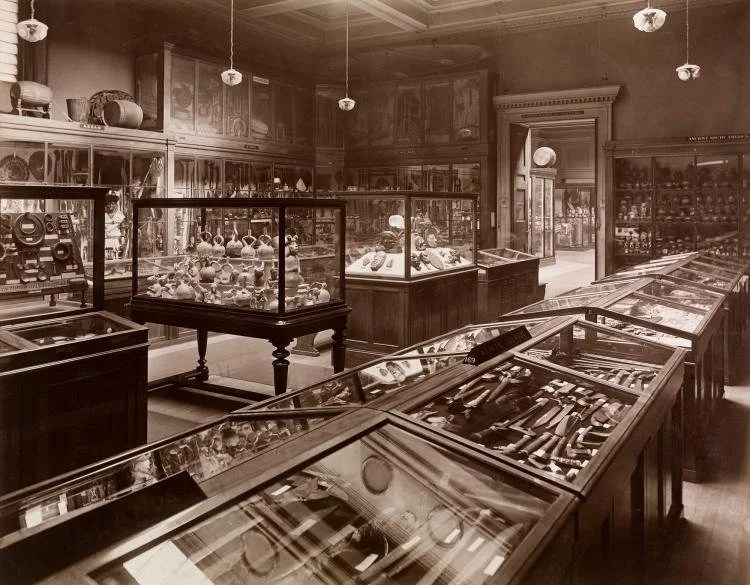
When public museums came to be in the late 19th and early 20th centuries they were primarily formed to be a repository for items and artifacts that people had collected on travels or through organized expeditions. The intention was to gather these artifacts for further study. Eventually these institutions morphed into places for the display of the collections that not only scholars, but also the public could come to see. That brings us to the large museums we know today with their dynamic programing and money generating entertainment.
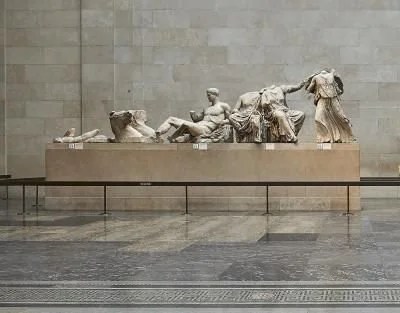
The methods for storage, reckoning with the histories and acquisition of objects, and our present world have not kept pace with each other. I visited the British Museum as part of a summer program through my university and of course, we were there to se the Parthenon statues (which were already controversial in the 80’s). However, what I was shocked by was a trip to a small storage room on the lower level of the museum. There our professor was excited to show us was row upon row of ancient pieces of Greek statuary fragments just laying around on shelves. There was no visible organization of the items or any identifying information. This all came to mind this morning as I read this New York Times article about the recent discovery of the long time theft of pieces from the collection by a curator. My point is that security and the organization and maintenance of many museum’s collections are sorely in need of examination and updating. In some cases, they have more in common with your kitchen’s junk drawer than not. Also, if you have so much in the collection that you cannot secure or maintain it, perhaps dispersing (or returning) some of it is not a bad idea – maybe take a look at the KonMari method?
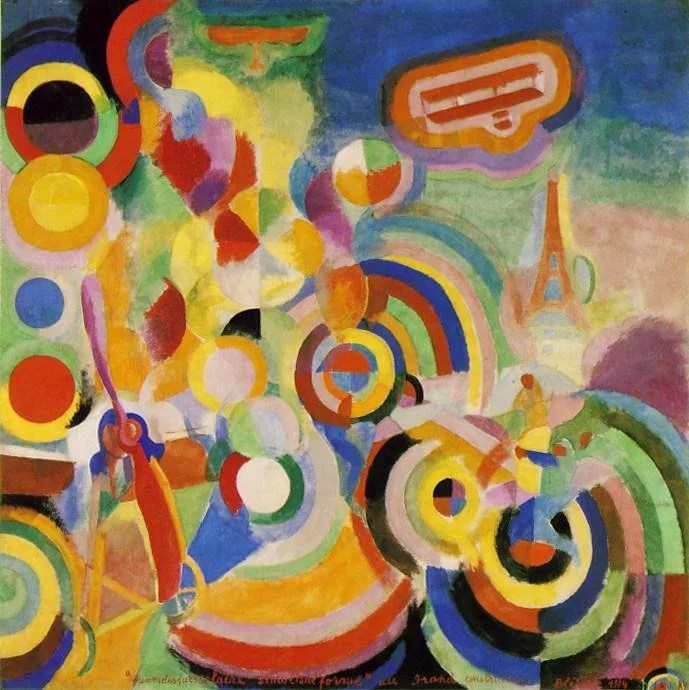
Homage to Bleroit by Robert Delaunay, 1914.
In 1909 Bleroit was the first person to cross the English Channel in an airplane. Delaunay wanted to capture this moment that he saw as the dawning of a new age of modern man. He uses a modern method of painting the scene (notice the Eiffel Tower in the background) because to use a more straightforward or realistic representation would not have done justice to the new technology.
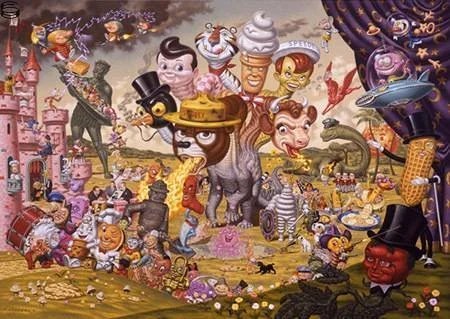
The Hydra of Madison Avenue by Todd Schorr, 2001
This work is a trip down memory lane with a message about mass consumerism and Madison Avenue advertising. How many logos do you recognize? Schorr’s detailed and beautifully colorful paintings have been aptly called Neosurrealist
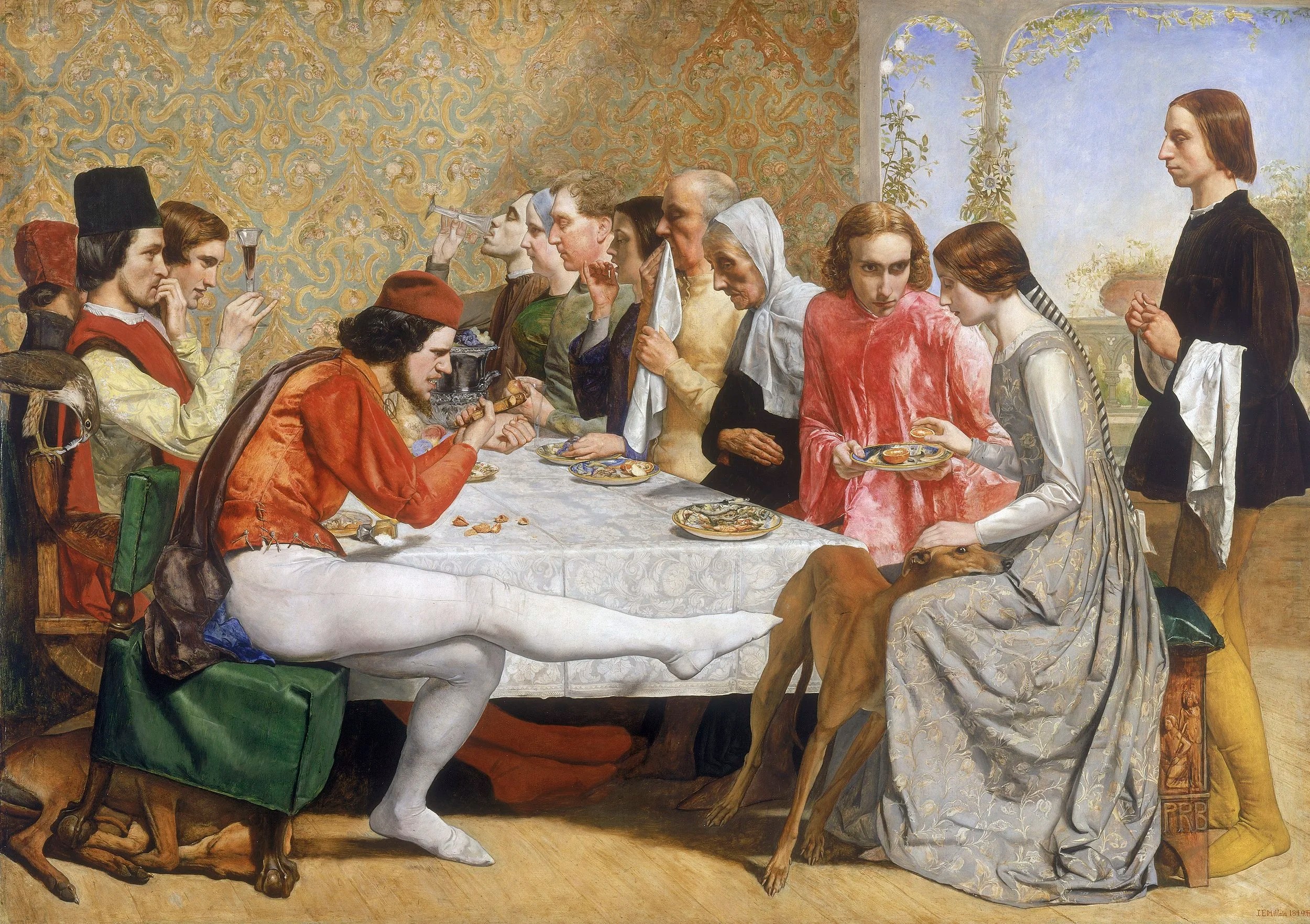
Lorenzo and Isabella by John Everett Millais, 1849.
This work illustrates John Keats poem Isabella, whose work the Pre Raphaelite Brotherhood much admired.
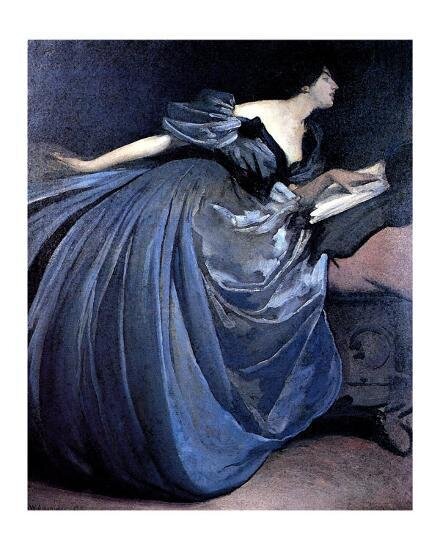
Althea by John White Alexander, 1895. Private Collection.
John White Alexander is primarily known as a portraitist who created beautiful, languid portraits of the young society women in his circle. He achieved success in France where he received many honors, as well as, in the US where he painted many luminaries of the day including Walt Whitman, Oliver Wendell Holmes, Mark Twain, and John Burrows. The Smithsonian Archives of American Art has made his papers available online.
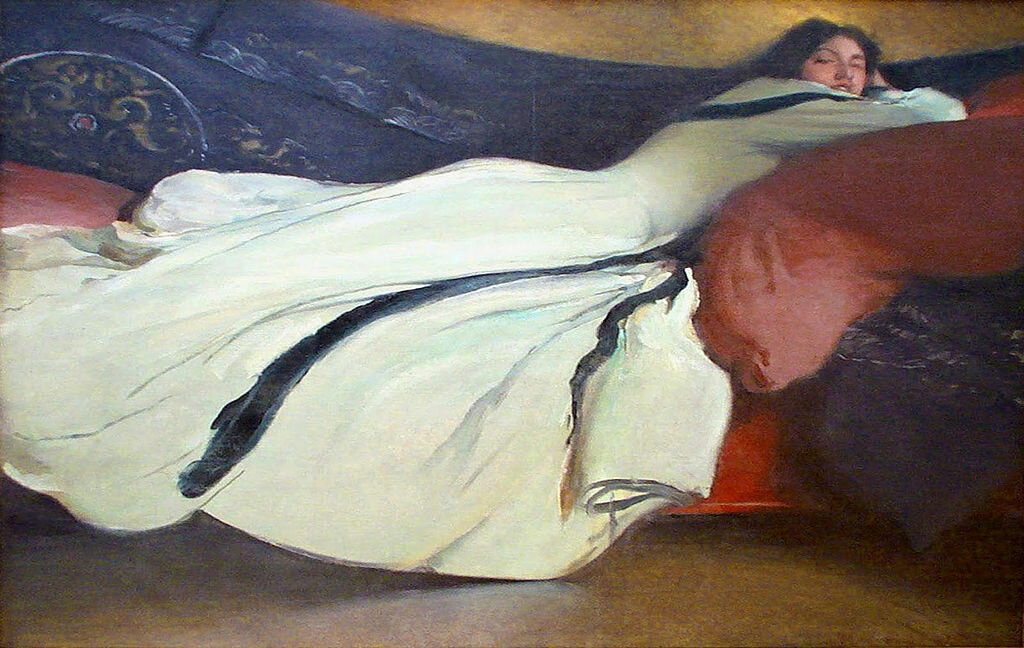
Repose by John White Alexander, 1895, The Metropolitan Museum of Art.
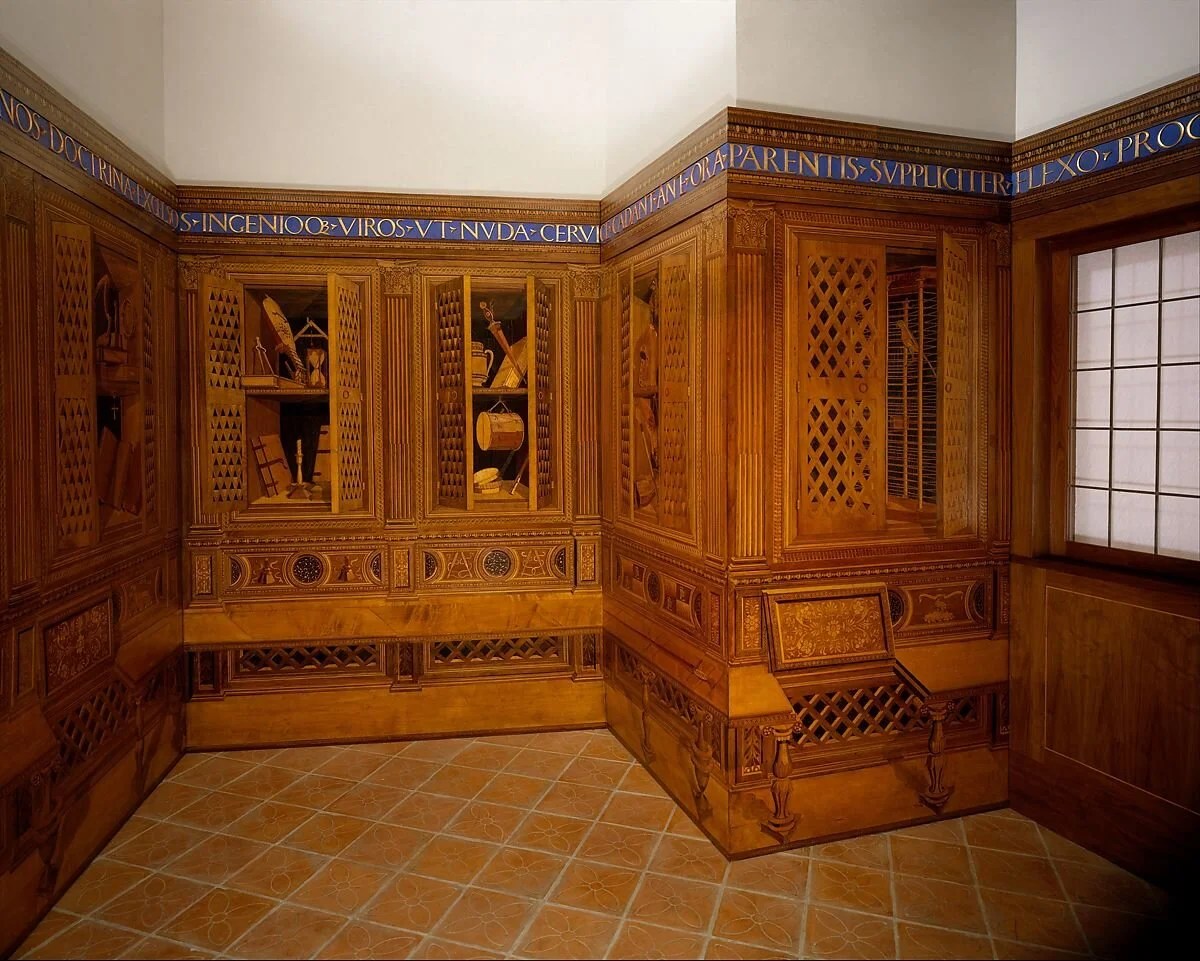
Study from the Palace of the Duke of Urbino, 1476.
Commissioned by Frederico da Montefeltro, duke of Urbino for a palace in Gubbio near Perugia, Italy, but now part of the collection of The Met. This room is an example of the trompe l’oeil, or “fool the eye” technique. Small pieces of wood are inlaid in patterns to resemble actual objects.
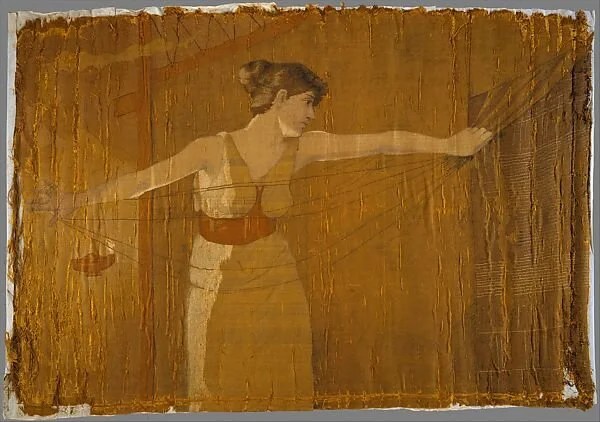
Penelope Unraveling her Work by Dora Wheeler, 1886, textile.
Wheeler and her mother ran an interior design firm and Dora Wheeler did some original textiles for the firm. This piece is featured in the Connections/Poetry by Jennette Mullaney.
The Cleveland Museum of Art also has a wonderful portrait of Dora Wheeler, which features a textile (with fighting cats) behind her done painted by her teacher William Merritt Chase.
Portrait of Dora Wheeler by William Merritt Chase, 1882-83, The Cleveland Museum of Art.

Dawn by Odd Nerdrum.
When I was working at the Joslyn Art Museum in the 1991 I saw the work of Odd Nerdrum for the first time and was struck at how it seemed old and new at the same time. I recognized references to artists of the Northern school and Caravaggio, but it was also so contemporary as art seemed to be moving toward a return to Realism.
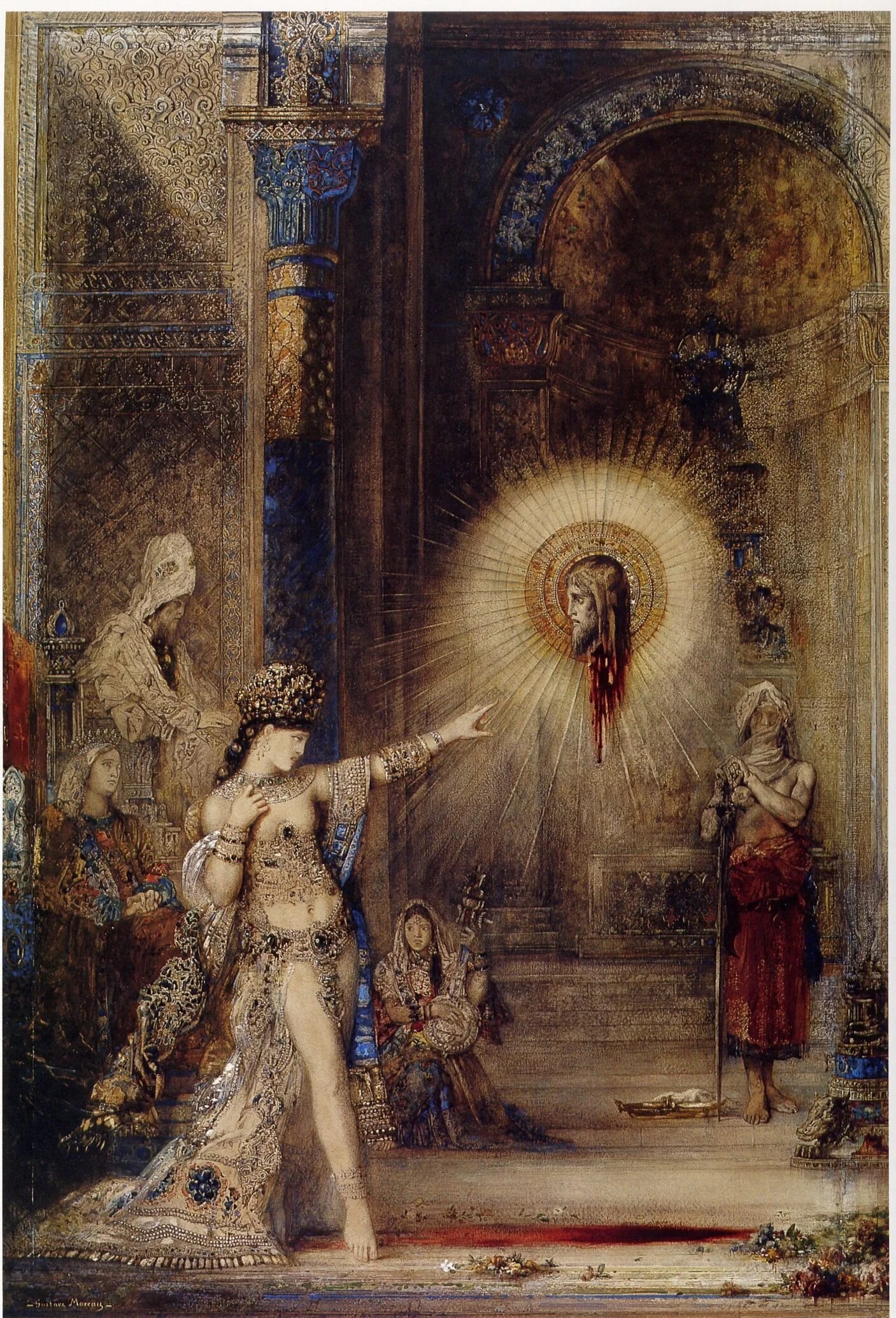
The Apparition by Gustave Moreau, 1874-76, Louvre, Paris
In this watercolor painting by Moreau we see Salome’s vision of the head John the Baptist is she remorseful or celebratory, it is hard to tell. Moreau was part of the Symbolism movement that paved the way for the Surrealist and Abstract artists who were to come.

