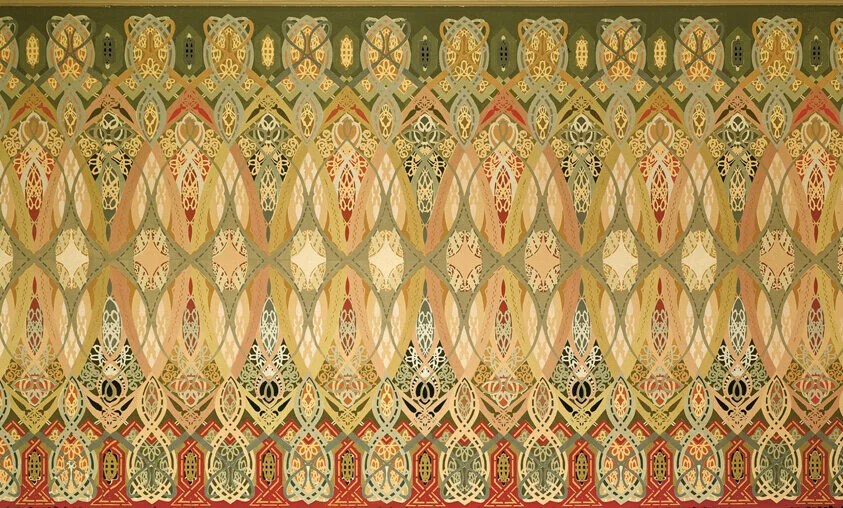
Section of a Stencil from the face of the Main Ceiling Trusses of the Trading Room of the Chicago Stock Exchange Building 1893/94 designed by Adler and Sullivan and executed by Healy and Miller, The Art Institute of Chicago.
The trading room from the Chicago Stock Exchange was dismantled when the building was torn down and reconstructed at The Art Institute of Chicago. The building was torn down in 1972. It was designed by the famous Chicago architecture firm of Adler and Sullivan.

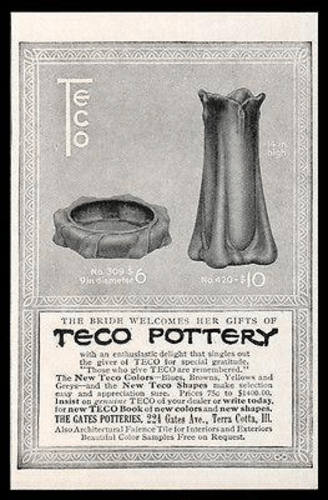
Teco Vase, early 20th century, Terra Cotta Tile Works – Teco.
Teco’s matte finishes and organic shapes have become synonymous with the Prairie School movement. Frank Lloyd Wright had them produce some of his designs.
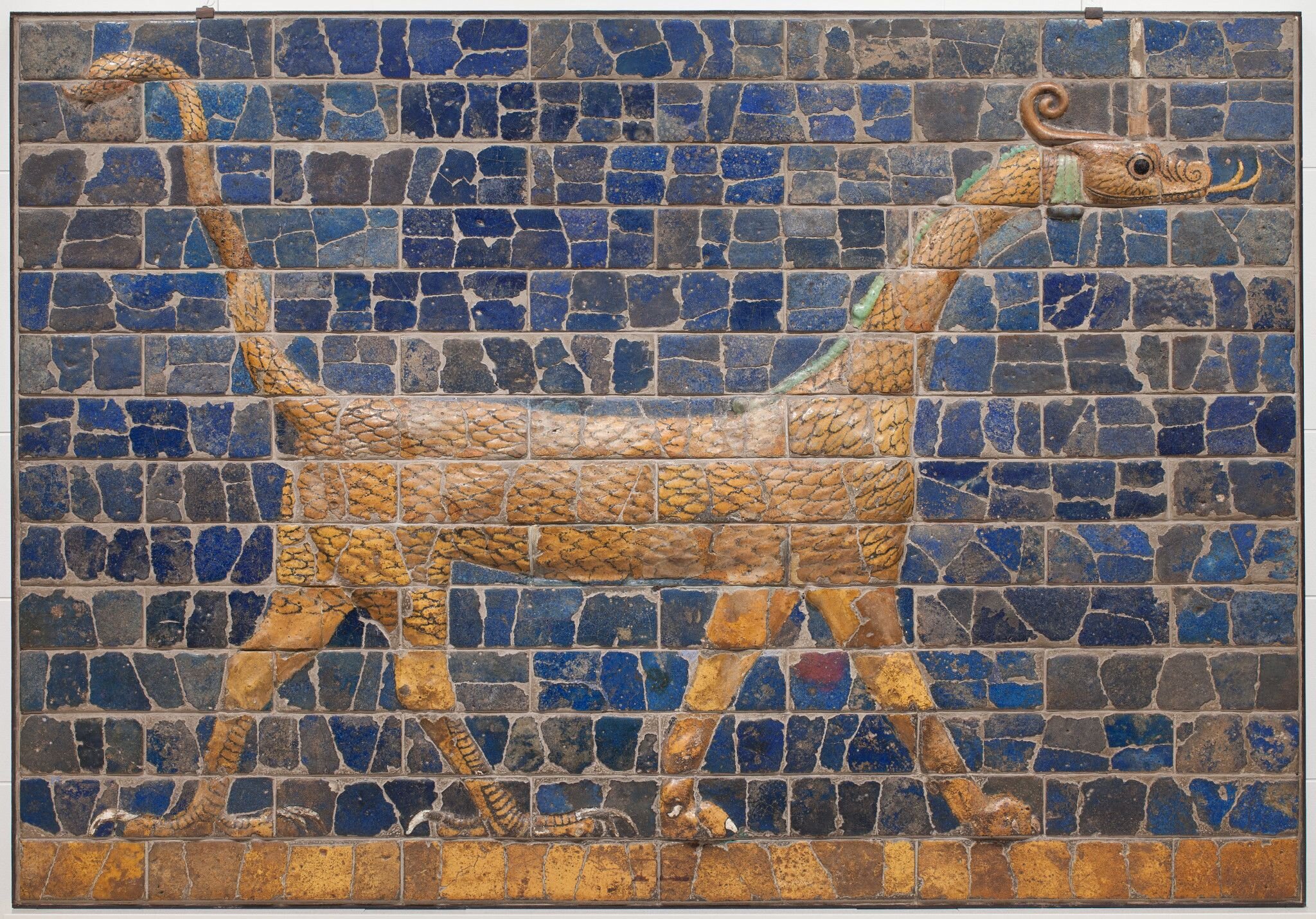
Dragon of Marduk, Neo-Babylonian, Reign of Nebuchadnezzar II, Detroit Institute of Arts.
The Latin word for dragon, draco means both dragon and snake. This glazed brick representation of a dragon comes from Babylon of the fabled Hanging Gardens. The Staatliche Museen zu Berlin has recreated the Ishtar Gate which depicts many guardian animals, both mystical and real.
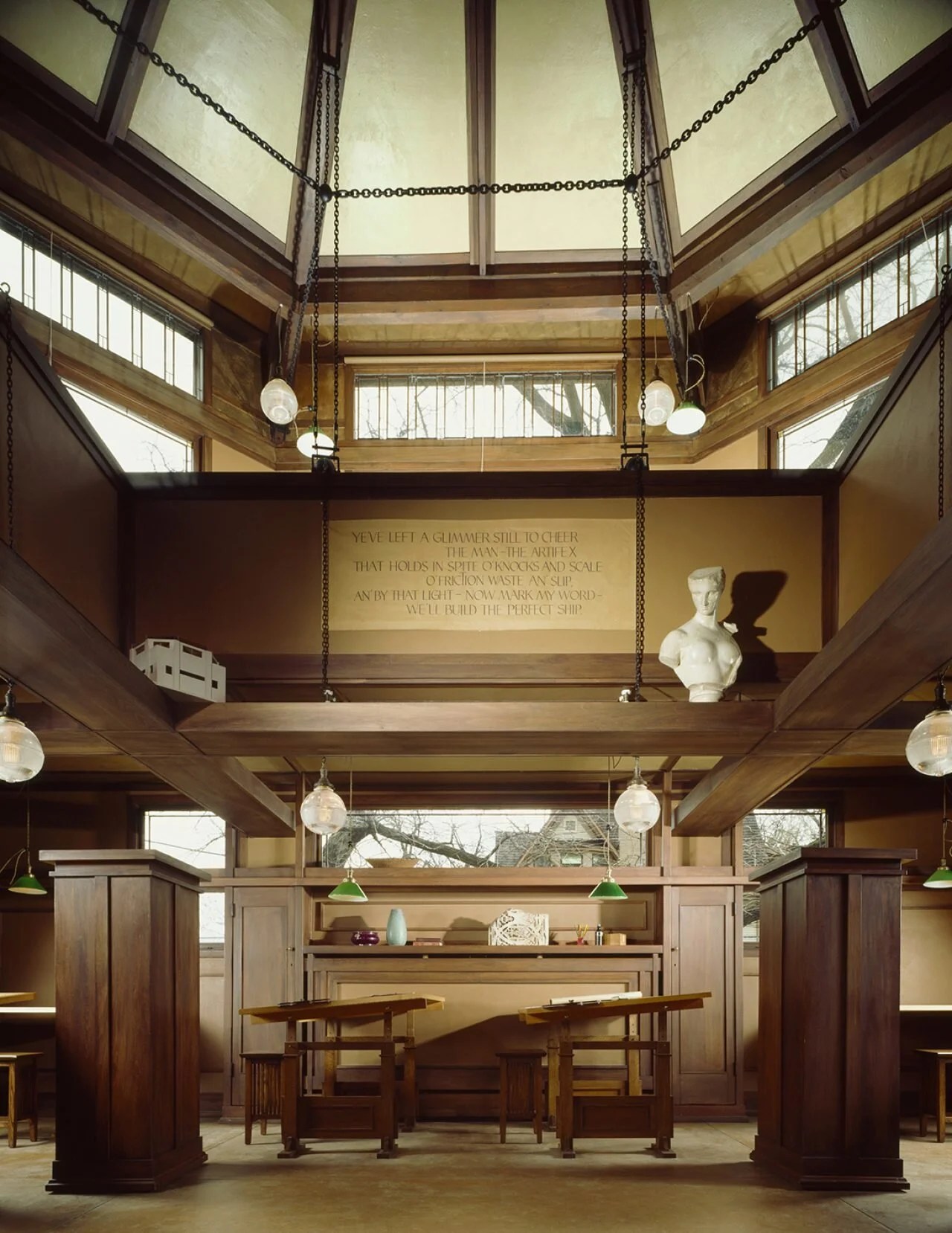
Studio Reception Room, Frank Lloyd Wright Home and Studio, Oak Park IL.
Frank Lloyd Wright is the most famous American architect. His work changed the way Americans thought about the spaces they lived in and he continues to be a great influence today.
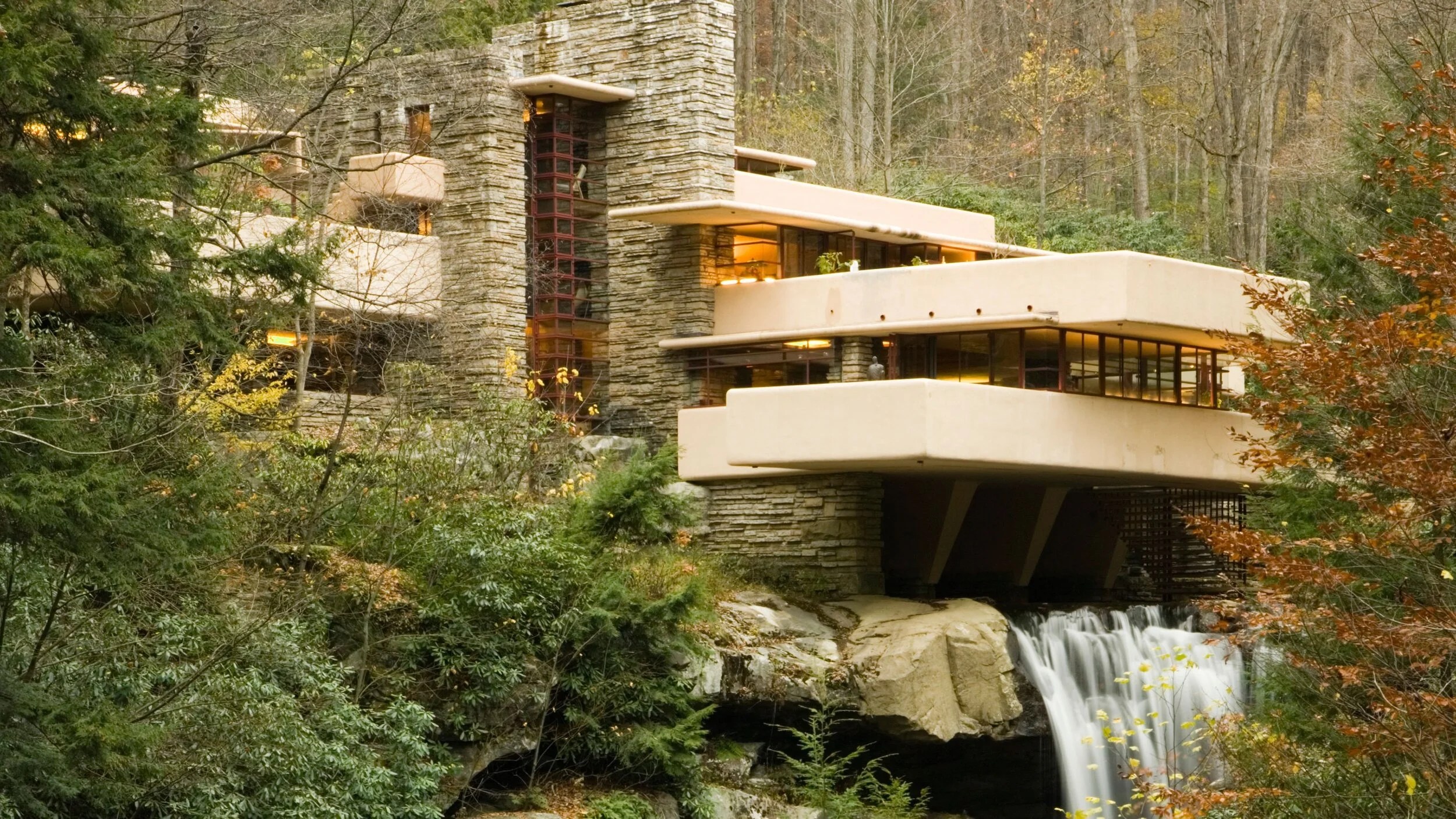
Fallingwater, 1936-38 by Frank Lloyd Wright, Bear Run, PA. Western Pennsylvania Conservancy.
Considered Wright’s masterpiece, Fallingwater is found deep in the PA woods and was built as a retreat for the Kaufman family of Pittsburgh.
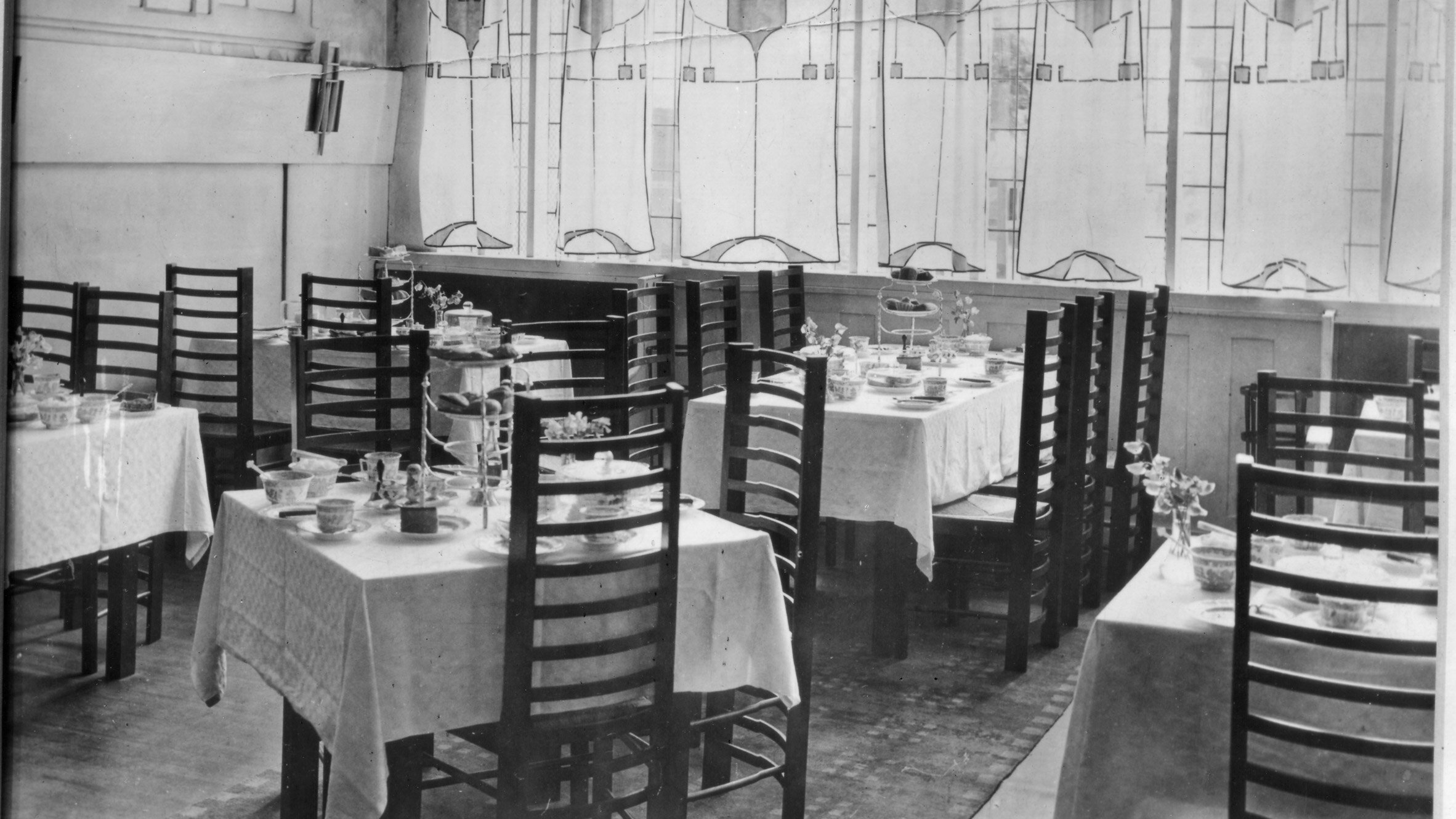
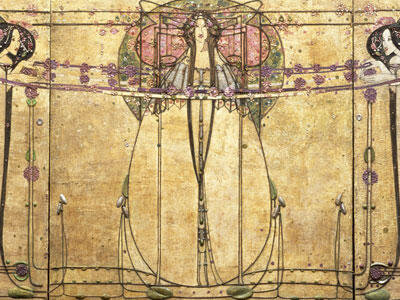
Ingram Street Tea Rooms by Charles Rennie Mackintosh et al.
Here is an example of Charles Rennie Mackintosh’s architectural and Margaret Macdonald Mackintosh’s design work. His wife worked with him on his interior designs. Charles, Margaret, her sister Frances and Herbert MacNair all formed a design group known as “The Four.”
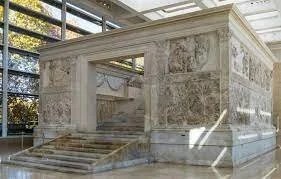
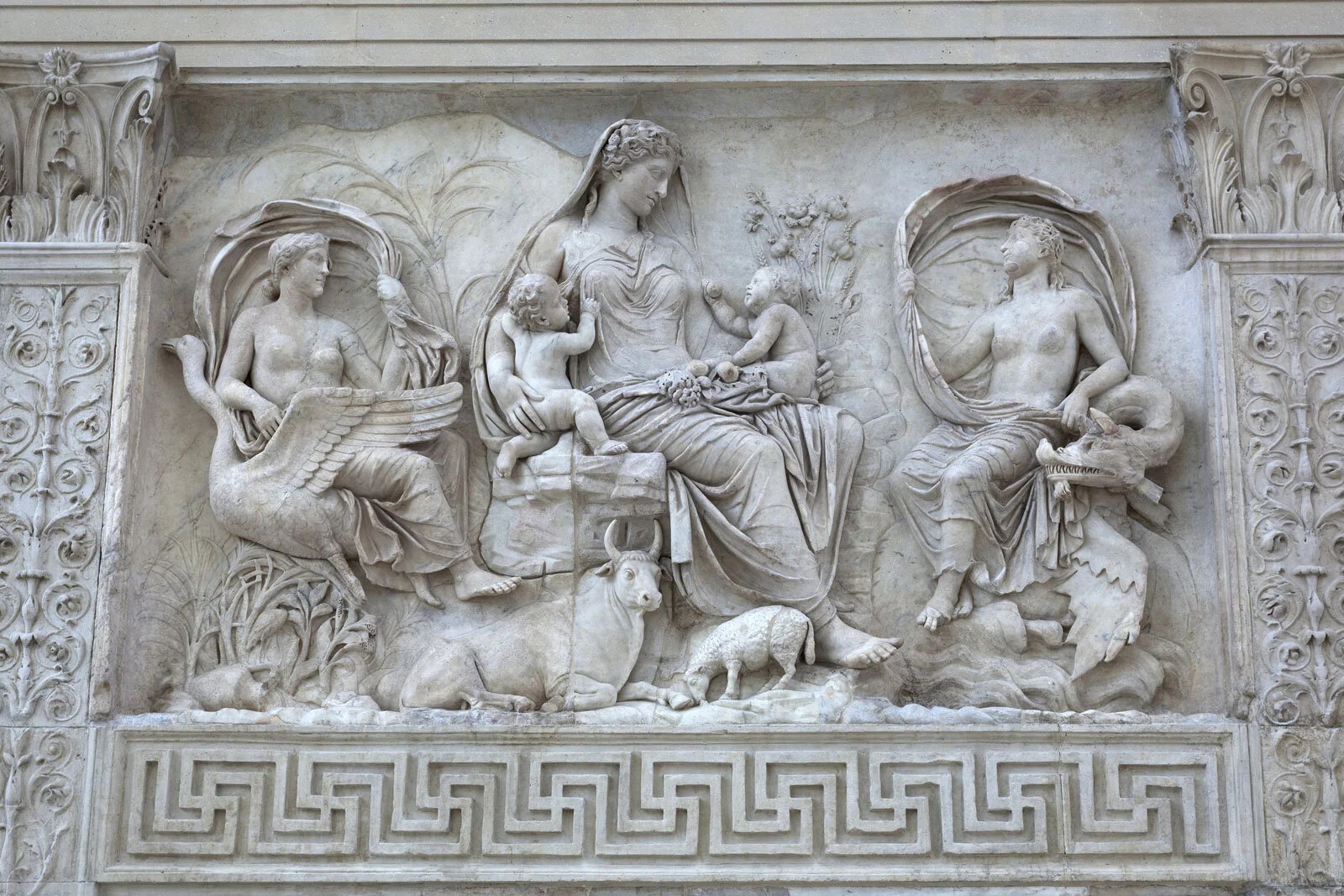
Ara Pacis, Roman Temple built for Augustus, 30-9 BCE, Rome.
Built to honor Augustus’ battles in Spain and Gaul, the Ara Pacis was built as a celebration to the power of the Roman Empire and “peace” their dominance brought to them. Over the years it was buried as the city grew and was finally excavated in the 20th century.

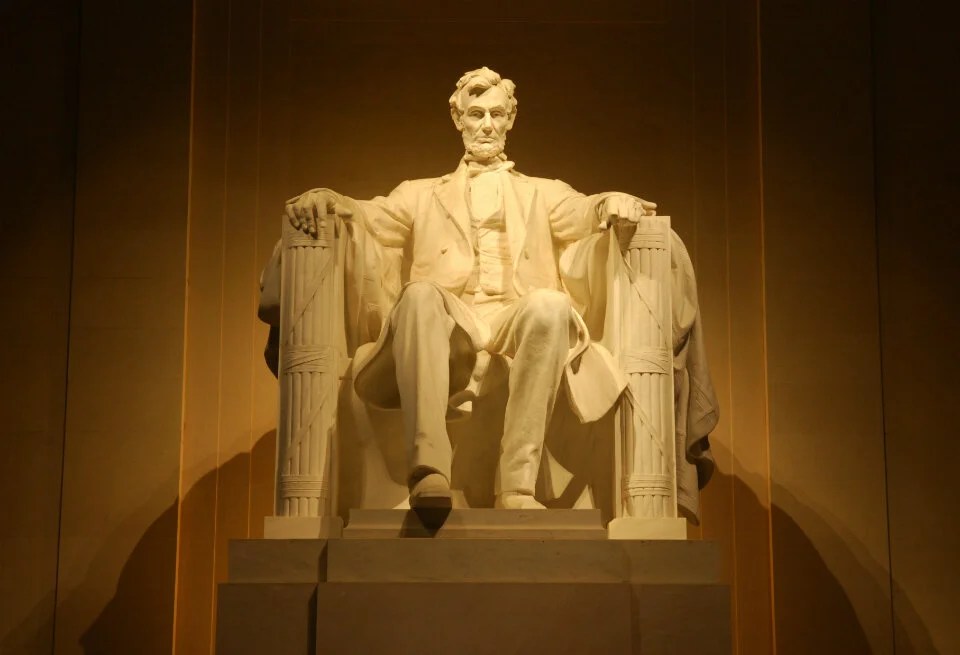
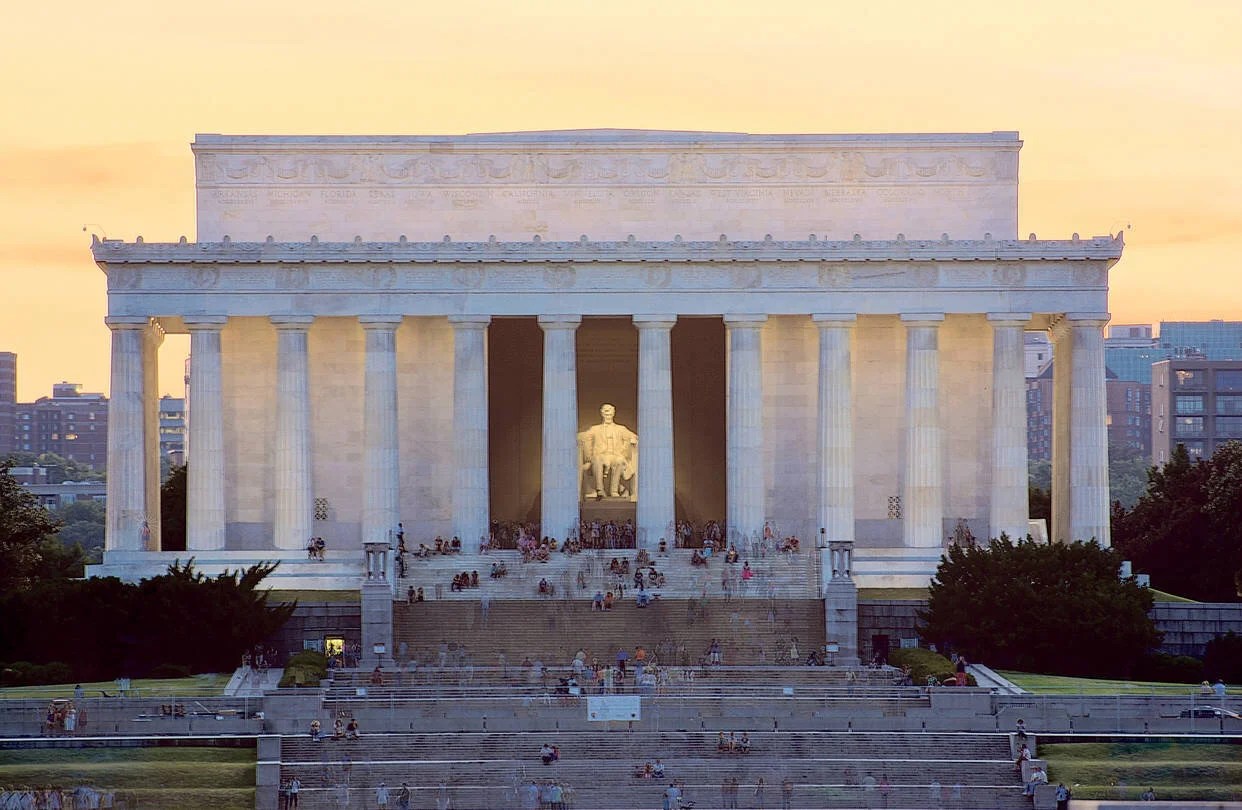
Abraham Lincoln from the Lincoln Memorial in Washington D.C.,
The memorial dedicated in 1922. Sculpture of Lincoln by Daniel Chester French.
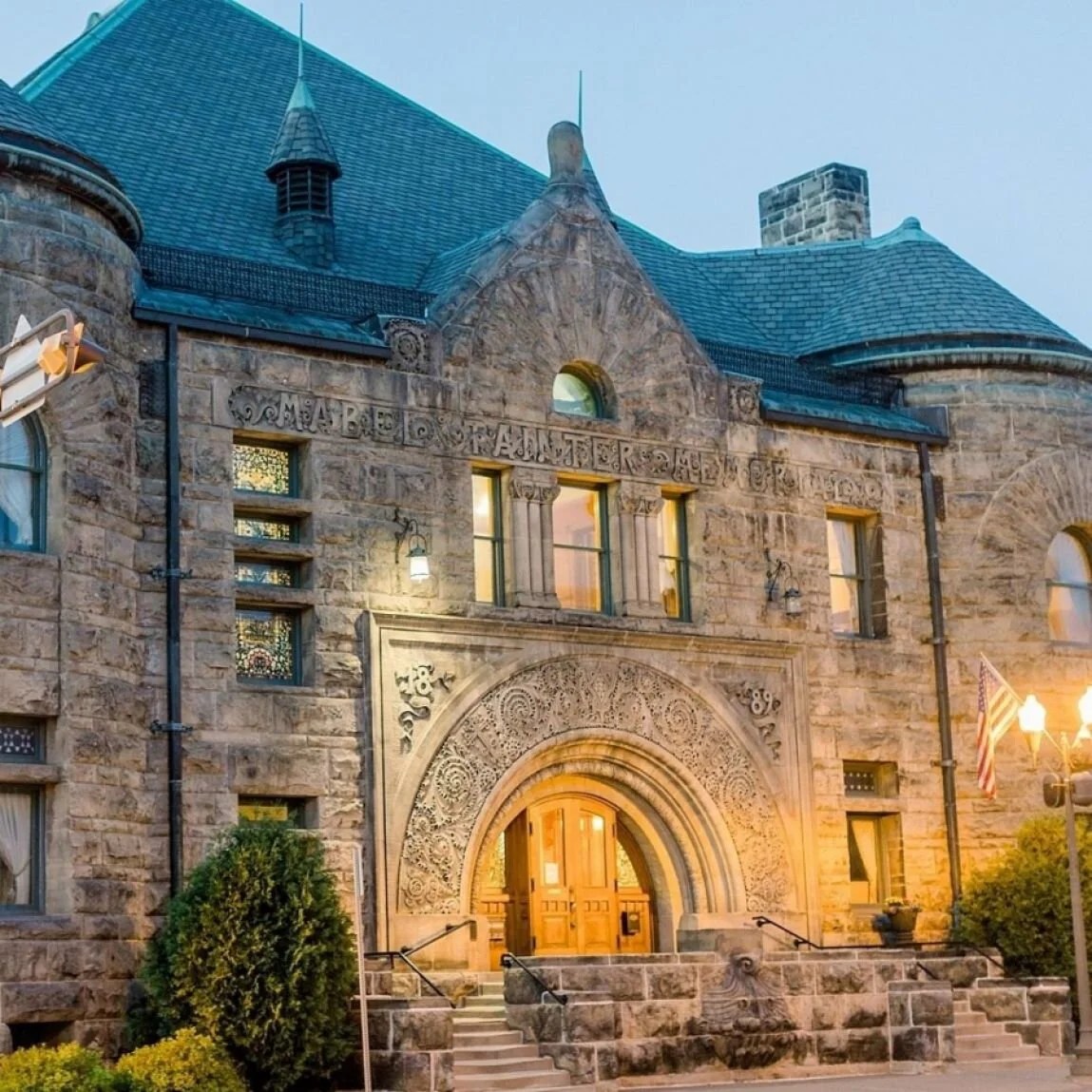
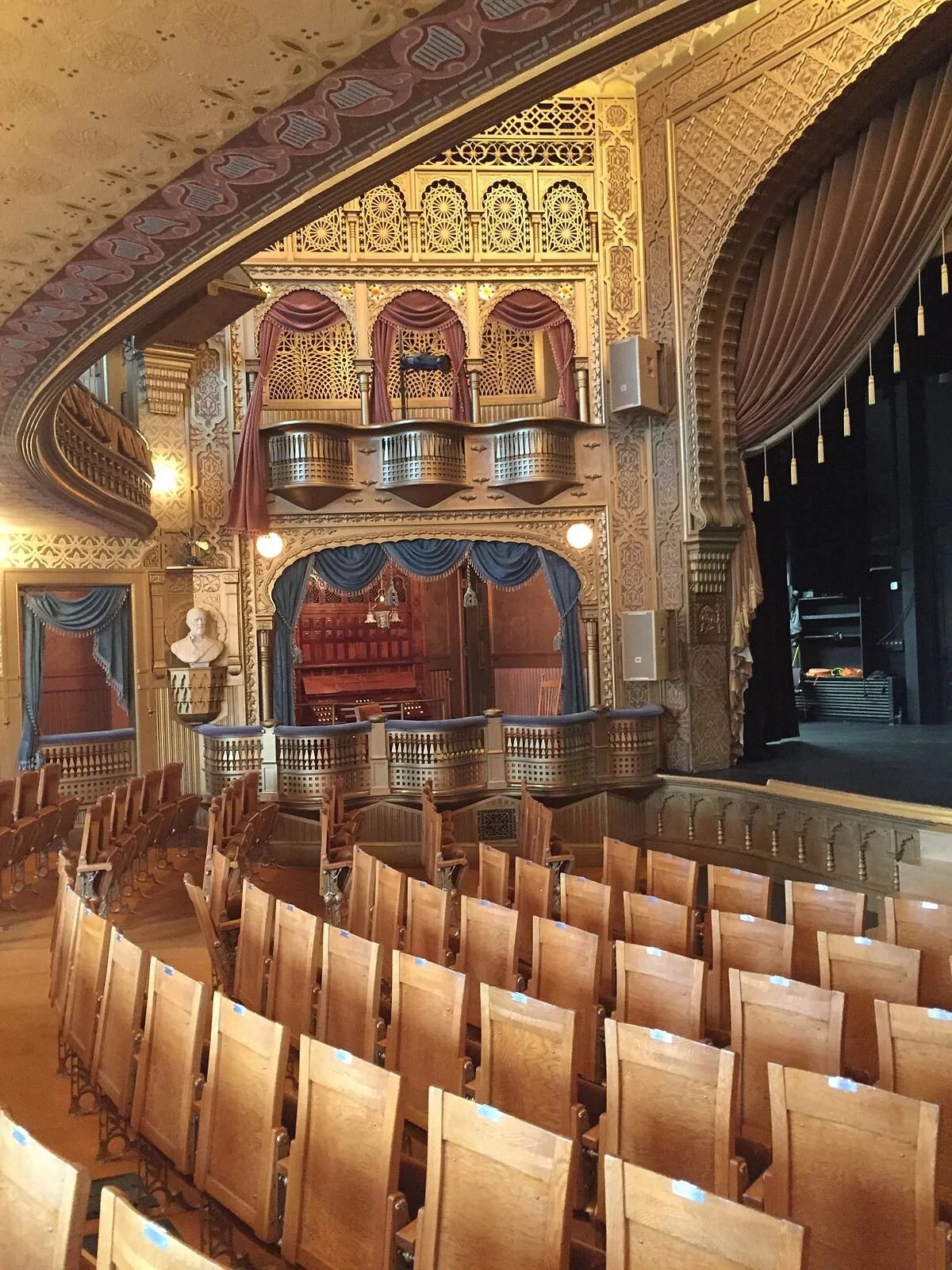
Mabel Tainter Memorial Building, 1889 by architect Harvey Ellis, Menomonie, WI
The style of this building is called Richardsonian Romanesque, but the architect was a strong behind-the-scenes influence on the American Arts & Crafts movement. Harvey Ellis worked with Gustav Stickley and has been credited with many of the company’s furniture designs and undoubtedly influenced Stickley’s Craftsman style.
 Your Daily Art