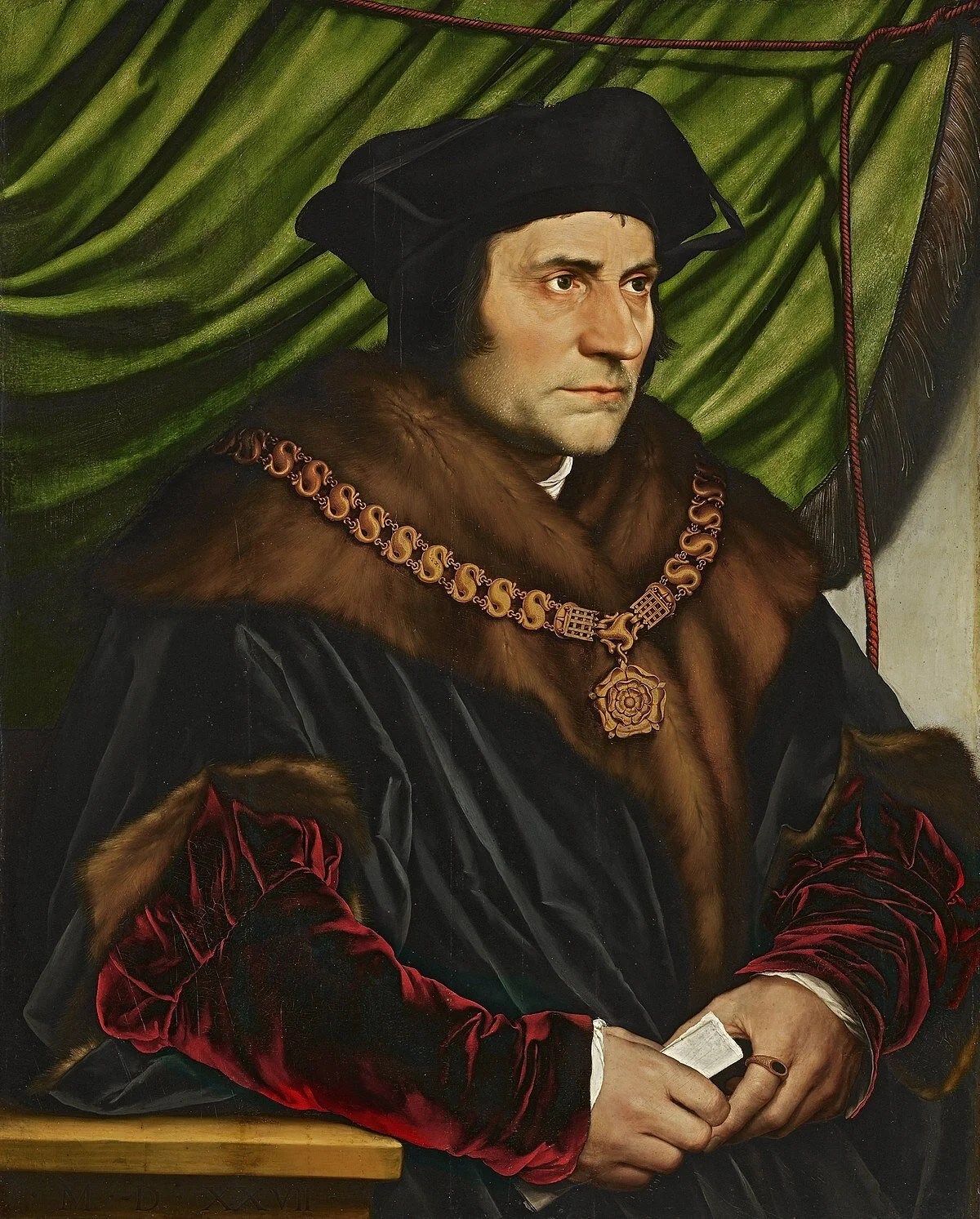
Sir Thomas More by Hans Holbein, The Frick Collection
Holbein was a 16th century German artist who became the court painter under Henry VIII. His style, with its attention to detail, was well suited for his later work in miniature. The Tudor Rose
Sir Thomas More by Hans Holbein, The Frick Collection
Holbein was a 16th century German artist who became the court painter under Henry VIII. His style, with its attention to detail, was well suited for his later work in miniature. The Tudor Rose
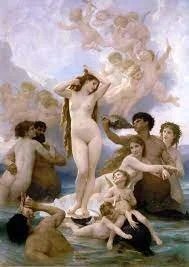
La Naissance de Vénus (Birth of Venus)1879 by William-Adolph Bouguereau.
Very similar in composition to Botticelli’s work. Bouguereau had a very successful career. His realistic style appealed to a large number of people. A contemporary of Degas and Monet; they even conceded his extreme popularity.
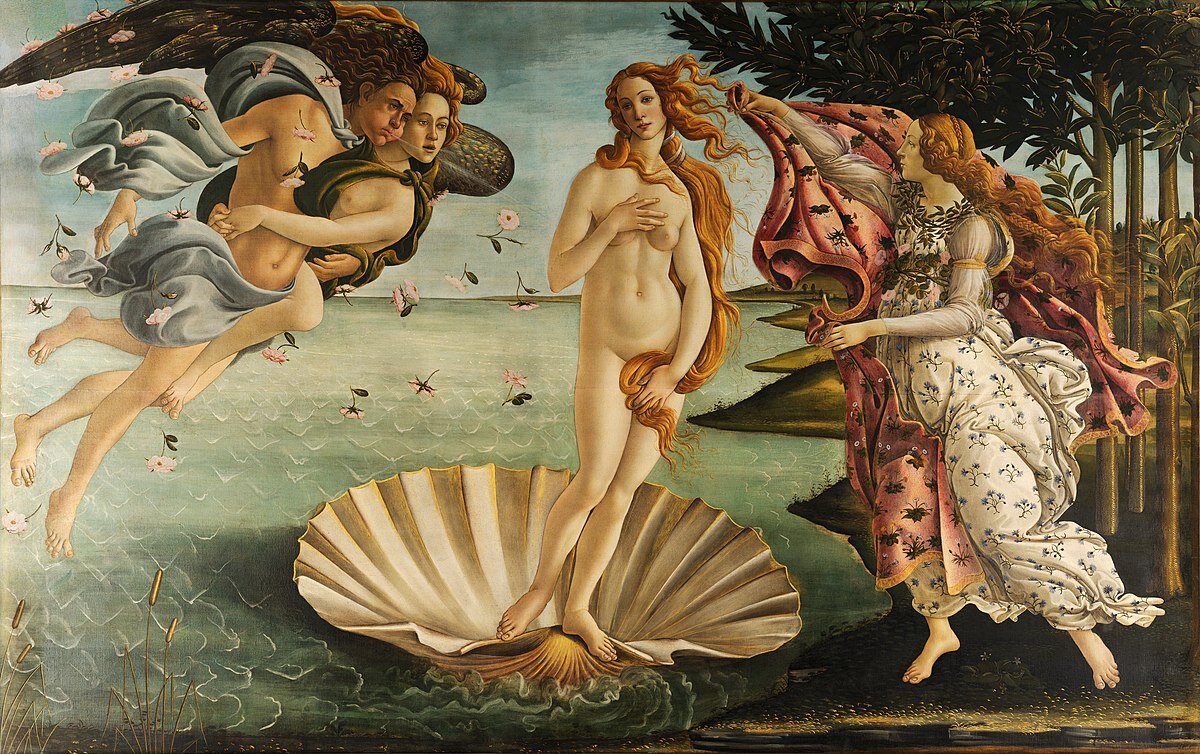
Birth of Venus, c. 1485-86 by Sandro Botticelli.
One of the most famous of the Italian Renaissance paintings it is one of the most frequent images, out of thousands, when a likeness of the Greek goddess Venus (Aphrodite) is referenced.
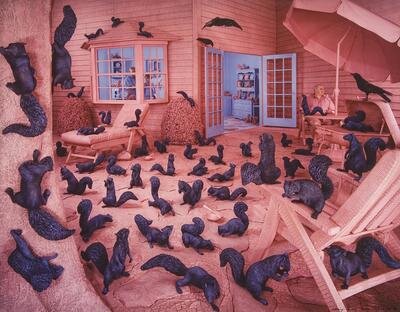
Gathering Paradise by Sandy Skoglund
Installation art creates an environment within a museum or gallery that brings the viewer into the artwork. It began in the 1970’s and reached it’s zenith in the 1980’s, today it is often termed “site specific.” Skoglund’s use of animals and color make her work popular and memorable for viewers.
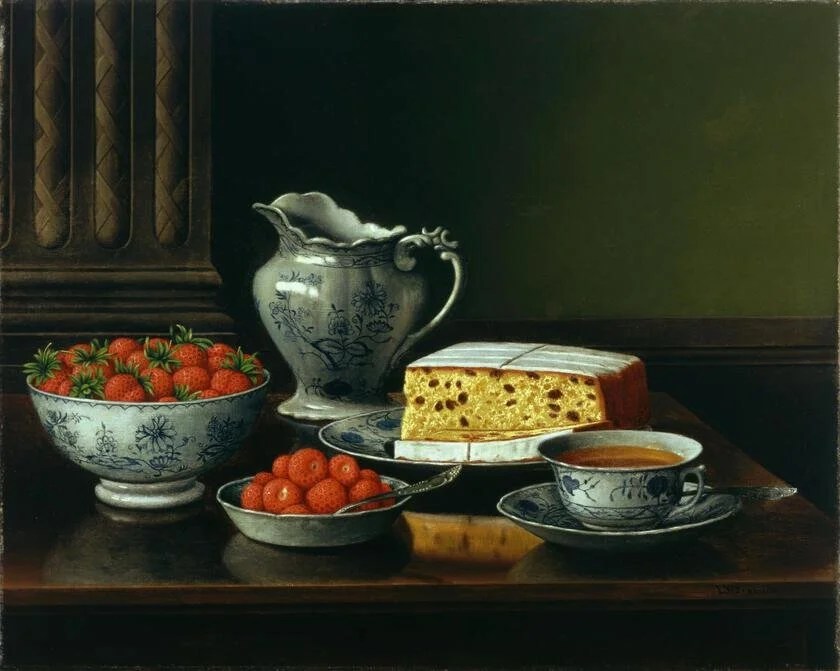
Still Life with Strawberries, no date by Levi Prentice (Amerian 1851-1935), Carnegie Museum of Art, Pittsburgh.
Prentice is known for painting still lifes, often with fruit. He worked as a carpenter and an art teacher.
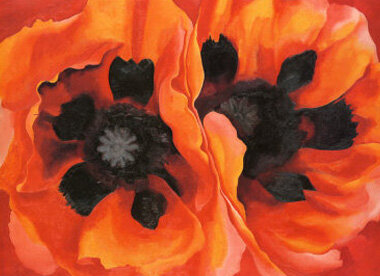
Oriental Poppies, 1927 by Georgia O’Keeffe,
Frederick R. Weisman Art Museum.If someone asks, buy a poppy, but why a poppy?
– Happy Memorial Day Weekend.
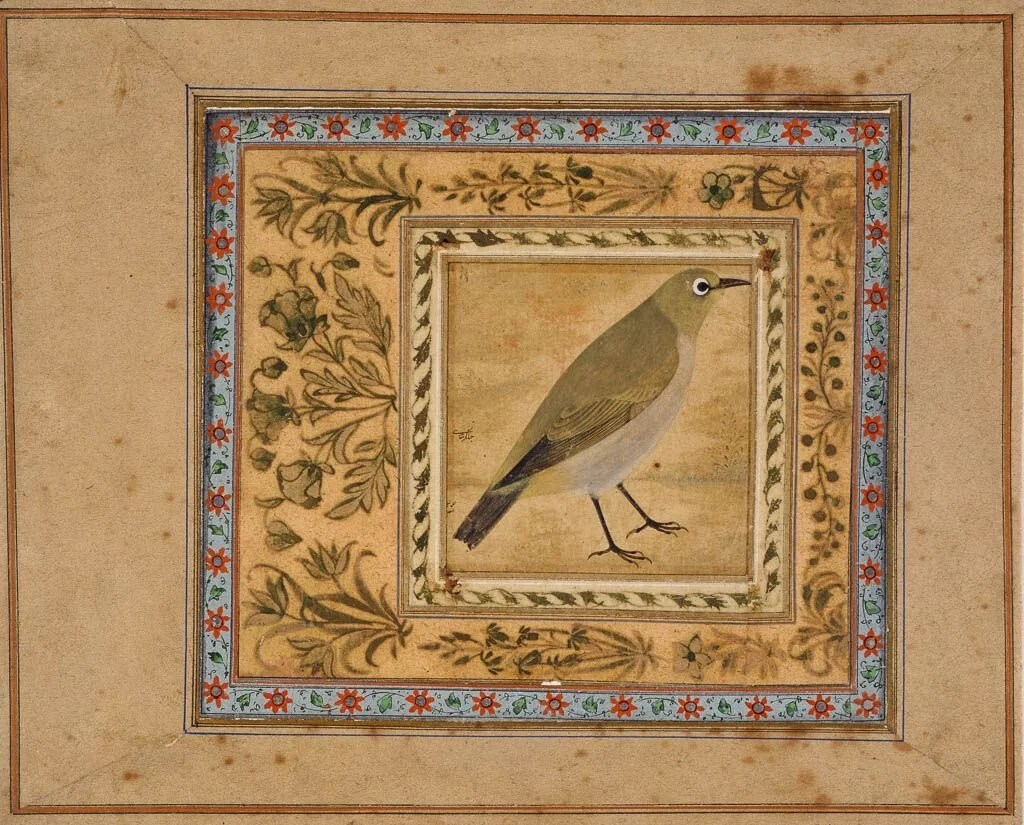
White-eye, Manuscript Mughal Period.
The Mughal empire a line of Indian Muslim emperors who ruled from 1526 to 1828. The most famous work to come out of this period is the Taj Mahal.
.
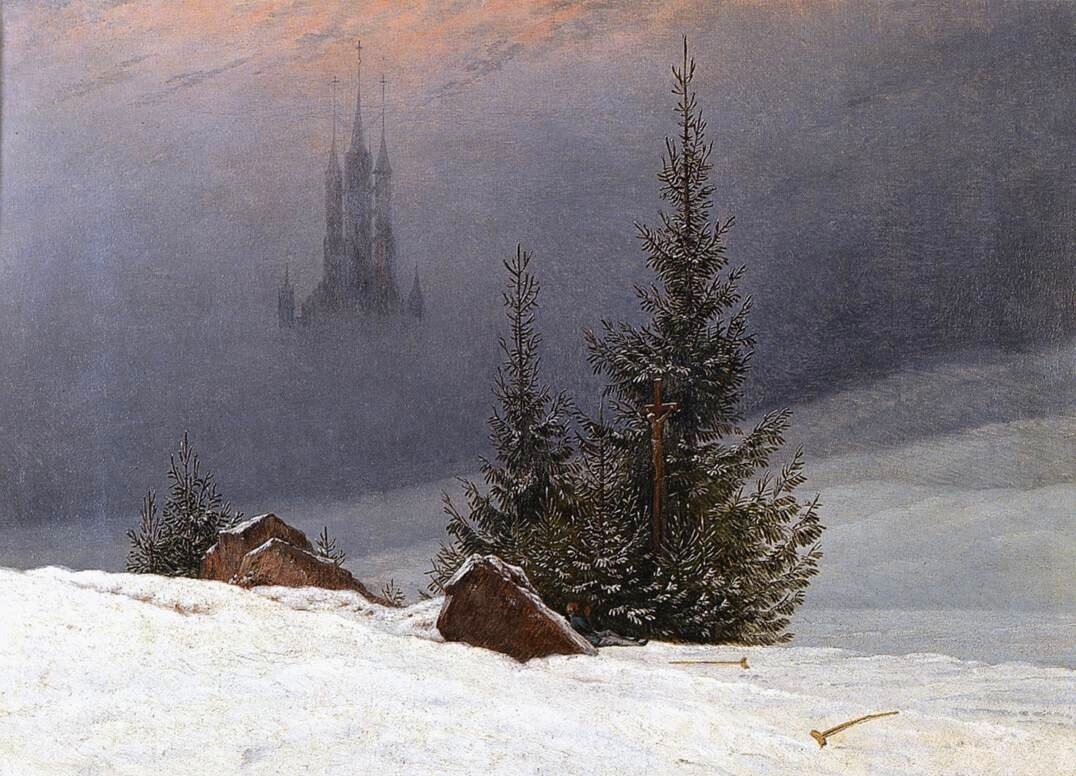
Winter Landscape, probably 1811 by Casper David Friedrich.
There is a man sitting down against the rocks and praying, he has abandoned his crutches as he approached the shrine. The serenity of the scene with the church in the background is a favorite theme of Friedrich.
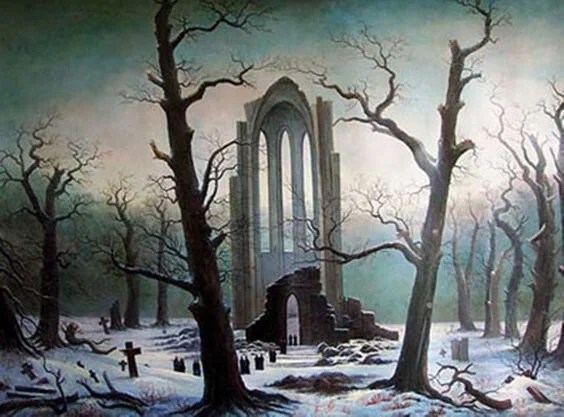
Monastery Graveyard in the Snow, 1819 by Casper David Friedrich.
Friedrich’s ethereal landscapes have an uncanny calmness. People have very personal reactions to his art. For example, if you are religious, you might concentrate on the ruined church and what that means. If you are feeling isolated or lonely, the winter scene and bare trees, may be what you feel most moved by.
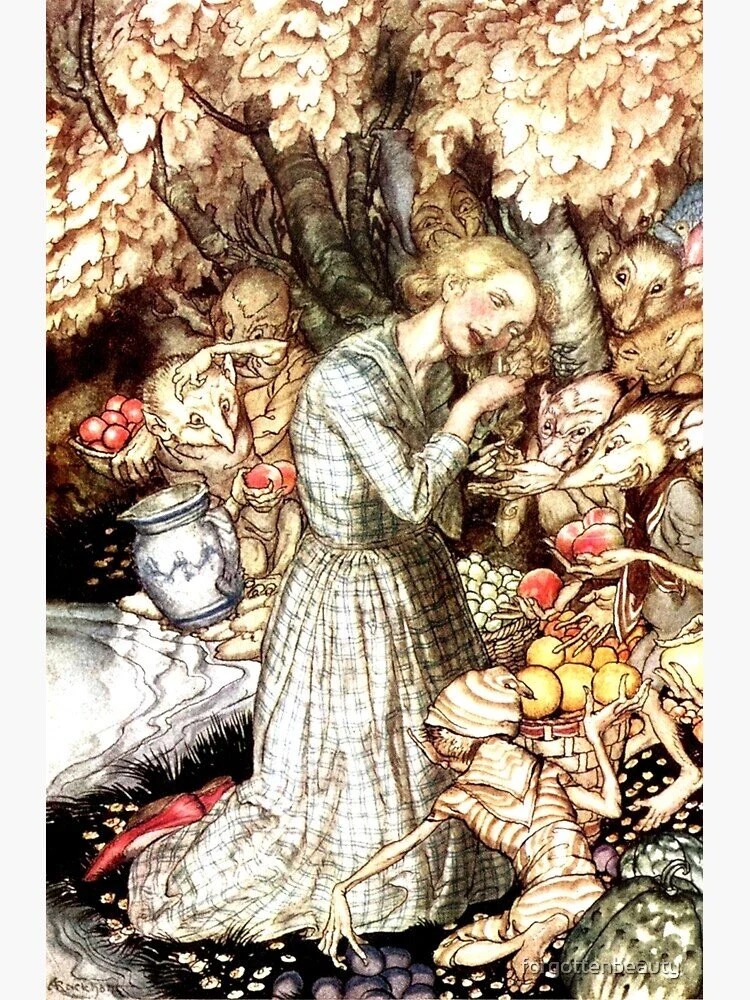
Frontispiece for Goblin Market, 1933 by Arthur Rackham.
Rackham’s illustrations for Christina Rossetti’s poem are full of the detail that make his artwork popular with young and old, alike.

