The Fish, 1890 by John La Farge, Museum of Fine Arts, Boston.
La Farge worked in stained glass creating many famous projects in public buildings, especially churches. He was also a painter in oil and watercolors, and a writer.
The Fish, 1890 by John La Farge, Museum of Fine Arts, Boston.
La Farge worked in stained glass creating many famous projects in public buildings, especially churches. He was also a painter in oil and watercolors, and a writer.
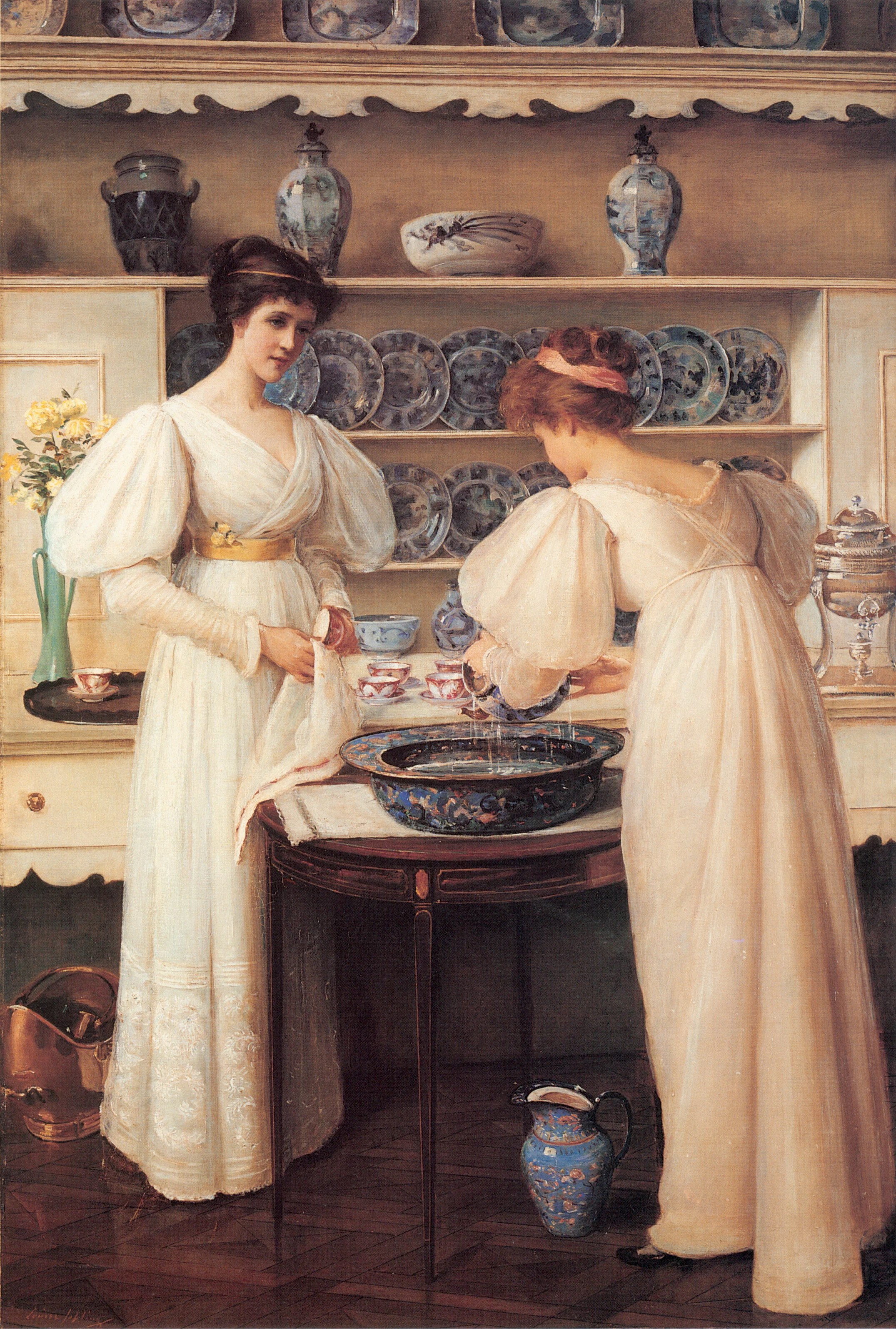
Blue and White, 1896 by Louise Jopling,
Lady Lever Art Gallery, Port Sunlight, England.
During the Victorian period it became quite fashionable to collect blue and white porcelain from China, The Netherlands and eventually from England when the potteries there began to produce it. People would have entire rooms devoted to displaying their large collections.
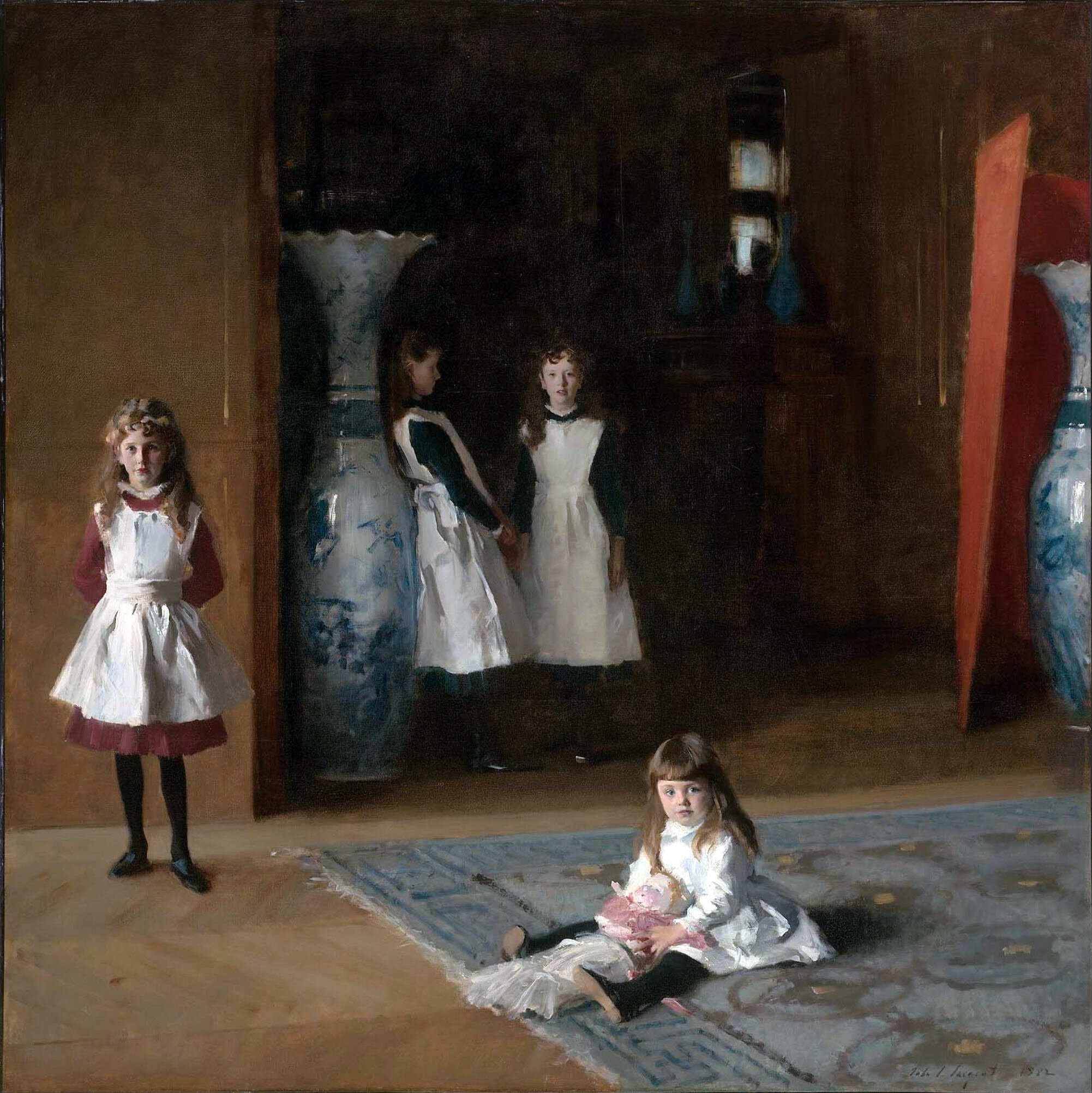
The Daughters of Edward Darley Boit, 1882 by John Singer Sargent, MFA Boston.
Sargent’s portraits of children are among his most expressive. It must have been nice for him to work with subjects who would have probably been less vain than the adults (although I am sure a few of them were looking over his shoulder).
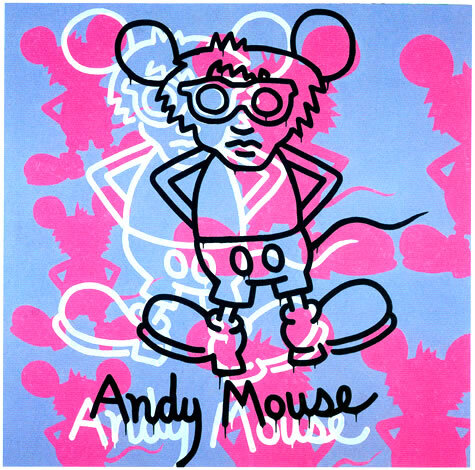
Andy Mouse, 1985 by Keith Haring © Keith Haring Foundation
Haring was very popular from the mid 1980’s on. He was a real presence in NYC first through the drawings he used to do in chalk on the black matte surfaces of empty subway advertising panels. These drawings brought him recognition and gallery shows. He and Jean-Michel Basquiat, his friend have had a return to popularity recently.
This work in a portrait of Andy Warhol.
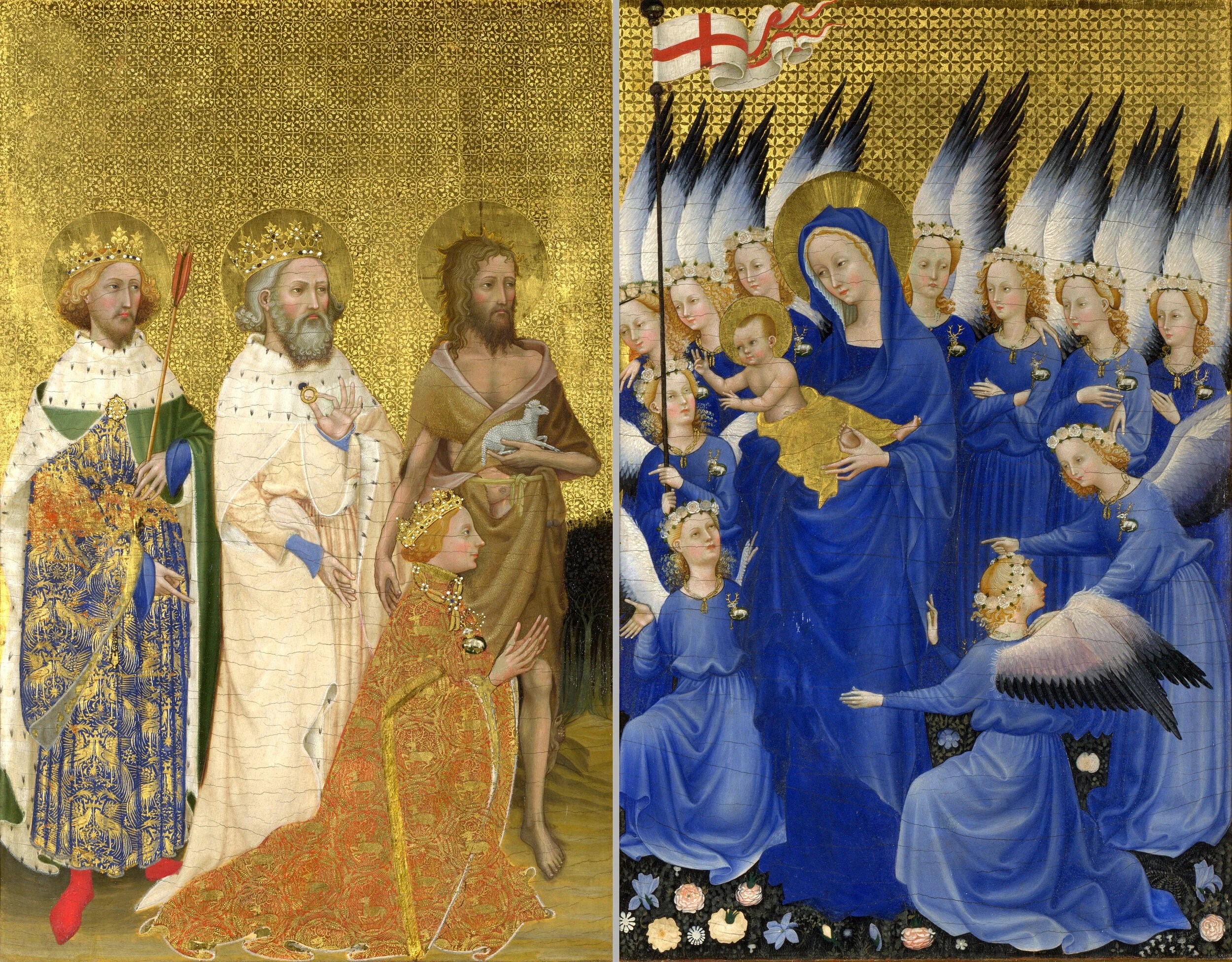
The Wilton Diptych, c. 1394 for King Richard the II, artist unknown,National Gallery, London.
One of my favorite of the Madonna and Child images. The blues are so vivid especially against the gold. It is the size of a regular book when closed. Diptych refers to the two parts of the painting.
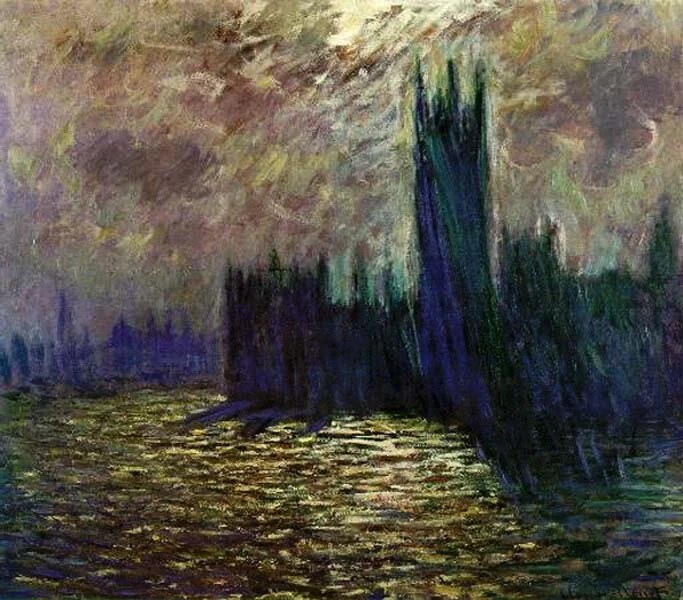
Houses of Parliament, London, 1905 by Claude Monet, Musee Marmottan, Paris.
Another of Monet’s views of Parliament. His goal was to paint the same thing in different light, which in turn would make a different impression, much darker, yet recognizable.
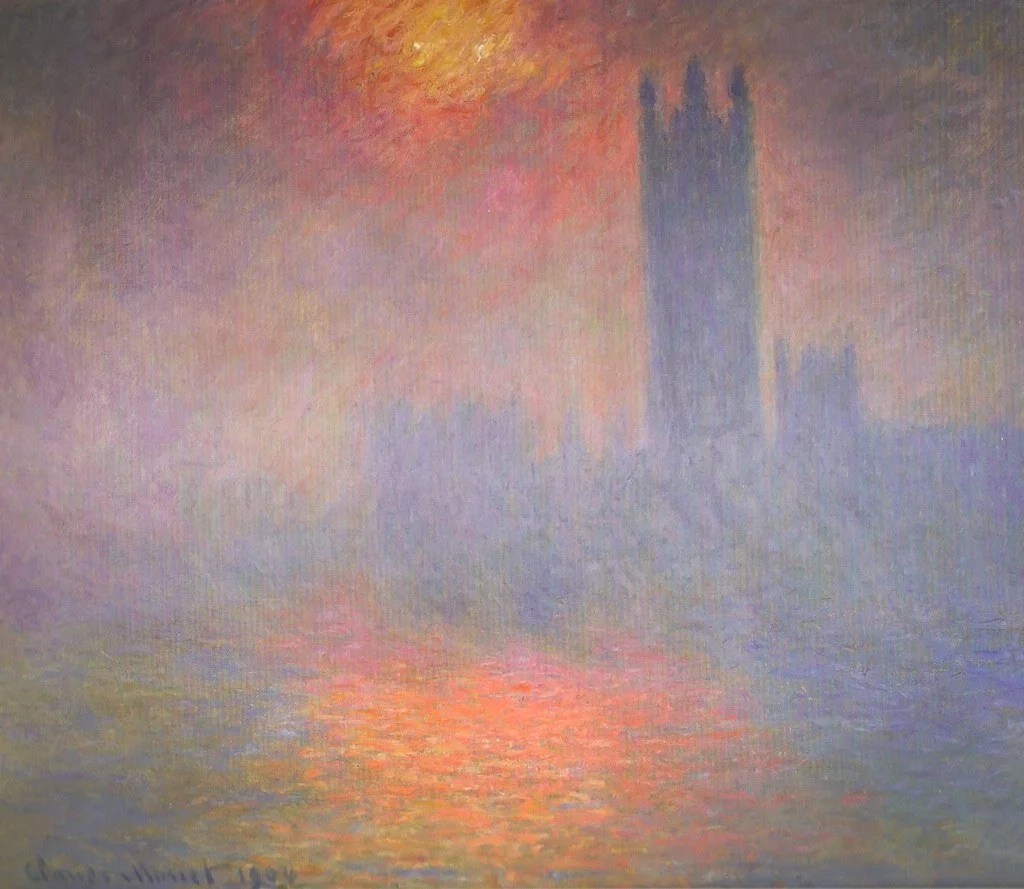
Houses of Parliament, London, Sun Breaking Through the Fog, 1904 by Claude Monet, Musee d’Orsay,Paris.
Monet, like Turner recorded the London Parliament buildings but his was a study of the same building at different times of the day.
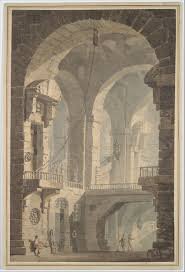
“Dark Prison (Cacrere Oscura),” c.1790 by Joseph Mallord William Turner, The Metropolitan Museum of Art.
Turner is the most famous and prolific British painter of the 19th Century. His watercolors and oils record the buildings an events of his world. He also traveled throughout Europe and the British isles where he recorded what he saw. The work was inspired by the Italian artist Piranesi.
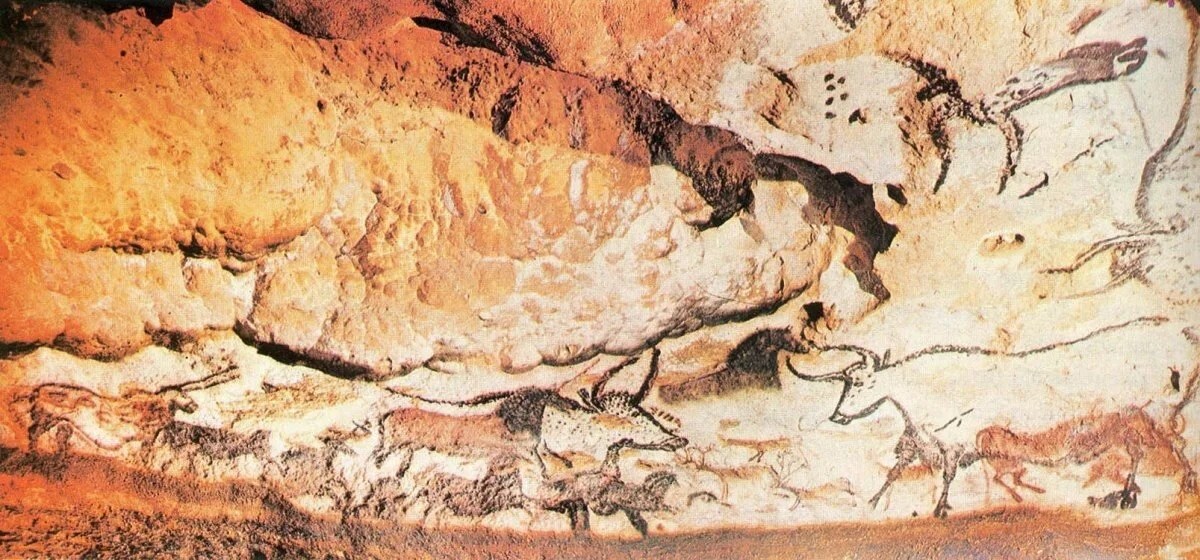
An Image from the Hall of Bulls, the Caves at Lascaux, Dordogne,France.
The caves at Lascaux contain some of the earliest known art work to be created by man. They are dated to between 13,000 to 15,000 BC and were discovered in 1940. They were open but carbon dioxide from visitors was damaging the paintings so they were closed in 1963 to preserve them.