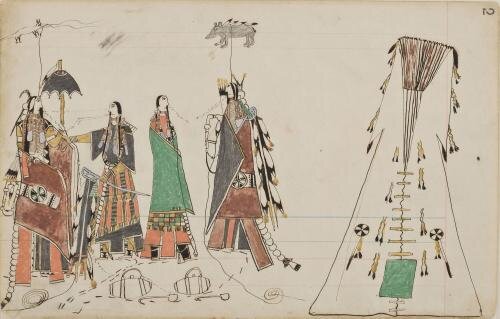
Howling Wolf, Southern Cheyenne, 1849-1927. Oberlin Ledger, Allen Memorial Art Museum, Oberlin, OH.
Plains Native Americans used ledgers as sources of paper to create artistic records of battles and other important events.
Howling Wolf, Southern Cheyenne, 1849-1927. Oberlin Ledger, Allen Memorial Art Museum, Oberlin, OH.
Plains Native Americans used ledgers as sources of paper to create artistic records of battles and other important events.
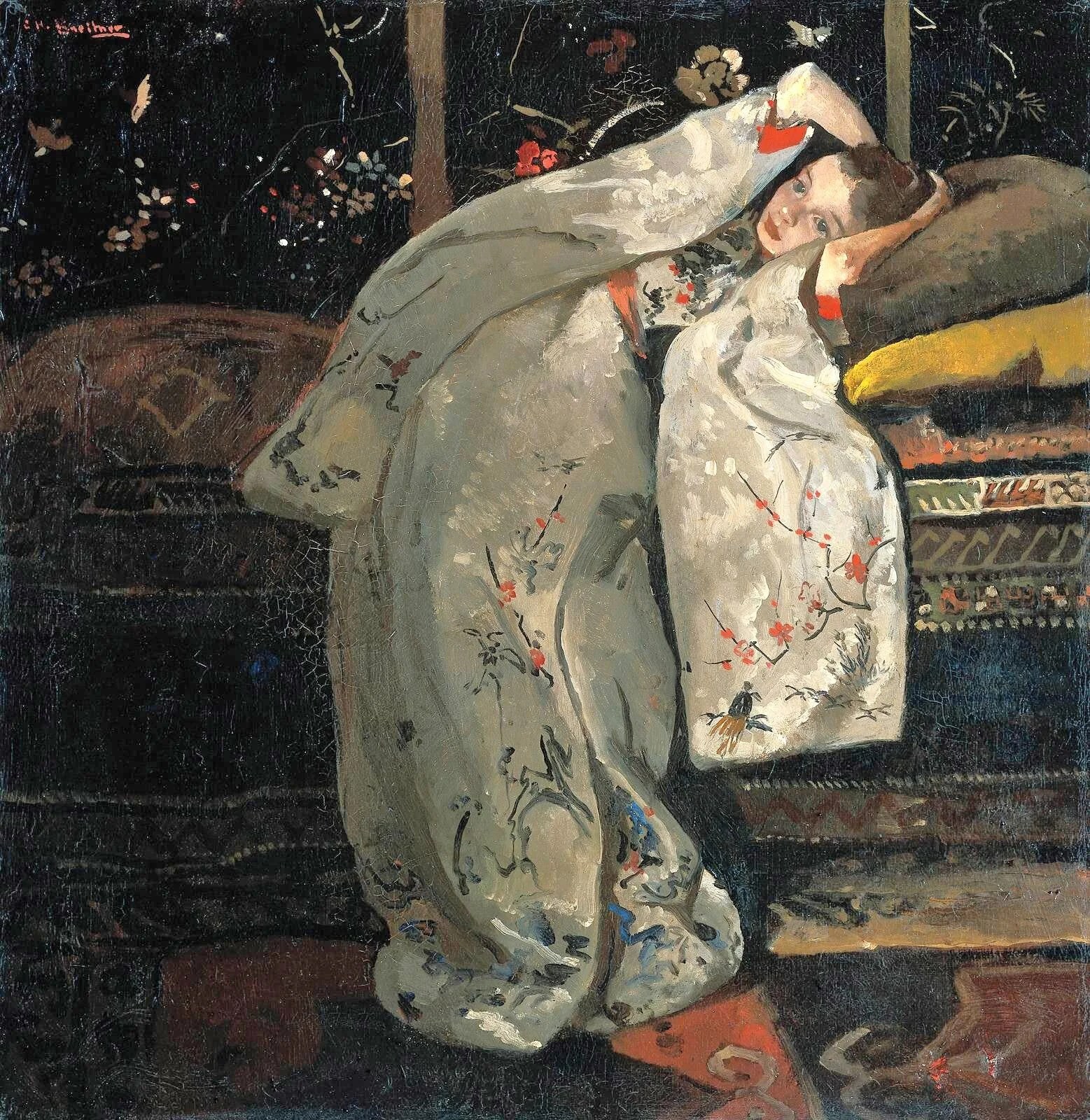
Girl in a White Kimono (Geesje Kwok), 1894 by George Breitner.
As an example of the influence of Japan in Europe at this time, the young girl wears a kimono in front of a floral screen. Van Gogh was fascinated with Japanese art and culture and was a contemporary (if not necessarily an admired one) of Breitner.
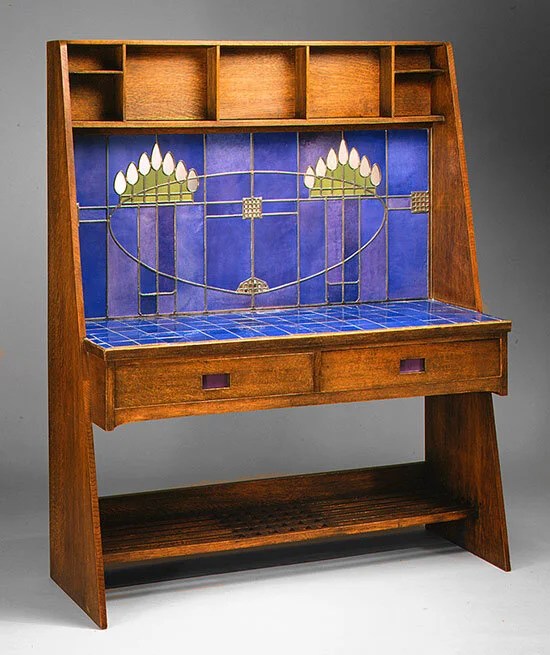
Washstand, 1904 by Charles Rennie Mackintosh.
This beautiful washstand was designed as part of the furnishings for a house he designed called Hill House. The owner of the house also owned a series of tea rooms that were designed by Mackintosh and company.
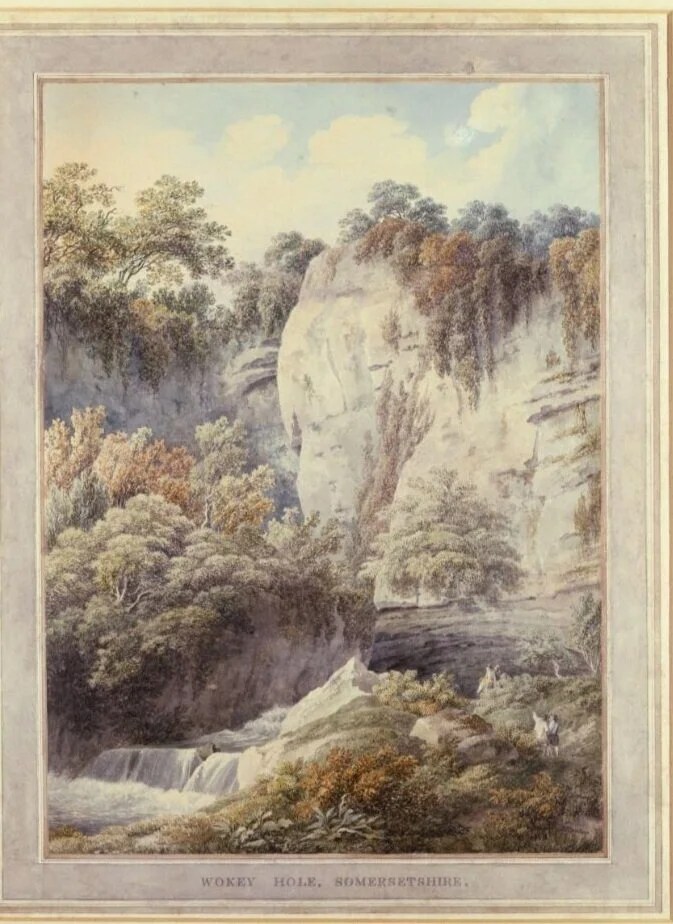
Wokey Hole, near Wells, Somerset, c.1794 by Michael Angelo Rooker.
Rooker helped make watercolor a viable medium for serious artists. Before he concentrated on it, it was considered beneath a serious artist.
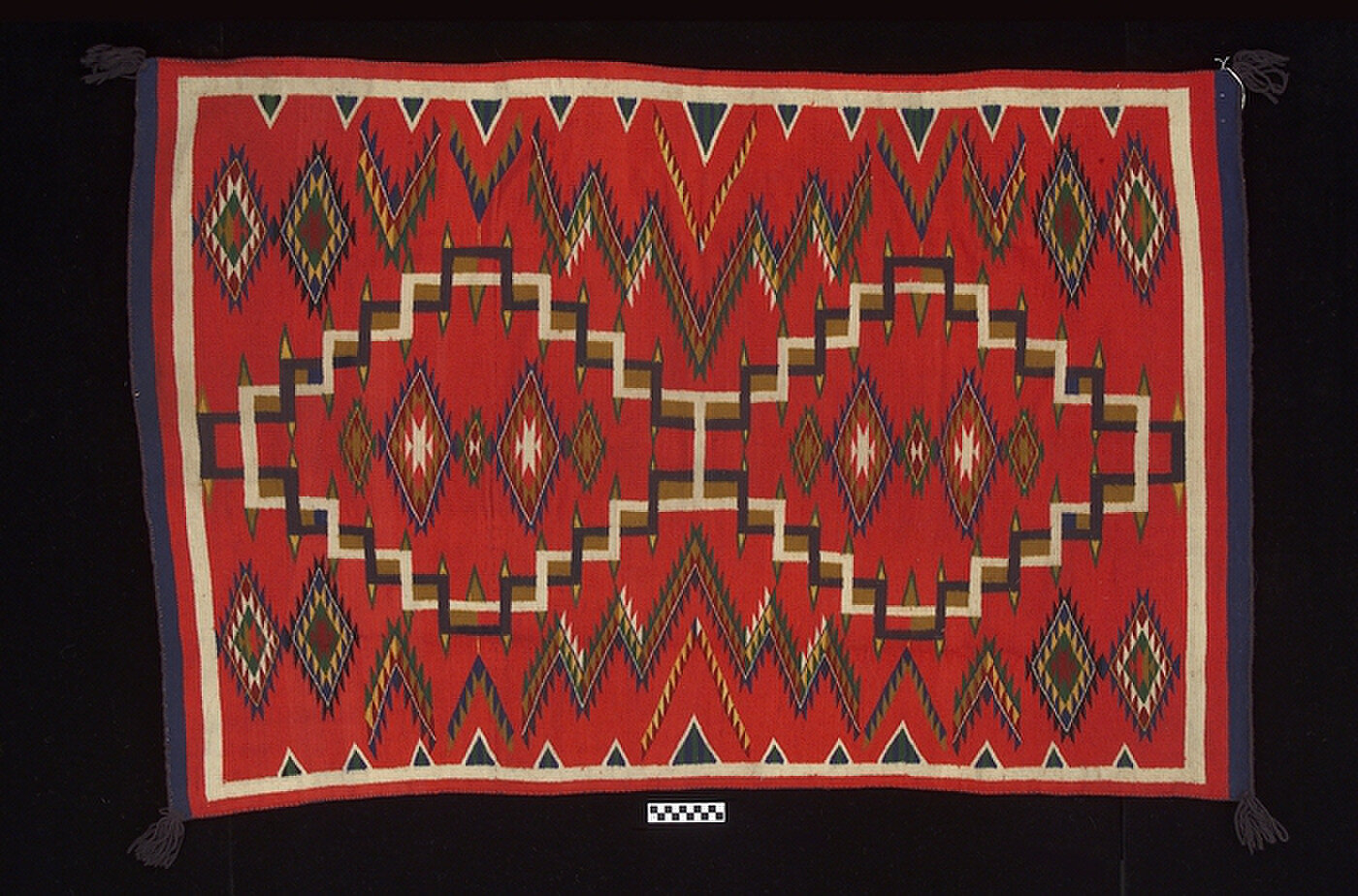
Navajo Blanket, 1881 from New Mexico, Smithsonian Center for Education and Museum Studies.
In the 17th century sheep were introduced to the American Southwest by the Spanish. Navajo women used designs learned from Mexico and expanded upon them until they created their own unique designs.
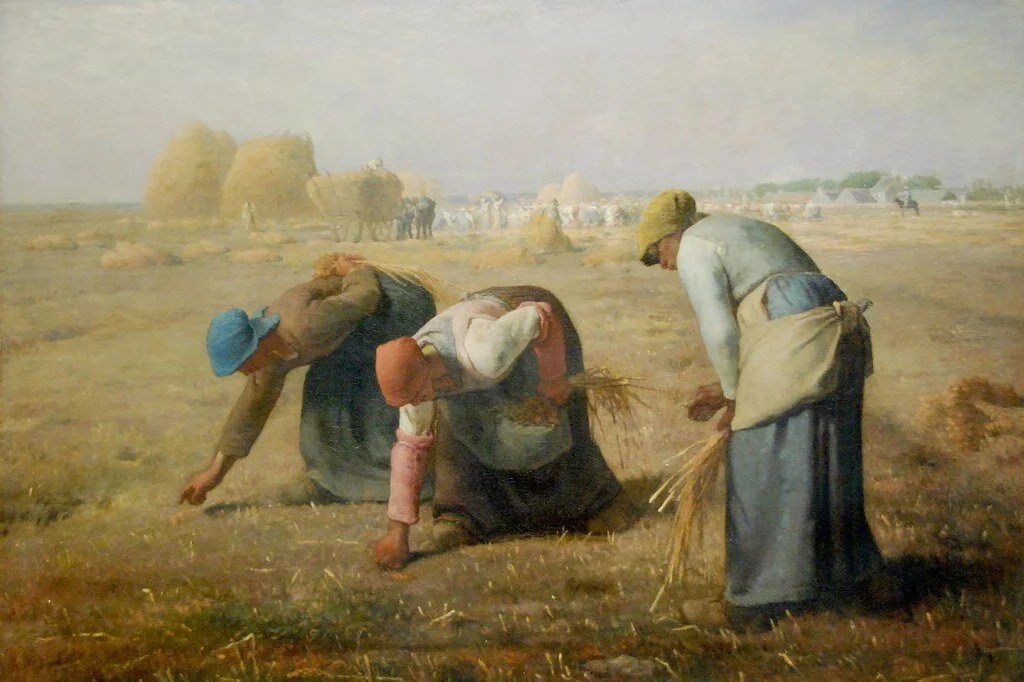
The Gleaners by Jean-Francois Millet.
The Gleaners are picking up the last little remains of the harvest. Millet sets the women against a broad horizon and thereby lends a majesty to their work. This was on purpose as Millet saw the work as a social commentary against the rich vs. the poor in society.
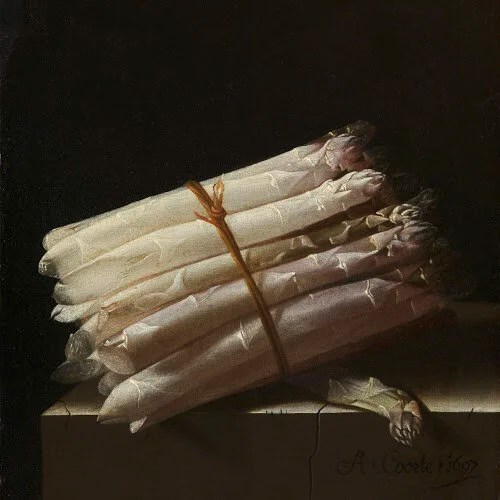
Asparagus by Adrian Coorte (active 1683-1707).
Sometimes still life painters concentrated on a particular item in order to give it their complete attention and immerse themselves in rendering it as close to the real thing as possible.
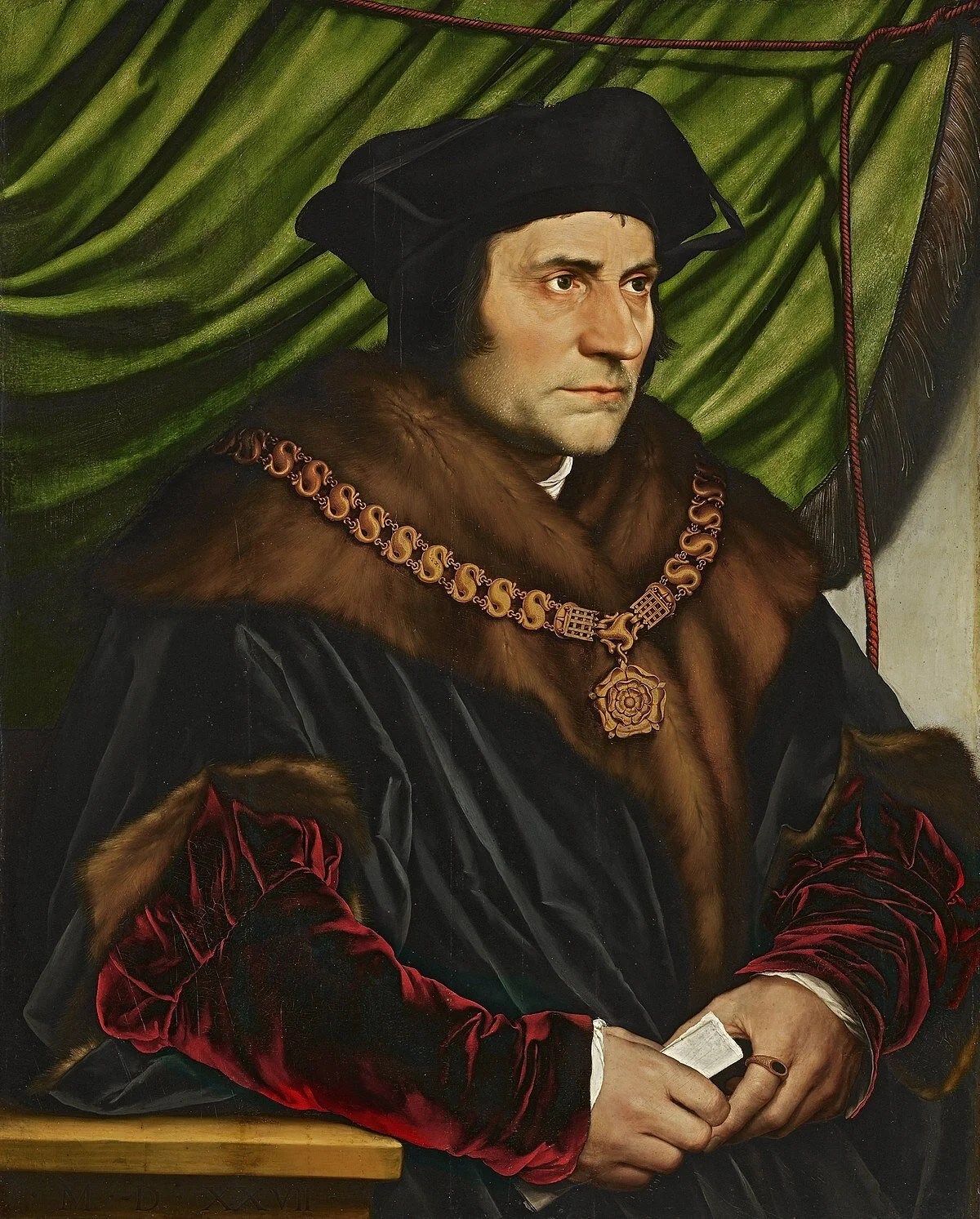
Sir Thomas More by Hans Holbein, The Frick Collection
Holbein was a 16th century German artist who became the court painter under Henry VIII. His style, with its attention to detail, was well suited for his later work in miniature. The Tudor Rose
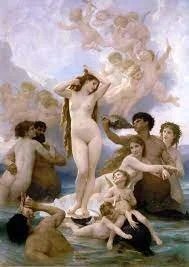
La Naissance de Vénus (Birth of Venus)1879 by William-Adolph Bouguereau.
Very similar in composition to Botticelli’s work. Bouguereau had a very successful career. His realistic style appealed to a large number of people. A contemporary of Degas and Monet; they even conceded his extreme popularity.
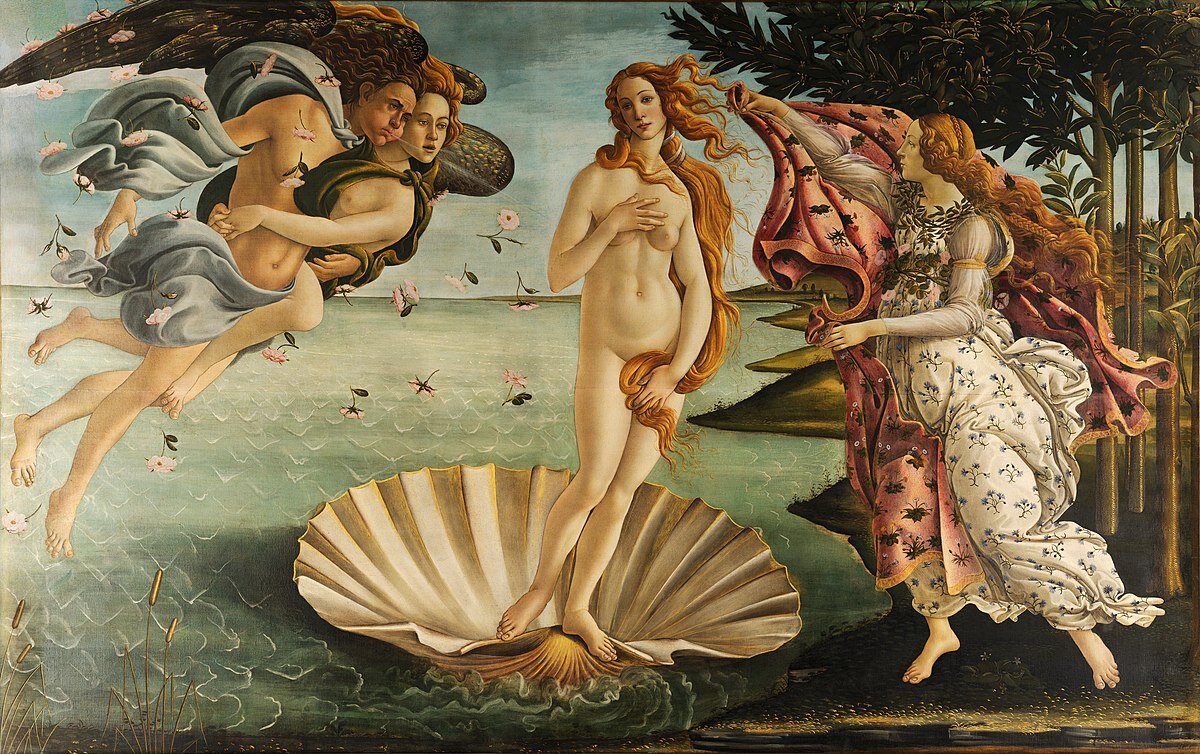
Birth of Venus, c. 1485-86 by Sandro Botticelli.
One of the most famous of the Italian Renaissance paintings it is one of the most frequent images, out of thousands, when a likeness of the Greek goddess Venus (Aphrodite) is referenced.

