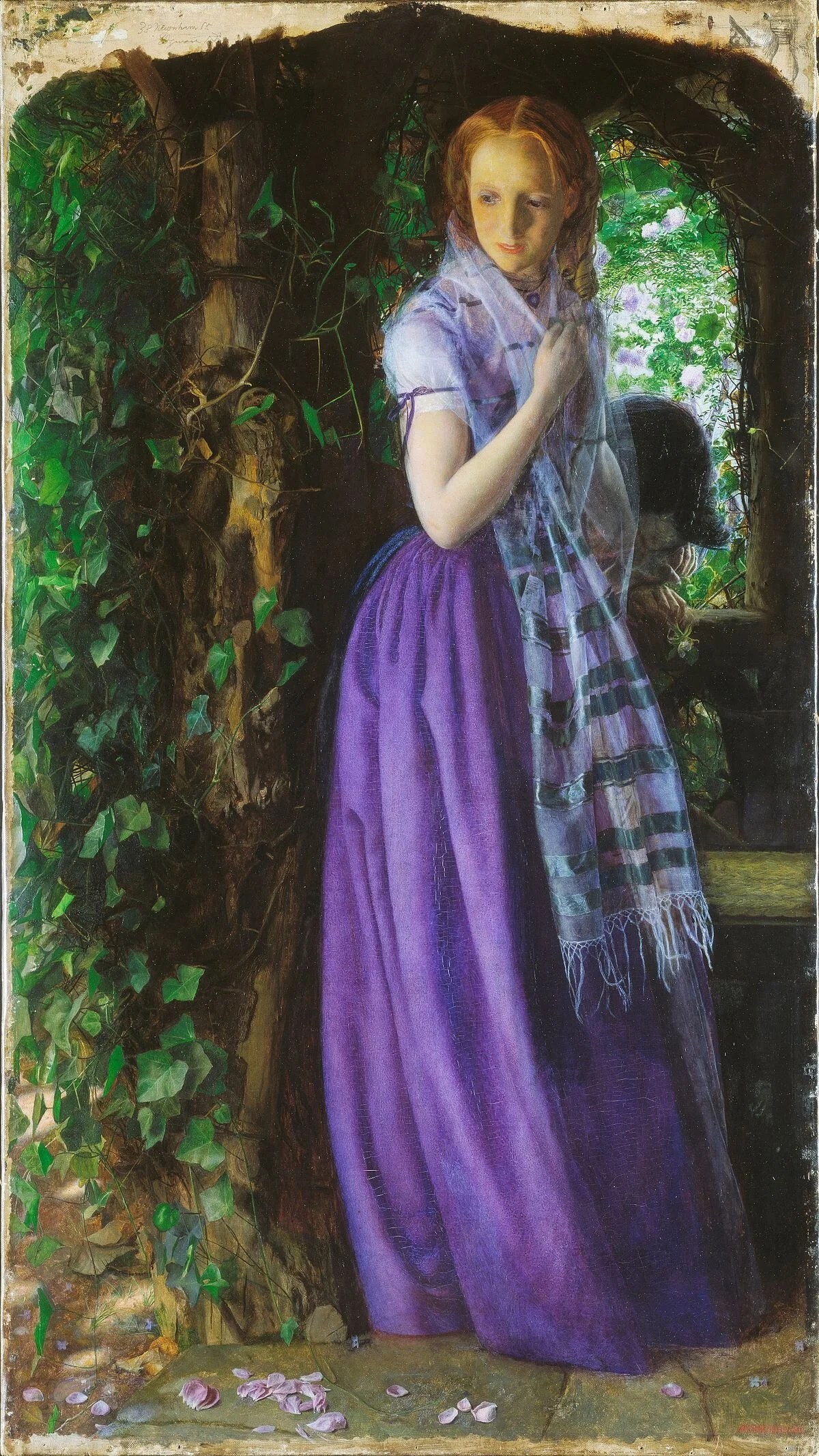
April Love, 1855-56 by Arthur Hughes.
Hughes accompanied this painting with a poem by Tennyson called The Miller’s Daughter. I love the vibrant purple of the dress, it just pops out of the painting.
April Love, 1855-56 by Arthur Hughes.
Hughes accompanied this painting with a poem by Tennyson called The Miller’s Daughter. I love the vibrant purple of the dress, it just pops out of the painting.
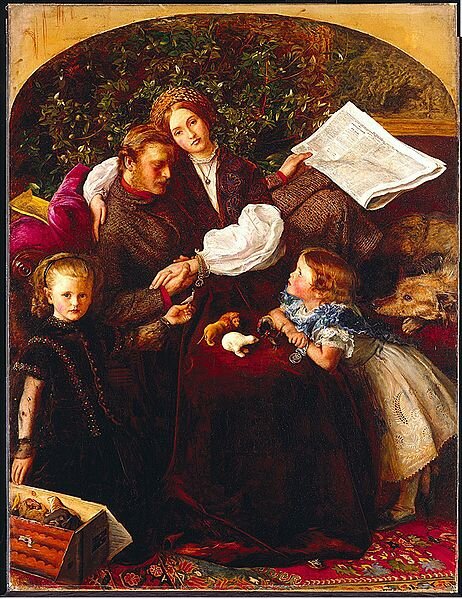
Peace Concluded, 1856 by John Everett Millais.
This scene marks the end of the Crimean War and the return home of the soldier to his family.
On the mother’s lap, four animals from the toy Noah’s Ark represent the four belligerents: Britain (lion), Russia (bear), the Ottoman Empire (turkey), and France (rooster).
The father holds the newspaper that announces the end of the war.
This post is in honor of all the fathers (and mothers) who sadly cannot celebrate with their families because they are still fighting a war.
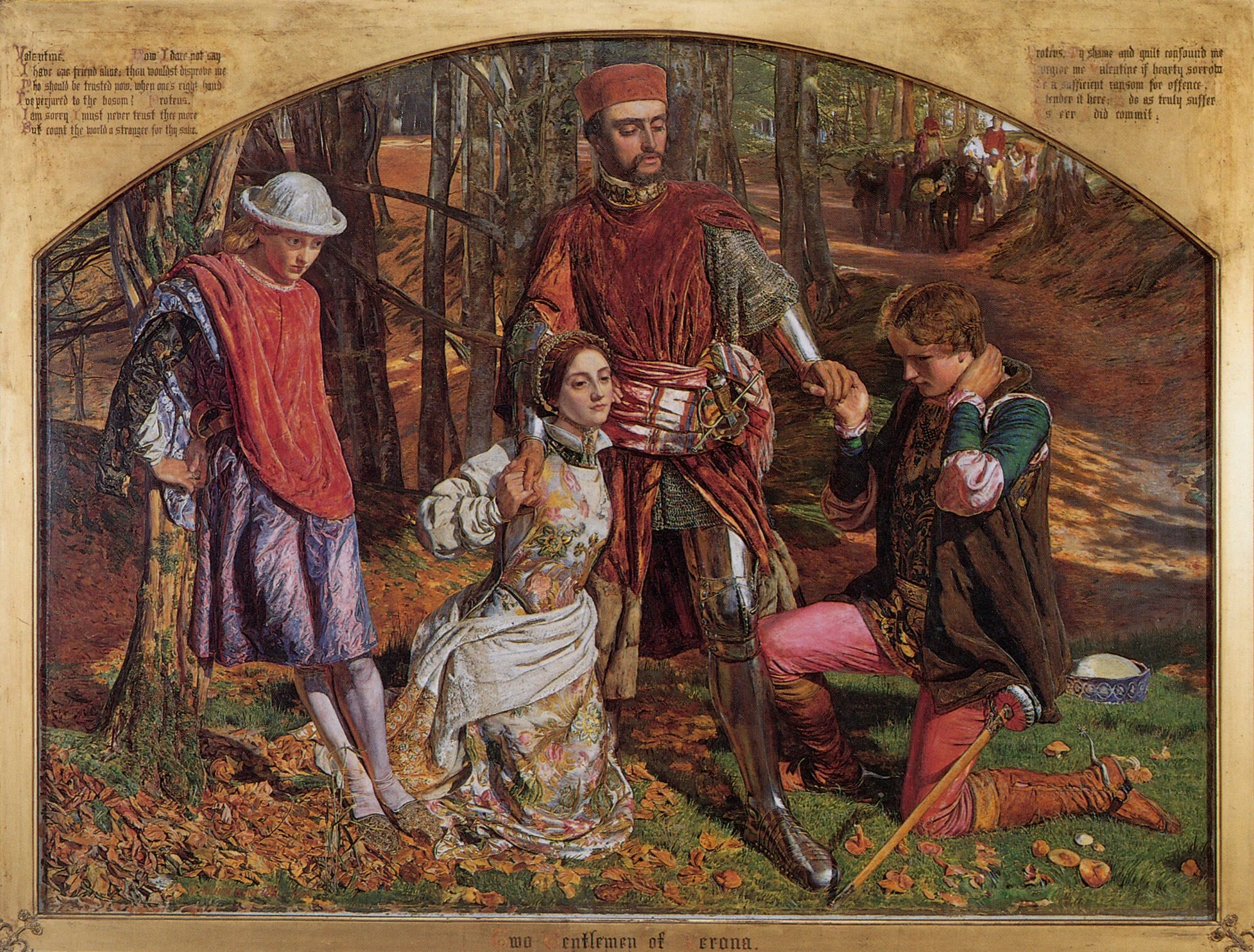
The Two Gentleman of Verona Valentine Rescuing Sylvia from Proteus by William Holman Hunt.
One of the original Pre-Raphaelites, Hunt takes his subject from a Shakespeare play. The PRB liked to get their subjects from literature and to paint out of doors in natural light. I’m sure the model for Sylvia Elizabeth Siddal, had sore knees.
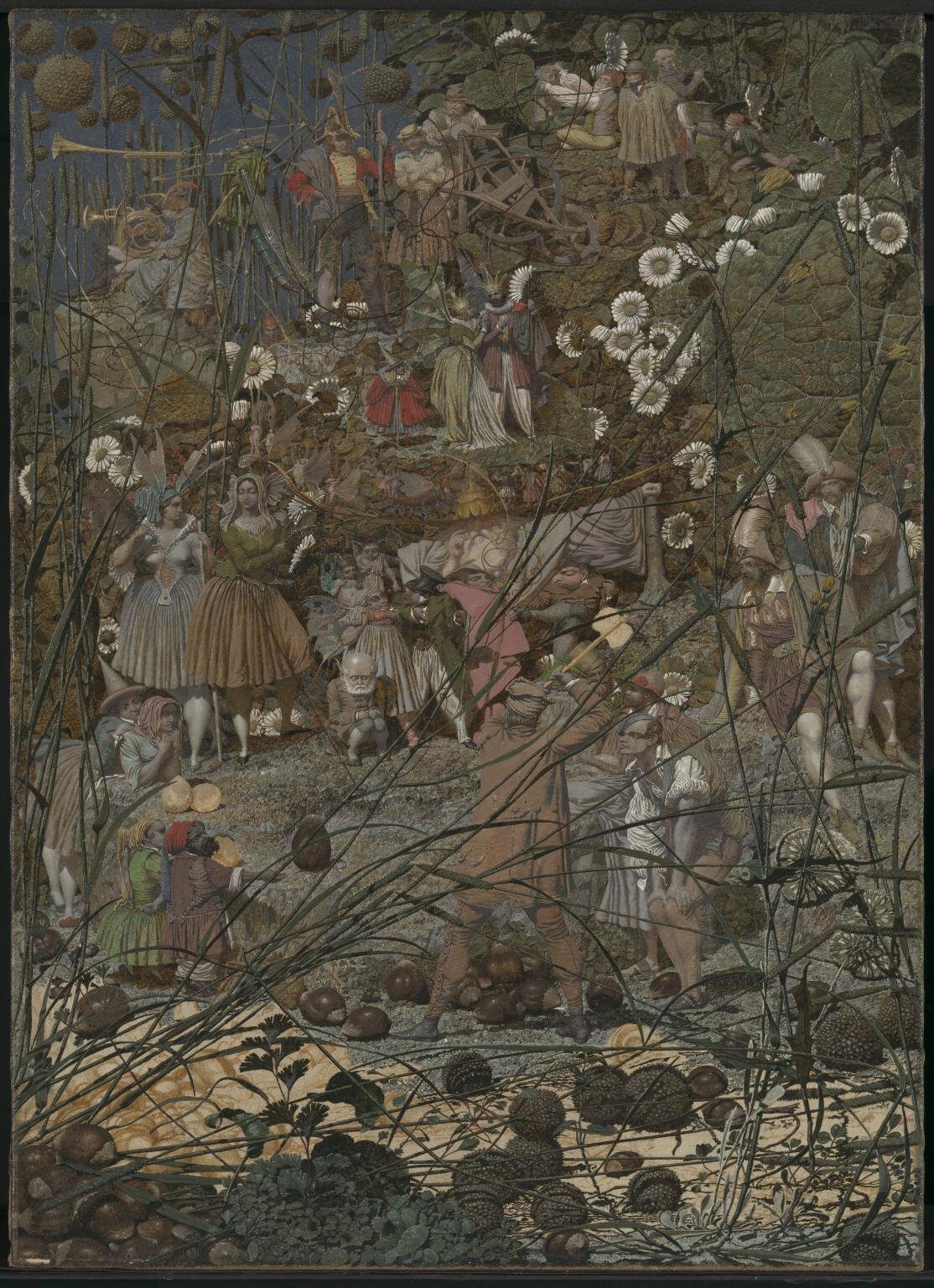
The Fairy Feller’s Master-Stroke, 1855-64 by Richard Dadd.
Richard Dadd was known as “Mad Dadd” he spent much of his life in an insane asylum after murdering his father whom he was convinced was the devil. His intricate paintings took him years to complete.
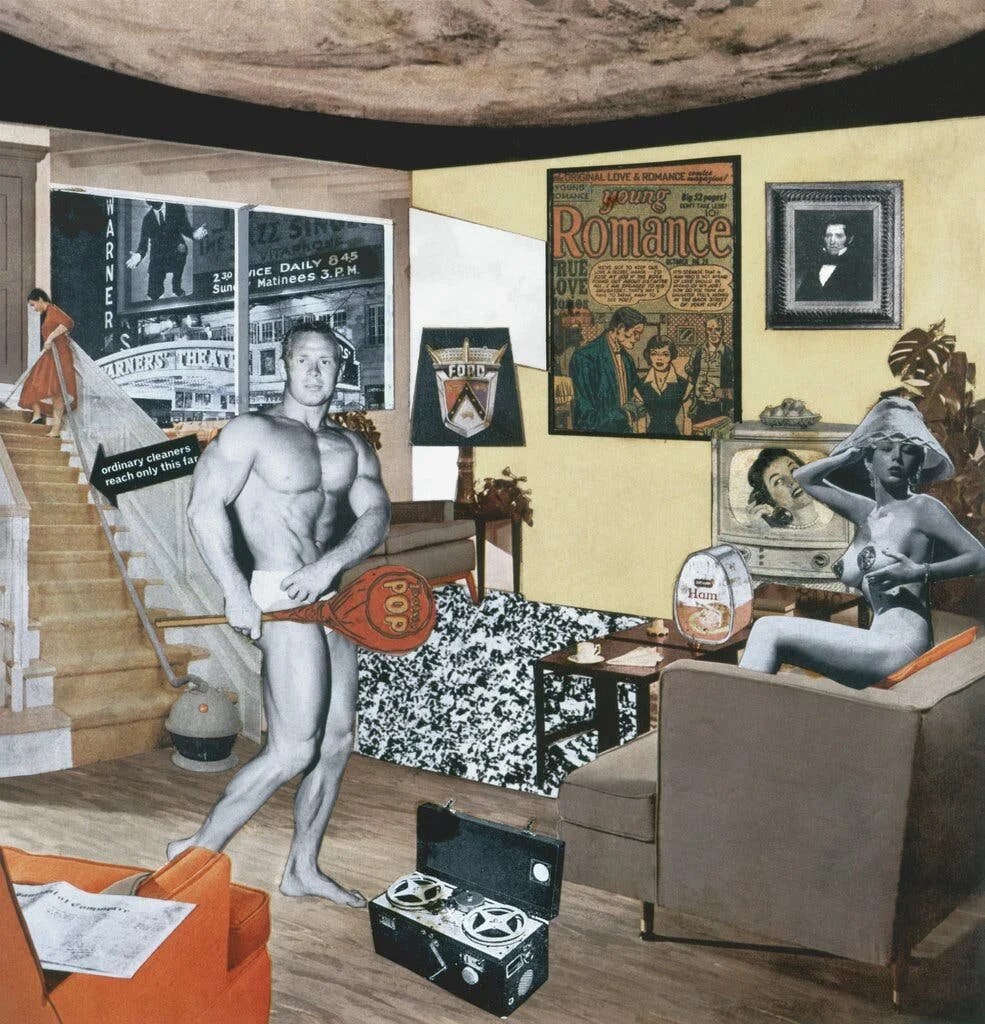
Just What Makes Today’s Homes, So Different, So Appealing? , 1956 by Richard Hamilton.
Hamilton’s collage about overblown 1950’s consumerism also hailed the use of the word Pop in reference to art. He is still an innovator, creating his new art with computers.
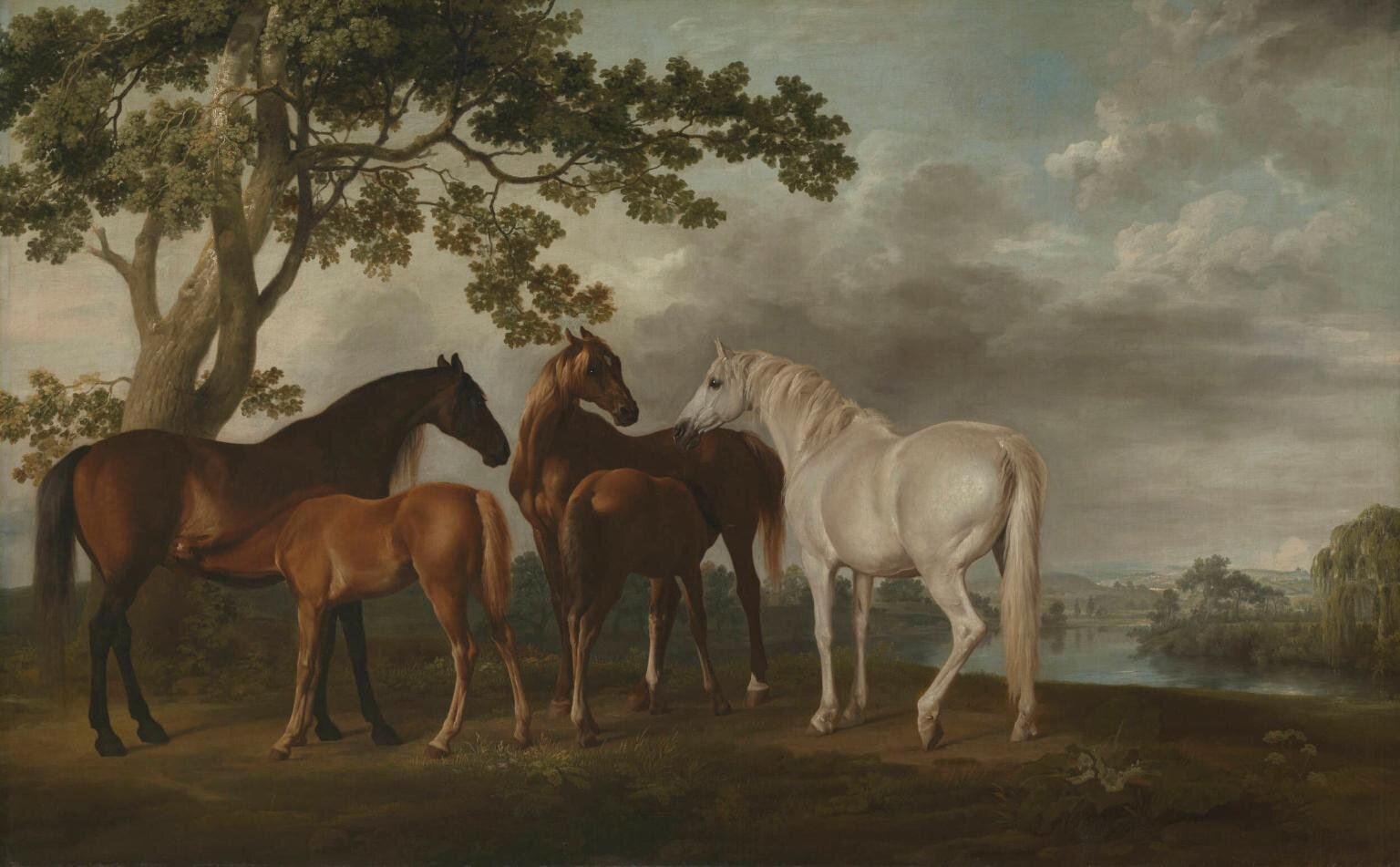
Mares and Foals in a River Landscape, 1763-8 by George Stubbs.
Stubbs spent hours studying the musculature and skeletal structures of the animals he painted in order so that his portrayals would be as life-like as possible.
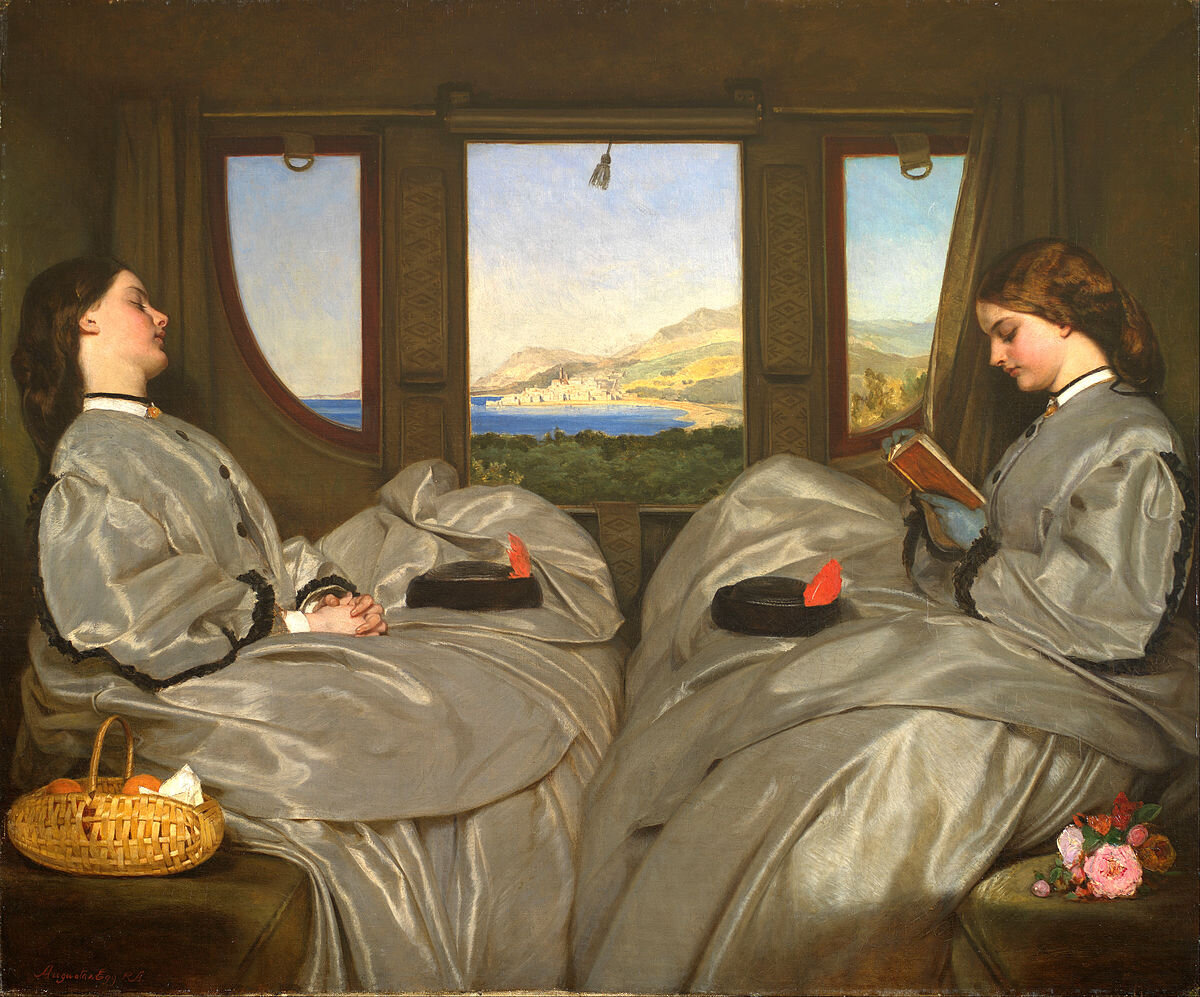
The Travelling Companions by Augustus Leopold Egg.
Egg was an actor and his dramatic training shows in his artwork. He painted subjects from literature. He was a close friend of Charles Dickens and performed in his stage productions.
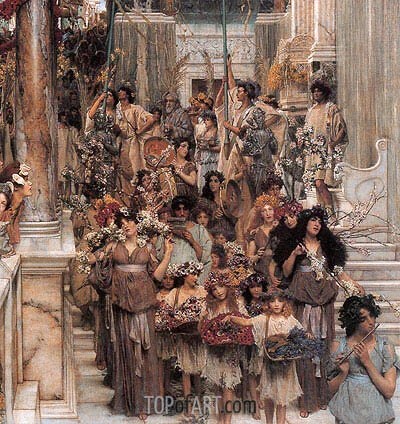
Spring, 1895 byLawrence Alma Tadema, The J. Paul Getty Museum, Malibu CA
In a land of clear colours and stories,
In a region of shadowless hours,
Where Earth has a garment of glories
And a murmur of musical flowers.
This poem by Algernon Swinburne (a favorite of Victorian painters especially the Pre-Raphaelites) is engraved on the frame of the painting.
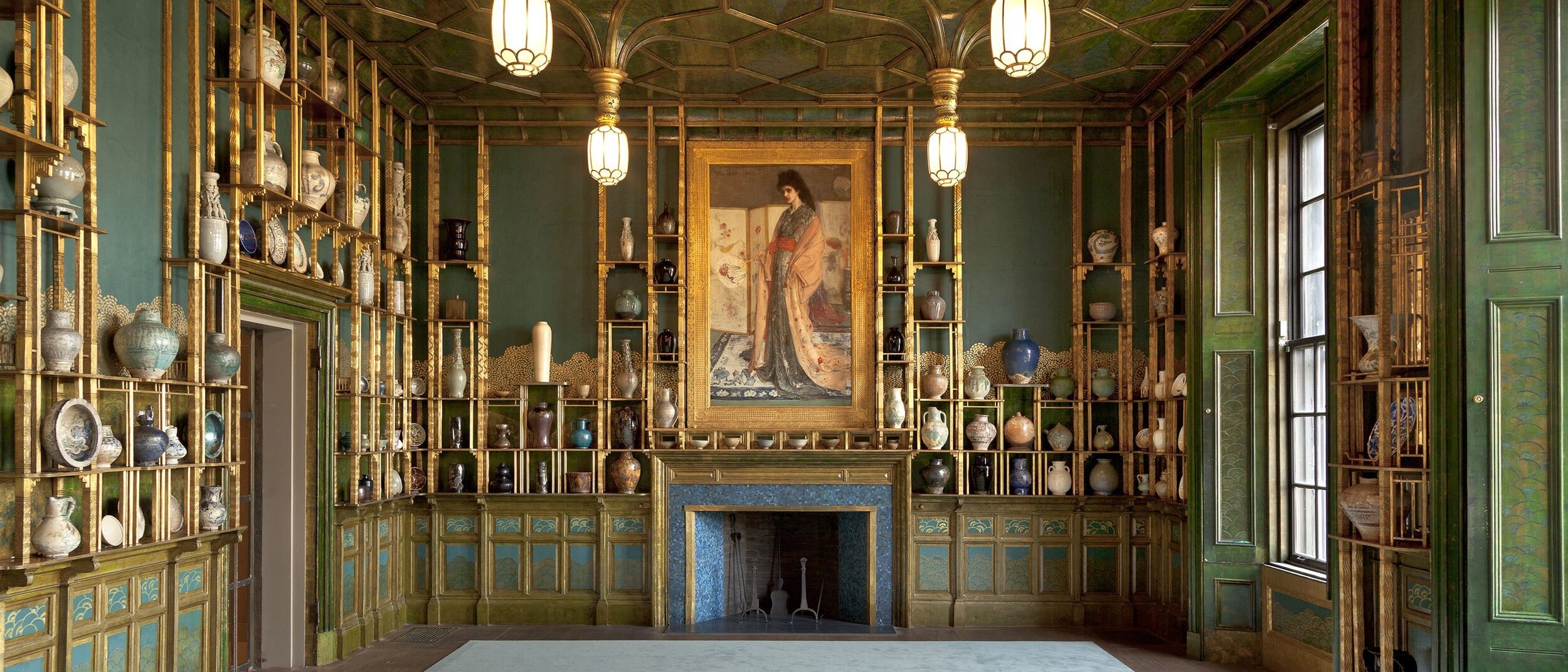
The Peacock Room, 1877 by James McNeill Whistler, Freer Gallery, Smithsonian.
Whistler, in his usual flamboyant and arrogant manner, took his decoration of this London dining room to such an extreme, he angered and the patron and made their argument public.
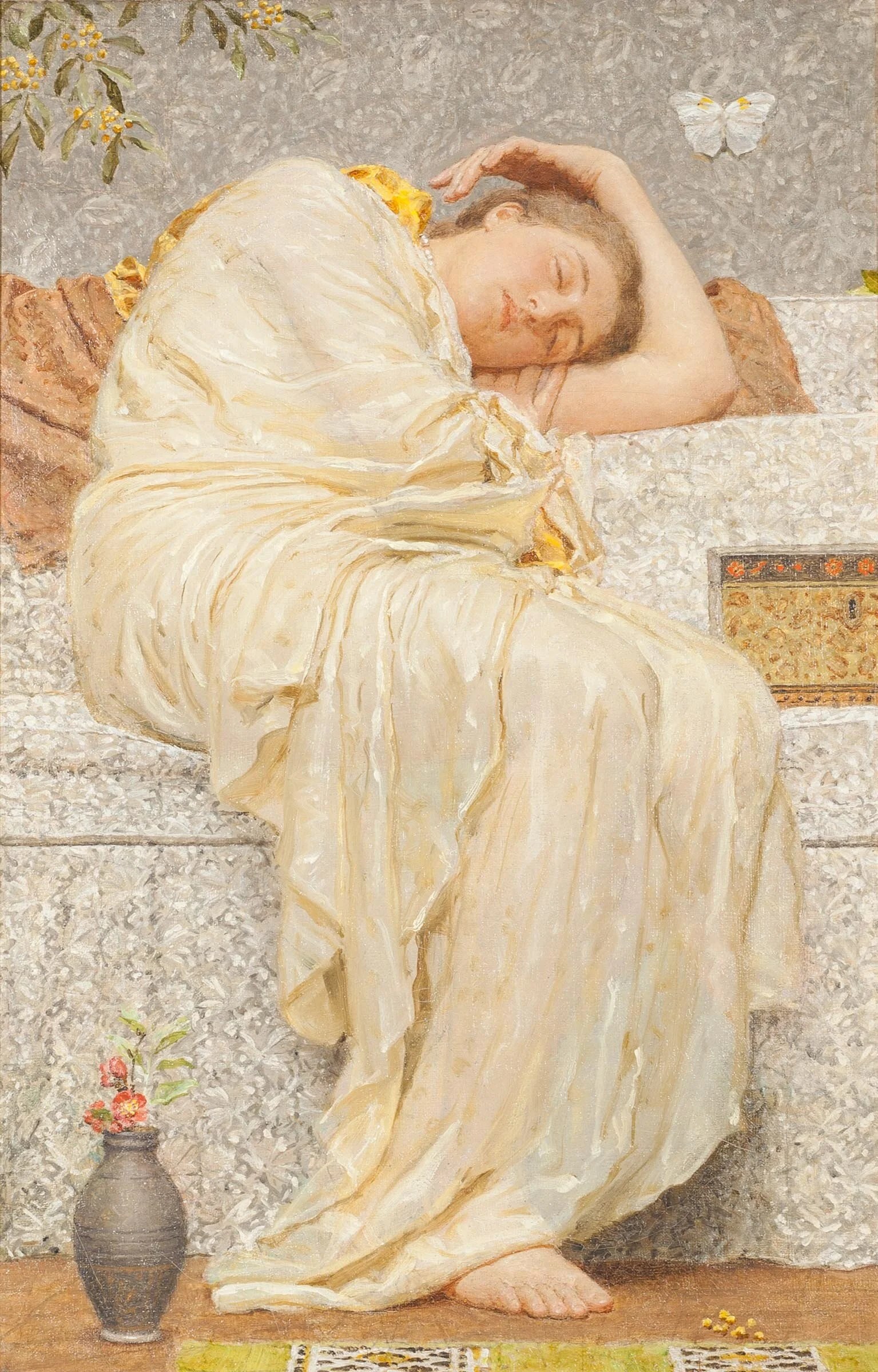
Acacias, c.1880 by Albert Moore.
Moore was influenced by the Elgin Marbles (Parthenon statuary which had recently arrived in London at the British Museum – where they remain and are the source of much controversy).

