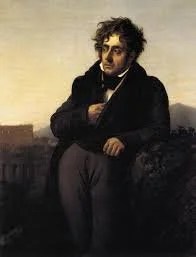
Chateaubriand, 1809 by Anne-Louis Girodet de Roussy-Trioson.
Chateaubriand was an important French historical figure and writer whose English chef would make him more famous than his exploits.
Chateaubriand, 1809 by Anne-Louis Girodet de Roussy-Trioson.
Chateaubriand was an important French historical figure and writer whose English chef would make him more famous than his exploits.
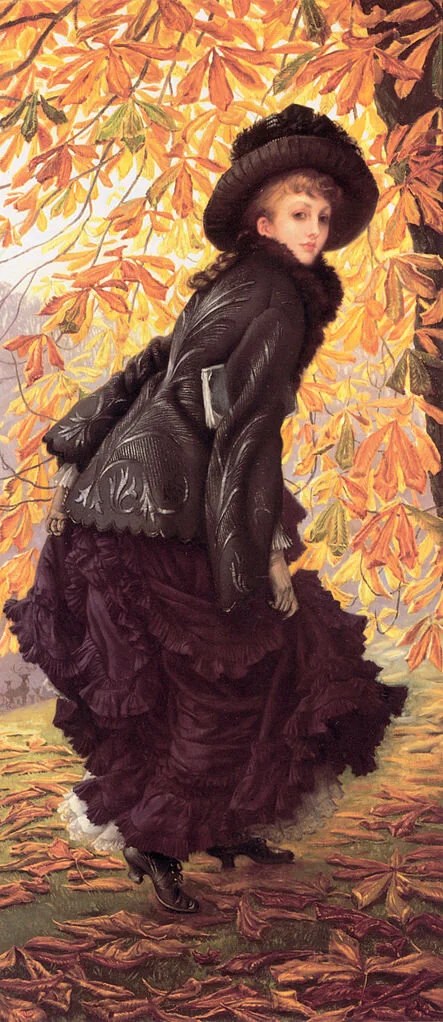
October, 1877 by James Tissot, Montreal Museum of Fine Arts
Another example of a Tissot model Kathleen Newton, the same one (I believe) as here. Often artists used the same models, even the same costumes as similar garments turn-up again and again.
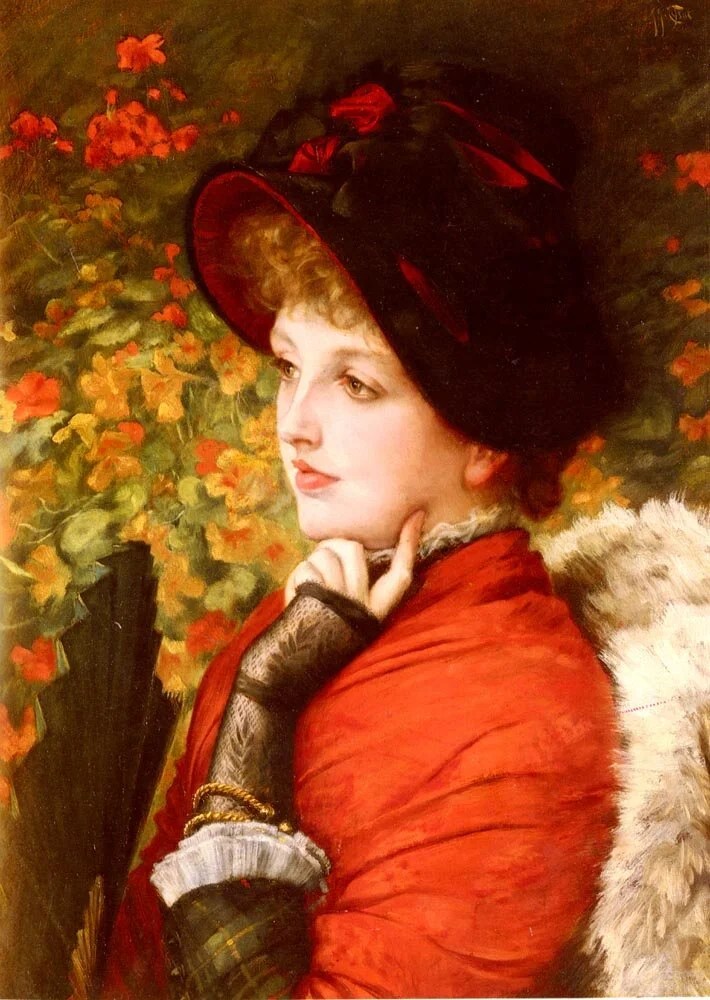
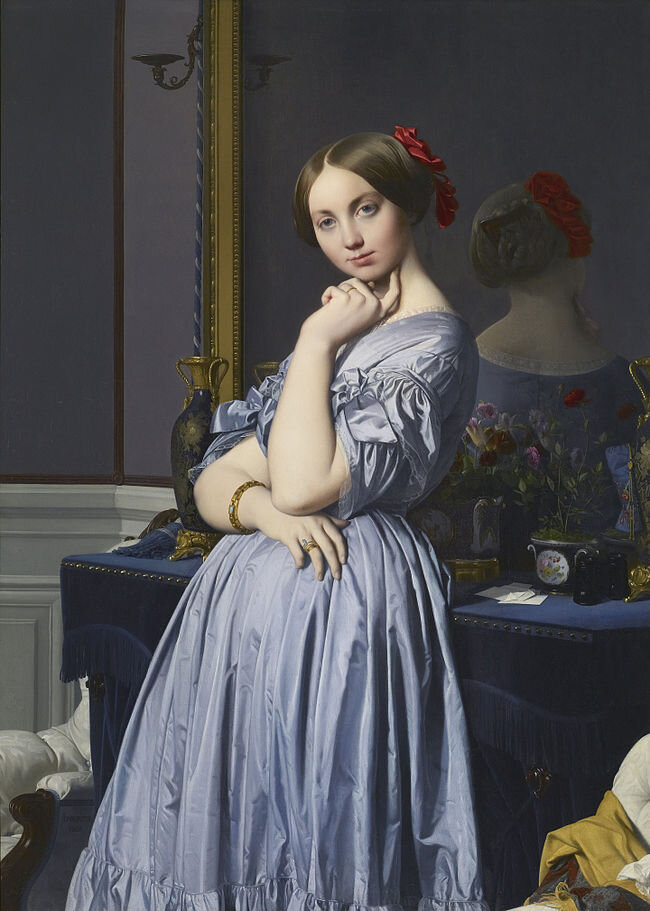
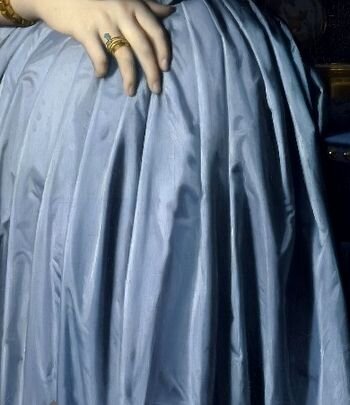
Louise de Broglie, The Countesse d’Haussonville by Jean-Auguste-Dominique Ingres, The Frick Collection
Ingres was a French 19th Century painter known for his realism. I am particularly fond of his fabrics – so realistic and so lush.
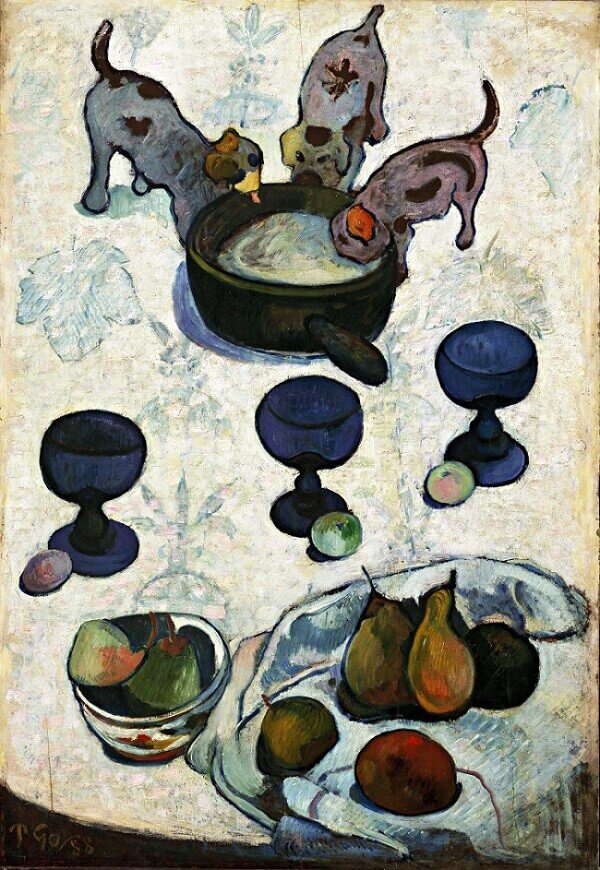
Still Life with Three Puppies, 1888 by Paul Gauguin, the Museum of Modern Art, NYC.
This was painted by Gauguin the same year he lived with van Gogh.
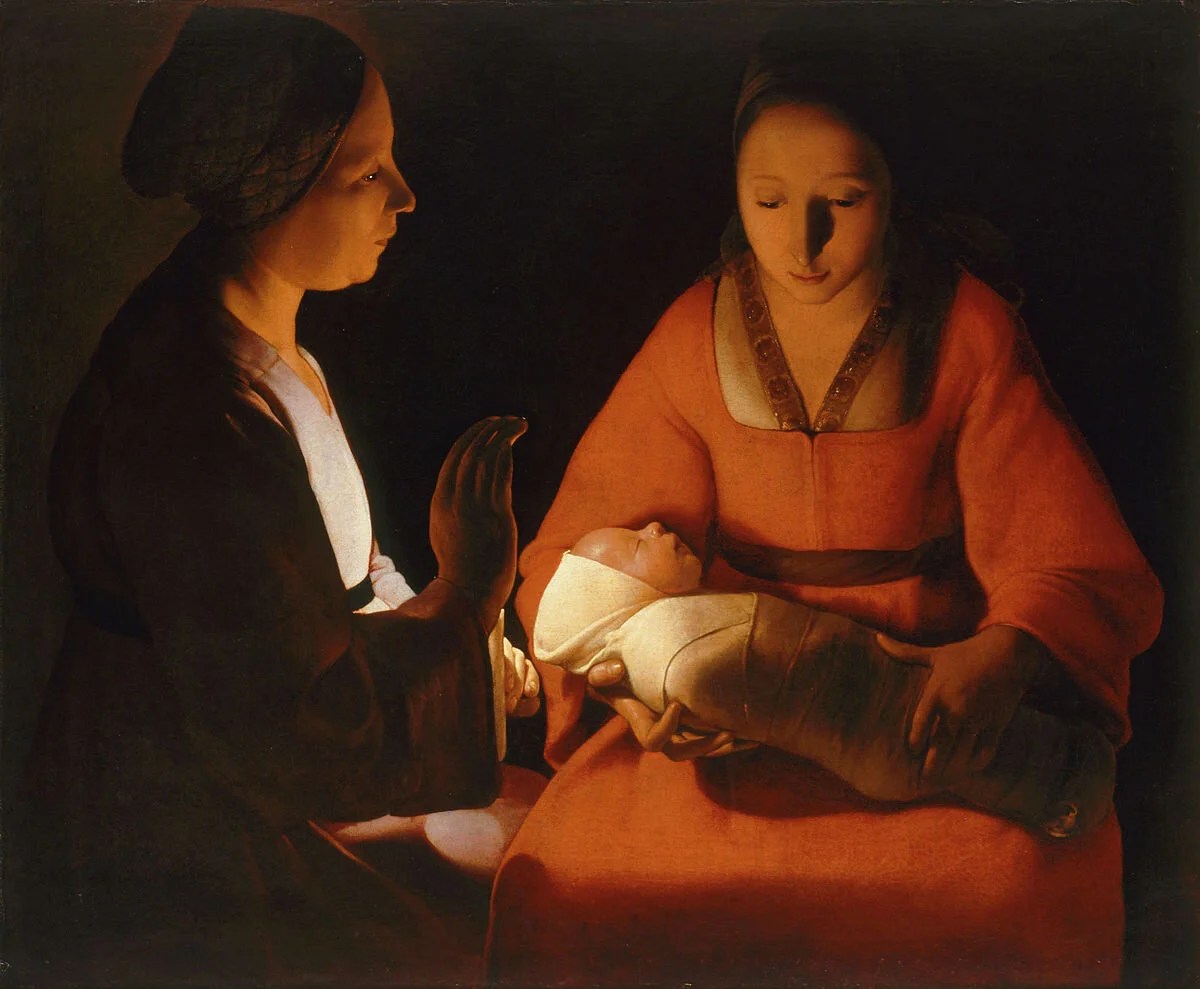
The New-born, c. 1640 by Georges de la Tour, Musee des Beaux Arts, Rennes.
Often artists would mask religious scenes by setting them in the present and leaving out all of the traditional “signs” of a religious nativity scene such as a halo on the mother and child, but the calm the beauty and the presence of a figure who could be perceived as St. Anne, seem to indicate a religious meaning.
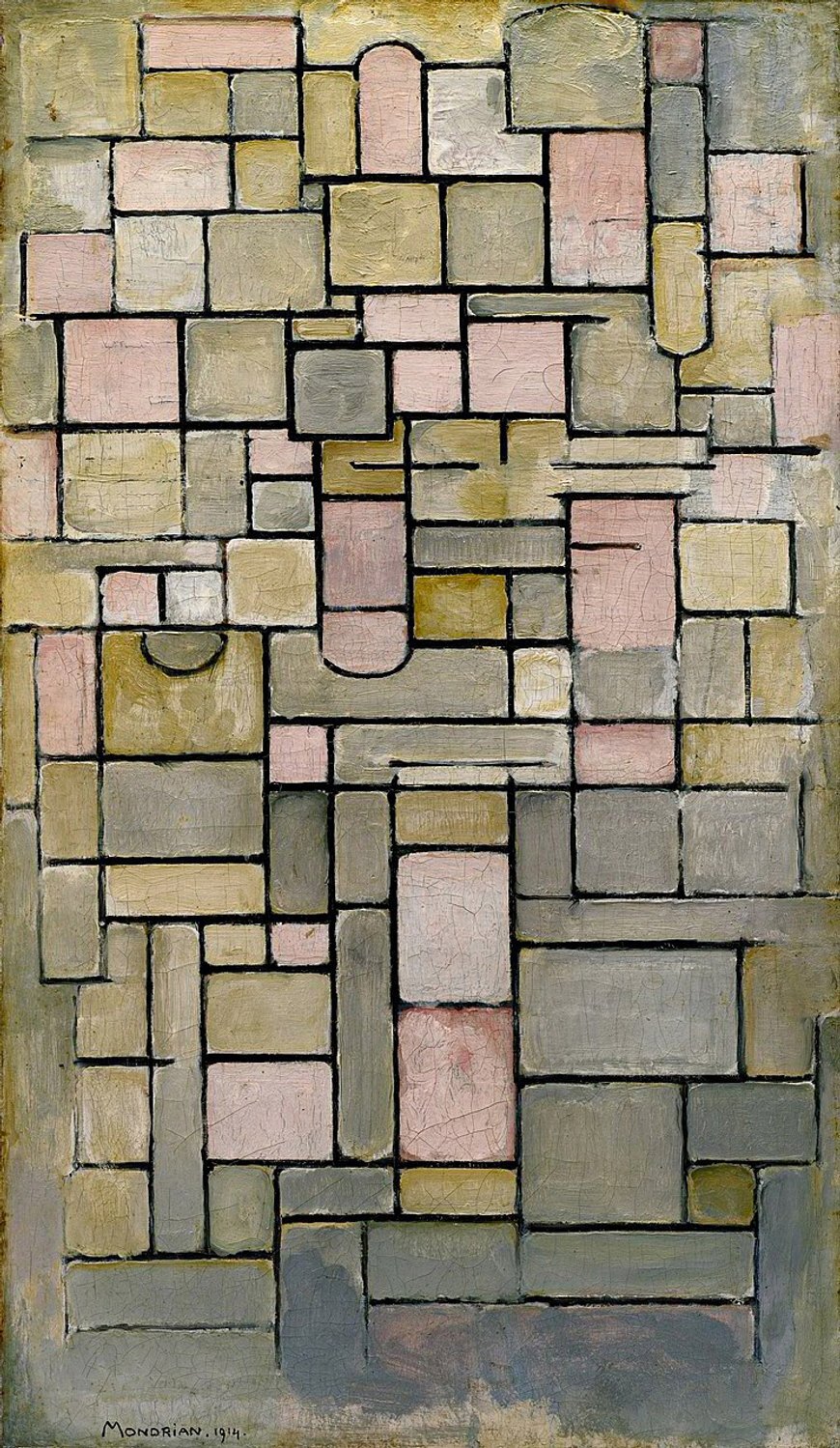
Composition 8, 1914 by Piet Mondrian, The Guggenheim Museum, NYC.
This is Mondrian’s interpretation of a tree after seeing the cubist work of Braque and Picasso. He eventually took it to an even more abstract level.
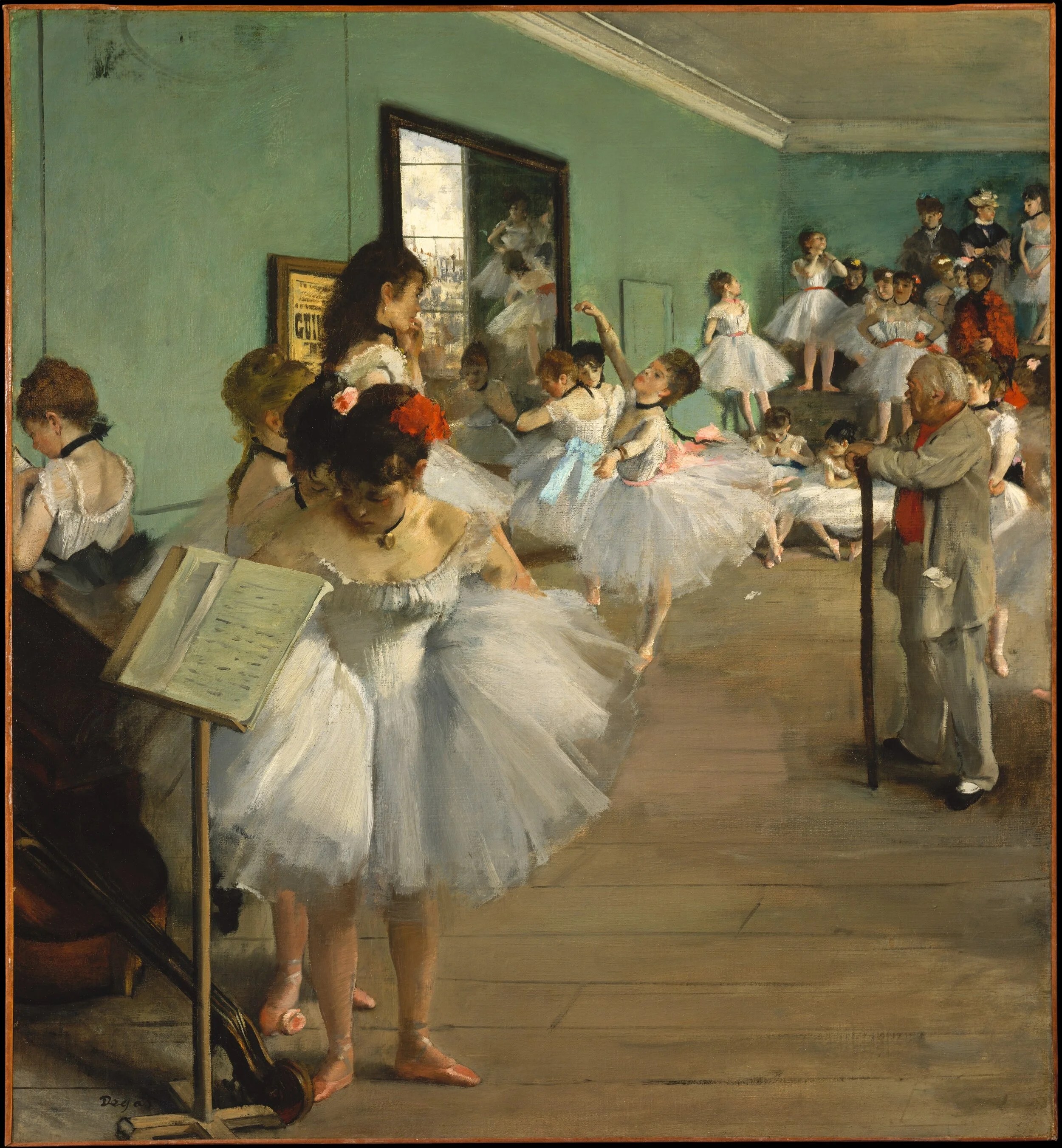
Ballet Rehearsal 1874 by Edgar Degas. The Metropolitan Museum.
The teacher in these paintings was actually a dancer and friend of Degas and not the class teacher. His name was Jules Perrot.
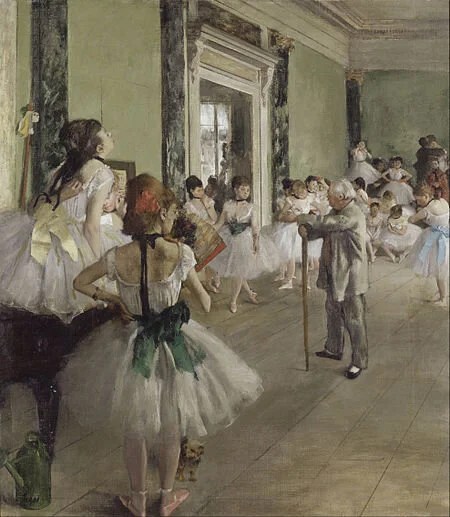
La classe de danse (The Dancing class), c.1873-75 by Edgar Degas, Museé d’Orsay, Paris.
Degas had access to all areas of the dancer’s world and took advantage of this capturing them at rest, rehearsing, performing and dressing. They were a subject he returned to frequently over the years.
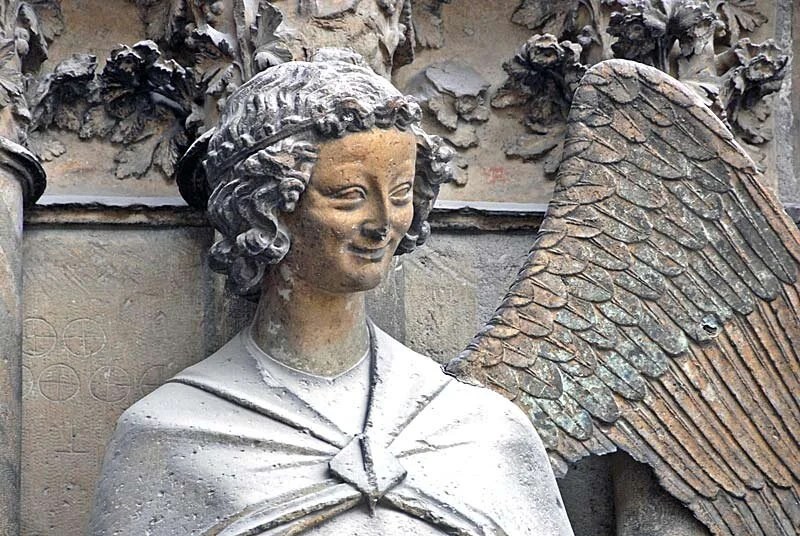
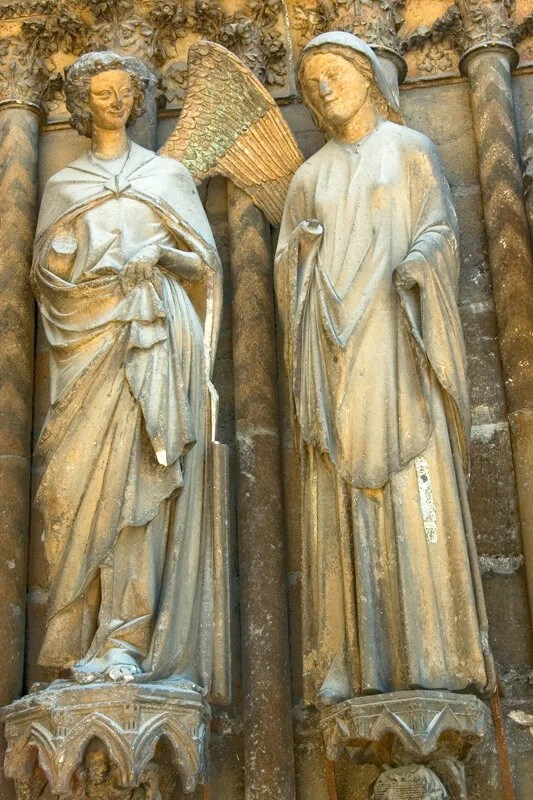
Archangel Gabriel, 13th Century AD, Notre Dame Cathedral, Reims,France.
Notre Dame at Reims is the first example of the High Gothic style of architecture. It is highly decorated with carving, sculpture and stained glass. It sustained a great deal of damage after the French Revolution and during WWII.
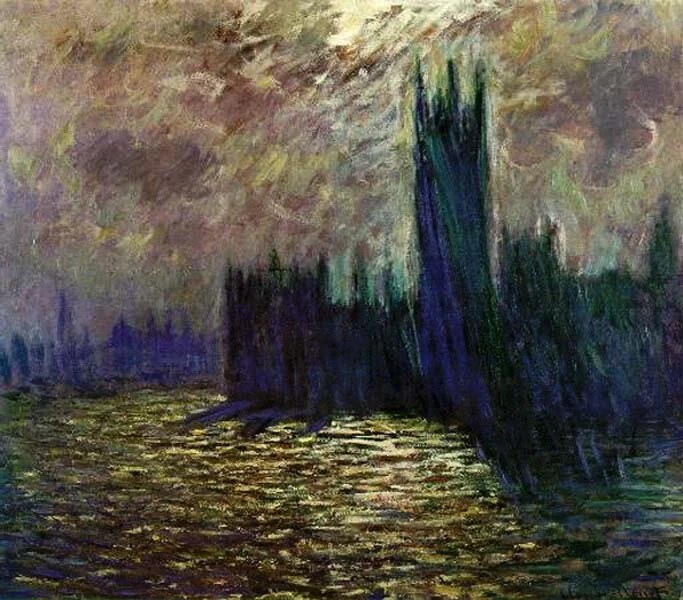
Houses of Parliament, London, 1905 by Claude Monet, Musee Marmottan, Paris.
Another of Monet’s views of Parliament. His goal was to paint the same thing in different light, which in turn would make a different impression, much darker, yet recognizable.


