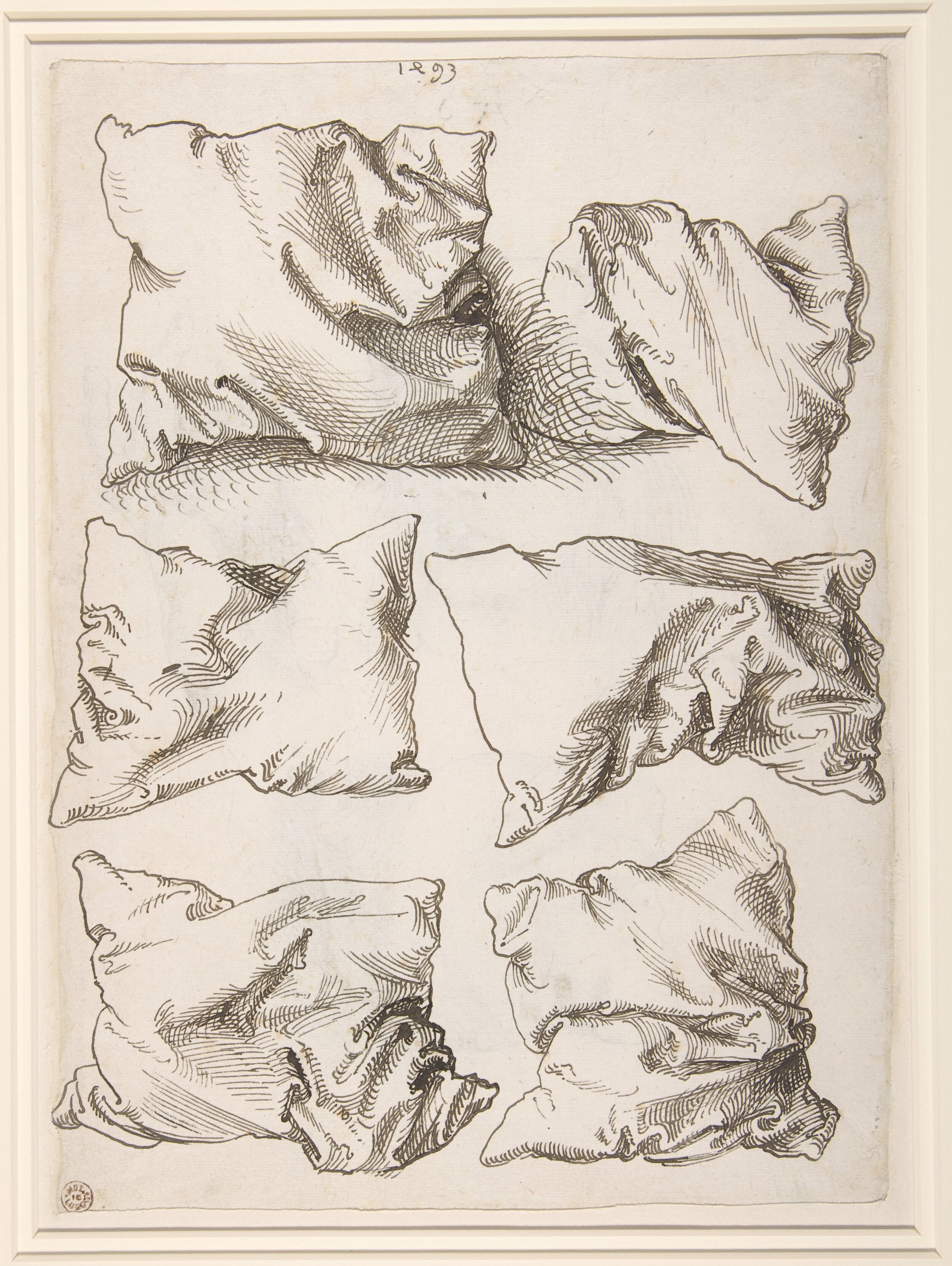
Sechs Kissen (Six Pillows), 1493 by Albrecht Dürer, The Metropolitan Museum of Art.
Dürer created this drawing as a study of shading by using cross-hatching, but it is also a study in drawing drapery.
Sechs Kissen (Six Pillows), 1493 by Albrecht Dürer, The Metropolitan Museum of Art.
Dürer created this drawing as a study of shading by using cross-hatching, but it is also a study in drawing drapery.
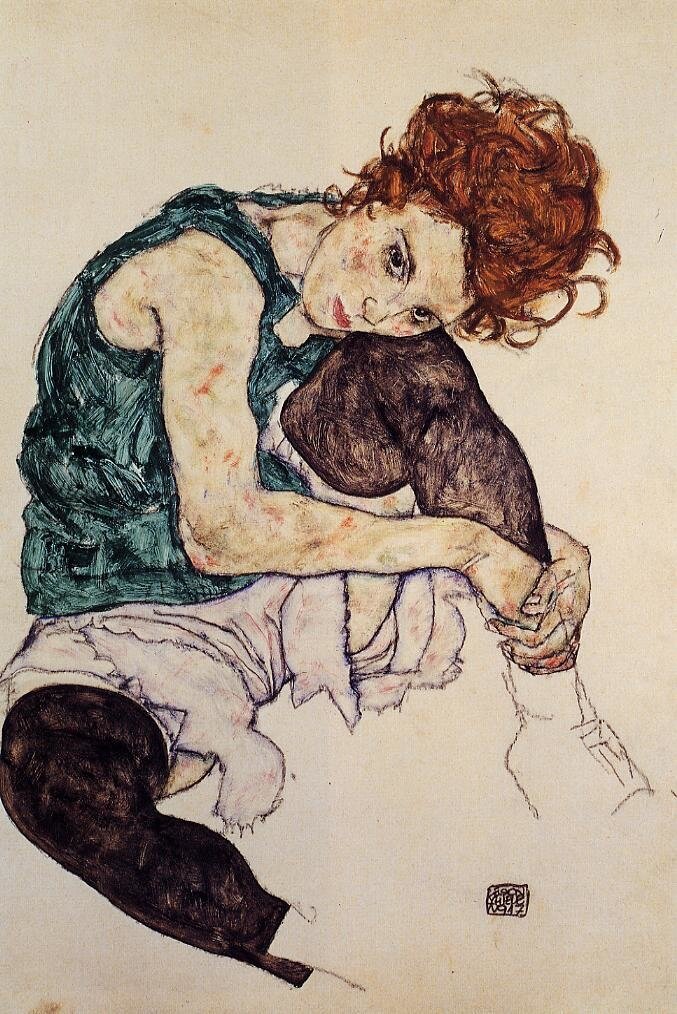
Seated Woman with Bent Knee, 1917 by Egon Schiele
Schiele was arrested and imprisoned for immoral artwork. His work was often more explicit than this example; his work is raw and uncompromising. He died at 28 from influenza.
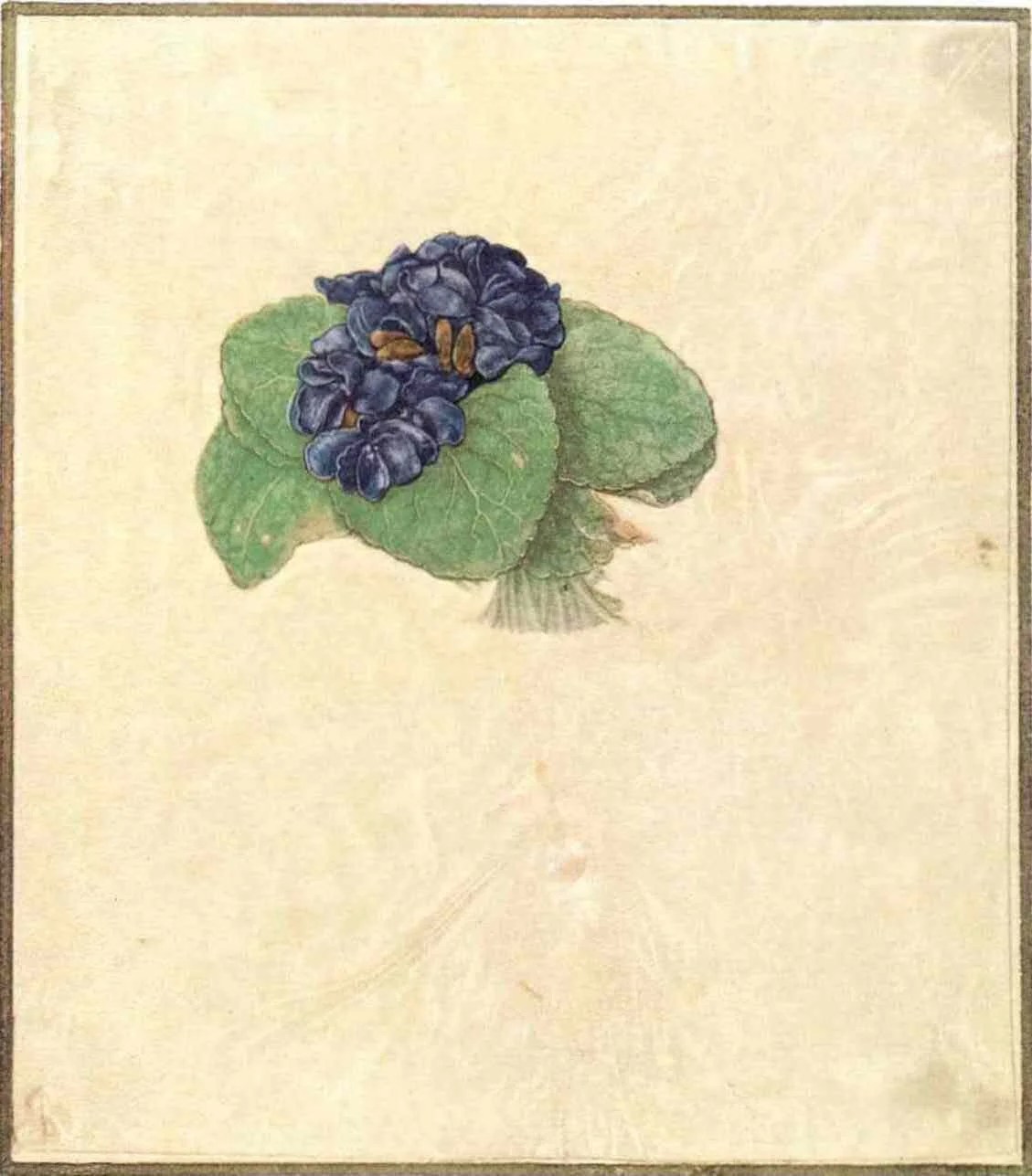
Nosegay of Violets, c.1503 by Albrecht Dürer.
Dürer’s paintings and engravings are still compelling and popular 500 years after he lived and worked. He is considered the greatest German artist of the Northern Renaissance for his paintings and most especially his graphic work. his skill came from apprenticeship in metalwork whose exactly methods made for highly detailed etchings and engravings.
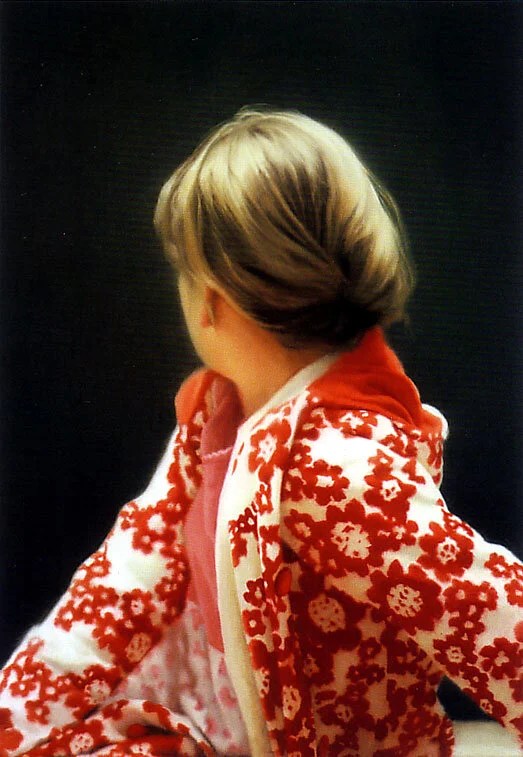
Betty, 1988 by Gerhard Richter, St. Louis Art Museum (copyright Gerhard Richter).
What looks to be a photograph is actually a painting of the artist’s daughter. It cannot be considered a true portrait when it is of the back of the subject but he lovingly portrays the his subject. His style has varied a lot over the years from photo-realistic paintings like to the very abstract.
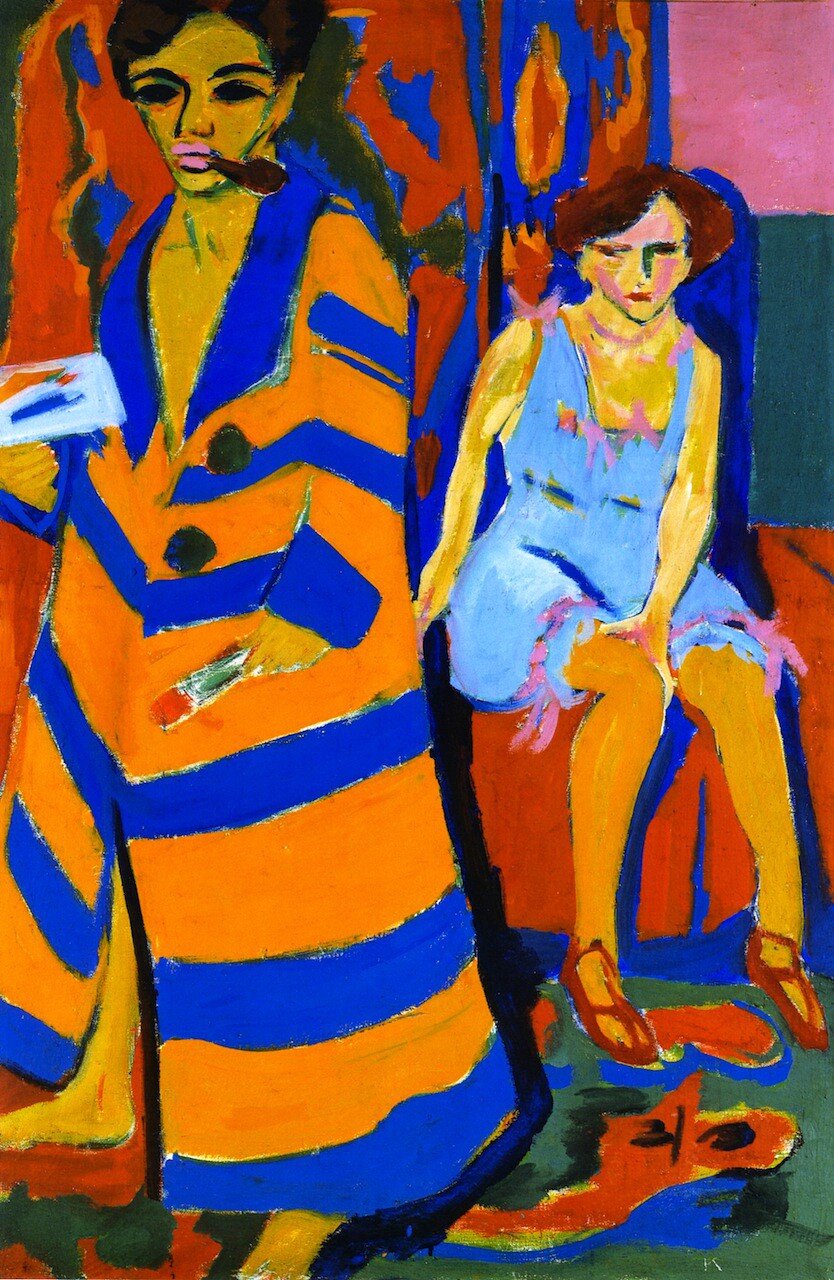
Self-portrait with Model, c. 1910 by Ernst Ludwig Kirchner, Kunsthalle, Hamburg.
Kirchner’s self-portrait is the main focus of this work (who could ignore that robe). His work was branded “degenerate” by the Nazi’s.
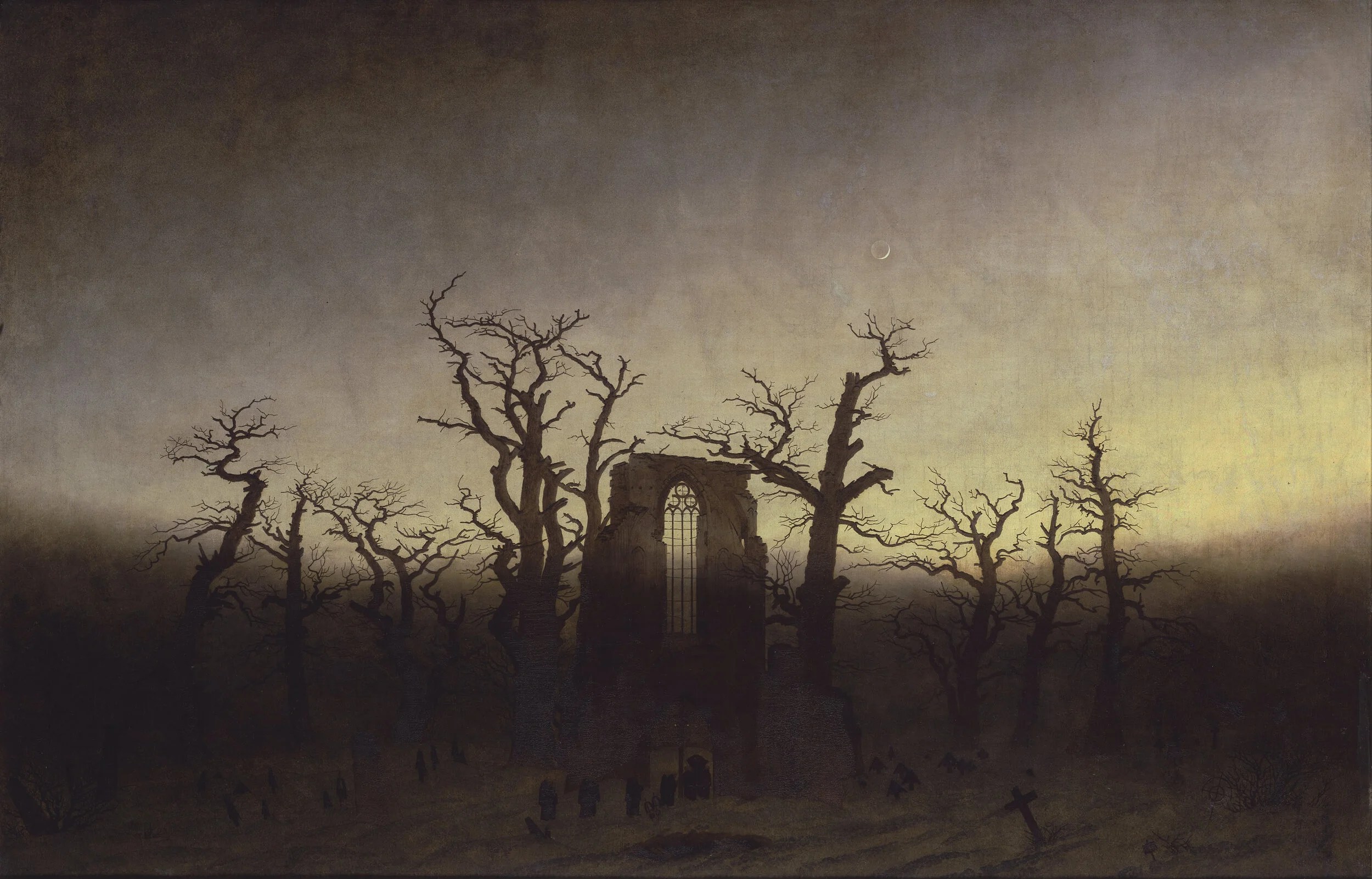
The Abbey in the Oakwood, 1809-10 by Casper David Friedrich, Schloss Charlottenburg, Berlin.
Friedrich’s remarkable landscapes in the Romantic style influenced the great landscape artists of the Hudson River School and the Rocky Mountain School.This work was done in sepia.
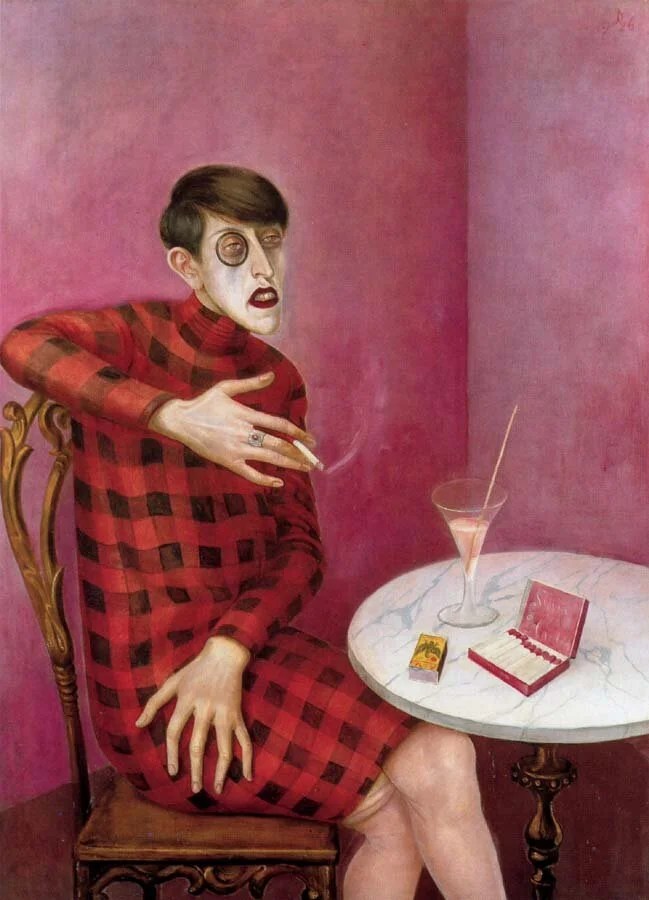
Portrait of Journalist Sylvia von Harden by Otto Dix, 1926.
Otto Dix is known for his colorful and harsh images of life during and after Germany’s Weimar Republic. He was a gunner in World War I.

