• Spots Before My Eyes

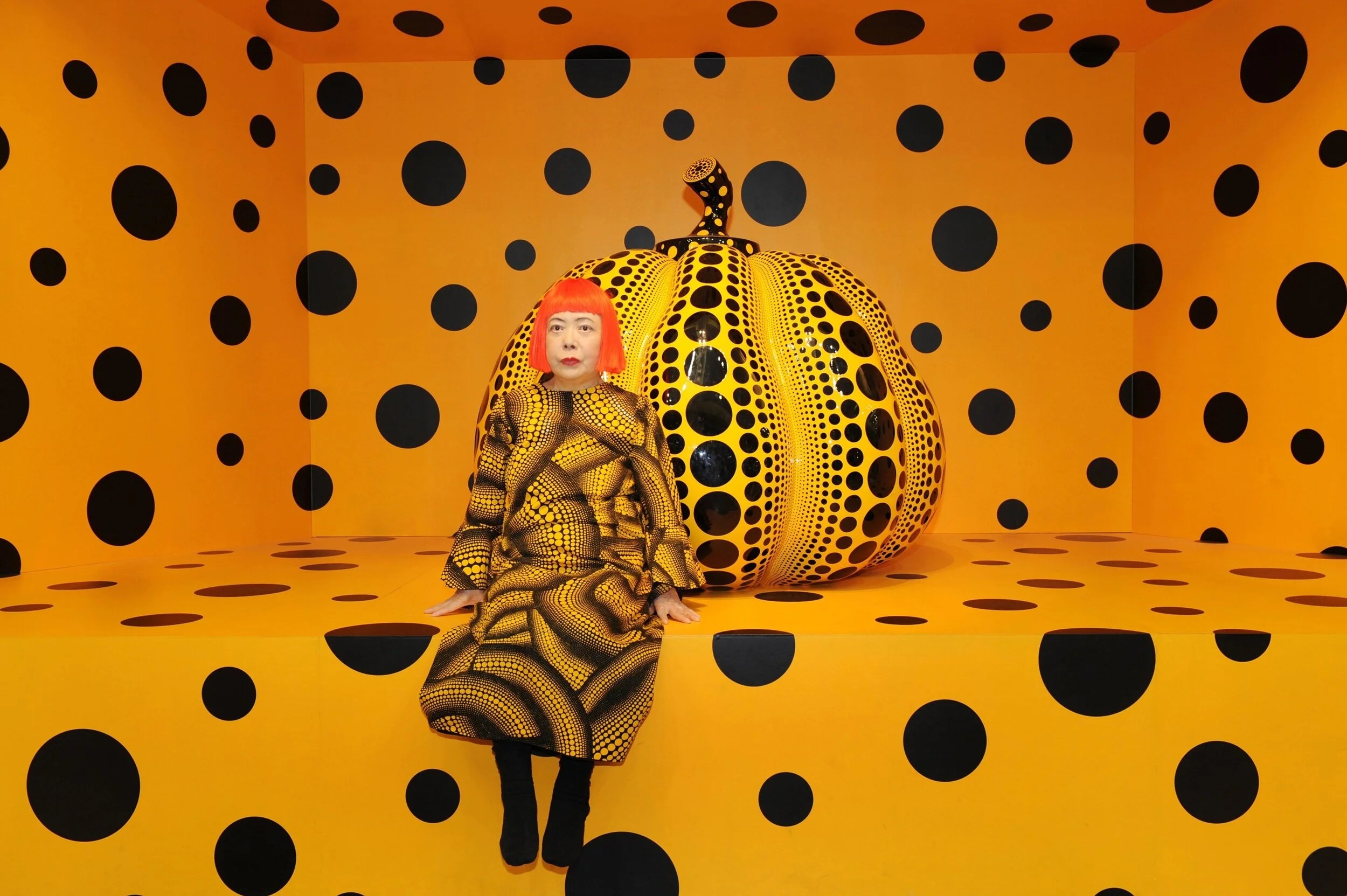
    Kusama with Pumpkin by Yayoi Kusama, currently at David Zwirner Gallery NYC

    I got to see the Kusama exhibition at the Cleveland Museum of Art in 2018 and I found it to be one of the most exciting and interactive exhibitions I had seen in a long time. Her work is so colorful and uplifting that is the perfect art for the social media age. Hi neighbors: The Phoenix Museum of Art has a Kusama Infinity Room too (see it when they re-open).
  • Bringing the Modern to Tradition

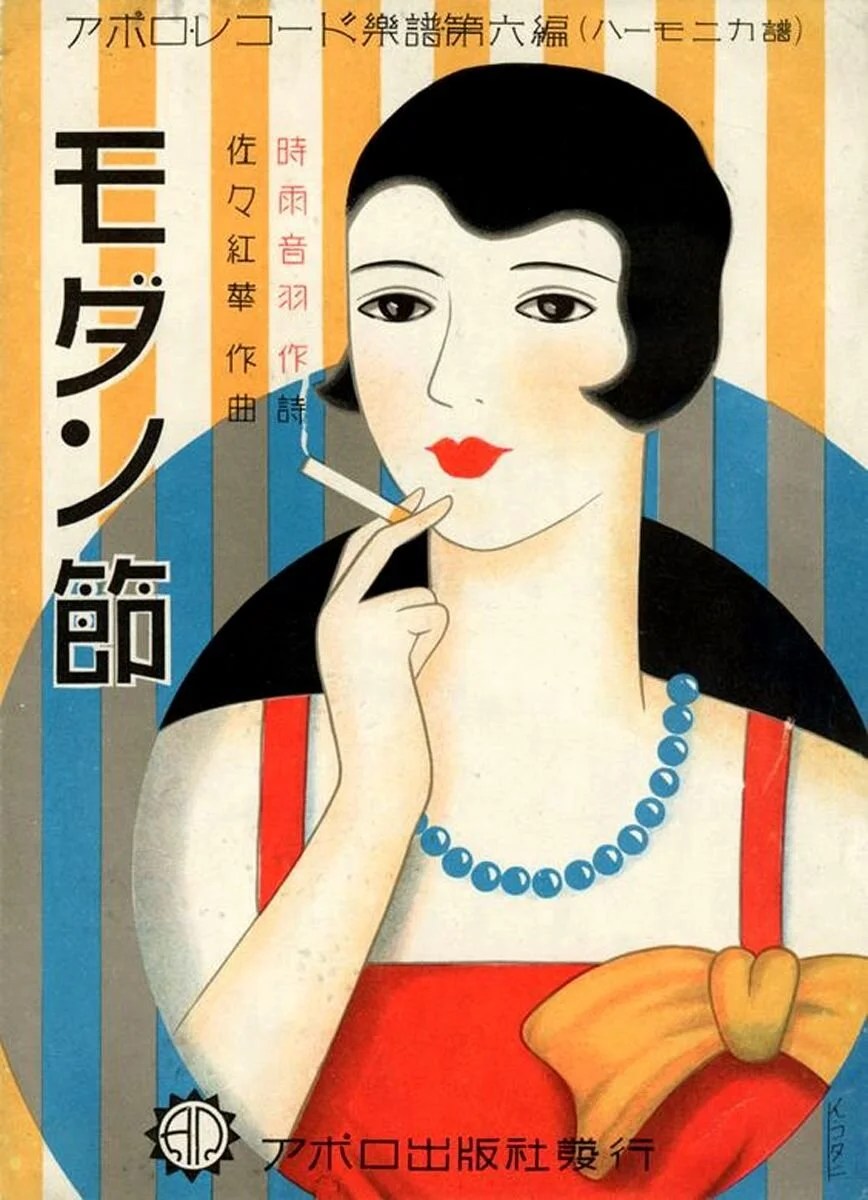
    The Modern Song (Modan bushi) by K. Kotani, 1930.

    Japanese Art Deco period. The work presented shows us a country working to combine tradition with the modern western world whose influence had been felt in Japan for a while, but whose culture was only then beginning to be adapted. This can be seen most prominently in the depiction of the Japanese version of the “Flapper,” or modern early 20th century woman, who was up-ending society in the West.

  • Holy Cows

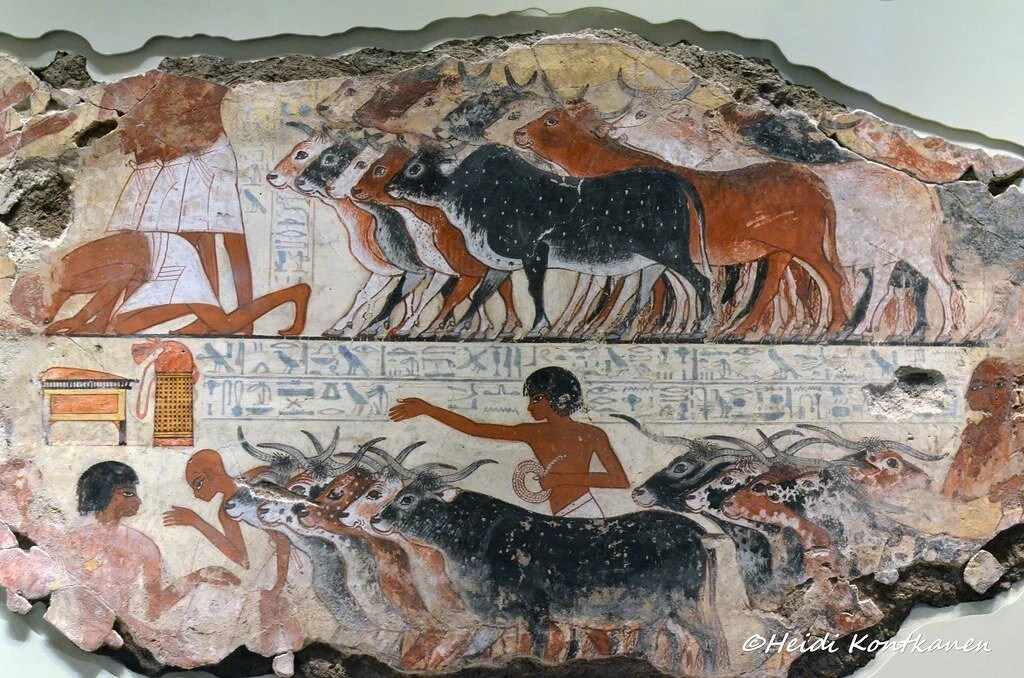
    Nebamun’s cattle, fragment of a scene ,Thebes, Egypt Late 18th Dynasty, around 1350 BC.

    The Egyptians considered cows an essential element of life and survival. As the once fertile area of Northern Africa became a desert, the domesticated cow brought life and nourishment. The goddess Hathor was also frequently depicted as a cow’s, or at least with the horns of cows as part of her crown.

  • Setting the Scene

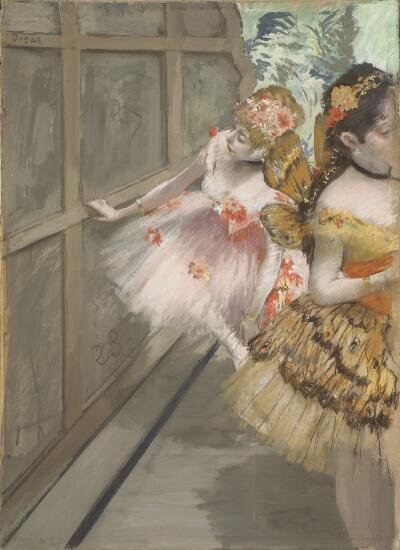
    Dancers in the Wings by Edgar Degas, 1876-78, Pastel

    Degas is well known for his superior ability to draw and to fade into the background so that he could capture a scene without influencing what was happening.

  • Before Cubism

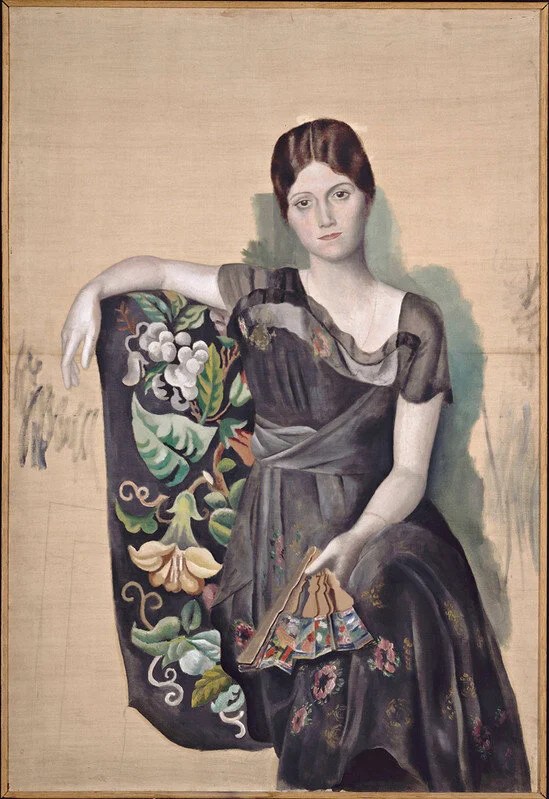
    Portrait Olga dans un Fauteuil by Pablo Picasso, Picasso Museum

    Olga in an armchair. This early portrait is of his first wife Olga whom he married in 1918 and separated from in 1927, but never divorced. She was active in society and Picasso had disdain for that lifestyle.

  • Spot On

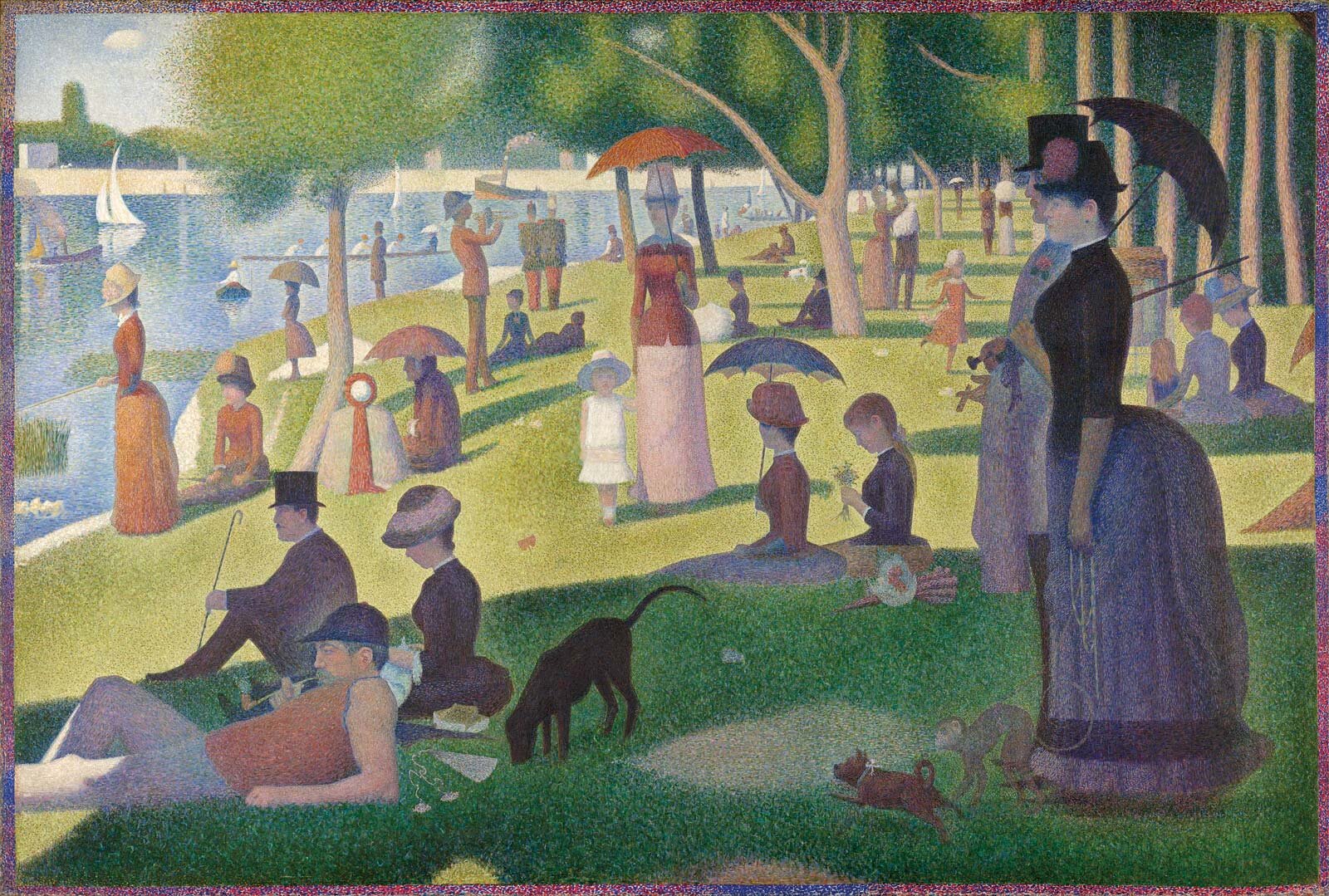
    Sunday Afternoon on the Island of Grand Jatte by Georges Seurat, Art Institute of Chicago.

    Seurat did preparatory drawings everyday for six months getting ready to paint this picture of people relaxing on a day off. The style is called Pointillism and involves using color dots to create the image. Who knows how Seurat would have refined the style he invented if he had not died at the age of 32.

    Love you, Mom!

  • Sketch

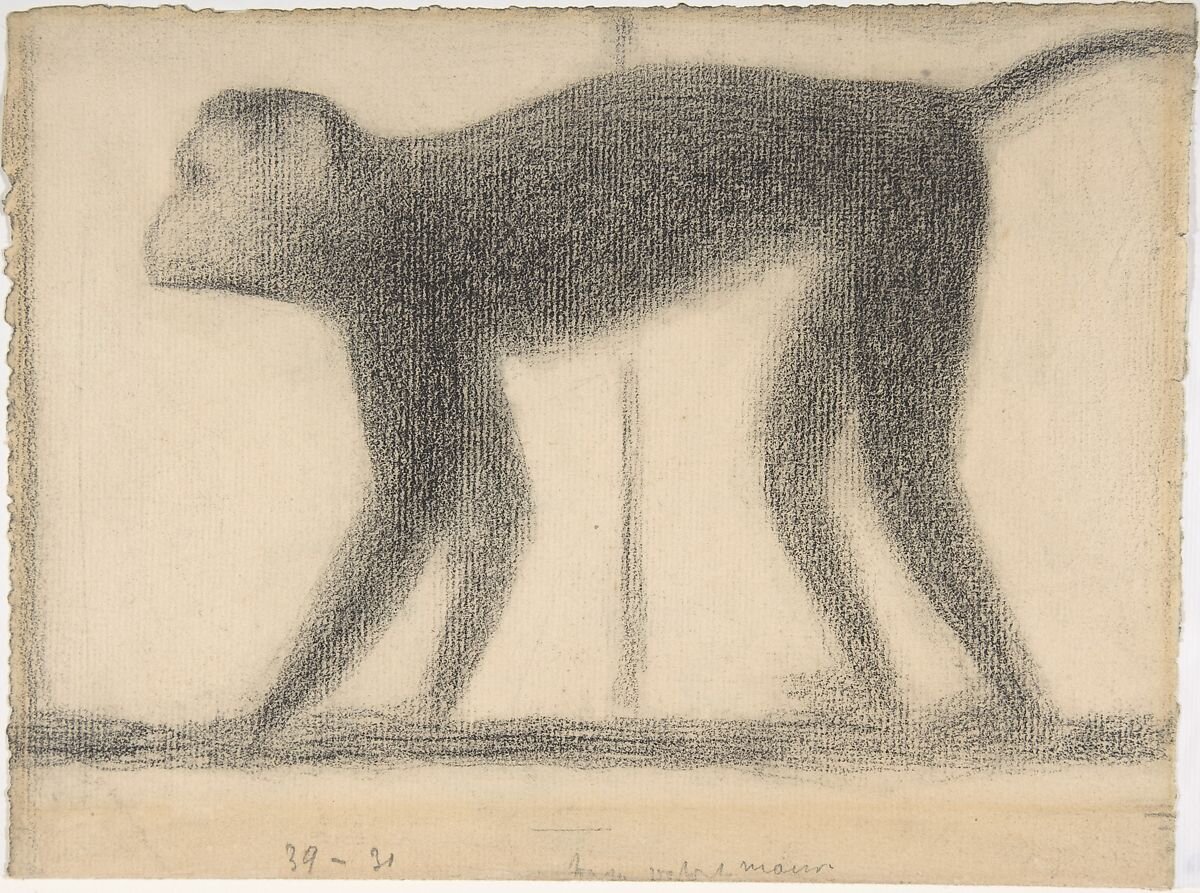
    Monkey (study for La Grande Jatte), 1884 by Georges Seurat, The Art Institute of Chicago.

    Seurat made hundreds of studies for his painting La Grande Jatte, some just small pencil sketches like this, some on-site oil sketches, and even full large scale drafts.

  • Monkey Business

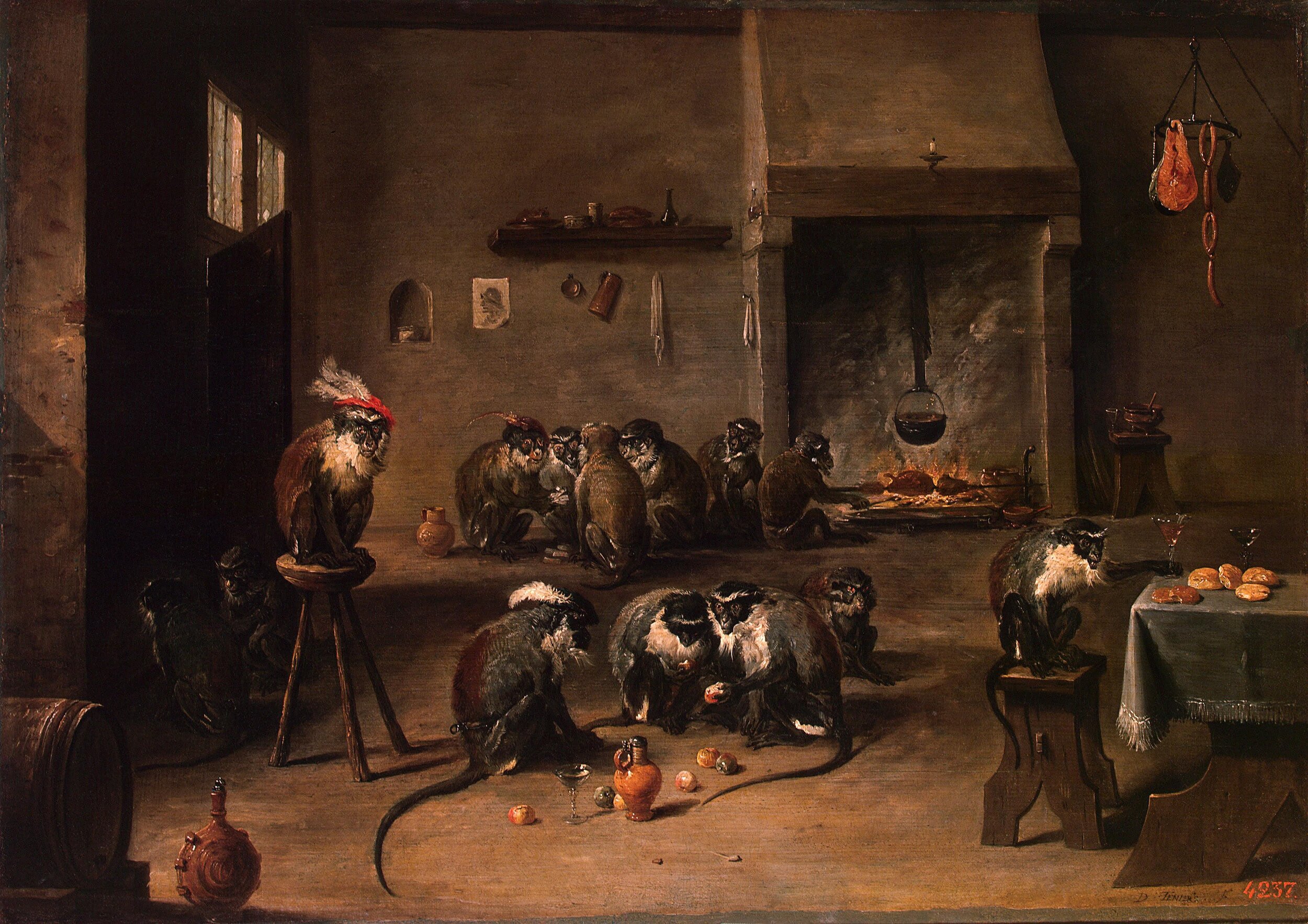
    Monkeys in a Kitchen by David Teniers the Younger, The Hermitage

    Teniers was a prolific painter and also the court curator for Archduke Leopold in Brussels during the 17th century. Of the over 2000 works he painted, many of them were copies of other works in the Archduke’s collection, as well as, paintings showing the placement of the art on the walls.

  • Recreation

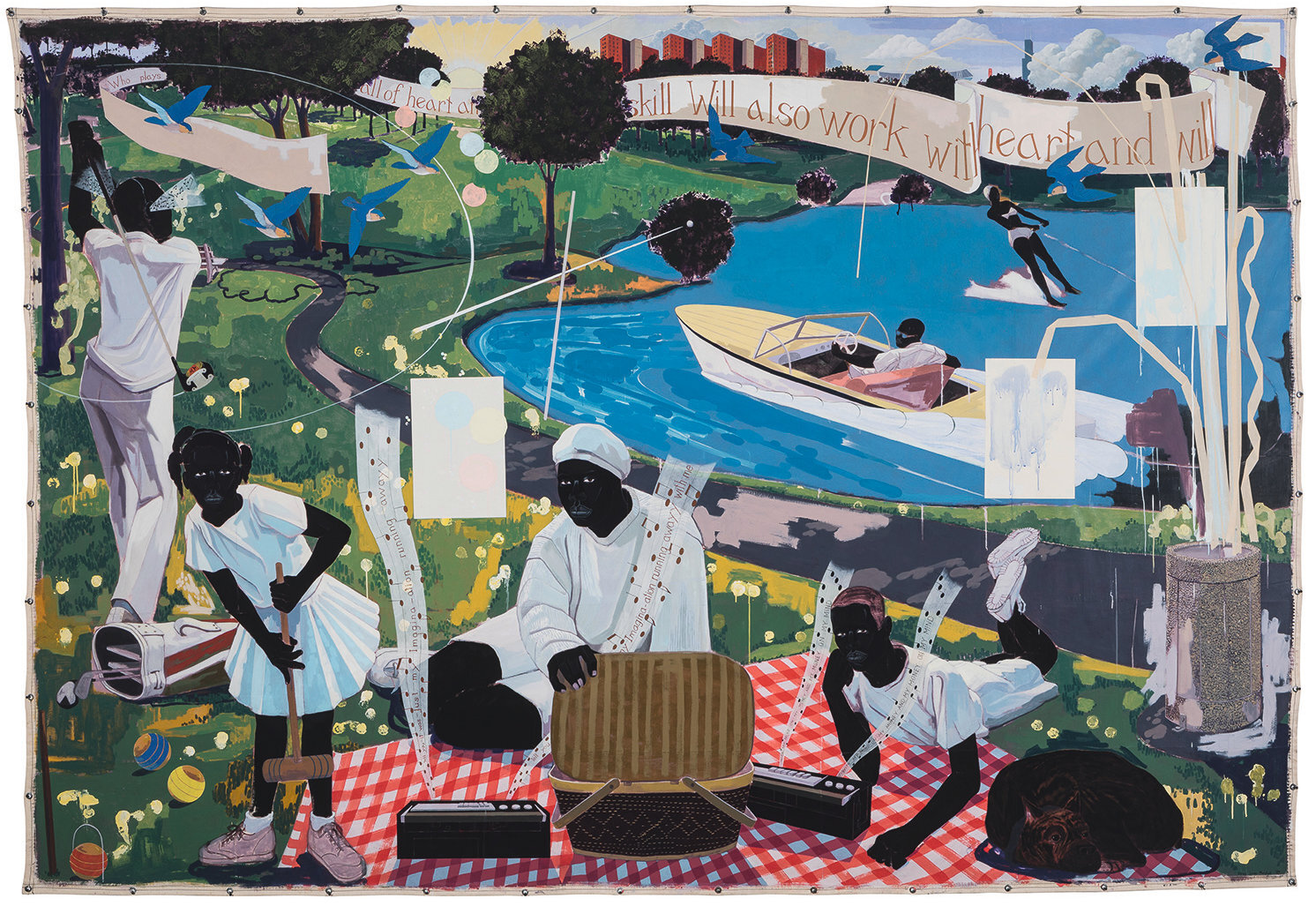
    Past Times by Kerry James Marshall, 1997.

    This work was recently bought by Sean Combs (P.Diddy) for his personal collection.

    Marshall who is from Chicago and was classically trained as an artist, has gained much fame in recent years through gallery representation and shows at the Met Breuer, the Museum of Contemporary Art in Chicago,, and the Tate Modern in London.

    As an art historian, I can’t help but make a connection between his work and the work of the great Jacob Lawrence.

  • Mad Architecture

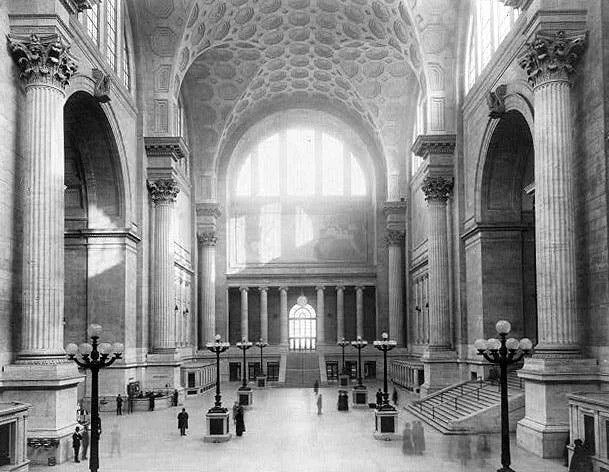
    The Old Pennsylvania Station, NYC, 1910-1963, McKim, Mead, and White Architects.

    When the original Beaux-Arts station was torn down in 1963 there was such an uproar from the citizens of NYC that the New York City Landmarks Preservation Commission was established. The loss of historic architecture to make way for future projects is a double-edge sword, what went up in its place is Madison Square Garden. The destruction of this building was featured in an episode of the television series Mad Men.