Tag: Art Deco

  • Green Dress

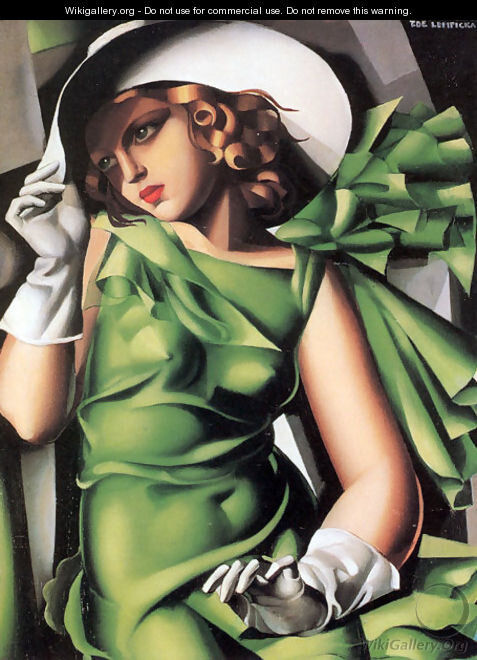
    Jeune fille en vert, 1930 by Tamara de Lempicka.

    Lempicka has come to represent the Art Deco period in painting because of the fluid lines, rich colors, and sensuousness of her paintings. She was inspired by, and part of, the bohemian scene in Paris in the 1920’s and the Hollywood scene in the late 1930’s and 40’s. She liked socializing and being a part of the most popular groups. She disliked the 1970’s era, feeling it was inferior to the ones that preceded it, but ironically, in the 1970’s her artwork was discovered once again, after a retrospective of her work was shown in Luxembourg and she has remained popular with collectors, since then.
  • All That Jazz

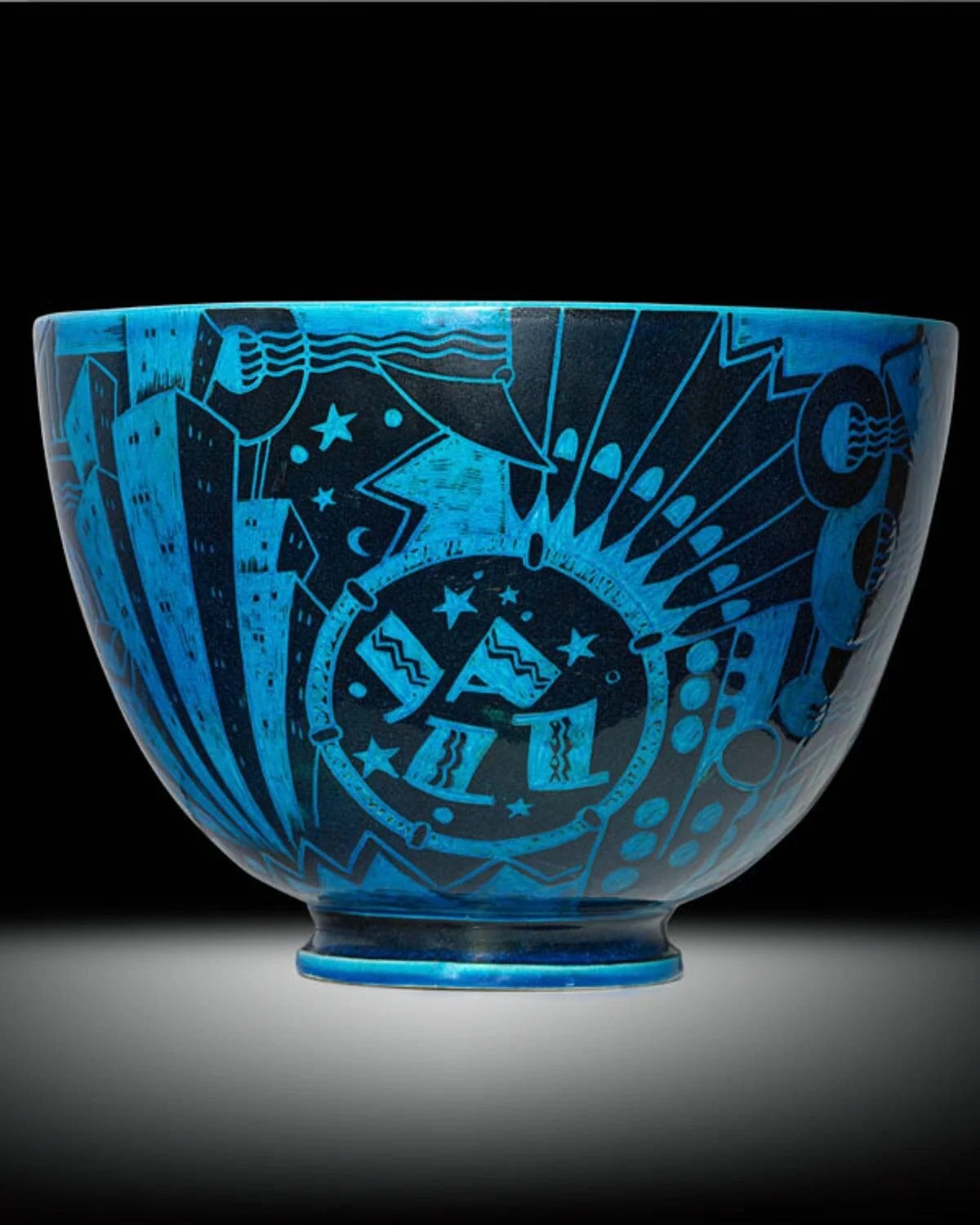
    The Jazz Bowl, 1931 by Viktor Schreckengost, The Cowan Pottery Museum, Rocky River, OH.

    According to many sources the Jazz Bowl is considered one of the earliest examples of the Art Deco style made in America. It was produced by Cowan Pottery as a punch bowl for a client who turned out to be Eleanor Roosevelt.

  • Big Business

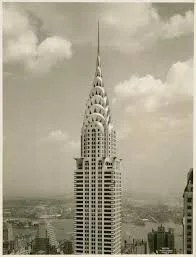
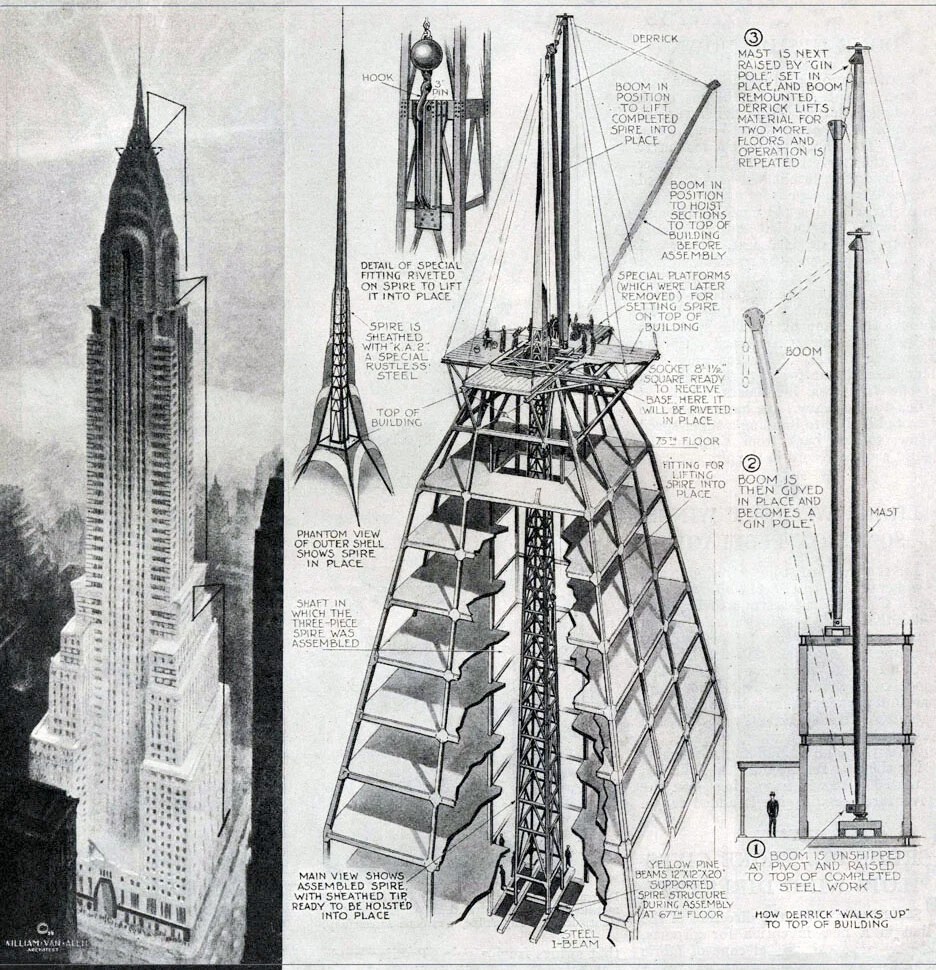
    The Chrysler Building, 1930, architect William Van Alen, New York.

    An homage to all things modern, the tallest building (until the Empire State eclipsed it one year later), decorated with hubcaps, hood ornaments and steel so shiny it looks like chrome. It remains an Art Deco Icon.

  • Bringing the Modern to Tradition

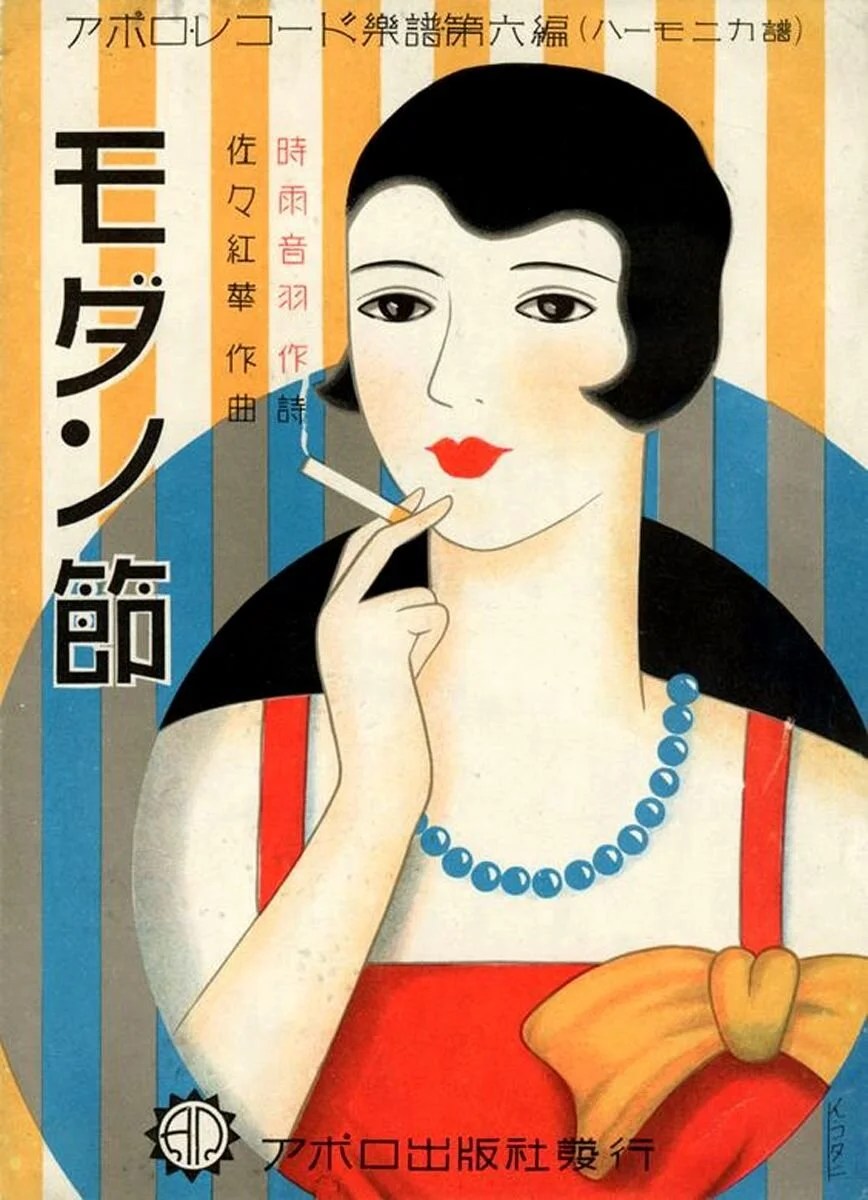
    The Modern Song (Modan bushi) by K. Kotani, 1930.

    Japanese Art Deco period. The work presented shows us a country working to combine tradition with the modern western world whose influence had been felt in Japan for a while, but whose culture was only then beginning to be adapted. This can be seen most prominently in the depiction of the Japanese version of the “Flapper,” or modern early 20th century woman, who was up-ending society in the West.

  • Standing Guard

     The large figures on the Hope Memorial Bridge in Cleveland (also known as the Lorain-Carnegie Bridge) were created by sculptor Henry Hering in 1932 and executed by many stone carvers who found much work in Cleveland in the early 20th century. The architects of the bridge were the firm of Walker and Weeks. Hering was primarily a Beaux-Arts style sculptor, having been a student of the famous Augustus Saint-Gaudens, and the architect Frank Walker is credited with the over-all art deco design of the figures. In the 1970’s they were almost taken down and the county engineer at that time thought they were hideous, but thank goodness they saved and remain an important part of the city landscape. The bridge was renamed the Hope Memorial Bridge in 1980 after the entertainer Bob Hope donated money for its restoration because his father had worked on it.

    Hope Memorial Bridge: Guardians of Traffic holding truck – CSU Digital Humanities
  • Bringing the Modern to Tradition

    The Modern Song

    (Modan bushi

    ) by

    K. Kotani,

    1930. (Detail.)

    The Japan Society

    (Credit: Exhibition organized and circulated by Art Services International, Alexandria, Va.)

    The Japan Society

    is currently hosting an exhibition of Japanese art from the

    Art Deco

    period. The work presented shows us a country working to combine tradition with the modern western world whose influence had been felt in Japan for a while, but whose culture was only then beginning to be adapted. This can be seen most prominently in the depiction of the Japanese version of the

    “Flapper,”

    or modern early 20th century woman, who was up-ending society in the west, as well.

    The exhibition runs through June 10th at the

    Japan Society, NYC

    .