Tag: Cleveland

  • Site Specific

    Ahuja Azure, Cirtron and Amber Persian Wall by Dale Chihuly, 2010, The University Hospitals’ Ahuja Medical Center, Beachwood, OH

    Dale Chihuly is the most famous glass artist in the world. Since the later part of the 20th century, his installations have been gaining in popularity and recognition.

    Chihuly himself no longer blows the glass in his pieces, but he conceives and designs them and oversees their installation.

  • Saving The Past for the Future

    St. Hedwig by Joseph Felix Męcina-Krzesz, 1914, Location of Original Unknown.

    The Museum of Divine Statues in Lakewood, OH is housed in the old St. Hedwig Catholic Church and this lithograph image of the Saint for whom it is named was gifted to the museum. The museum features rescued and restored Catholic religious statuary from many of the churches in the area that have been closed in the last few years. It also has a fine collection of stained glass, as well as, furnishings, fixtures, and other artwork from many area churches. 

    New York Times Article

    Museum Twitter: @modscle

    Museum Pinterest

  • Rooms to Let 2016 – Everyday Dishes

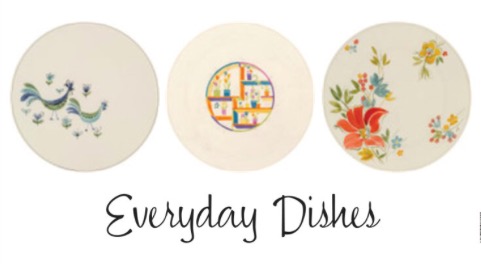
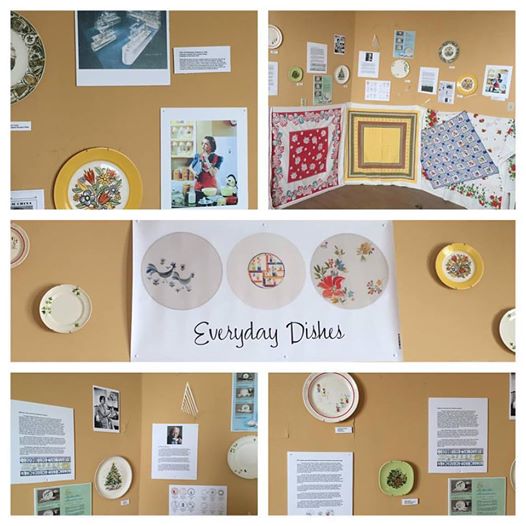
    I participated in Cleveland Rooms to Let 2016 where curated a room that will feature the dinnerware designs of Cleveland Artist, Designer and CIA professor, Viktor Schreckengost. The installation will be called Everyday Dishes and is based on an exhibition I curated in 2004 at the Northern Clay Studio in Minneapolis called The Dinnerware Legacy of Viktor Schreckengost. The dishes Viktor designed when he worked for Salem China and American Limoges in Sebring, OH in the early part of the 20th century, were the dishes that people used to eat their daily meals and would have bought at stores like J C Penny,  Sears and Montgomery Ward. They were not the good dishes that only came out a couple of times a year, but the ones that they grabbed for their morning toast and set their dinner tables with. The Rooms to Let Cleveland event will took place on May 21 & 22, 2016.

  • The Last Hurrah

    Rooms to Let in Slavic Village in Cleveland
    There was a uplifting art happening in Cleveland last weekend called “Rooms to Let.”  It was the second such event where foreclosed and abandoned houses in a hard hit area of Cleveland (houses that are scheduled to be demolished) are turned over to artists, who give them one last celebratory and dignified, send-off.
     Artist: Dana Depew
     Artist: Dana Depew

    The houses are all roughly a hundred years old and the last few years have been less then their best years. They are filled with character, beautiful wood, built-in china cabinets, window seats, etc., but what the artists focus on, for the most part, are that the houses are also filled with the lives of their former occupants. The houses sheltered people whose lives cry out to be celebrated before the tangible evidence of their exsistence is gone forever. We as a society, especially one hard hit by its changes like Cleveland’s Slavic Village, are too quick to erase the past as we rush toward the future and we often don’t realize what has been lost until it is no longer there. “Rooms to Let” stops us in our tracks and makes us look at these places, see the beauty, enjoy some music, laugh and talk with people, honor these structures and the families who lived and loved in them.

     Artist: Christine Mauersberger
     Artist: Christine Mauersberger
     Artist: Christine Mauersberger

    Having become blighted and a burden on the neighborhood, the city has no choice but to tear them down. This has been the story for many rust belt cities who deal with a loss of population and aging housing stock. For one more weekend though, people filled rooms, created music, gathered around them and enjoyed life. It was a celebration of the service of the houses as dwellings and the lives of the people who lived in them.

     Artist: Jeff Chiplis
     Artist: Paul Sydorenko
  • A Gold Star for Cleveland

    A large detail of Louis Grebenak’s WBOE mural, which awaits installation at ideastream in downtown Cleveland.
     
    There is an article in the Cleveland Plain Dealer today about a series of WPA murals that were saved from destruction by an art history teacher from Cleveland State University named Walter Leedy, who unfortunately did not live to see the results of his efforts. Much of the thanks goes as well to the ICA Art Conservation of Cleveland and to the Cuyahoga Metropolitan Housing Authority (CMHA). The artwork has been displayed around Cleveland, including on the campus at Cleveland State who leased two of the murals.
  • Standing Guard

     The large figures on the Hope Memorial Bridge in Cleveland (also known as the Lorain-Carnegie Bridge) were created by sculptor Henry Hering in 1932 and executed by many stone carvers who found much work in Cleveland in the early 20th century. The architects of the bridge were the firm of Walker and Weeks. Hering was primarily a Beaux-Arts style sculptor, having been a student of the famous Augustus Saint-Gaudens, and the architect Frank Walker is credited with the over-all art deco design of the figures. In the 1970’s they were almost taken down and the county engineer at that time thought they were hideous, but thank goodness they saved and remain an important part of the city landscape. The bridge was renamed the Hope Memorial Bridge in 1980 after the entertainer Bob Hope donated money for its restoration because his father had worked on it.

    Hope Memorial Bridge: Guardians of Traffic holding truck – CSU Digital Humanities
  • Western Art

    This weekend a new art venue opens on Cleveland’s near west side. The Transformer Station is a project of the Fred and Laura Ruth Bidwell Foundation and a collaboration with The Cleveland Museum of Art that strives to being contemporary art to Cleveland’s oft neglected west side. The opening exhibition is called Bridging Cleveland Photographs by Vaughn Wascovich also, Light of Day Photographs from the Collection of Fred and Laura Bidwell.
  • Another View of the Jersey Shore

    Jersey Shore by Mabel Hewit, c. 1935, Mary Ryan Gallery.
    Mabel Hewit was from the Cleveland area and created woodblock prints in the “white-line” technique. Most of her subjects were everyday people and scenes. She enjoyed creating these prints, in part, because she felt that the brightly-colored woodblock prints were mare accessible to working people who were looking for colorful art for their homes.
  • Site Specific

    Ahuja Azure, Cirtron and Amber Persian Wall by Dale Chihuly, 2010, The University Hospitals’ 
     Dale Chihuly is the most famous glass artist in the world. Since the later part of the 20th century, his installations have been gaining in popularity and recognition. Chihuly himself no longer blows the glass in his pieces, but he conceives and designs them and oversees their installation. The Dallas Arboretum is hosting an exhibition now through November 5, 2012.
  • Faster Than a Speeding Bullet

    Sadly, this plan which would make travel easier along the I-80 corridor and offer an alternative to cars, has been shelved in OH, but continues to gain footing in MI and IL. Then OH will have to play catch-up instead of being ahead of the game. The poster is the thing that caught my eye. It recalls the WPA travel posters of the past. Could not find a credit for who designed it, does anyone know?