Tag: Egypt

  • Look Out Below

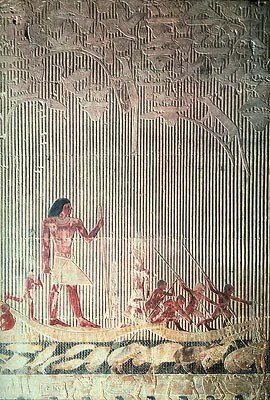
    Ti Watching a Hippopotamus Hunt, Tomb of Ti, Fifth Dynasty, Old Kingdom Egypt, c. 2450 – 2325 BCE.

    Ti was a commoner, but a very rich commoner since he was able to build a large tomb for himself that contained this wonderful painting/sculpture. Ti is the large figure standing on the boat with all of the “river creatures” depicted below and the “land creatures” among the papyrus on the shore.
  • For Safe Keeping

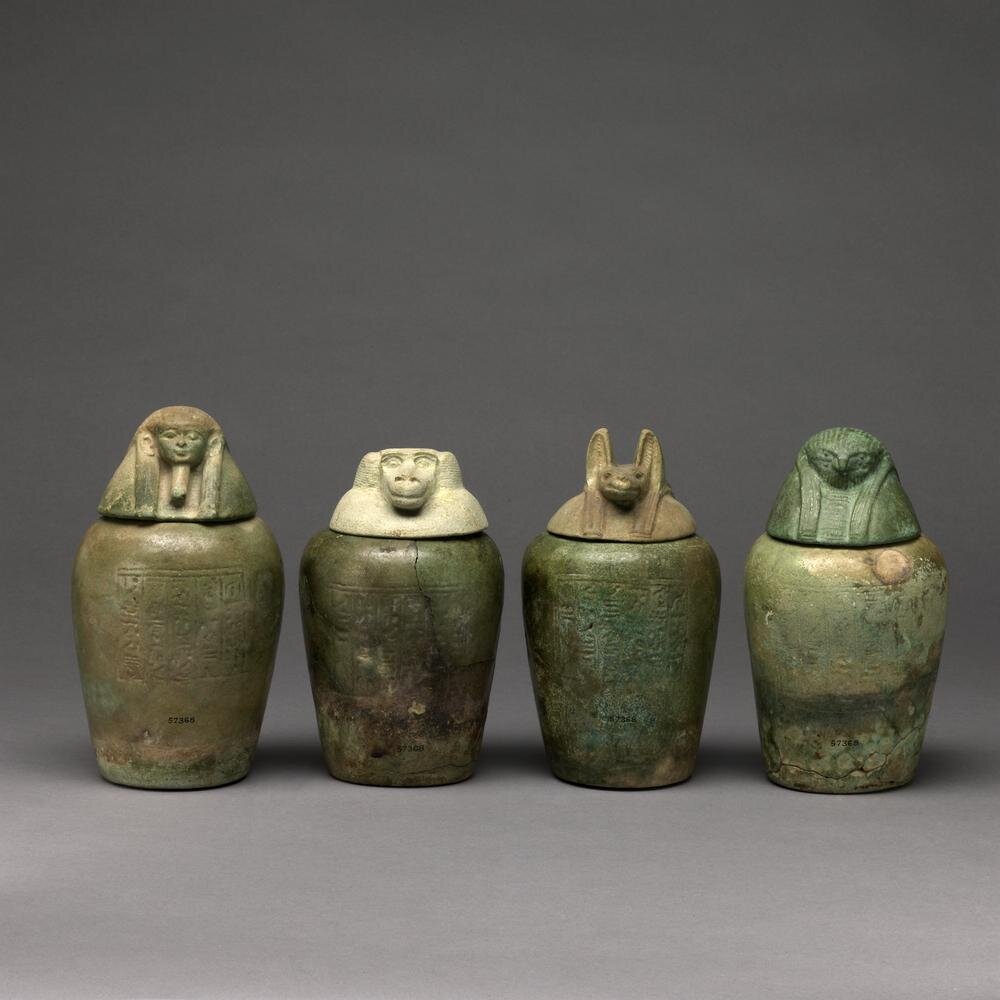
    Set of Canopic Jars, c. 1069-945 BC, Egyptian 30th Dynasty.

    These jars were used to store the internal organs, removed for mummification. They stored the liver, lungs, stomach and intestines. They represent the four sons of the god Horus and were to protect the organs inside.

  • Souvenirs

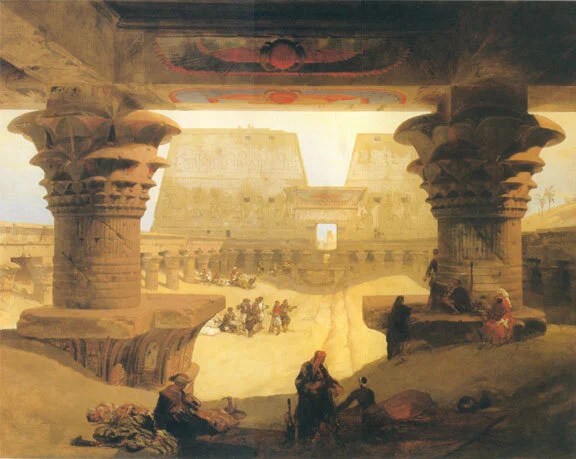
    Dromos, or outer Court of the Great Temple at Edfou in Upper Egypt by David Roberts, RA 1796-1864

    Dated 1840 and inscribed ‘EDFOU, UPPER EGYPT’ Roberts painted watercolors of ruins in Egypt and reproduced them as lithographs and sold them in London to disciples of the Grand Tour.

  • Guillaume

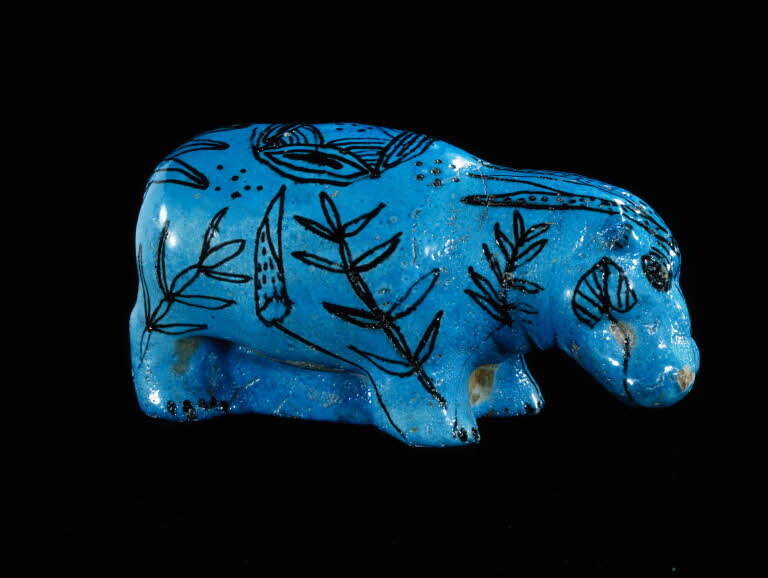
    Egyptian Faience Hippo, Middle Kingdom Period, 3800 – 1710 BC.

    Faience is a type of ceramic with a high concentration of quartz. When fired it turns a bright blue. While the Ancient Egyptians considered the male hippo very dangerous the female was thought to bring luck in maternity. The lotus flower and other plants that decorate the body represent the river where the hippo lives.

    Also see William at the Met.

  • Holy Cows

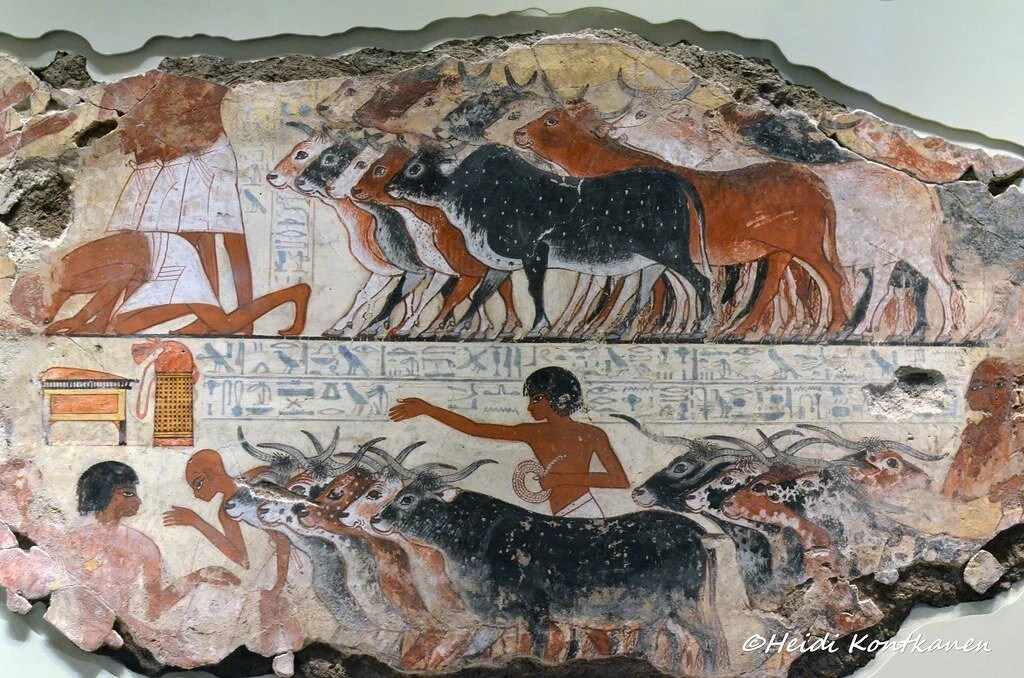
    Nebamun’s cattle, fragment of a scene ,Thebes, Egypt Late 18th Dynasty, around 1350 BC.

    The Egyptians considered cows an essential element of life and survival. As the once fertile area of Northern Africa became a desert, the domesticated cow brought life and nourishment. The goddess Hathor was also frequently depicted as a cow’s, or at least with the horns of cows as part of her crown.