Tag: Hellenistic

  • More Greek Sculpture

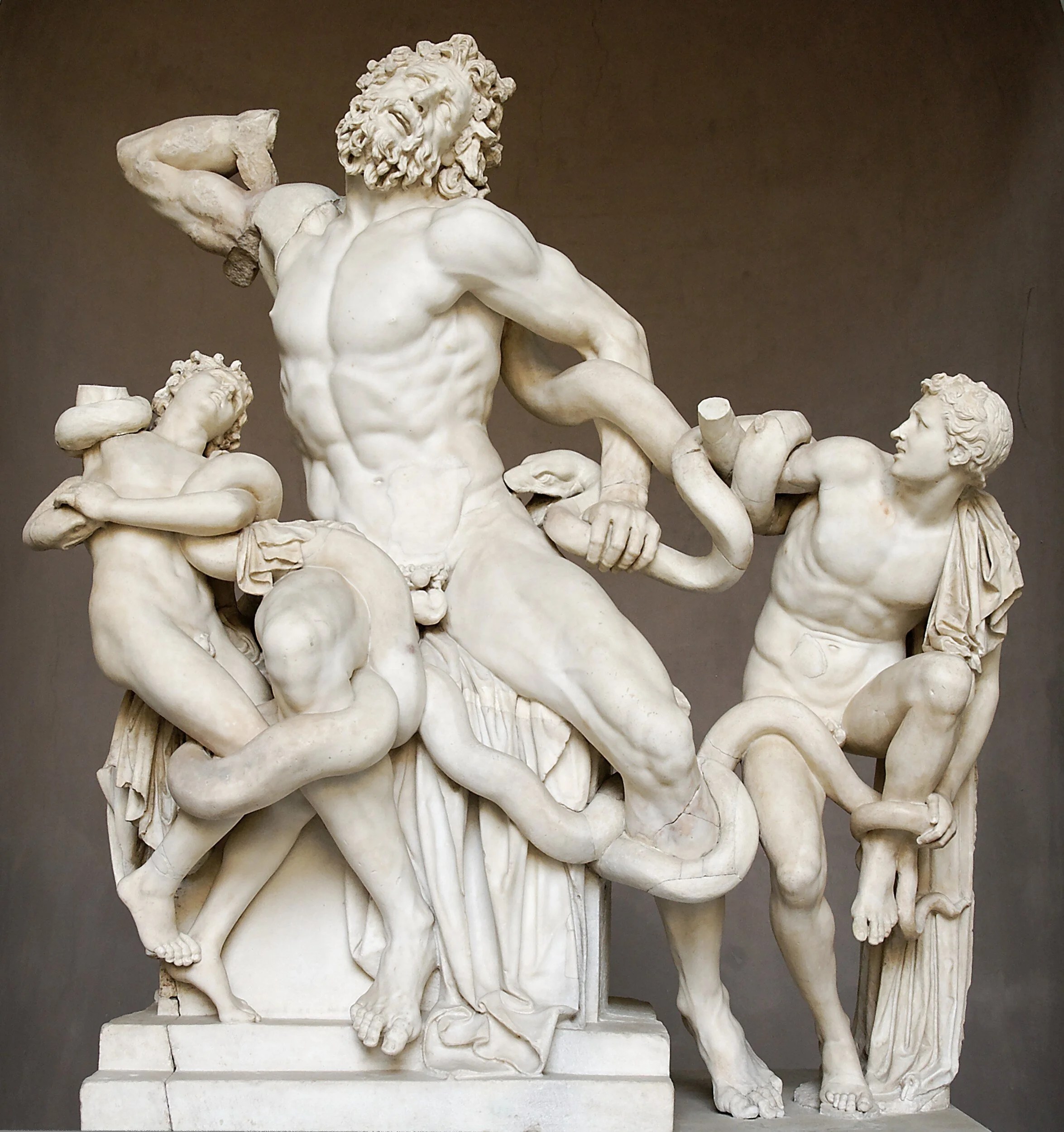
    Laocoon and his Sons (or Laocoon Group), Greek Hellenistic (most likely 42 -20 BC), Vatican Museums, Rome.

    Laocoon warning about the Trojan Horse earned him the wrath Poseidon who sent serpents to attack him and his sons. Michelangelo was influenced by this work and the contortions of the body of Laocoon can be seen in many of his works, especially something like the Dying Slave.
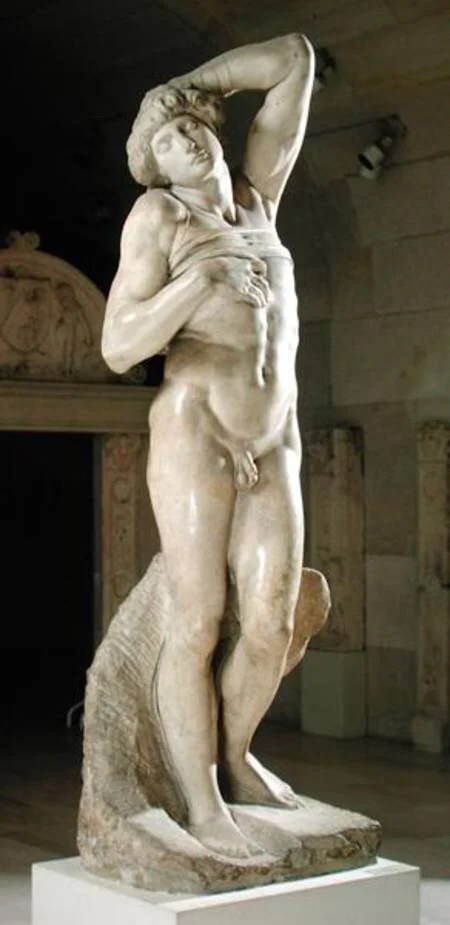
    Dying Slave

    , 1513-16 by Michelangelo, Louvre, Paris.
  • Winged Victory

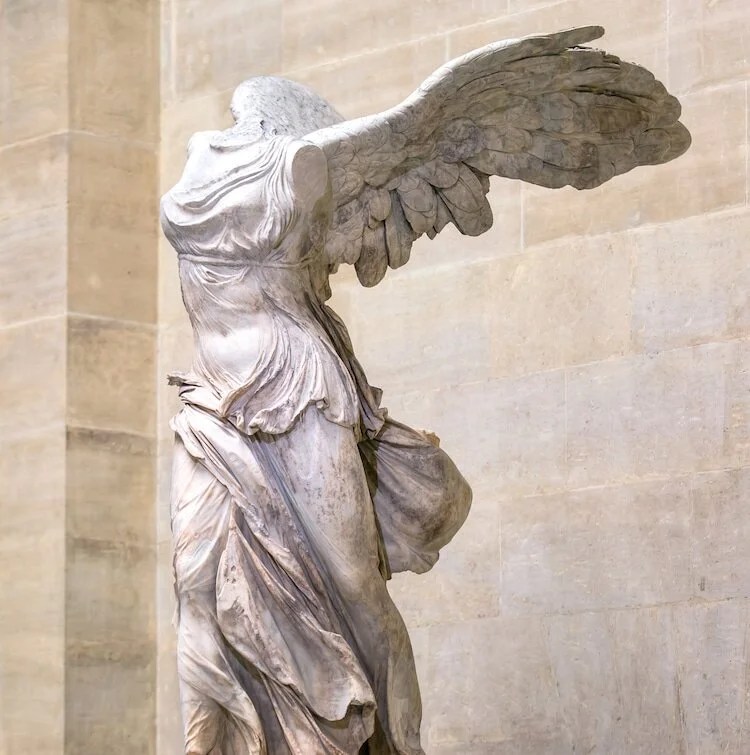
    Nike of Samothrace or Winged Victory, Greek Hellenistic period (220-190 BC) The Louvre, Paris.

    It is thought that this work was originally created to celebrate a naval victory. The dramatically flowing drapery on the figure as well as the wings lend credence to the idea that it was in honor of a naval battle for she stands in the prow of a ship.

  • Veiled Thoughts

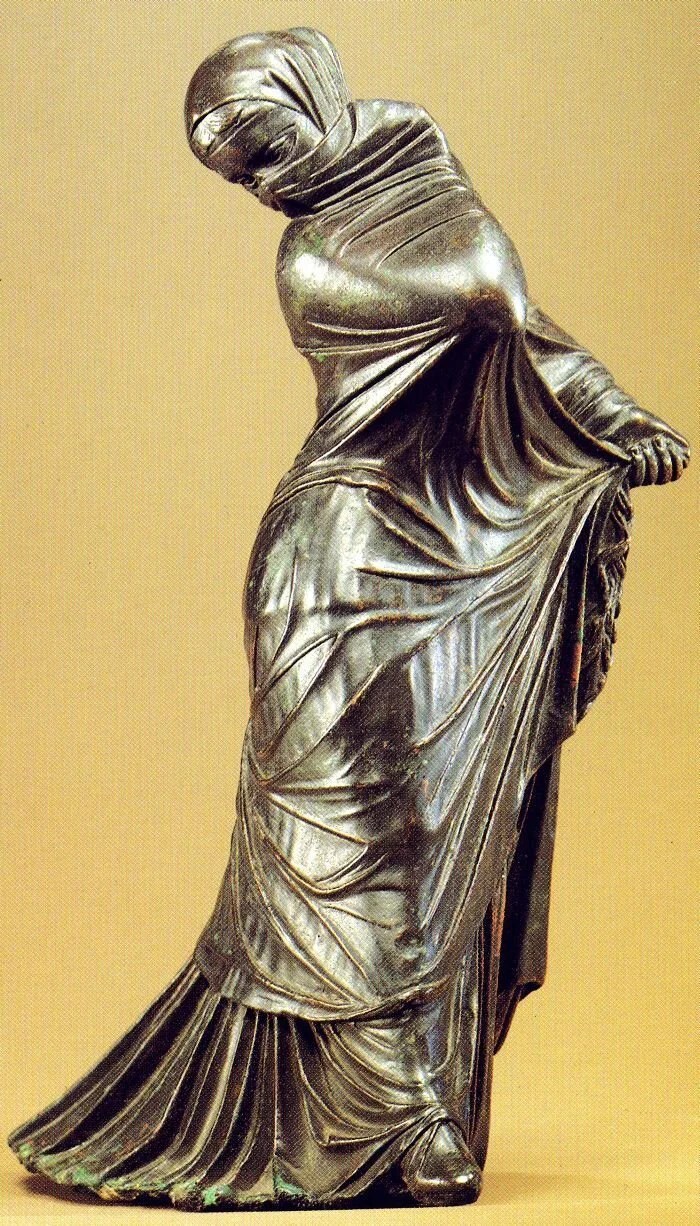
       Bronze statuette of a veiled and masked dancer, 3rd–2nd century B.C. Greek
    Bronze statuette of a veiled and masked dancer, 3rd–2nd century B.C. Greek

    Greek Hellenistic Period

    , 3rd – 2nd century BCE, The Metropolitan Museum, New York.

    This small statuette is a remarkable representation of a dancer caught in the midst of a complicated move. It is expressive and mysterious at the same time.