Tag: Impressionism

  • Monet in Cleveland

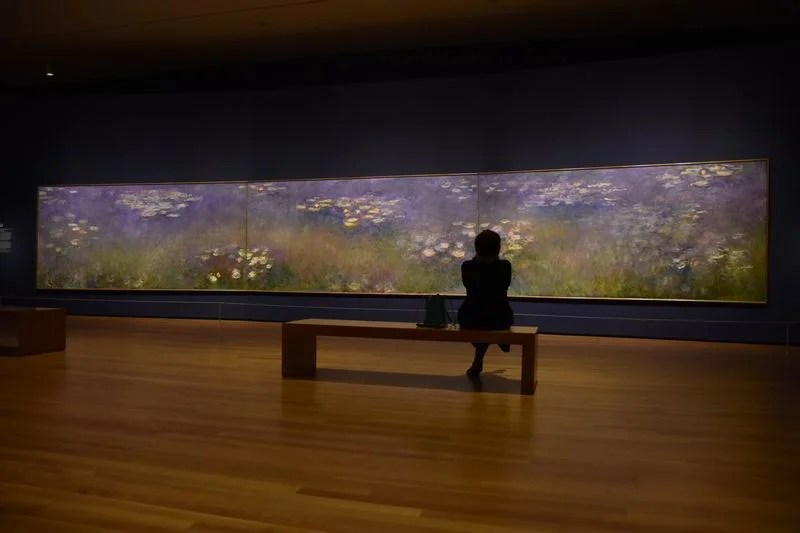
      The Nelson-Atkins  and the  St. Louis Art Museum  have loaned their  Waterlilies  by Monet to the CMA so that the three images could be joined together again.
    The Nelson-Atkins and the St. Louis Art Museum have loaned their Waterlilies by Monet to the CMA so that the three images could be joined together again.

    The Cleveland Museum of Art is hosting an exhibition entitled Painting the Modern Garden: Monet to Matisse now through January 5, 2016. The exhibition, organized by CMA and the Royal Academy of Arts in London,  looks at the role of gardens to artists such as Claude Monet, who was also a horticulturist.

     Spotted during the set-up for the exhibition, did the man himself drop by?
    Spotted during the set-up for the exhibition, did the man himself drop by?
  • Happy Father’s Day

    Portrait if

    Alexander J. Cassatt

    and his son, Robert Kelso Cassatt

    by

    Mary Cassatt

    ,1884-85,

    The Philadelphia Museum of Art

    Mary Cassatt

    , the Impressionist artist, is well known for using her family as models in her artwork (men and boys are seen less often) as she spent a lot of her time around the women of the family. In this portrait we see

    Cassatt’s

    father and her brother sharing an intimate moment. Her father was a railroad man and probably not around the house as often, or willing to sit still for very long (pure conjecture on my part). Happy Father’s Day – perhaps you can capture an image of your father today?
  • Happy Birthday Gustave

    Fruit Displayed on a Stand by Gustave Caillebotte, 1881-2, Museum of Fine Arts, Boston.
    Caillebotte existed on the fringes of the Impressionist group, as he was both a benefactor and a member of the group. He was a painter himself, but lived as a lawyer, solider, and engineer. He did not adhere closely to the painting by light and loose brush strokes of the Impressionists and his work belies his realistic-style training, however, he allowed enough of the looser, less studied style of the Impressionists to enter his work, that it was given a lightness, that more realistic work lacks.
    Even in death he supported the Impressionists, leaving his vast collection to the French Government on the condition that it be displayed, not stored away. The artists and their work had not yet been embraced by the French people, and the government and they rejected that condition, but ended up accepting a portion of the work which they did display, making it the first time the artists of the group were displayed in a government exhibition.