

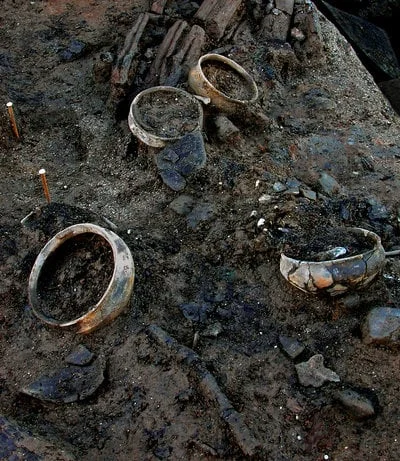
With many ongoing building projects in the works, archaeologists in London are quite busy as remnants of Roman occupation, the Bedlam cemetery, and other yet to be determined sites are uncovered during construction. They have found many skeletons and are doing DNA testing to determine cause of death, background, etc. It is hard to believe that such a busy modern city is also a very active archaeological site.
Making Lace from Steel

Shovels by Cal Lane
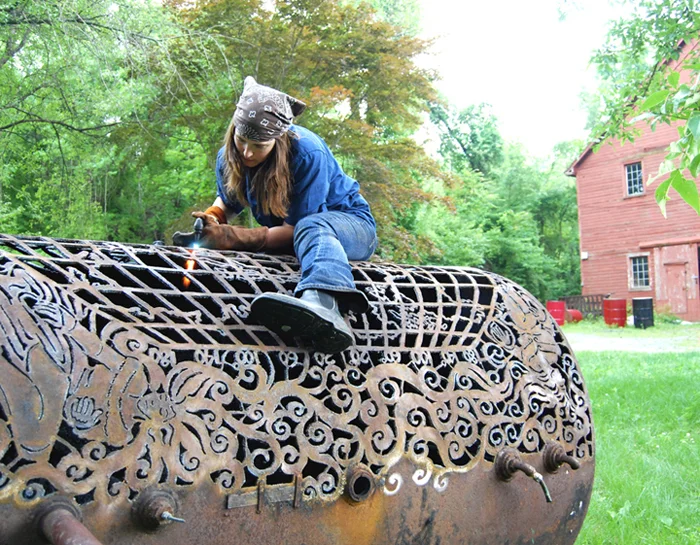
Artist Cal Lane uses metal as her palette and a torch as her brush. She creates amazingly intricate designs in found metal objects. Tools, pieces of old cars, etc anything rusty that she can transform into her lace-like creations.
Monet in Cleveland
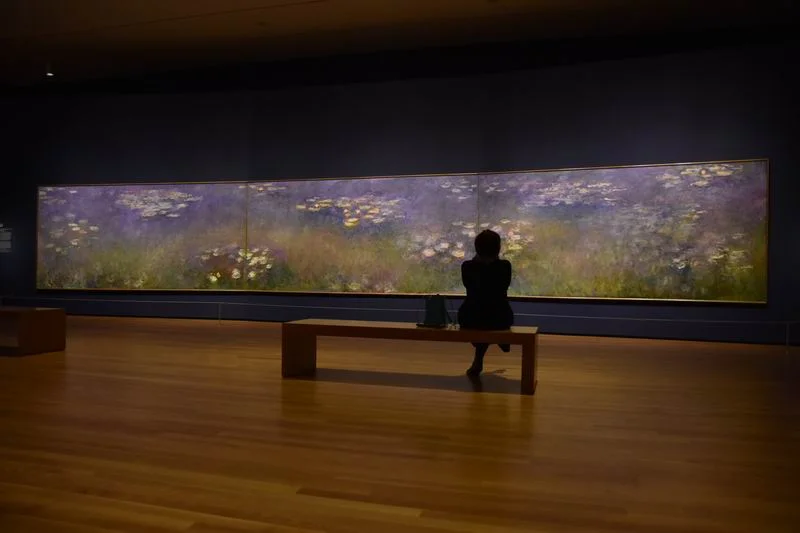
The Nelson-Atkins and the St. Louis Art Museum have loaned their Waterlilies by Monet to the CMA so that the three images could be joined together again.
The Cleveland Museum of Art is hosting an exhibition entitled Painting the Modern Garden: Monet to Matisse now through January 5, 2016. The exhibition, organized by CMA and the Royal Academy of Arts in London, looks at the role of gardens to artists such as Claude Monet, who was also a horticulturist.
Spotted during the set-up for the exhibition, did the man himself drop by?
Looking Beyond the Traditional

Timelines by Christine Mauersberger, 2015
The exhibition Beyond Materials: Woven Values . The show features artwork that reflects the history of fiber work (which has traditionally been viewed as a "craft") as textile based art moves forward as an ever evolving, viable art medium. The exhibition is up until October 3, 2015.
Kehinde Wiley in Cleveland
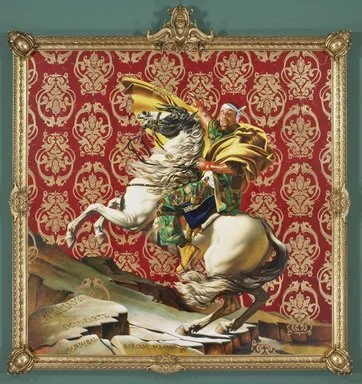
Kehinde Wiley,
Napoleon Leading the Army Over the Alps (Self-Portrait),
Oil on canvas, 2005
Artist
will speak at
Cleveland Museum of Art's Gartner Auditorium, Saturday August 29th
at 2:00. His beautiful work harks back to an earlier style while creating very modern portraits. Wiley's recent one man exhibition at the
was very well received by the art world and the public, alike. The Cleveland lecture is part of the
Cleveland Public Library's The Lockwood Thompson Dialogues
.
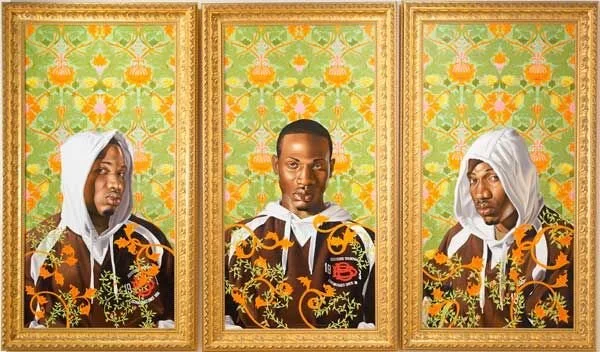
Kehinde Wiley
Triple Portrait of Charles I
, oil and enamel on canvas. Triptych, 2007,
The Last Hurrah
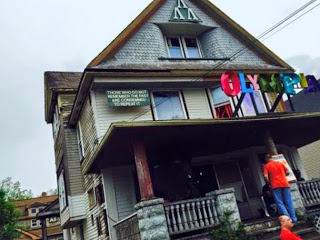
Rooms to Let in Slavic Village in Cleveland
There was a uplifting art happening in Cleveland last weekend called "Rooms to Let." It was the second such event where foreclosed and abandoned houses in a hard hit area of Cleveland (houses that are scheduled to be demolished) are turned over to artists, who give them one last celebratory and dignified, send-off.
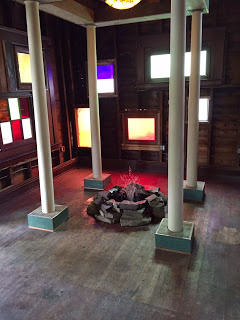
Artist: Dana Depew
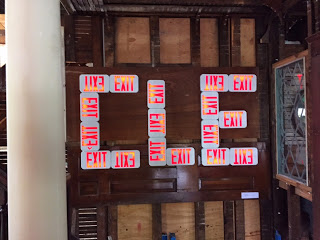
Artist: Dana Depew
The houses are all roughly a hundred years old and the last few years have been less then their best years. They are filled with character, beautiful wood, built-in china cabinets, window seats, etc., but what the artists focus on, for the most part, are that the houses are also filled with the lives of their former occupants. The houses sheltered people whose lives cry out to be celebrated before the tangible evidence of their exsistence is gone forever. We as a society, especially one hard hit by its changes like Cleveland's Slavic Village, are too quick to erase the past as we rush toward the future and we often don't realize what has been lost until it is no longer there. "Rooms to Let" stops us in our tracks and makes us look at these places, see the beauty, enjoy some music, laugh and talk with people, honor these structures and the families who lived and loved in them.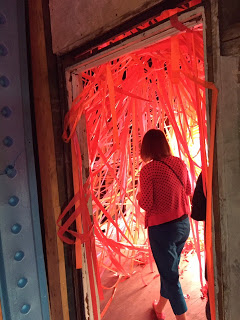
Artist: Christine Mauersberger
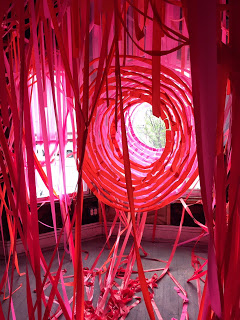
Artist: Christine Mauersberger
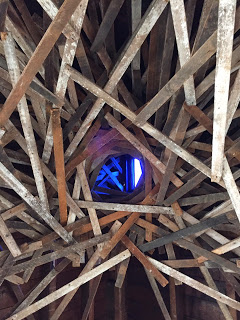
Artist: Christine Mauersberger
Having become blighted and a burden on the neighborhood, the city has no choice but to tear them down. This has been the story for many rust belt cities who deal with a loss of population and aging housing stock. For one more weekend though, people filled rooms, created music, gathered around them and enjoyed life. It was a celebration of the service of the houses as dwellings and the lives of the people who lived in them.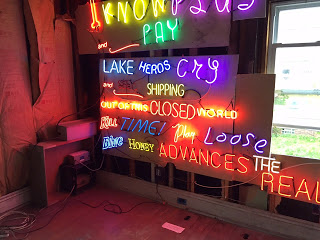
Artist: Jeff Chiplis
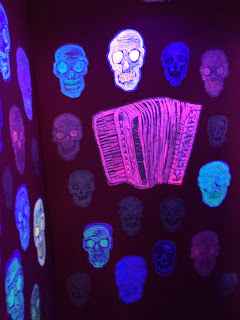
Artist: Paul Sydorenko
Good News
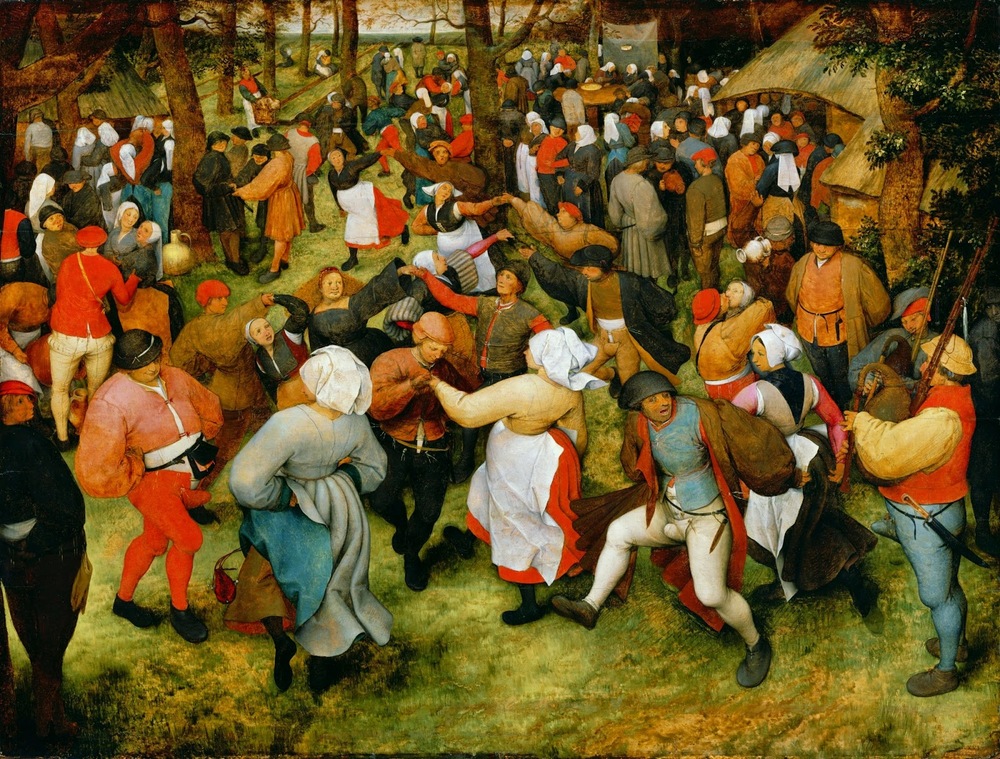
The Wedding Dance by Pieter Bruegel the Elder, c. 1566, Detroit Institute of Arts.
The New York Times reports that the collection of the Detroit Institute of Arts is no longer in danger of being sold as part of the Bankruptcy filed by the City of Detroit. This is very good news for not only the DIA, Detroit and Michigan, but for any art lover that enjoys access to masterpieces through public museums. Do yourself a favor and visit this collection if you can, there are some very fine pieces and you won't regret it.
Capturing Beauty
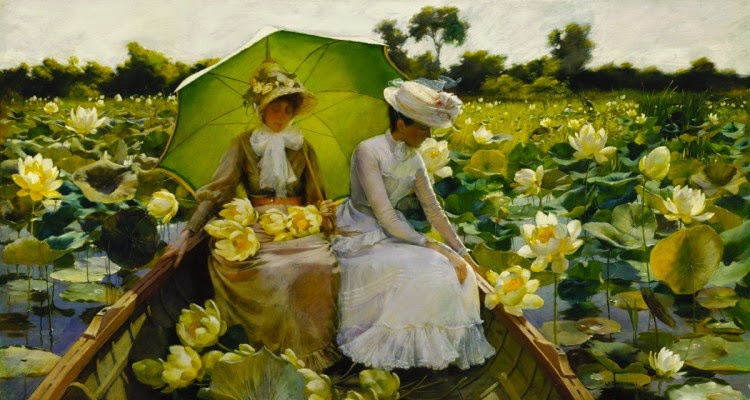
Lotus Lilies by Charles C. Curran, 1888, Terra Foundation for American Art
There is an exhibition of the work of Sandusky, OH artist Charles Courtney Curran at The Frick Art and Historical Center in Pittsburgh, now through February 1, 2015. He studied in Paris and split his time between New York and North Central Ohio on the shores of Lake Erie. The exhibition is titled Charles Courtney Curran: Seeking the Ideal and his definitely captures an idealized and beautiful life full of lovely settings and people, but don't we all like a look into an ideal world once in a while?
The Price We Pay
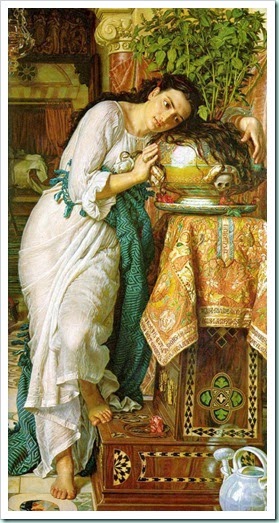
Isabella and the Pot of Basil by William Holman Hunt, 1868
Many years ago a friend and I attempted to visit The Delaware Art Museum. We drove up from Baltimore during the day and when we arrived at the museum, we found the building was closed because a protestor had chained himself to the front entrance to protest the DuPont Annual Meeting taking place inside the museum. Now, at that time in the early 1990's the DAM had the best collection of Pre-Raphaelite art in the US and having just completed a thesis on the Pre-Raphaelite Brotherhood, I was anxious to see their collection - I never got to.
I read an article in the New York Times in August that the Delaware Art Museum was arbitrarily and against the advice of the American Association of Museum Directors, divesting themselves of many of the most important pieces in their collection based on monetary, rather than curatorial, decisions. My feelings about the museum came to the surface again, disappointment and disbelief.
The image above is the painting they sold which they anticipated getting upwards of 13 million for, but it only realized 4.2 million (before auction commissions) I wonder if they think it was worth it now. The word is that two more pieces of the collection will go up for sale soon to pay a debt incurred for a construction project, soon there will be less to adorn those new walls.
Side by Side

The West Wind by Tom Thomson, 1916-17, Art Gallery of Ontario, Toronto, Canada
The National Gallery of Canada in Ottawa, Ontario is hosting a study of two iconic Canadian artworks by artist Tom Thomson through January 4, 2015. Tom Thomson's The Jack Pine and his The West Wind are examined side-by-side. I first came to know of Thomson after marrying my Canadian husband and visiting his relatives in Toronto when we went to the AGO (Art Gallery of Ontario) and I was introduced to the Group of Seven. They were a loosely tied group of landscape artists all choosing to focus on their surroundings as subject matter and thereby created the first major Canadian art movement.

The Jack Pine by Tom Thomson, 1916-17, The National Gallery of Canada, Ottawa, Ontario
Happy Father's Day

Portrait if
and his son, Robert Kelso Cassatt
by
,1884-85,
The Philadelphia Museum of Art
, the Impressionist artist, is well known for using her family as models in her artwork (men and boys are seen less often) as she spent a lot of her time around the women of the family. In this portrait we see
father and her brother sharing an intimate moment. Her father was a railroad man and probably not around the house as often, or willing to sit still for very long (pure conjecture on my part). Happy Father's Day - perhaps you can capture an image of your father today?
90 percent of Mackintosh building at Glasgow School of Art in Scotland saved
The Armory Show - Then and Now
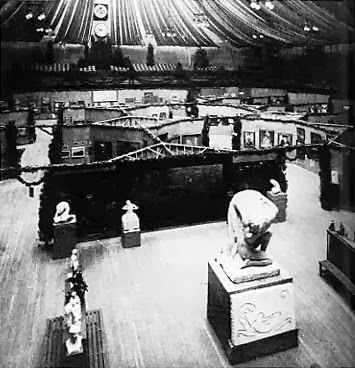
Gallery A in the 1913 International Exhibition of Modern Art (nicknamed "Armory" Show)
The International Exhibition of Modern Art (The Armory Show) of 1913 was a pivotal time in the world of art. It marked the first time that art considered to be the "modern" style was brought together and exhibited in one space. It took over a year of planning and received much public scorn from people unaccustomed and uninterested the burgeoning styles displayed like Cubism, Fauvism and Futurism.
Currently, there is an exhibition of the same name taking place in New York at the Piers which highlights art of the 20th and 21st centuries and is primarily a venue to buy and sell. However, if you have the opportunity, it is also a chance to see works by famous and unknown artists in the same locations.

2014 Armory Show in New York through March 9, 2014
Supreme Painting

Suprematist Composition, 1916 by Kazimir Malevich
During the closing ceremonies of the Olympics in Sochi last night, reference was made to Ukrainian artist Kazimir Malevich, but not much else was said about him. He is one of the most important artists of the 20th century, less famous than Picasso, but no less important. This is considered to be one of the most important pieces of 20th century art and in his treatise of 1916 Malevich explained that he wanted to concentrate on color and texture and to move beyond traditional representation.
Obama sends apology note to University of Texas professor for art history quip
Happy Valentine's Day

Seductive Selection by Peter Anton, 2011
Anton is known for creating sculptures of everyday objects (food is his favorite subject) but making them larger than life. He feels that food is a celebration of life and that it can be very beautiful, as well. His studio would be a treat to visit since he uses real foods as a model for his work

Art Sweet Art installation 2012
Artist Carrie Mae Weems on 30 Years of Genius - EBONY

"Art has saved my life on a regular basis. I wanted to offer that experience to children, to enlist them, to show them the possibilities that are in the arts, to persuade them to pursue it for both their own personal salvation and for changing the way we are understood." Carrie Mae Weems
A Gold Star for Cleveland

A large detail of Louis Grebenak's WBOE mural, which awaits installation at ideastream in downtown Cleveland.
There is an article in the Cleveland Plain Dealer today about a series of WPA murals that were saved from destruction by an art history teacher from Cleveland State University named Walter Leedy, who unfortunately did not live to see the results of his efforts. Much of the thanks goes as well to the ICA Art Conservation of Cleveland and to the Cuyahoga Metropolitan Housing Authority (CMHA). The artwork has been displayed around Cleveland, including on the campus at Cleveland State who leased two of the murals.
In Defense of Art History
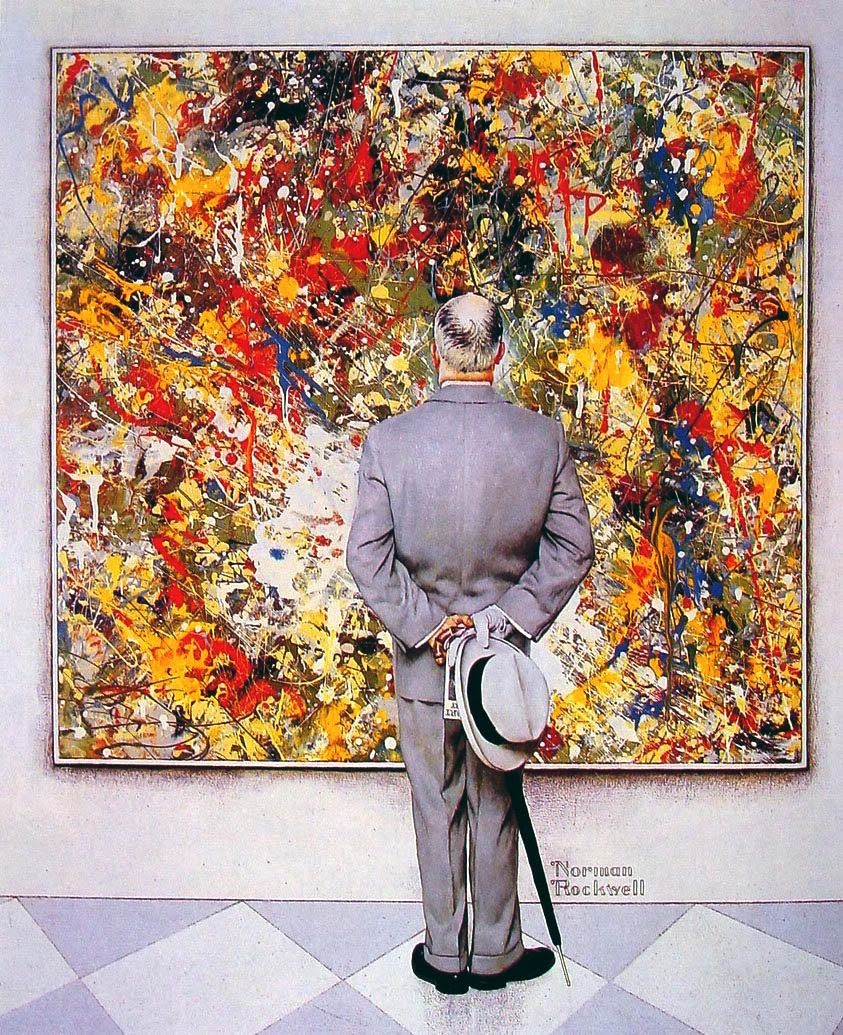
Art Connoisseur by Norman Rockwell, 1962.
I do not normally use this blog to editorialize, but I was listening to the radio yesterday and they played a sound bite from a speech President Obama was making in Wisconsin in defense of vocational training and I will say I agree with what he was saying, that there is no shame and often wage benefits, to being trained in a trade however, he chose the perpetually easy target of art history as an example of a college pursuit gone wrong (as Click and Clack humorously and routinely point out on Car Talk).
Here is the quote according to the Washington Post:
"A lot of young people no longer see the trades and skilled
manufacturing as a viable career, but I promise you, folks can make a
lot more potentially with skilled manufacturing or the trades than they
might with an art history degree." According to the Washington Post, President Obama then chuckled and attempted to put out the fire he had accidentally started by saying "Nothing wrong with art history degree, I love art history. I
don’t want to get a bunch of emails from everybody. I’m just saying,
you can make a really good living and have a great career without
getting a four-year college education, as long as you get the skills and
training that you need."
I thought oh great, one more insult to add to the pile, way to grab for the low hanging fruit Mr. President, but it points out a larger and and growing disdain in our society for the libral arts/ humanities in education. With all the promotion of the STEM degrees the traditional libral arts have taken a real hit in the last ten years or so. What used to be considered a fine, well-rounded background for almost any pursuit, has become the butt of jokes and is pointed to as an education squandered.
From my perspective, without the studies of the humanities our lives are less rich, they lack an understanding of past and richness that only an appreciation of the arts can bring. People may argue that you can pursue these avenues of enrichment on your own, outside of how you earn your money, but without teachers in these areas, your pursuit will only take you so far. Without someone to explain Abstract Expressionism to you, you might likely dismiss it as so many "globs of paint" and miss the importance of the freedom the movement represented and how by throwing the canvas on the ground and tossing the paint onto it, Jackson Pollock took art to a place without boundaries and represented the potential of a nation emerging from the dust of a hard-fought world war, as the new global super power. Art, music, literature, poetry are the mirror that reflects our world back to us, they capture and see things that may not be clear at the time, but upon further study enrich our understanding of ourselves and our world.
When I pursued my studies in the areas of literature and art, I knew I was not choosing a path to wealth or fame, but I expected to work in a museum or teach for a wage that would allow me to live modestly, but comfortably and reap my rewards though proximity to beautiful art, or through introducing students to the world of art. As I struggle to find a job (while the adjunct teaching opportunities dry-up and pay far less than a living wage [a rant for another place and time]) I get what Obama is saying, but I am sad for what we lose as a society when we devalue the humanities and look down on those who see its value as more than a guaranteed income bracket.
