Chateaubriand, 1809 by Anne-Louis Girodet de Roussy-Trioson.
Chateaubriand was an important French historical figure and writer whose English chef would make him more famous than his exploits.

Your Custom Text Here
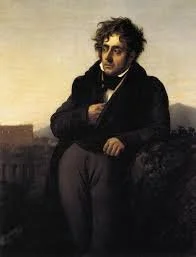
Chateaubriand, 1809 by Anne-Louis Girodet de Roussy-Trioson.
Chateaubriand was an important French historical figure and writer whose English chef would make him more famous than his exploits.

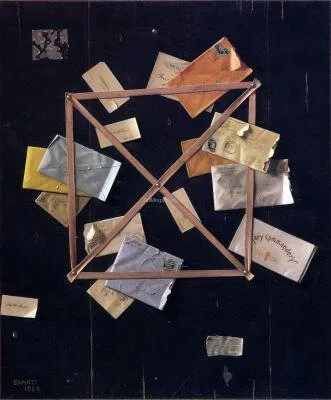
Mr. Hulings' Picture Rack, 1888 by William Harnett, Private Collection.
Harnett was a master of the Trompe L'Oeil (trick the eye) painting. The Greeks and Romans painted in this style but the term was coined in the Baroque period.

Kitaj was born in Cleveland, but lives and works mostly in England. This chaotic piece portrays the gates at Auschwitz and references T.S. Eliot's poem The Waste Land.

Self-portrait with Model, c. 1910 by Ernst Ludwig Kirchner, Kunsthalle, Hamburg.
Kirchner's self-portrait is the main focus of this work (who could ignore that robe). His work was branded "degenerate" by the Nazi's.
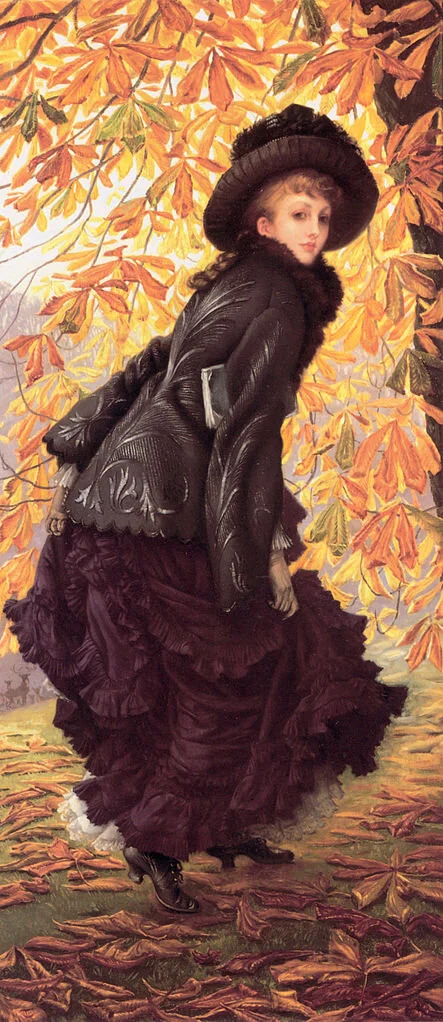

October, 1877 by James Tissot, Montreal Museum of Fine Arts
Another example of a Tissot model Kathleen Newton, the same one (I believe) as here. Often artists used the same models, even the same costumes as similar garments turn-up again and again.

Kathleen Newton (model)
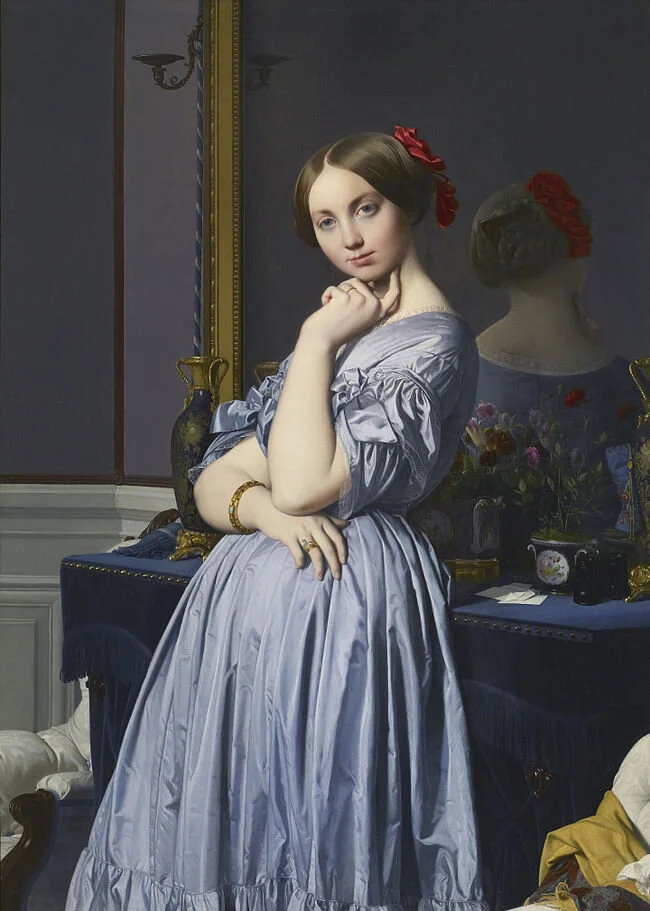

Louise de Broglie, The Countesse d'Haussonville by Jean-Auguste-Dominique Ingres, The Frick Collection
Ingres was a French 19th Century painter known for his realism. I am particularly fond of his fabrics - so realistic and so lush.
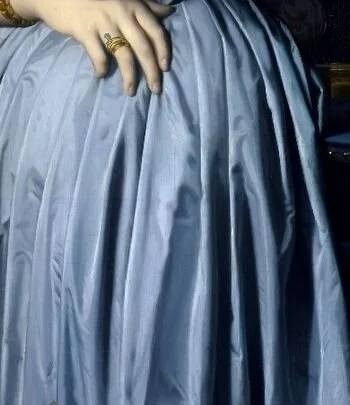
Detail
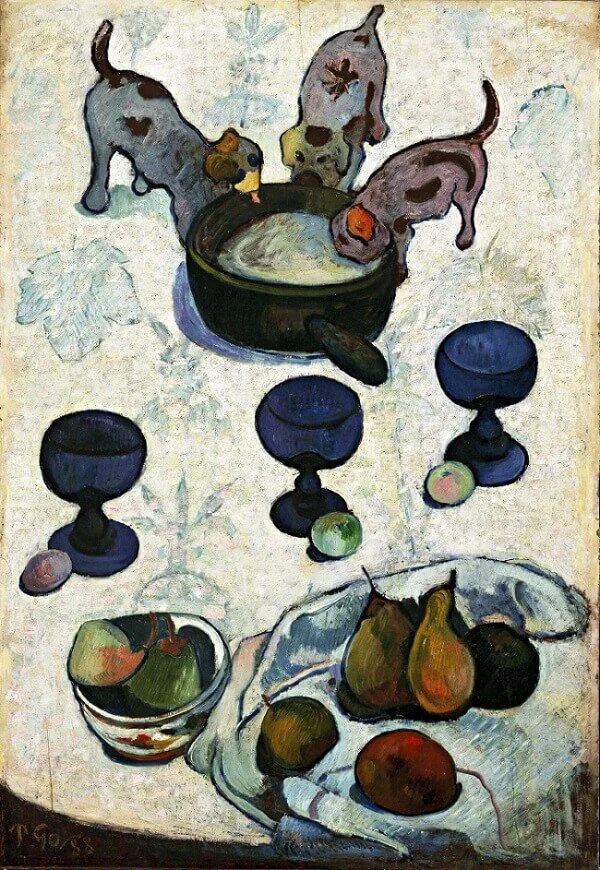
Still Life with Three Puppies, 1888 by Paul Gauguin, the Museum of Modern Art, NYC.
This was painted by Gauguin the same year he lived with van Gogh.
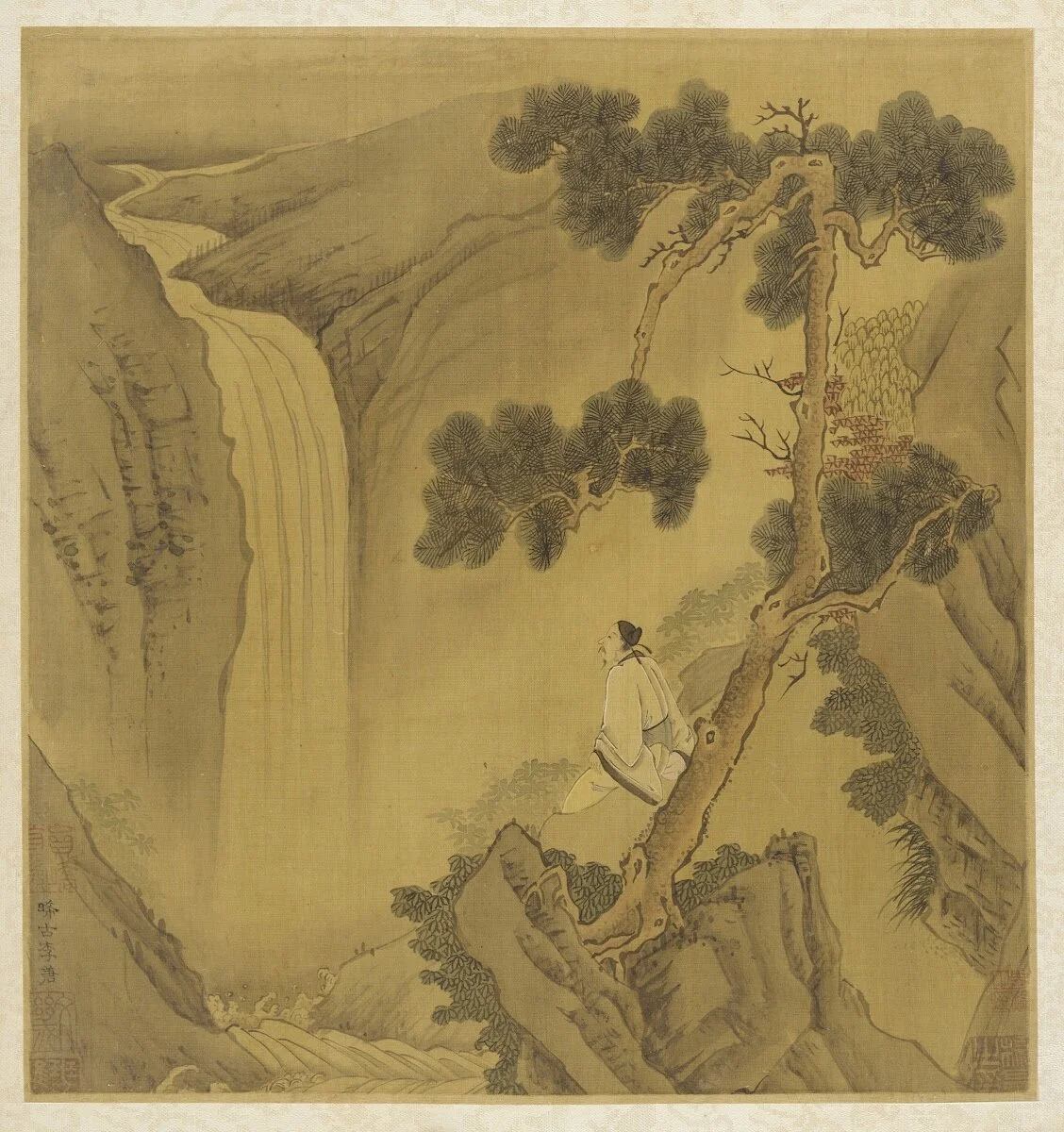
Landscape: A Man Looking at a Waterfall, Qing Dynasty (1644-1911), Freer and Sackler Galleries, Smithsonian.
The first time someone told me to look at Chinese paintings up and down instead of across, it made seeing the whole image so much easier.
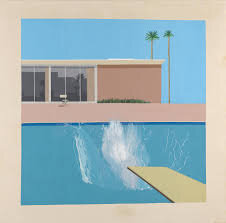
A Bigger Splash, 1967 by David Hockney, Tate Gallery, London.
Hockney was interested in capturing a splash of water that only lasts for mere seconds and depicting it on canvas. Throughout his career he has done series on the same subjects.
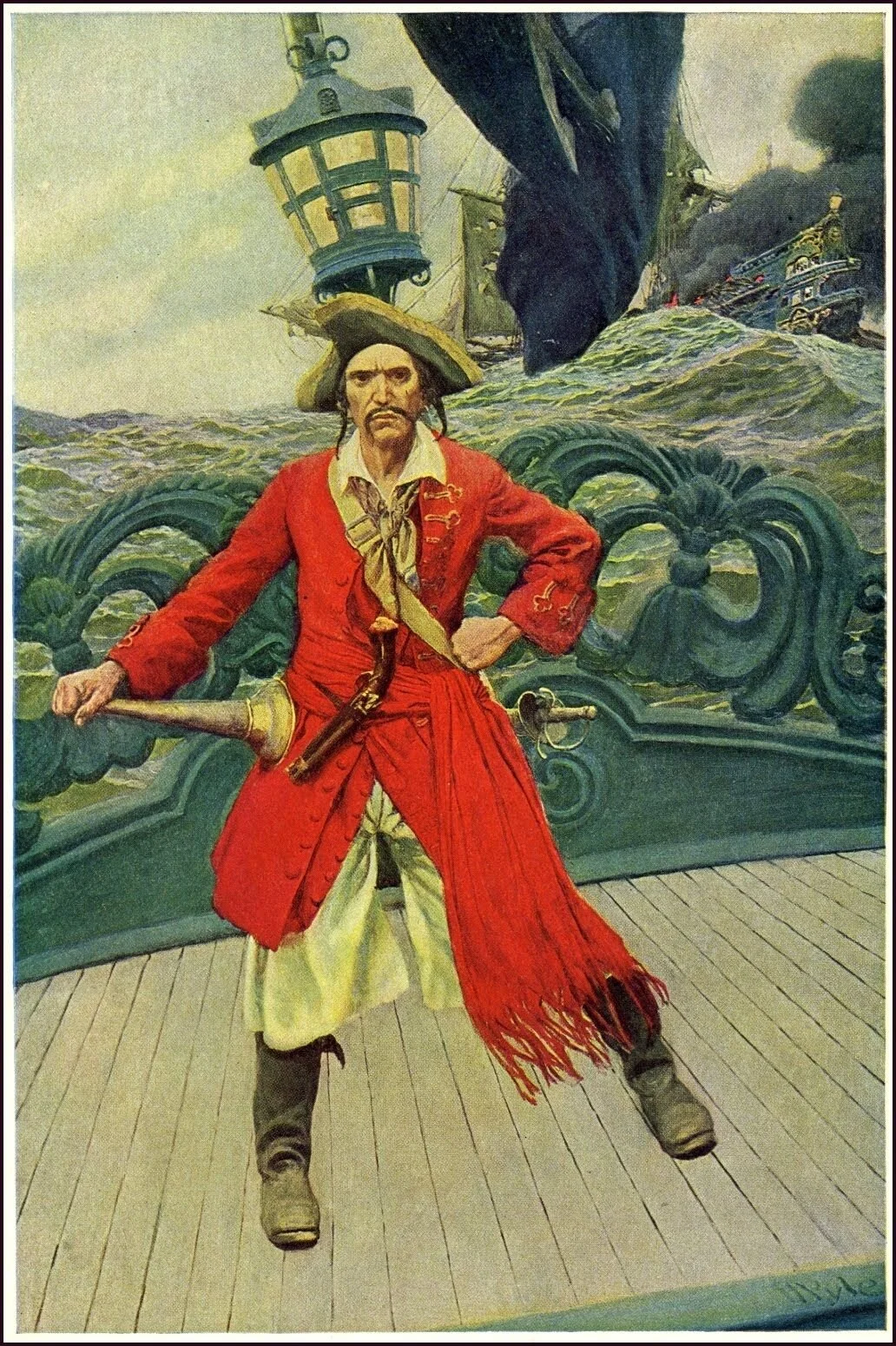
Captain Kidd, 1907 by Howard Pyle.
Pyle was better known as an illustrator and this comes from the Book of Pirates, which he also wrote.
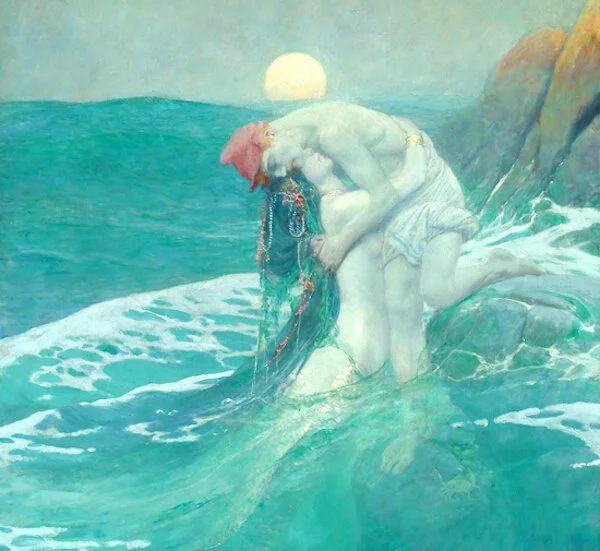
The Mermaid, 1910 by Howard Pyle, The Delaware Museum of Art.
This was the painting Pyle was working on when he sailed for Italy to study mural painting by studying the Italian Renaissance masters. He died while in Italy.
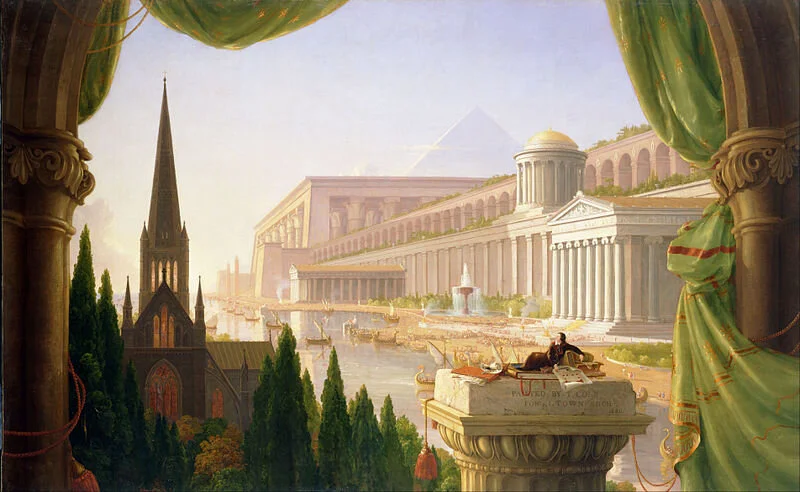
The Architect's Dream, 1840 by Thomas Cole, The Toledo Museum of Art.
On my final for intro to art history, I would always include this work which the students had not seen before and ask them to identify at least five styles of architecture - it was fun and a good way to end the exam.
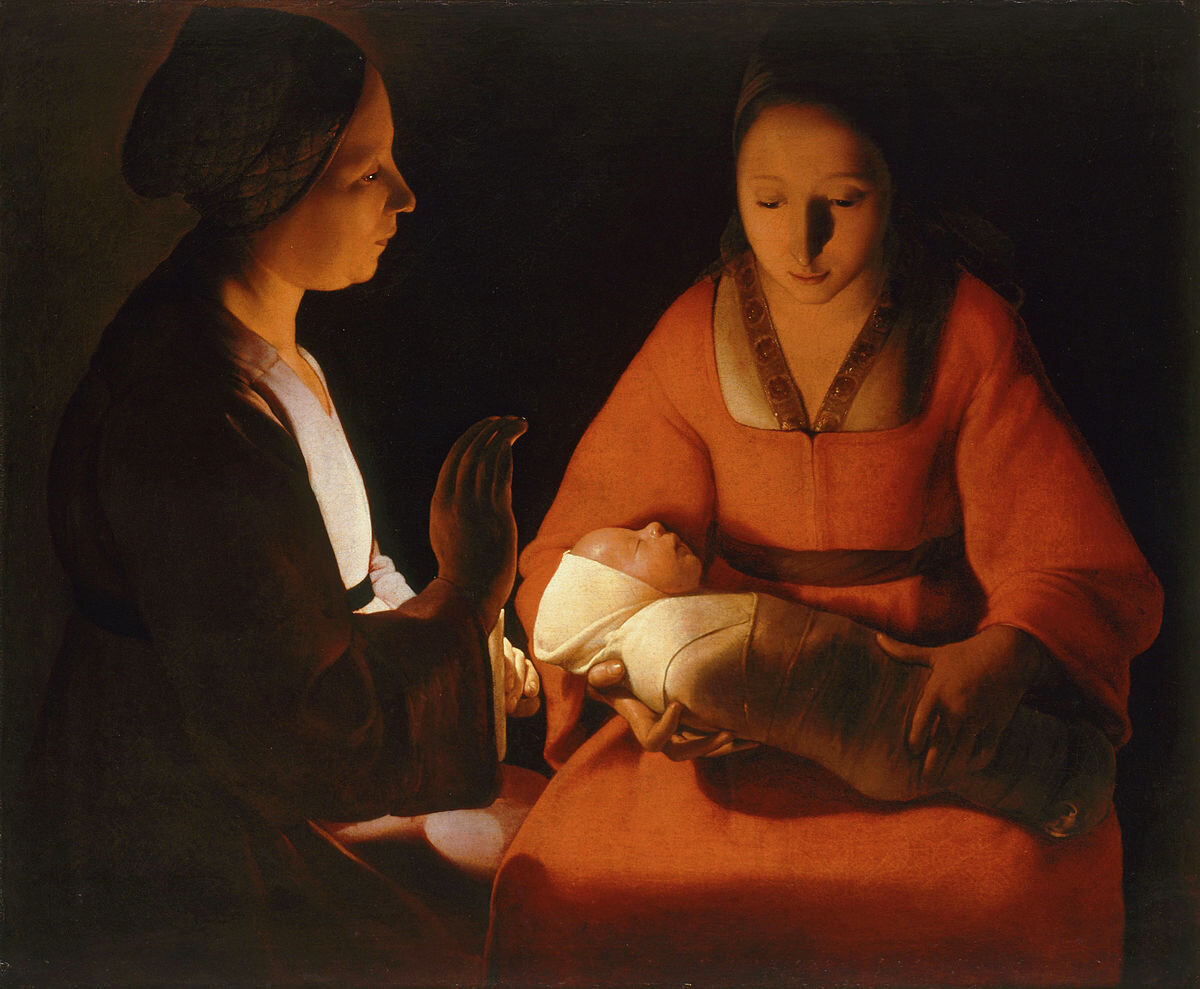
The New-born, c. 1640 by Georges de la Tour, Musee des Beaux Arts, Rennes.
Often artists would mask religious scenes by setting them in the present and leaving out all of the traditional "signs" of a religious nativity scene such as a halo on the mother and child, but the calm the beauty and the presence of a figure who could be perceived as St. Anne, seem to indicate a religious meaning.
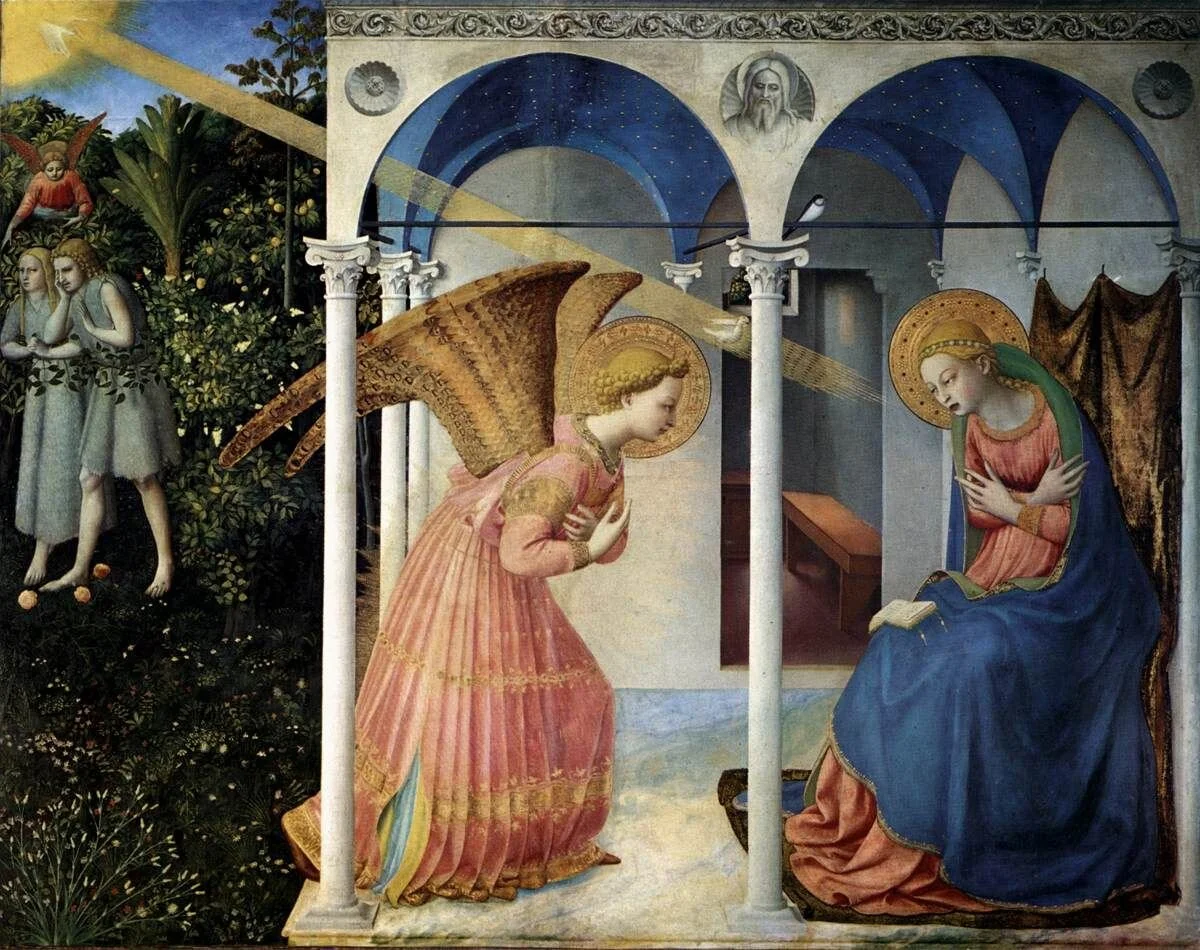
The Annunciation, c.1441-3 by Fra Angelico, Museo di San Marco, Florence.
Calm pervades the scene as Mary is informed by the Archangel Gabriel that she is carrying the child of God. St. Peter the Martyr (the patron saint of the inquisitive) looks on as she receives the news. Fra Angelico, a Dominican Monk, was known for his palette of pastels and serene depictions.
Commissioned by Cosimo de’Medici.
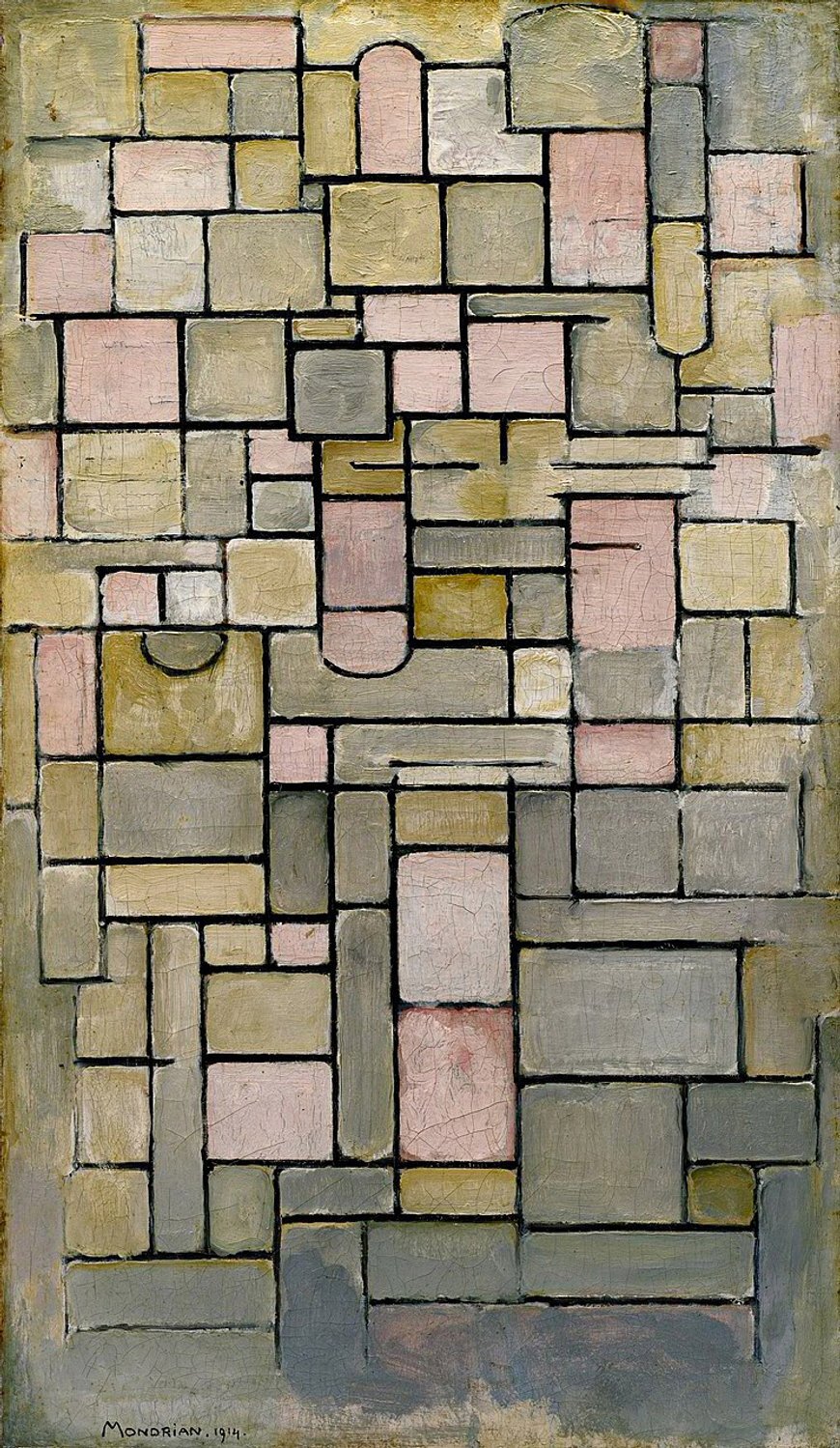
Composition 8, 1914 by Piet Mondrian, The Guggenheim Museum, NYC.
This is Mondrian's interpretation of a tree after seeing the cubist work of Braque and Picasso. He eventually took it to an even more abstract level.
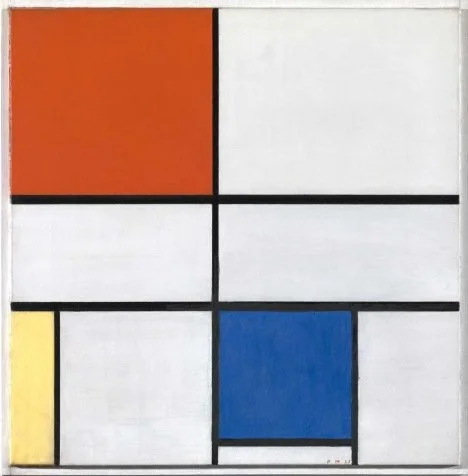
Piet Mondrian Composition C (No.III) with Red, Yellow and Blue © 2007 Mondrian/Holtzman Trust c/o HCR International, Warrenton, VA
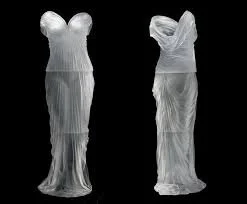
Dress 3 by Karen LaMonte, 2001. Fine Arts Museums of San Francisco.
LaMonte honors women, dresses and the art of glass in her work. You see the body beneath the garment, but the garment really is the star of the show.
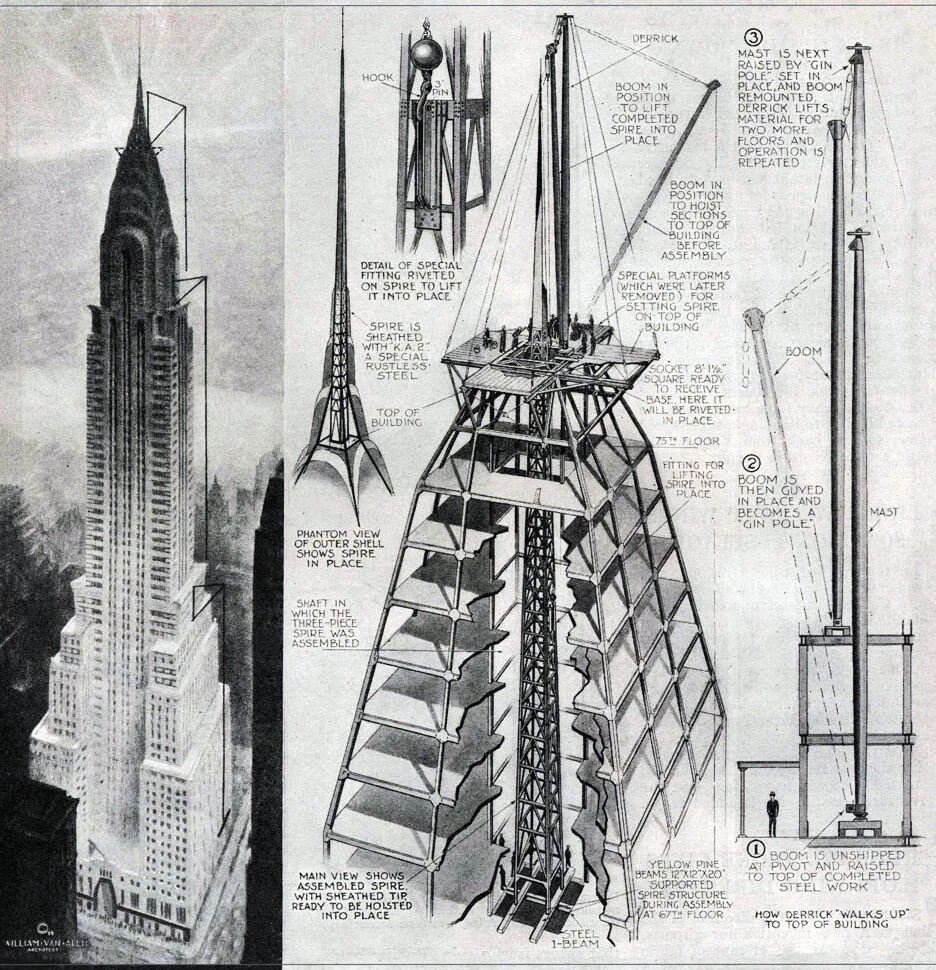
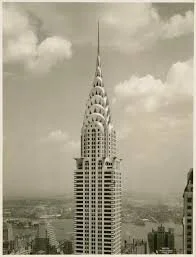
The Chrysler Building, 1930, architect William Van Alen, New York.
An homage to all things modern, the tallest building (until the Empire State eclipsed it one year later), decorated with hubcaps, hood ornaments and steel so shiny it looks like chrome. It remains an Art Deco Icon.
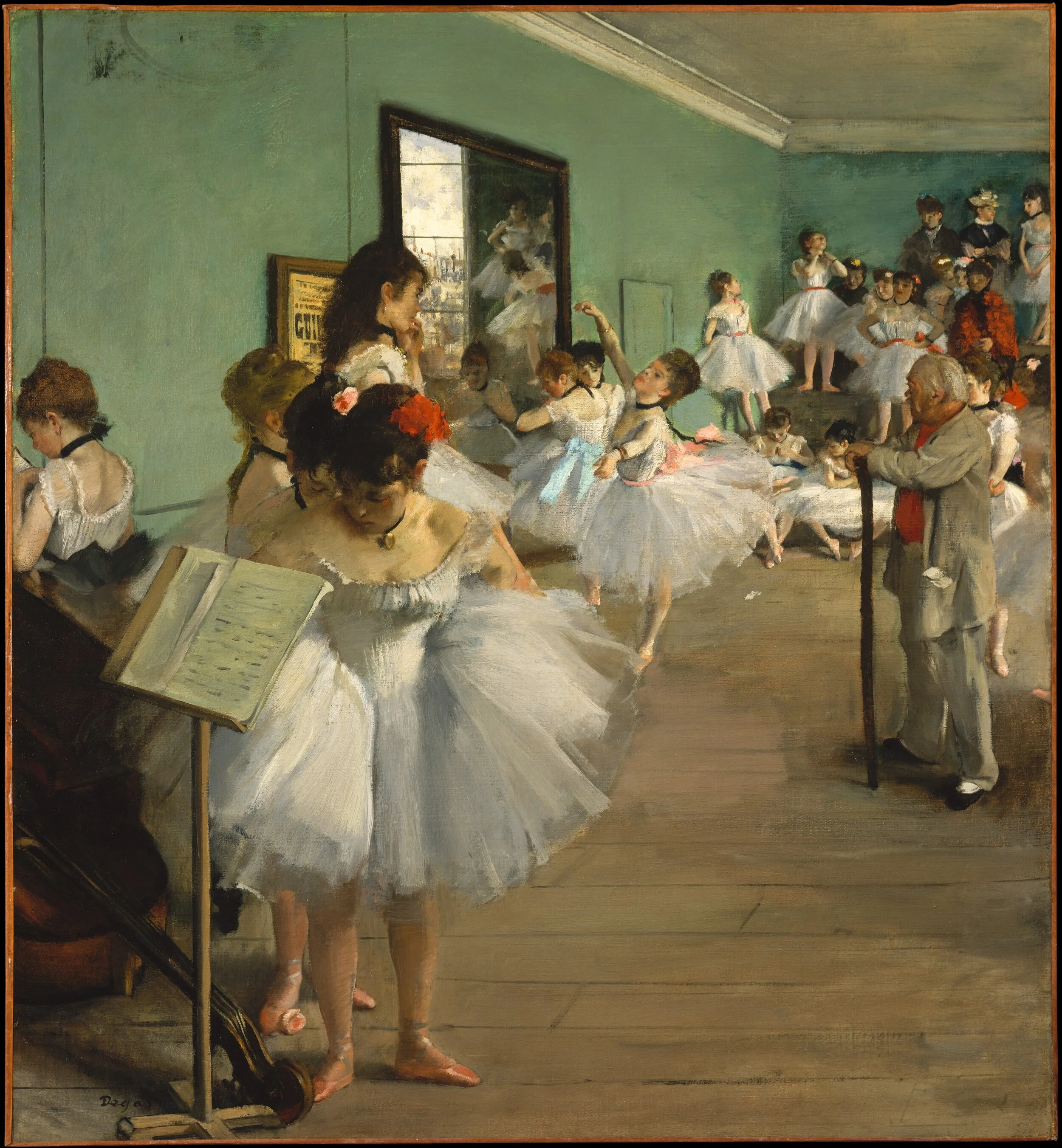
Ballet Rehearsal 1874 by Edgar Degas. The Metropolitan Museum.
The teacher in these paintings was actually a dancer and friend of Degas and not the class teacher. His name was Jules Perrot.
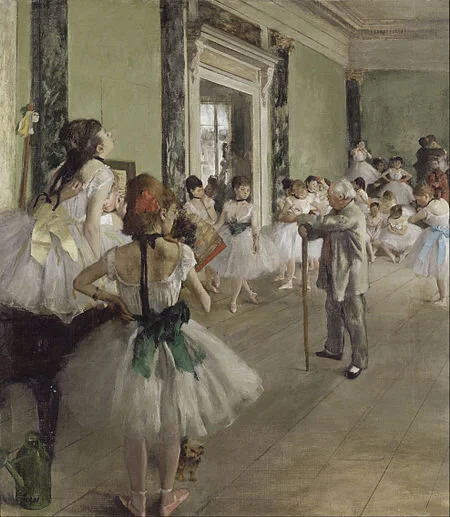
La classe de danse (The Dancing class), c.1873-75 by Edgar Degas, Museé d'Orsay, Paris.
Degas had access to all areas of the dancer's world and took advantage of this capturing them at rest, rehearsing, performing and dressing. They were a subject he returned to frequently over the years.