Frontispiece for Goblin Market, 1933 by Arthur Rackham.
Rackham's illustrations for Christina Rossetti's poem are full of the detail that make his artwork popular with young and old, alike.

Your Custom Text Here
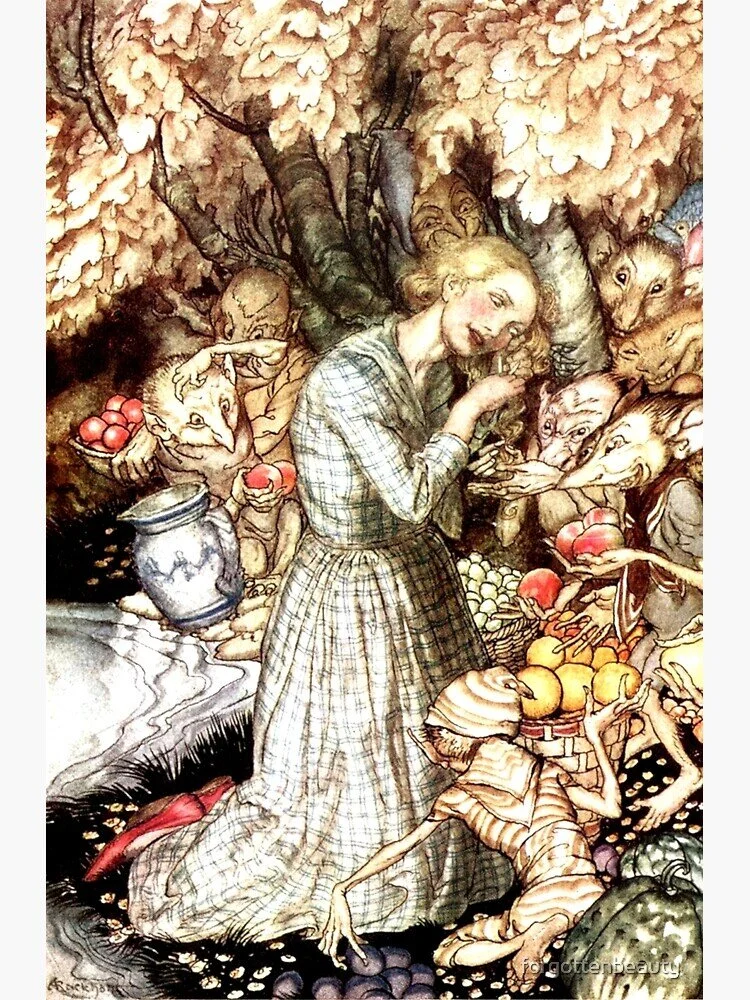
Frontispiece for Goblin Market, 1933 by Arthur Rackham.
Rackham's illustrations for Christina Rossetti's poem are full of the detail that make his artwork popular with young and old, alike.

Autumn, 1999 by Alex Katz, Carnegie Museum of Art, Pittsburgh.
Katz was influenced by Jackson Pollock early in his career but in the 1960's his work became more realistic and representational. He concentrated on portraits and figural images, but also did some landscapes and florals.

Fallingwater, 1936-38 by Frank Lloyd Wright, Bear Run, PA. Western Pennsylvania Conservancy.
Considered Wright's masterpiece, Fallingwater is found deep in the PA woods and was built as a retreat for the Kaufman family of Pittsburgh.
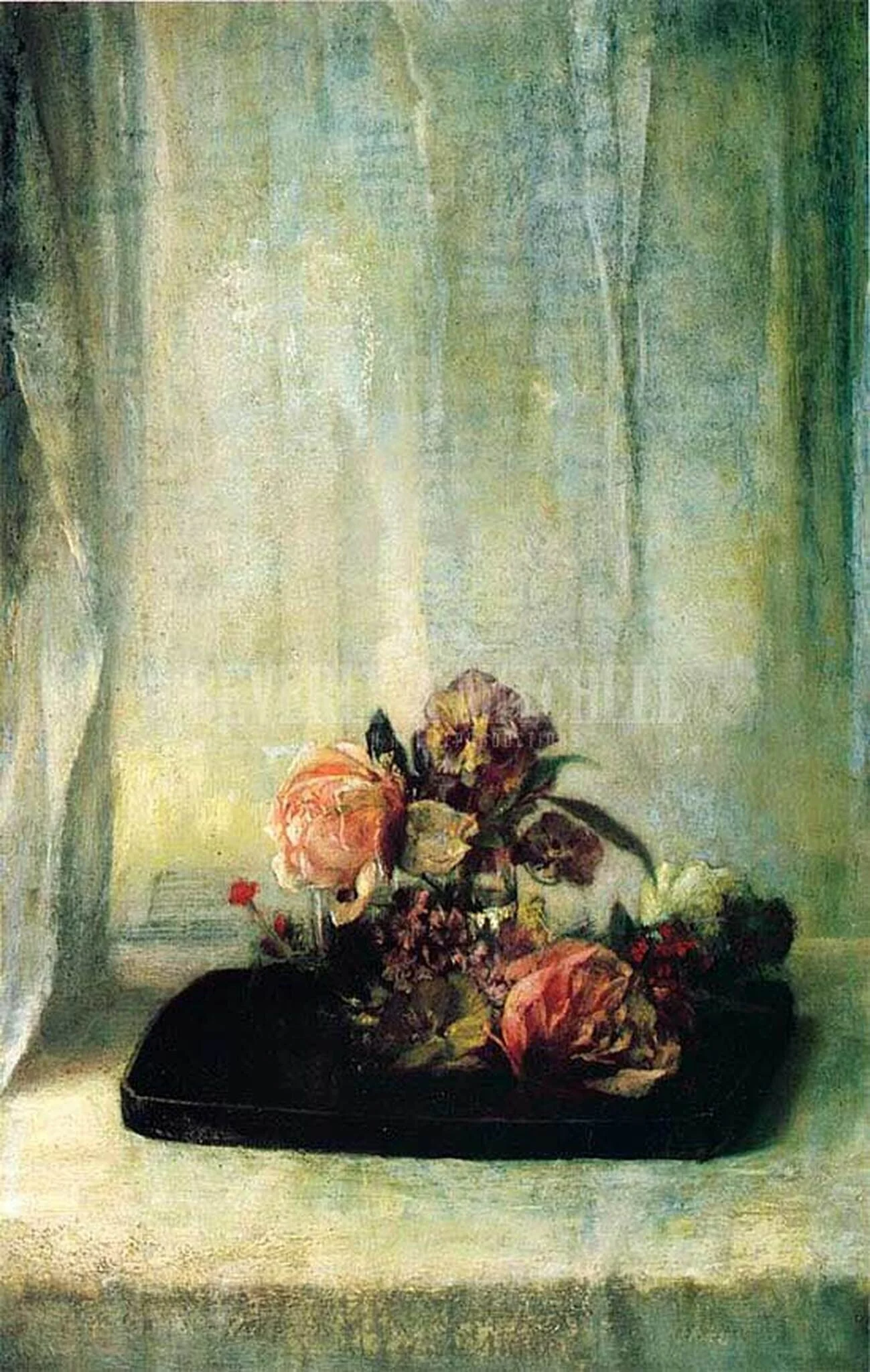
Roses on a Tray, c.1861 by John La Farge, Museum of Art, Carnegie Institute, Pittsburgh.
La Farge began his career as a painter, but became most famous for this work in stained glass. Second only to Louis Comfort Tiffany. He also created decorative for a number of churches and private residences.
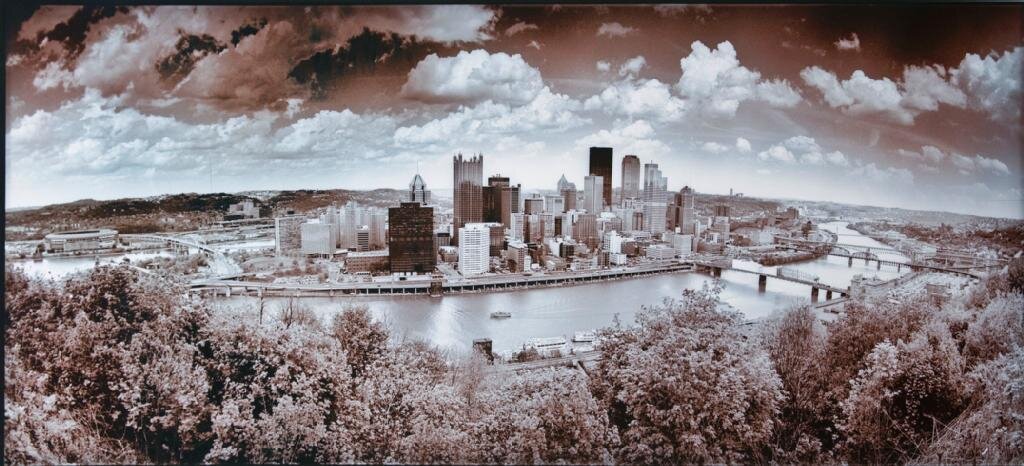
Downtown Pittsburgh Skyscrapers from Mount Washington, 1996 by Aaronel de Roy Gruber, Collection of the Artist.
A Pittsburgh artist who created paintings, sculpture and photos. Her work can be found in many museum collections. Many of her panoramic shots were also hand tinted.

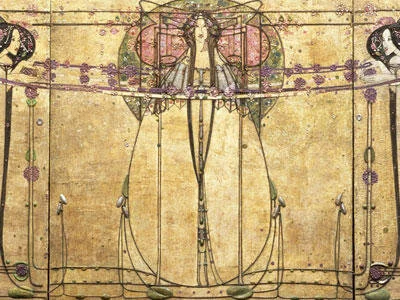
Ingram Street Tea Rooms by Charles Rennie Mackintosh et al.
Here is an example of Charles Rennie Mackintosh's architectural and Margaret Macdonald Mackintosh’s design work. His wife worked with him on his interior designs. Charles, Margaret, her sister Frances and Herbert MacNair all formed a design group known as "The Four."

Cuckoo Flower, 1910 by Charles Rennie Mackintosh, Hunterian Art Gallery, University of Glasglow, Scotland.
Mackintosh's interest in plants began at a young age and continued throughout his life. Although he is most famous as an architect, his talent in painting watercolors should also be appreciated.
"Art is the flower-life is the green leaf. Let every artist strive to make his flower a beautiful living thing - something that will convince the world that there may be - there are - things more precious - more beautiful - more lasting than life."
Charles Rennie Mackintosh 'Seemliness,' 1902.

Whatever it is, the way you tell your story online can make all the difference.
White Center, 1950 by Mark Rothko.
A member of the New York School that emerged in the mid 20th century, Mark Rothko has come to be regarded as one of America's greatest artists. He had his first solo exhibition in 1961.
Whatever it is, the way you tell your story online can make all the difference.
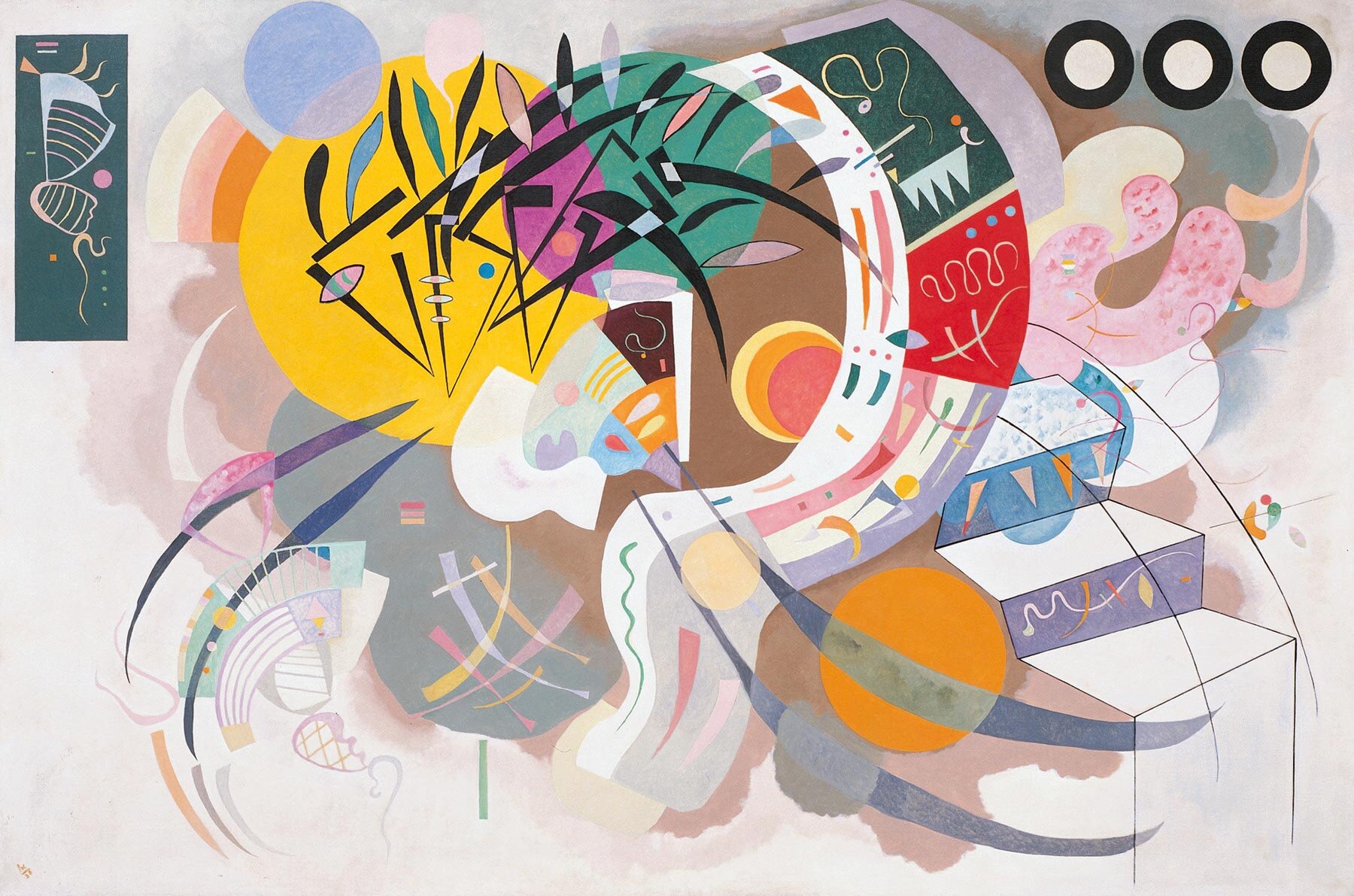
Dominant Curve by Vasily Kandinsky.
Kandinsky was one of the most influential Abstract artists of the 20th century. He was a teacher of both law and later art, teaching for a number of years at the German Bauhaus. He himself claimed he became interested in abstraction after seeing one of his paintings upside down.
Whatever it is, the way you tell your story online can make all the difference.
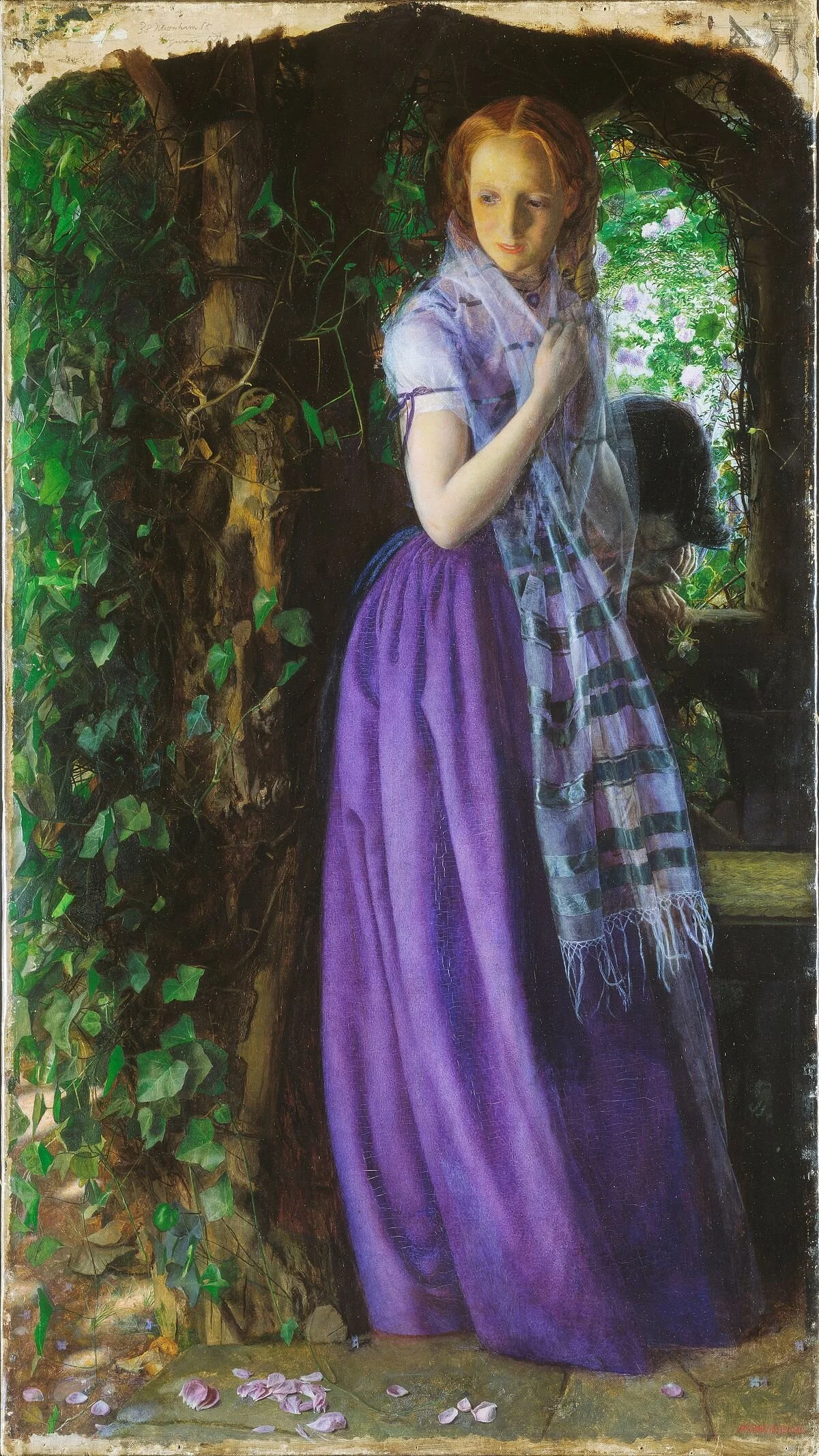
April Love, 1855-56 by Arthur Hughes.
Hughes accompanied this painting with a poem by Tennyson called The Miller's Daughter. I love the vibrant purple of the dress, it just pops out of the painting.

Whatever it is, the way you tell your story online can make all the difference.
The Chariot of Aurora (detail), 1935 by Jean Dunand.
This large panel was part of a design for the ocean liner Normandie one of the grandest and most famous ships ever built.
Whatever it is, the way you tell your story online can make all the difference.
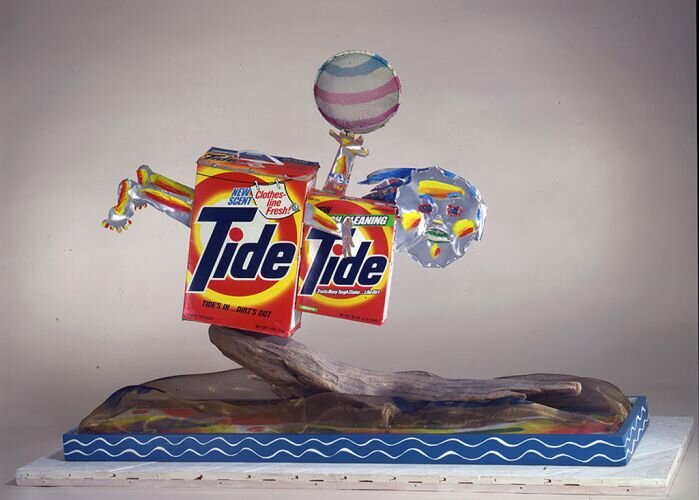
Sun, Sea, and Tide, 1989 by Red Grooms, The Kemper Museum of Contemporary Art, Kansas City, MO.
Red Grooms uses all different kinds of media in his work, which is often two or three-dimensional. He likes to combine painting and sculpture into works he calls "sculpto-pictoramas."
Whatever it is, the way you tell your story online can make all the difference.
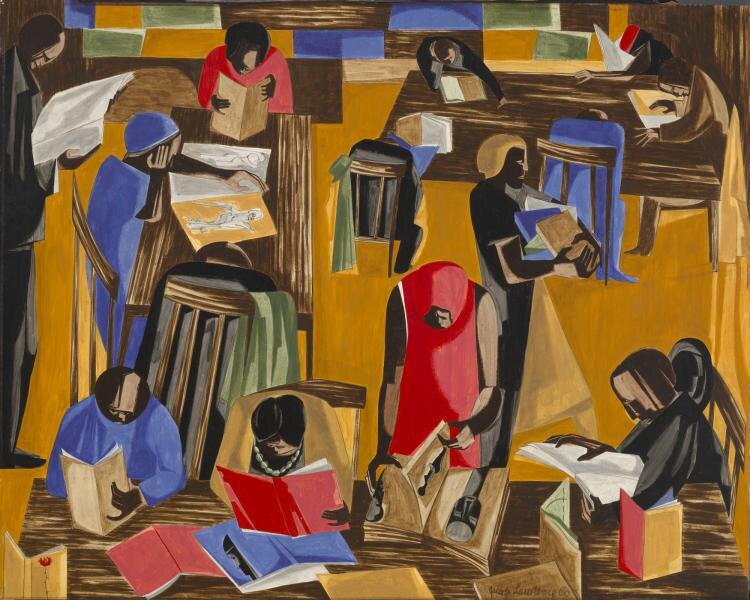
The Library, 1960 by Jacob Lawrence, The Smithsonian Institution, Washington D.C.
"Lawrence never completed high school but taught himself African American history, spending hours in the library researching legendary black figures and events to use in his paintings. " (Smithsonian website).
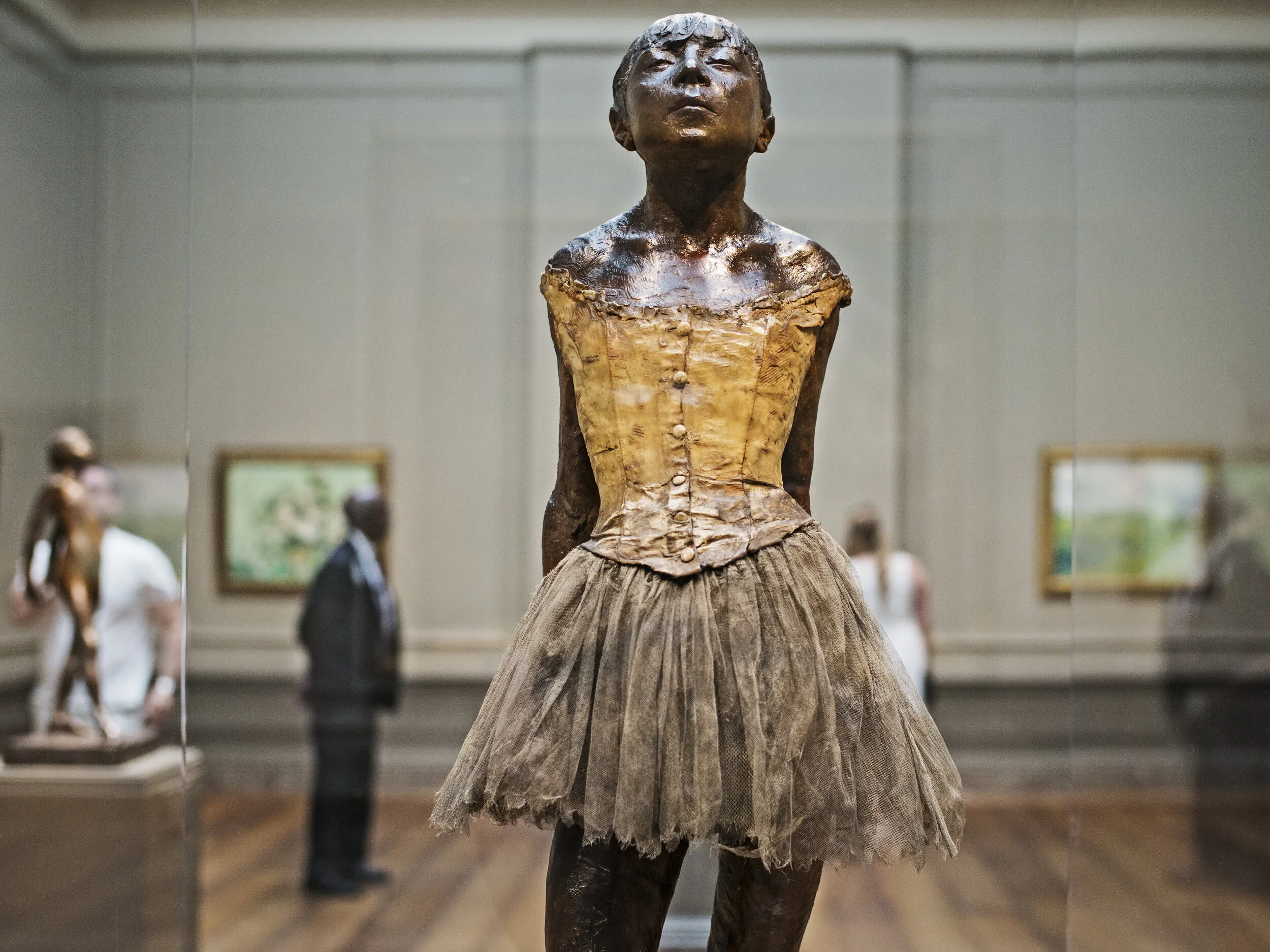
Dressed Ballet Dancer, 1880/1881 by Edgar Degas, National Gallery, Washington.
Degas spent a great deal of time observing the world of the ballet. This statue represents the young girls in training, known as the "rats."
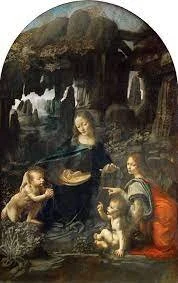
The Virgin of the Rocks, 1483-86 by Leonardo da Vinci.
Leonardo created two almost identical versions of the same scene of the Virgin with the angel Uriel, John the Baptist and the Christ child. The first work was commissioned by an organization and when they did not pay right away it was purchased by an individual, finally the group gathered the money and another version was made for them.
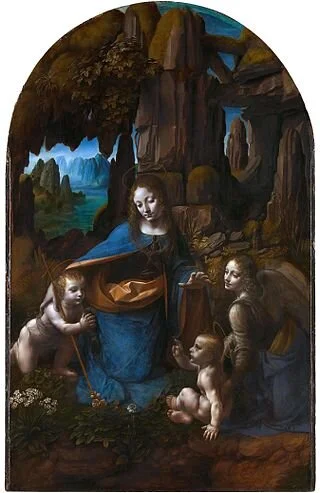
London version

Bullet Through Apple, 1964 by Harold "Doc" Edgerton.
Invented the Stroboscope which is what allowed him to create photographs like this one. He was a professor at MIT.
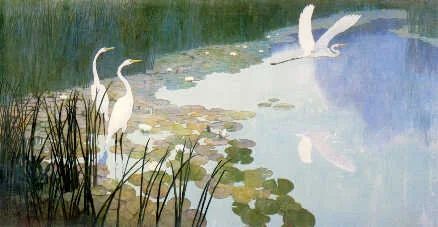
Egrets, c. 1945 by NC Wyeth, Mural for the Metropolitan Life Building.
NC Wyeth is the father of Andrew Wyeth. He is best known as a book illustrator and made many famous tales such as Robin Hood and Treasure Island come alive for young readers.
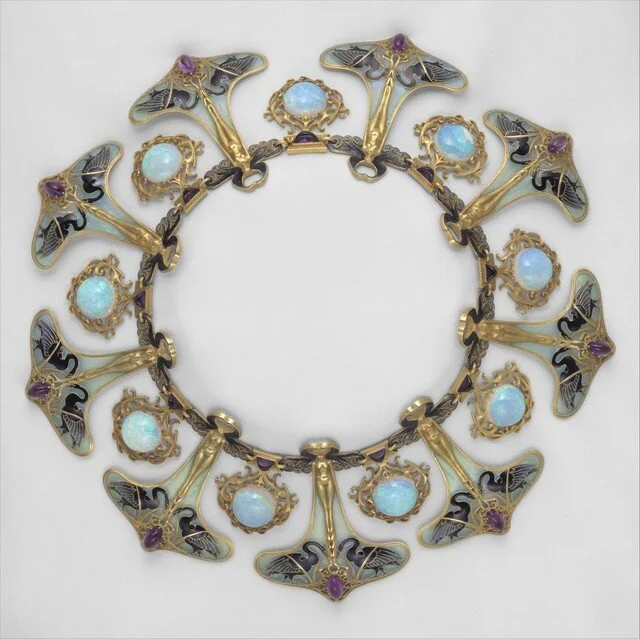
Necklace, Rene Jules Lalique, c.1900, The Metropolitan Museum of Art.
Lalique whose name is better known for his glass than his jewelry, created some amazing art nouveau jewelry, as he was trained as a jeweler. His jewelry often incorporated enamel which led him to begin to work in glass.

Detail

Lady with an Ermine, 1485 by Leonardo de Vinci.
This work is one of only three portraits of women done by Leonardo and has sustained a lot of retouching and overpainting throughout the years. However the woman (whose identity remains in dispute) and the ermine itself are so wonderful they are both considered to have been painted by da Vinci. The ermine has actually been identified as a ferret. Seized by the Nazi's in WWII the painting was returned to Poland in 1946.
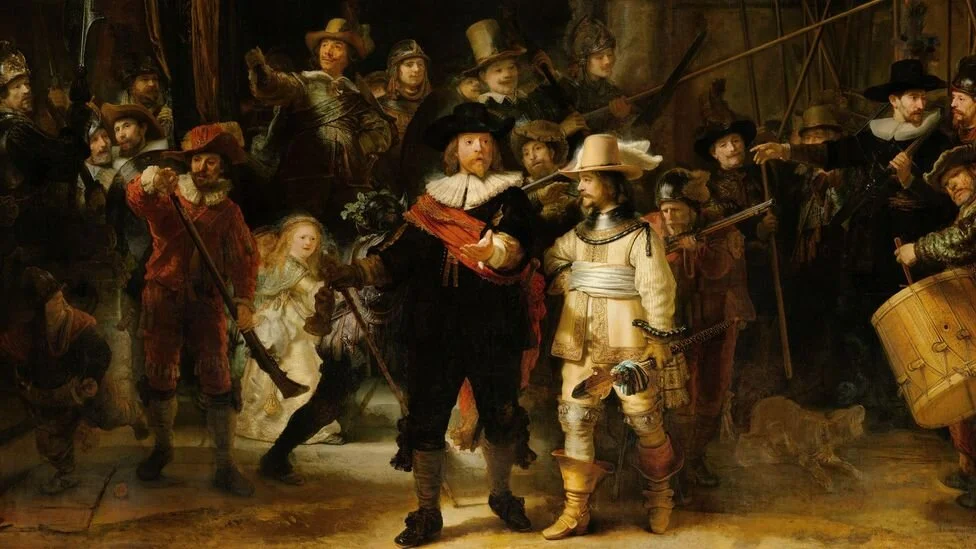
The Night Watch, 1642 by Rembrandt van Rijn, The Rijksmuseum, Amsterdam.
Called the Night Watch in modern times, the original title of this work Company of Captain Frans Banning Cocq and Lieutenant Willem van Ruytenhurch was a reference to its main characters. The "golden girl" in the background is a mystery. Considering the very fine clothing she wears, she is assumed to be more than a servant. Also her resemblance to Rembrandt's wife has been noted. The final misinterpretation lies in the name of the work, it was not painted as a night image, but had been covered in layers of brown varnish until it was restored after WW II.
