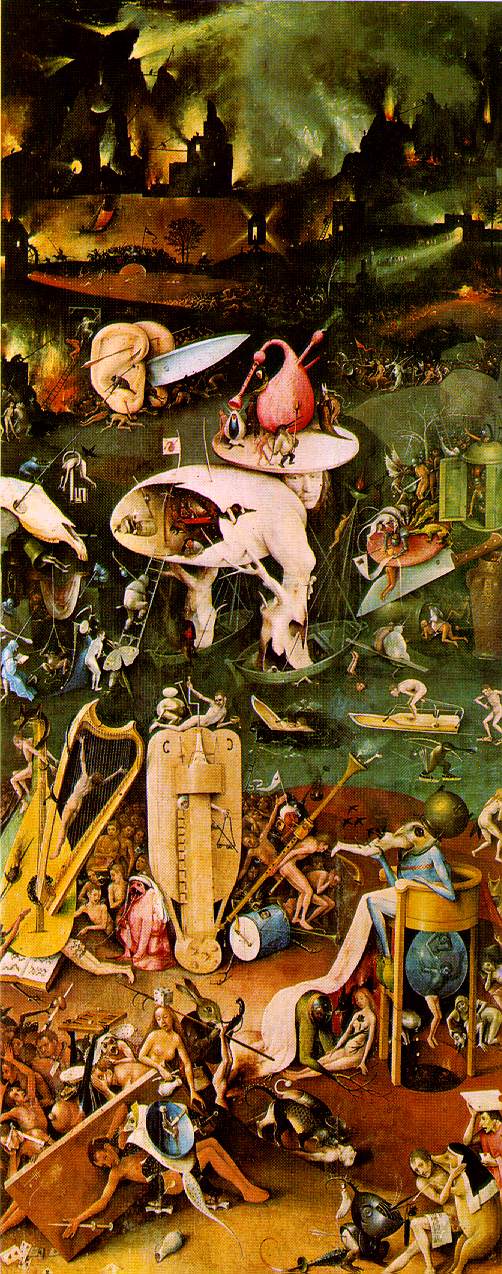
IKB 79,c.1959 by Yves Klein, Tate Gallery, London.
Klein created his own color called IKB (International Klein Blue) and he devotes the entire canvas to the color. He wrote the Chelsea Hotel Manifesto about his art. He died at age 34.
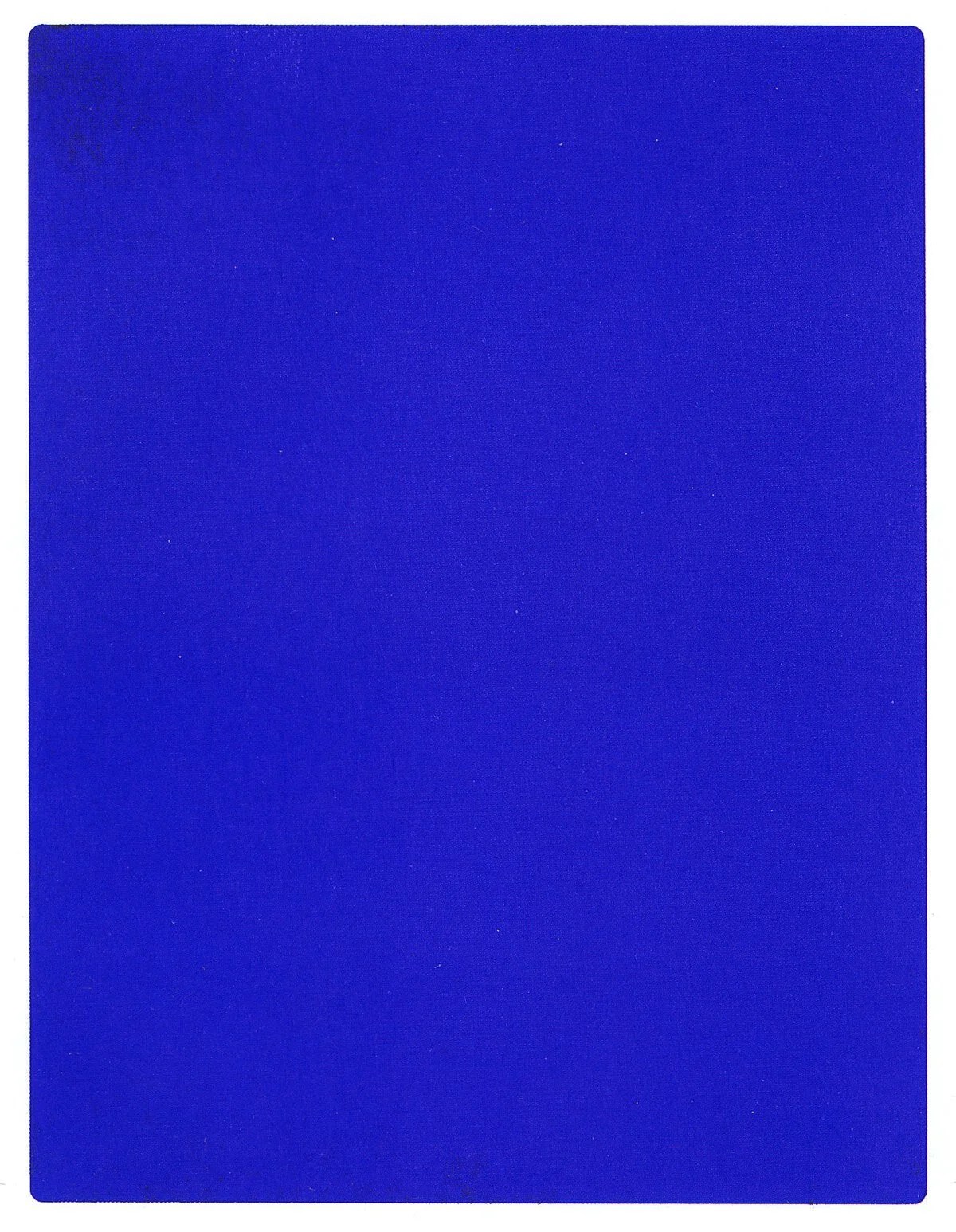
IKB 79,c.1959 by Yves Klein, Tate Gallery, London.
Klein created his own color called IKB (International Klein Blue) and he devotes the entire canvas to the color. He wrote the Chelsea Hotel Manifesto about his art. He died at age 34.
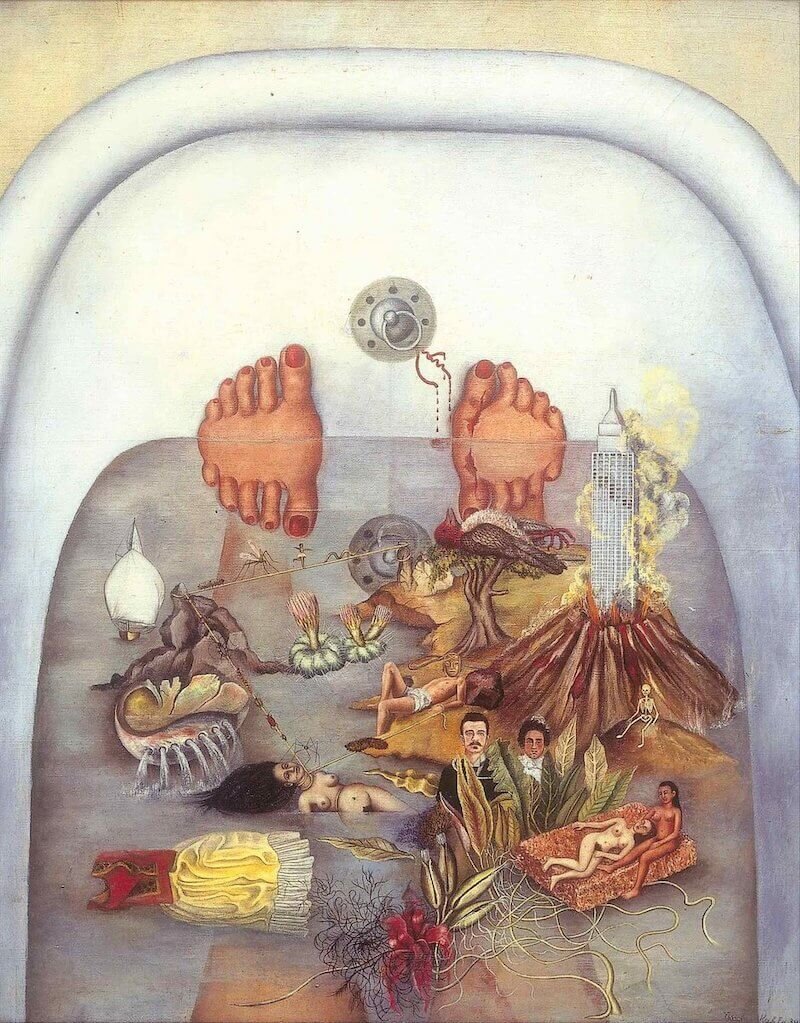
What the Water Gave Me, 1938 by Frida Kahlo.
Kahlo’s work is always very personal. This one exposes the thoughts and dreams of the artist whose feet stick out of the water at the end of the tub. She was married to Diego Rivera whose career eclipsed her own, however there has been a revival of her work in the last 15 years which has made her very popular.
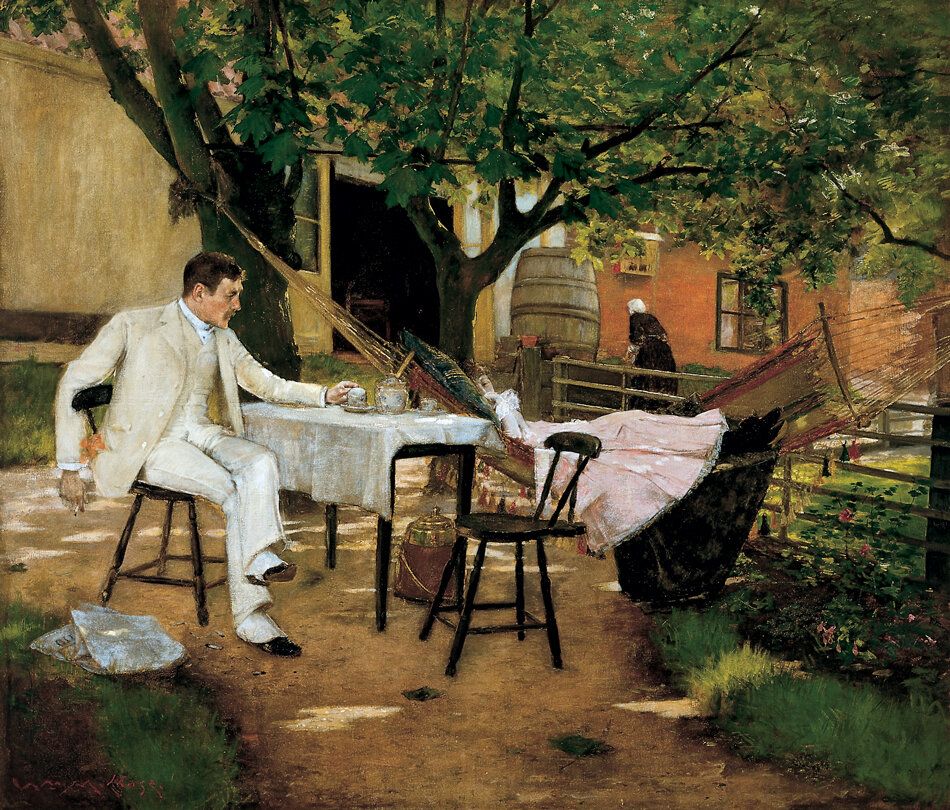
Sunlight and Shadow, 1884 by William Merrit Chase, Joslyn Art Museum, Omaha, NE
This work by another American artist who studied and had great success in Europe as well as in the US, was originally entitled The Tiff by the artist. That title gives us a little more insight into what is going on between the man and the woman peeking over the edge of the hammock.
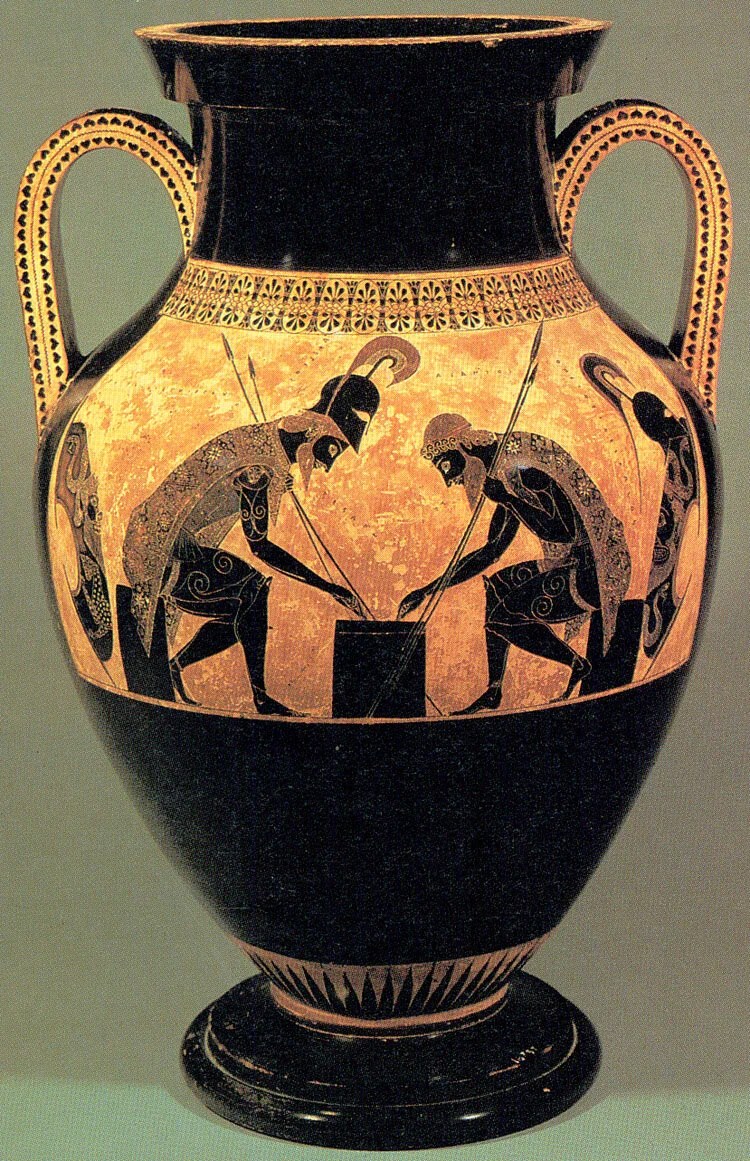
Exekias was active in the second half of the 6th century BCE. He is well known for his depictions of battle scenes, but also for another of his amphorae which shows Ajax and Achilles playing a board game.
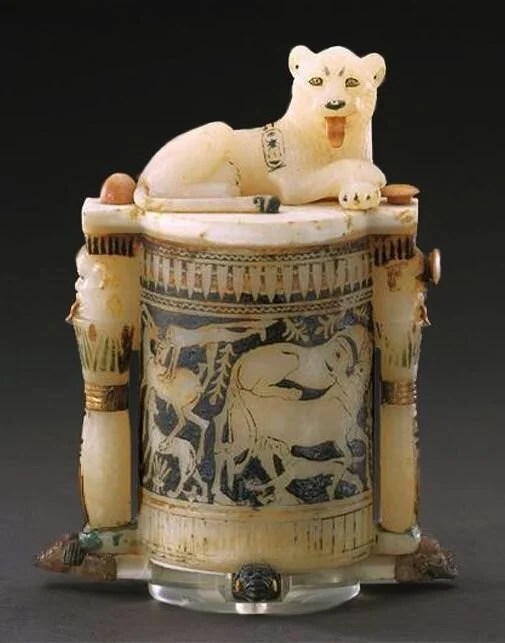
Container with Lion on Lid, 18th Dynasty Tomb of Tutankhamen,
The treasures of the “boy-king” are something to behold. Especially when you consider that we really only have them because he was such an unremarkable Pharaoh at the time, that his grave was overlooked by grave robbers for millennia.
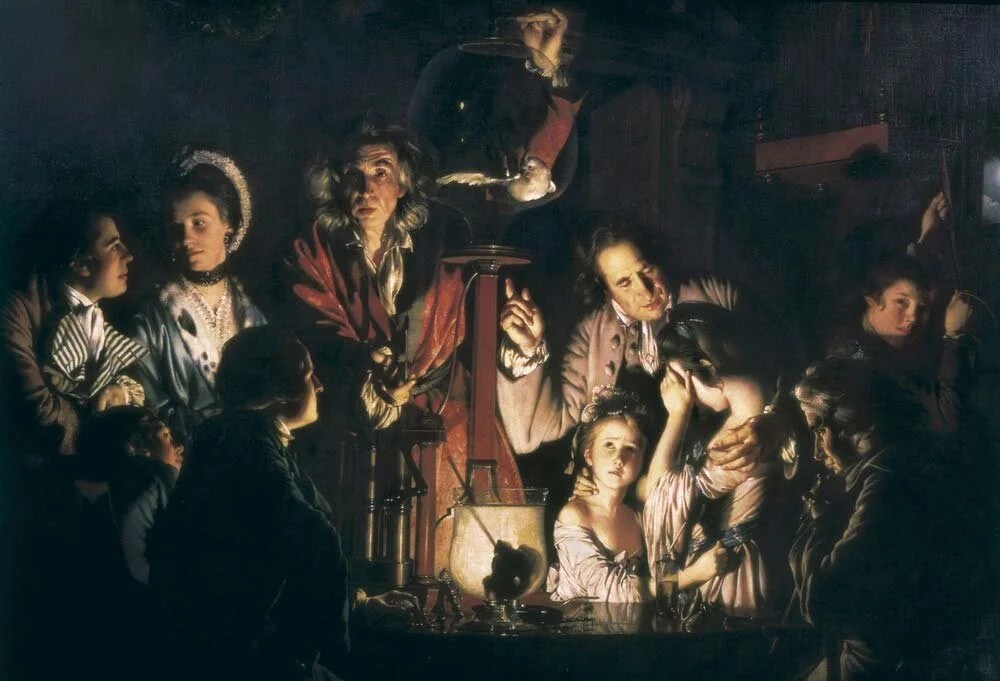
An Experiment on a Bird in the Airpump, 1768 by Joseph Wright of Derby.
Wright of Derby studied under Sir Joshua Reynolds however his work is more experimental as he was fascinated with light and painting the effects of light and darkness. This work even features the moonlight so it is a combination of artificial and natural light.
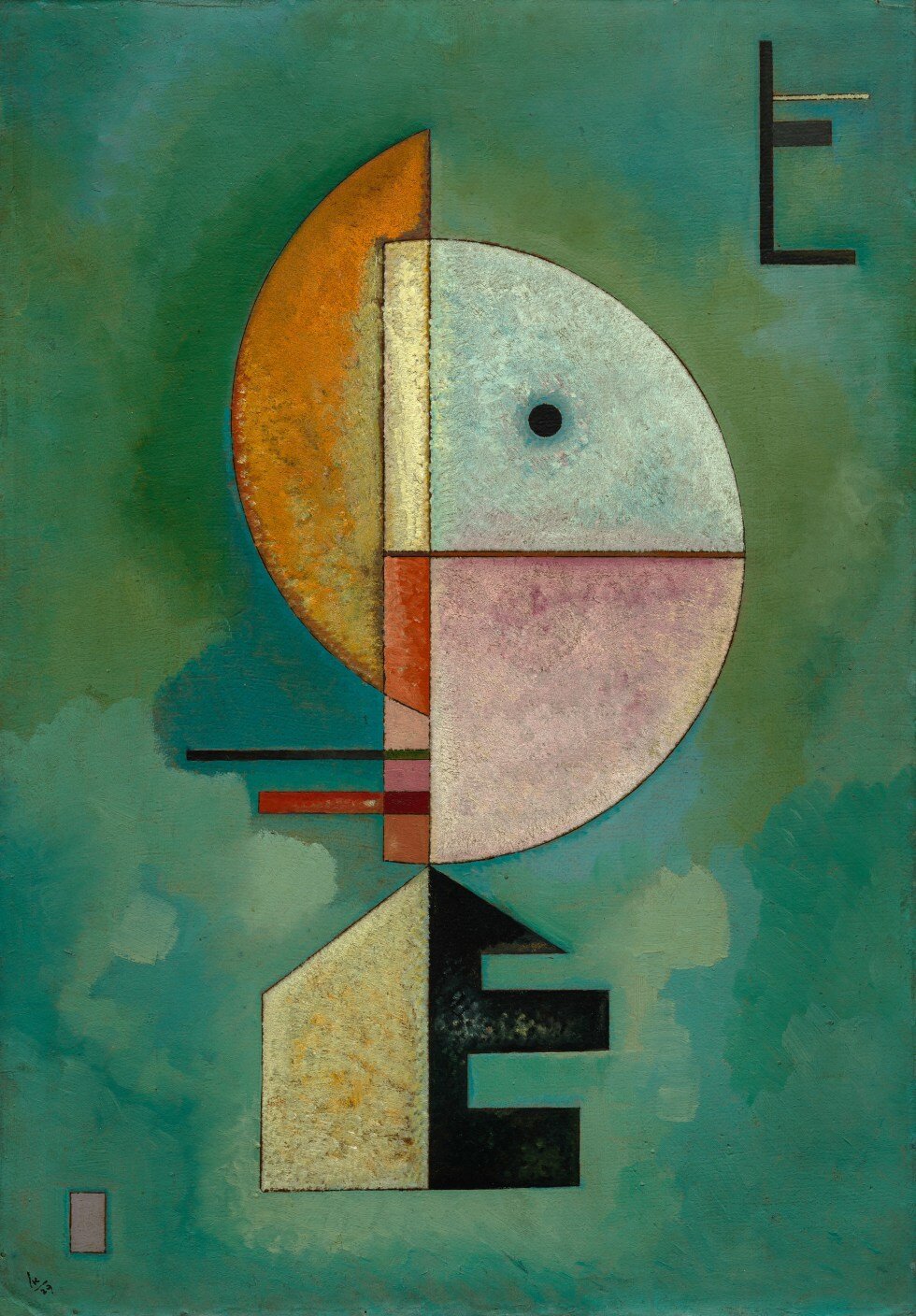
Upward (Empor), 1929 by Vasily Kandinsky.
This is one of the more controlled of Kandinsky’s work. He used lines and shapes to create an abstract form. There are two shapes that resemble the letter “E” they could refer to the German title of the piece Empor.
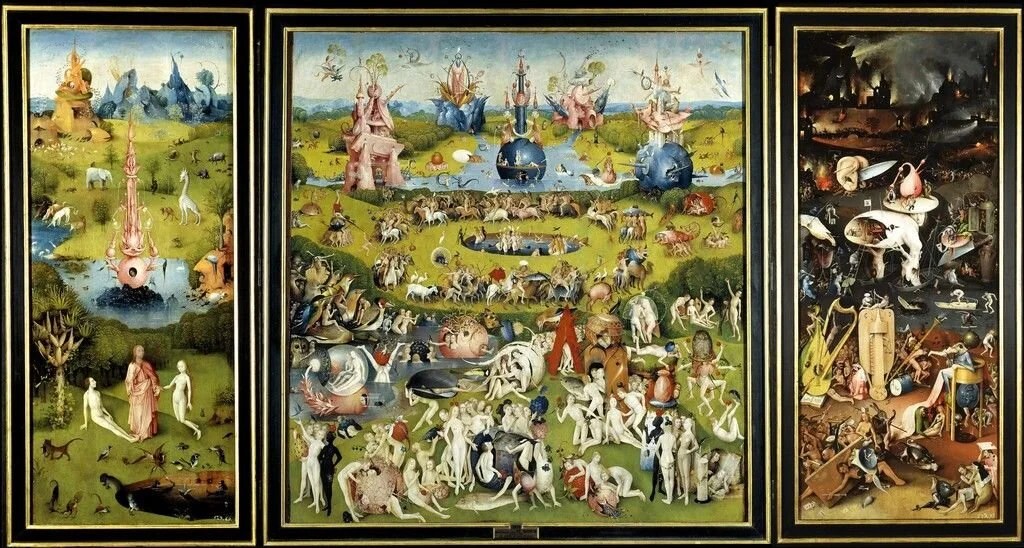
Garden of Earthly Delights, c.1504 by Hieronymus Bosch.
This painting has fascinated art and art history students for years. There is so much going on here and in his depiction of Hell, that one can study it for years and never totally understand it. He is so popular there is even a line of figurines.
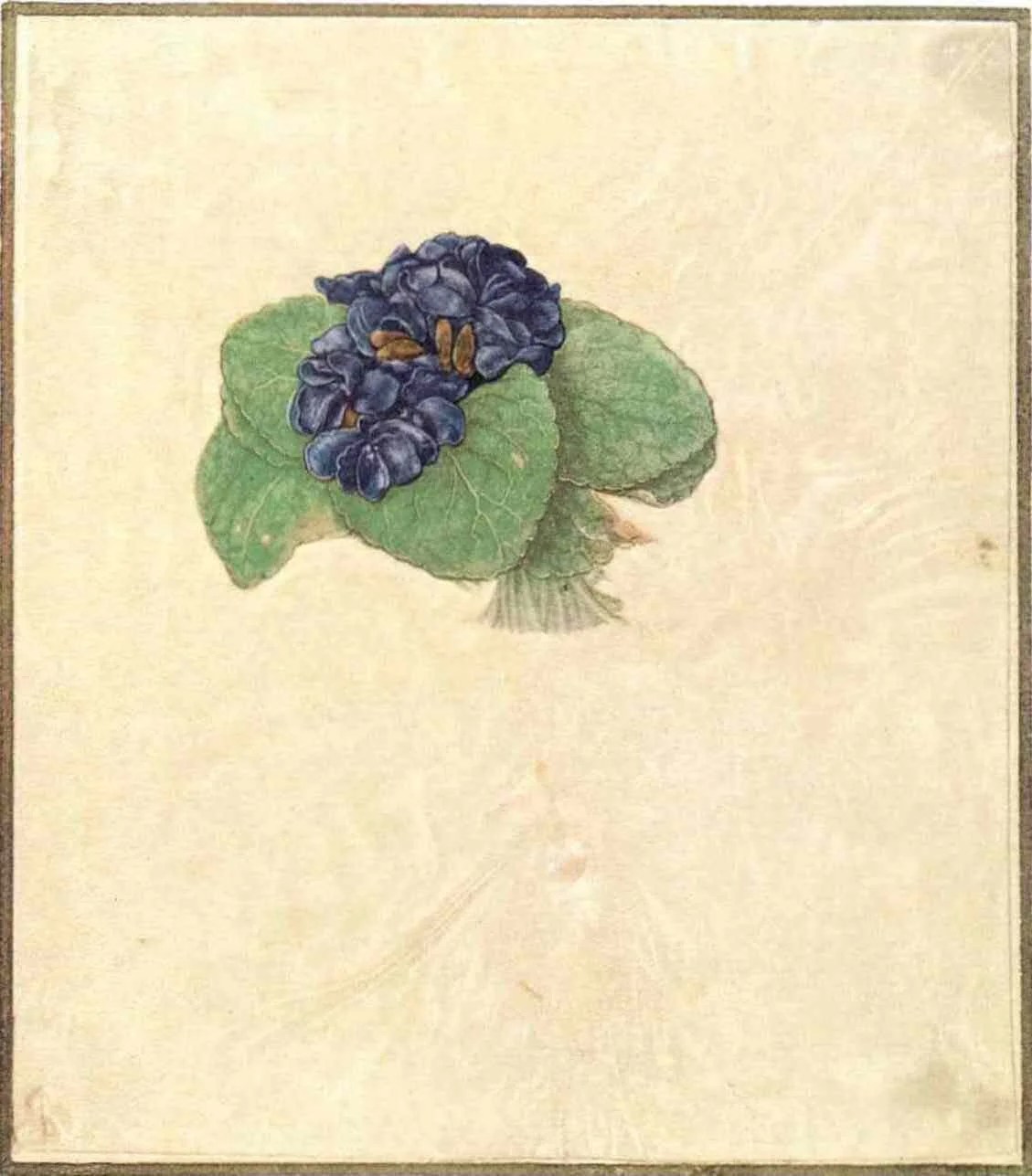
Nosegay of Violets, c.1503 by Albrecht Dürer.
Dürer’s paintings and engravings are still compelling and popular 500 years after he lived and worked. He is considered the greatest German artist of the Northern Renaissance for his paintings and most especially his graphic work. his skill came from apprenticeship in metalwork whose exactly methods made for highly detailed etchings and engravings.