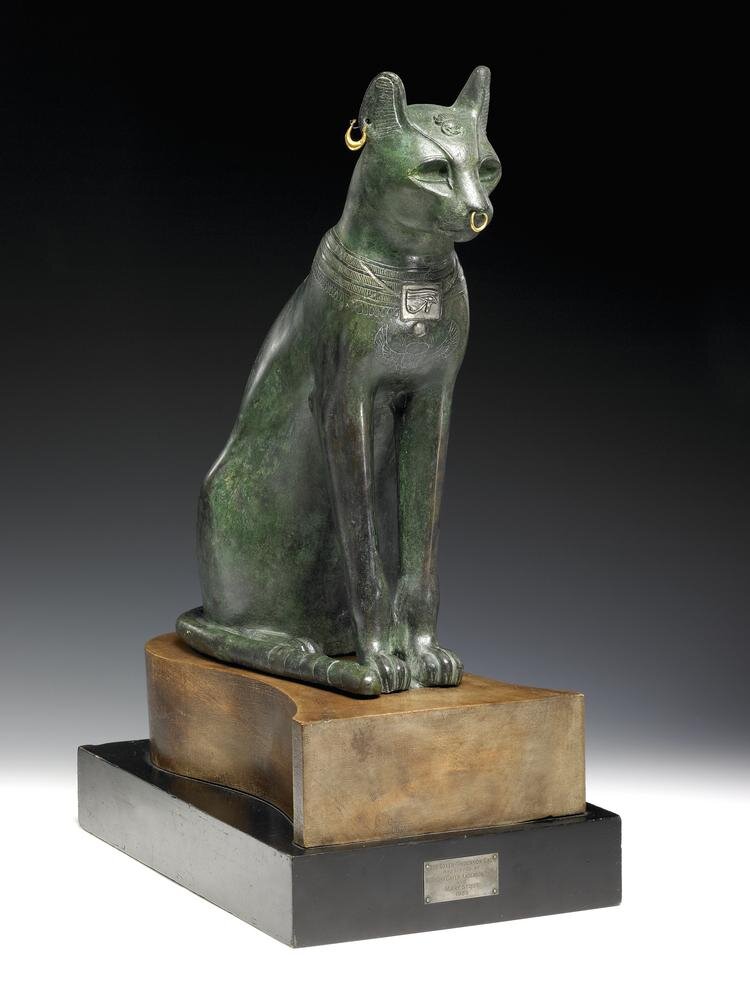
The Gayer-Anderson Cat (also named Figure) the Egyptian Cat goddess, Late period after 600 BC, The British Museum.
Bronze figure of a seated cat. The cat mummies were buried in honor of the goddess Bastet the daughter of the sun god Re.
The Gayer-Anderson Cat (also named Figure) the Egyptian Cat goddess, Late period after 600 BC, The British Museum.
Bronze figure of a seated cat. The cat mummies were buried in honor of the goddess Bastet the daughter of the sun god Re.
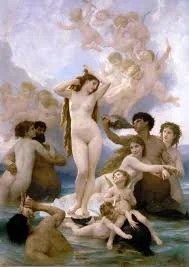
La Naissance de Vénus (Birth of Venus)1879 by William-Adolph Bouguereau, Musee d’Orsay, Paris.
Very similar in composition to Botticelli’s work.
Bouguereau had a very successful career. His realistic style appealed to a large number of people. A contemporary of Degas and Monet; they even conceded his extreme popularity.
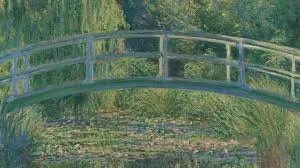
The Water-Lily Pond by Claude Monet, National Gallery London.
Monet is the most famous of the 19th century group of artists known as the Impressionists. The effect of the light upon the pond that Monet sought to capture was accomplished by using millions of small brush strokes. The water garden is part of his home at Giverny and he built it so he could paint the same scene at all the different times of the day, in order to capture all of the different effects of the light.
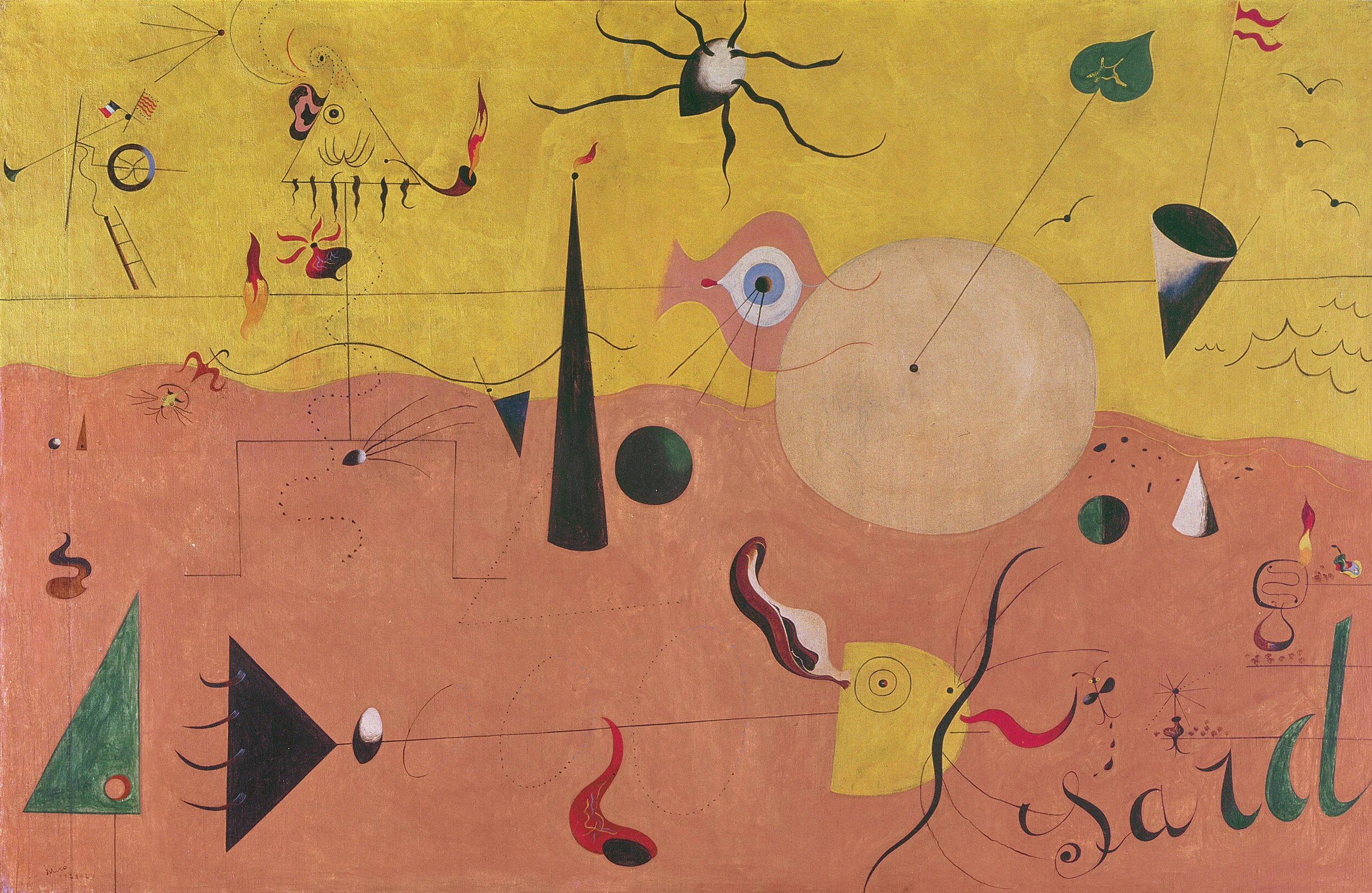
The Hunter (Catalan Landscape) by Joan Miro, 1923-24, MoMA, NYC.
Miro began his work as a painter doing portraits but soon found the work of artists like Picasso and the Surrealists with whom he socialized in Paris, to influence him to try other directions in his paintings. The Spanish Civil War drew his work into a political realm as his countrymen suffered at home. His career lasted well into the later part of the twentieth century, in fact a large tapestry he did for the World Trade Center was one of the most valuable pieces of art work that was destroyed on September 11, 2001.
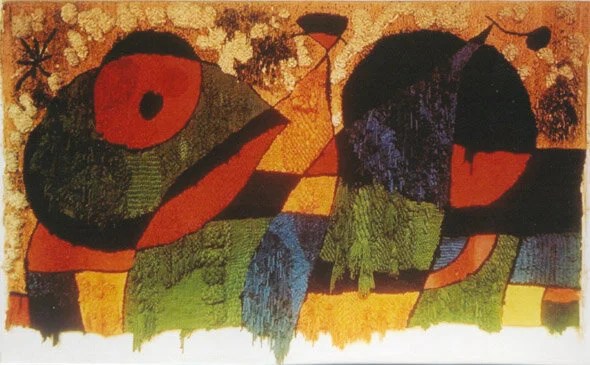
Figure 6 by Joan Miro, 1974, The World Trade Center (destroyed 9/11/01).
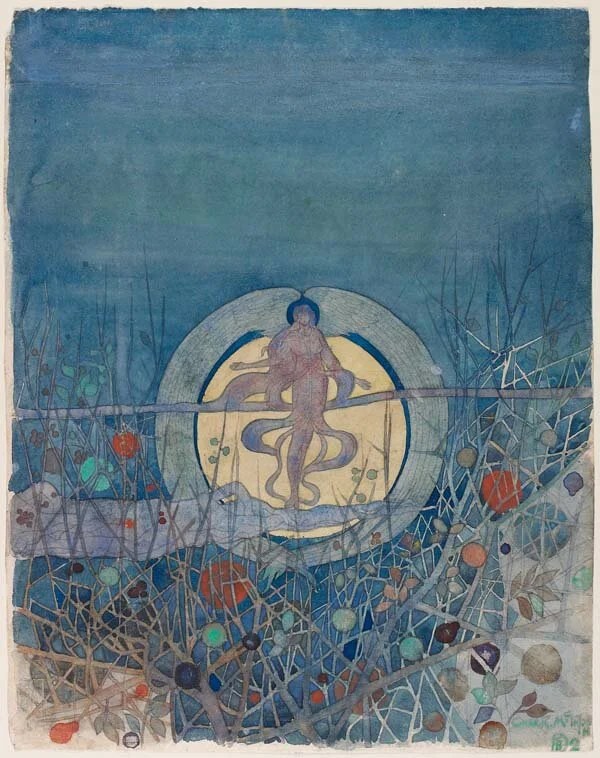
The Harvest Moon, c. 1894 -96 by Charles Rennie Mackintosh, Glasgow School of Art
My favorite artist. He was also an amazing architect. He was so far ahead of his time and although he was a contemporary of the Art & Crafts and Art Nouveau movements, his take on the aesthetic was really unique.
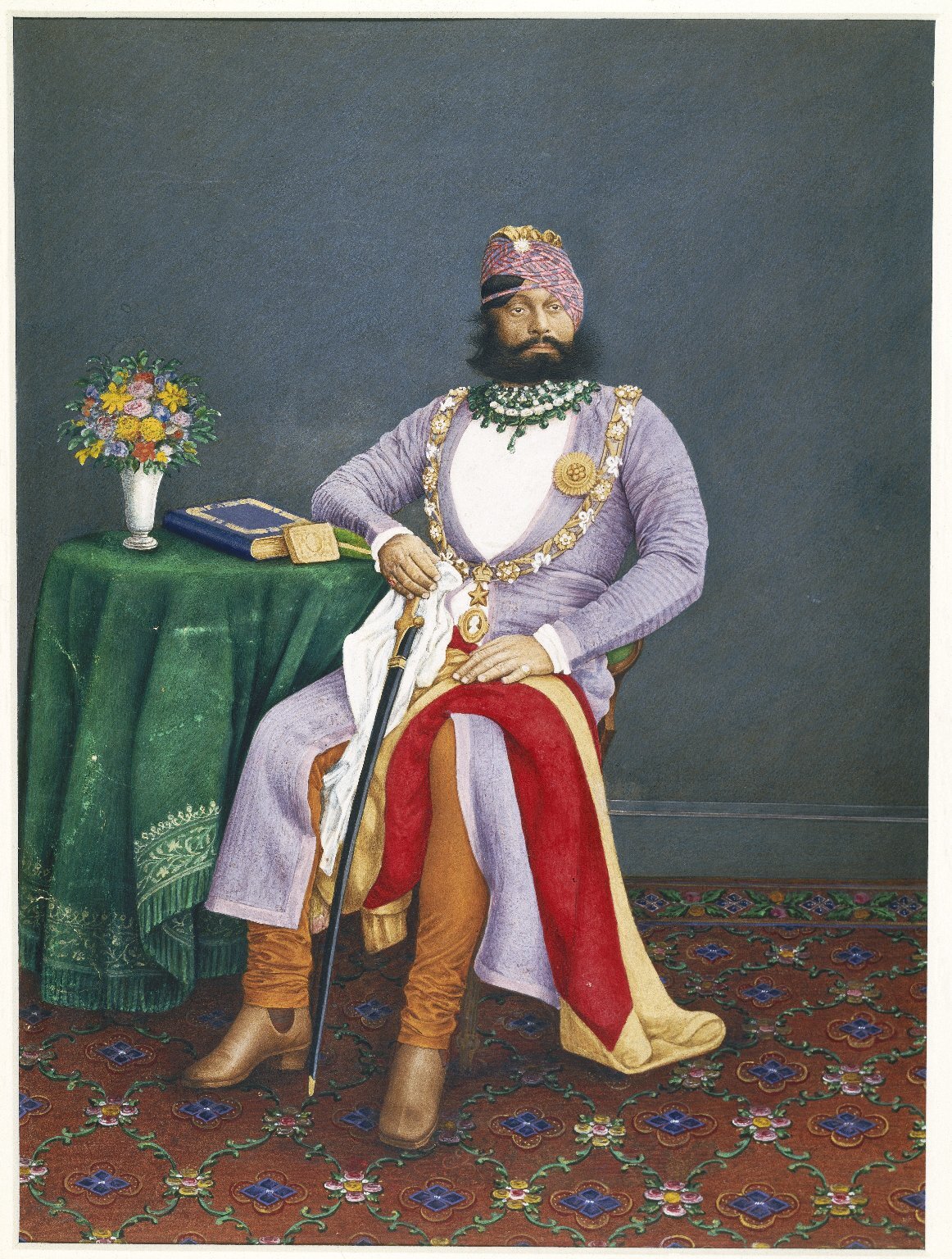
Maharaja Jaswant Singh of Marwar, ca. 1880, watercolor, The Brooklyn Museum.
The simple setting of this watercolor work is unusual and it has more in common with a photograph than a painting. It reflects the influence of the British on India in it’s more austere setting and pose.

Liza Lou, Color Field, 2013, glass beads, stainless steel, Perspex, , 20 x 26 feet (dimensions variable). , Courtesy the artist. © Liza Lou 2010-2013. Photo credit: Dean Eliot.
Artist Liza Lou’s works with beads which appeals to me because I make jewelry using beads. This piece is from an exhibition last year where she used thin pieces of wire each with a single color of beads that were then put together in patterns.
Liza Lou, Kitchen, 1990–95. Whitney Museum of American Art, New York
I first saw her Kitchen at the Akron Art Museum and was blown away by the amount of beads and time it must of took to complete at life-size room. She had people helping her with the beading or she would probably still be working on it.
Detail of the sink from Kitchen.
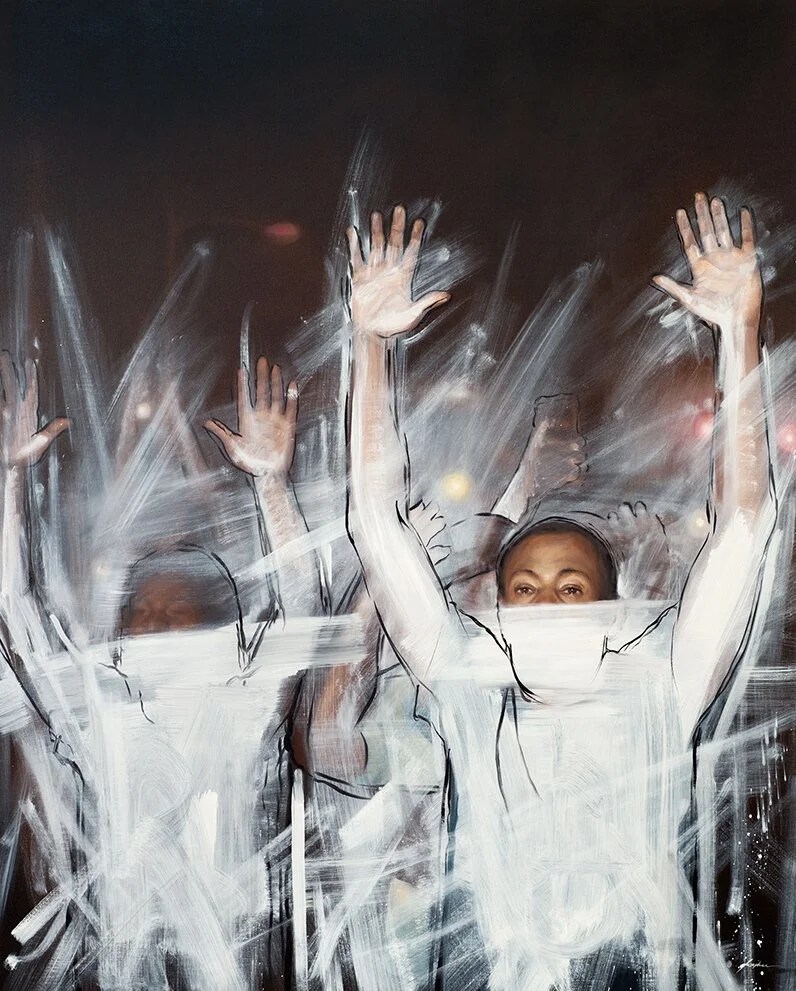
Yet Another Fight For Remembrance by Titus Kaphar, 2014
Time Magazine commissioned African-American artist Titus Kaphar to create a work after the Ferguson Protests in Missouri in 2014. The protests were sparked by the fatal shooting of Michael Brown by Police Officer Darren Wilson.
I feel an affinity to Kaphar as he and I are both from Michigan and were both introduced to the study of art history in Community College. He infuses his work with art and history and and makes his own voice and the voice of modern African-Americans heard in this work, as well. His art is very important, especially these days, as it reminds us we need to look backwards and know history, in order to move forward.
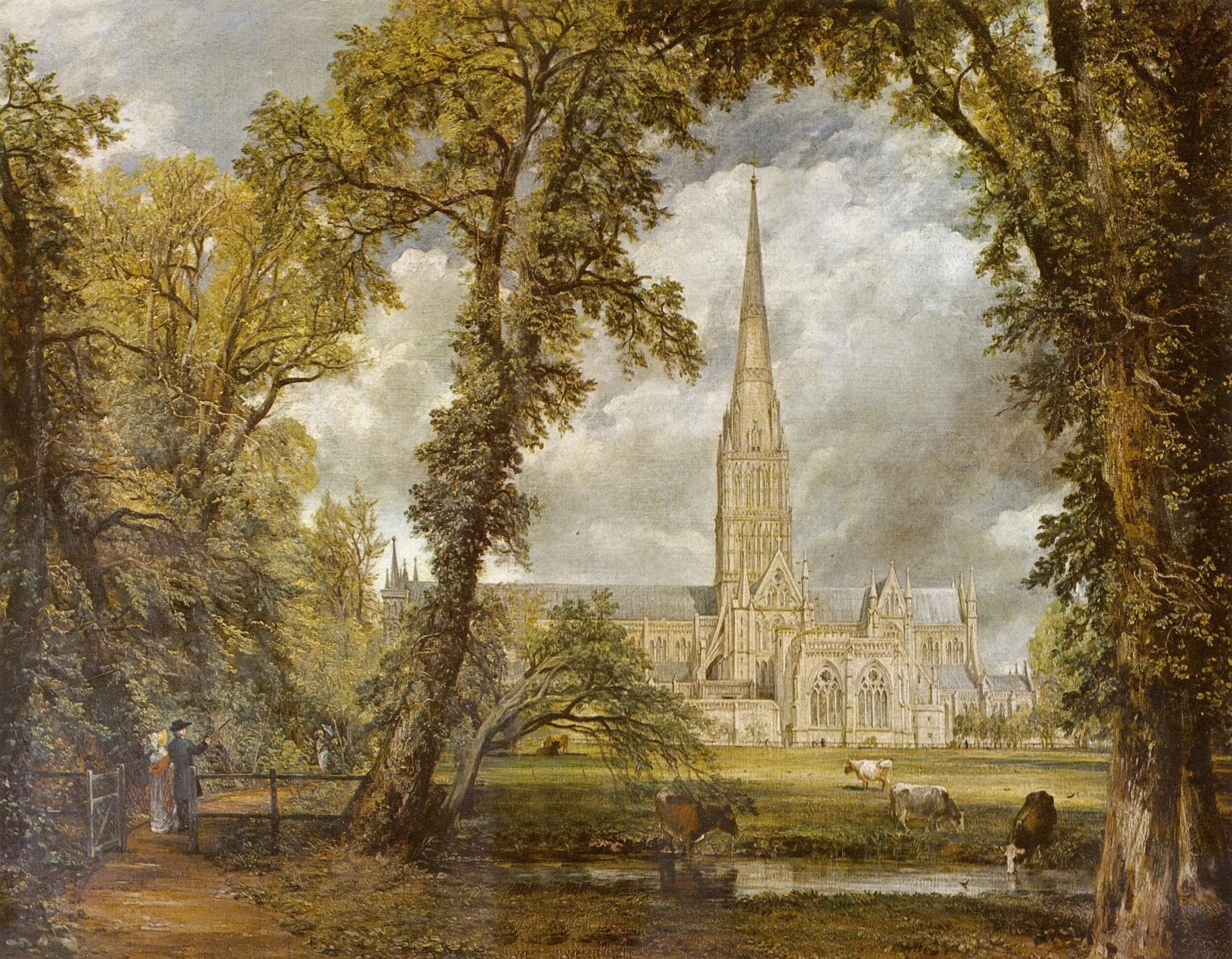
Salisbury Cathedral from the Bishop’s Grounds, ca. 1825 by John Constable, The Metropolitan Museum of Art.
This one is a favorite of mine by Constable because the cathedral is so clear and detailed.
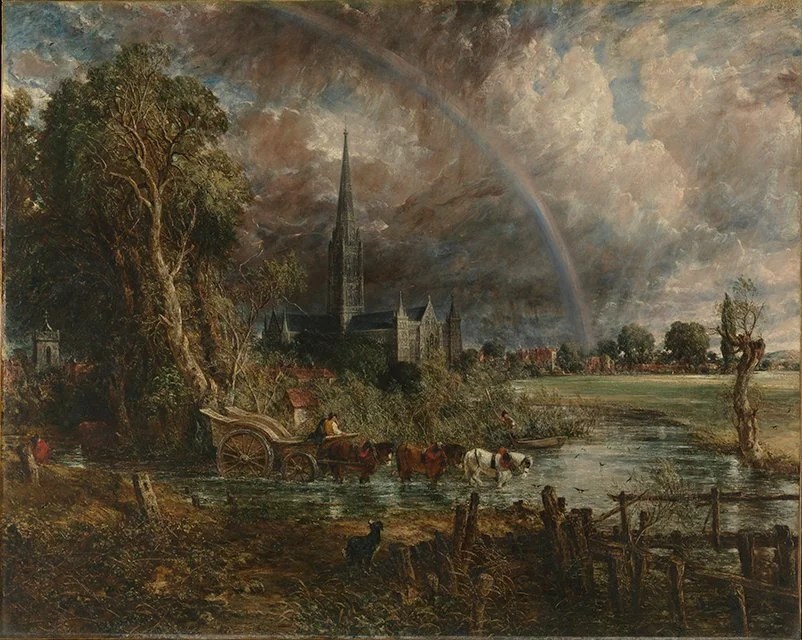
Salisbury Cathedral from the Meadows, 1831 by John Constable, Tate Britain.
This version of the cathedral is the most “romantic” with the horse and cart in the foreground and the rainbow in the background, which was apparently a later addition to the work.

