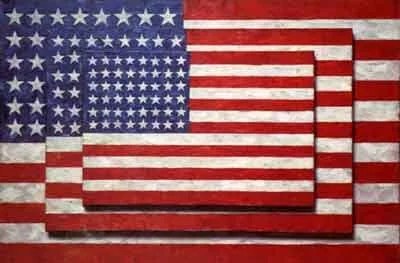
Three Flags by Jasper Johns, 1958, Whitney Museum of American Art
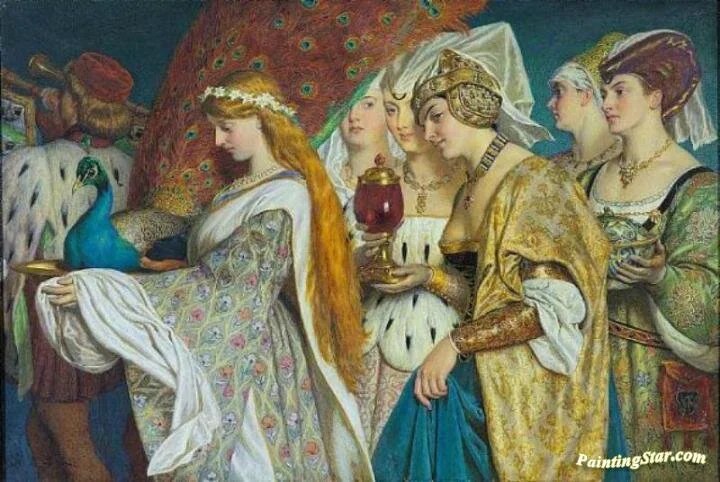
The Poisoned Cup (aka “Carrying a Peacock”) by John Dawson-Watson, 1869
Another artist discovered via Pinterest.
John Dawson-Watson was a British Impressionist whose early work seems very similar to John Everett Millais of the Pre-Raphaelite Brotherhood fame. The rich colors and attention to detail found in this work becomes looser and more pastel after he studies Impressionism at Monet’s home in Giverny.
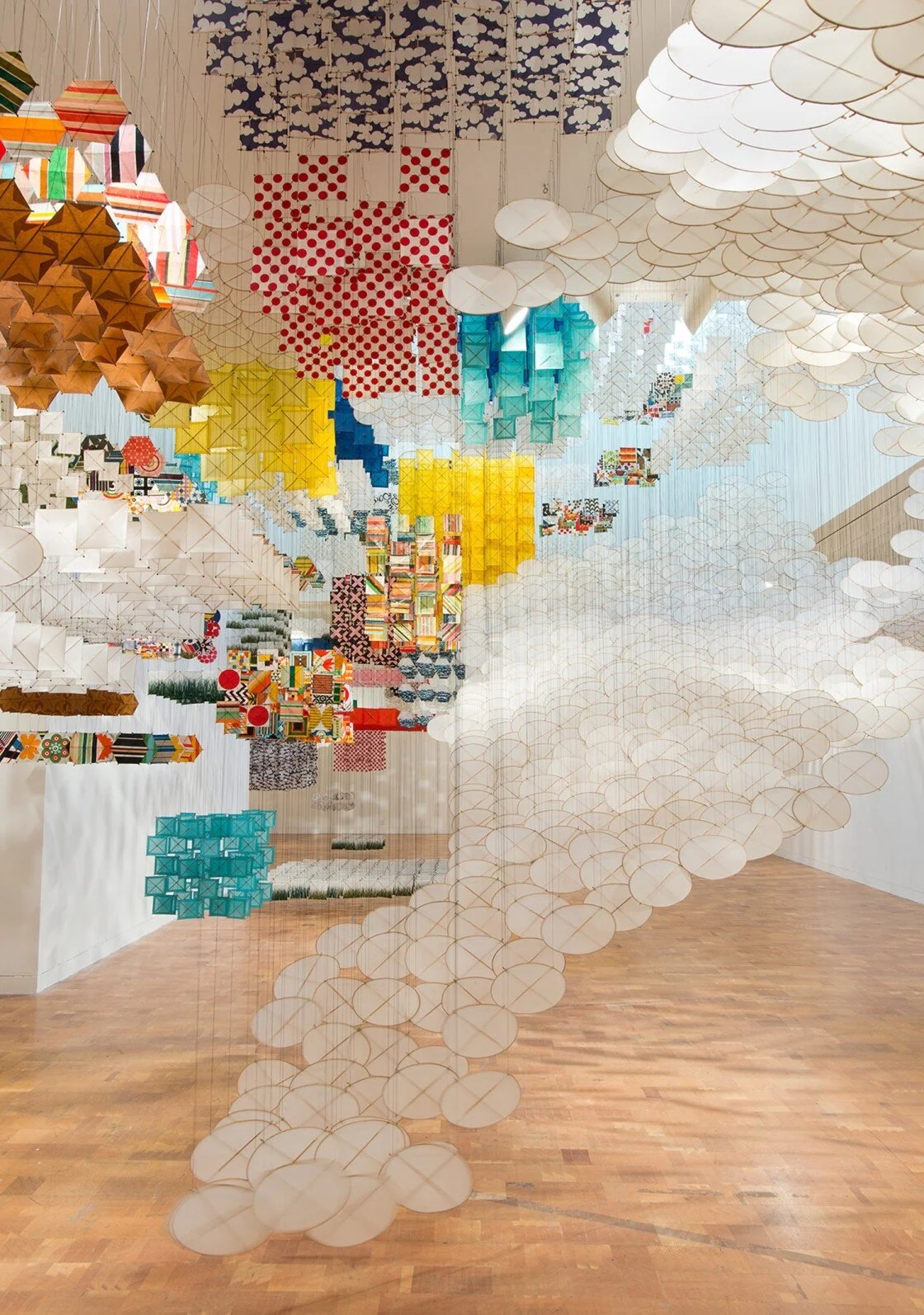
Gas Giant by Jacob Hashimoto at MOCA, Los Angeles
Jacob Hashimoto creates large installation pieces made up of many small parts that are constructed, quite often by utilizing kite making techniques. You can see in the photo the individual pieces, some in boxes, some circles that look like small kites.
Video:
http://www.nytimes.com/video/arts/design/100000002782070/gas-giant-by-jacob-hashimoto.html
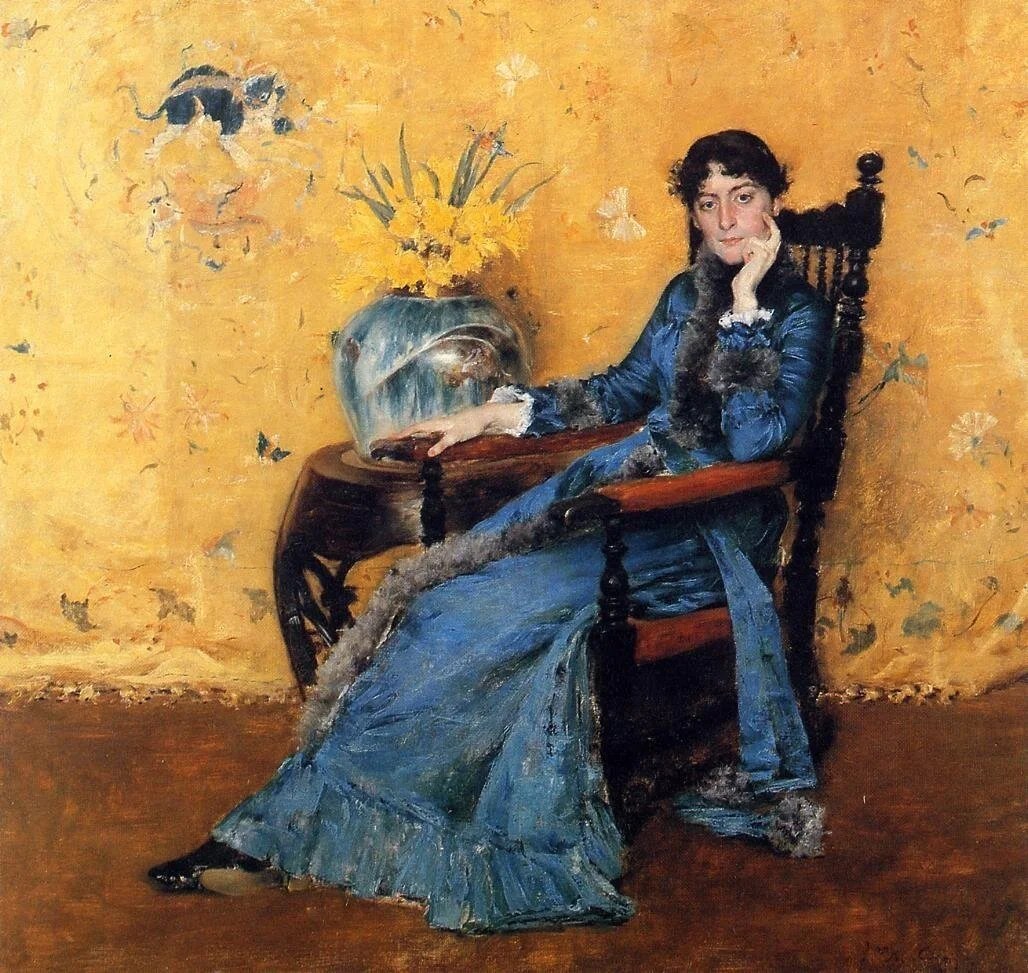
Miss Dora Wheeler, William Merritt Chase, 1882-83, The Cleveland Museum of Art.
This painting is one of the rel gems of the collection of the Cleveland Museum of Art. They have access to a large part of their collection and a lot of other interesting things to see and do on their website.
This work by William Merritt Chase is a particular favorite and features two fighting cats hidden in the background.
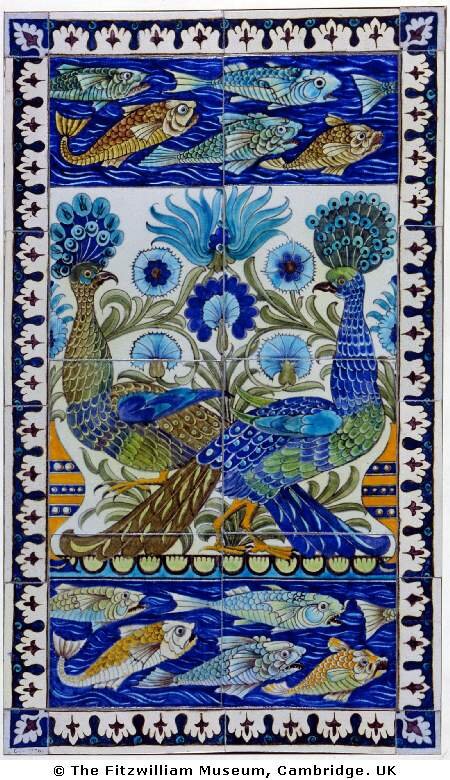
Peacock tiles by William De Morgan and Co., c. 1888-97, The Fitzwilliam Museum, University of Cambridge, UK.
William De Morgan was closely associated with William Morris the British Arts and Crafts movement, like Morris, De Morgan believed that looking to the skilled crafts of the past would greater enrich the lives of the people of Victorian Britain, as the hand-made work was both fulfilling and beautiful. His work was influenced by the ornate and colorful ceramics of the Middle East.
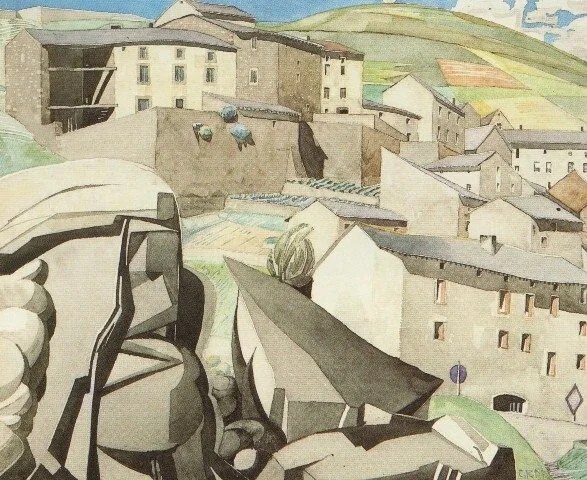
The Boulders by Charles Rennie Mackintosh, c. 1923-26, Hunterian Art Gallery, U of Glasgow.
This C.R. Mackintosh watercolor was done after he had arrived in the south of France on the Mediterranean coast where he was struck by the natural rock formations and sets them up in this painting as a contrast to the roofs of the buildings.
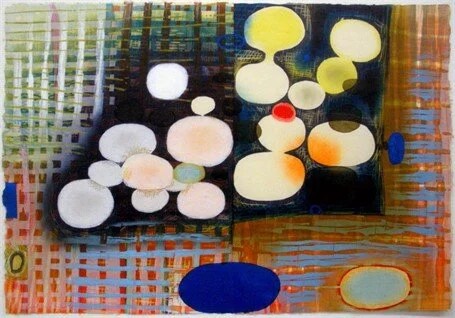
Conditions for Water by Karen Kunc, 2012.
I have always been a fan of Nebraska print maker Karen Kunc. I first became acquainted with Kunc’s work while a curatorial intern at the Joslyn Art Museum in Omaha. Her work is beautiful, composed of color and shape and her printing technique of woodcut layers is masterful. I was also honored to work with her parents Ray and Ila Kunc when I ran the Joslyn Museum Shop, their jewelry combined excellent lapidary work with refined design.
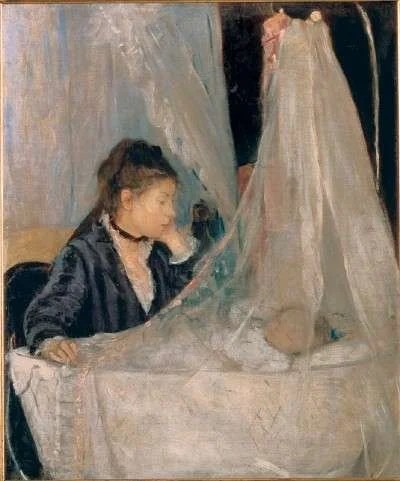
The Cradle, 1872 by Berthe Morisot, Musee d’Orsay, Paris.
Morisot was the great-granddaughter of Jean-Honore Fragonard and studied art under her bother-in-law Edouard Manet and later Pierre Auguste Renoir. She exhibited at almost all of the Impressionist exhibitions.
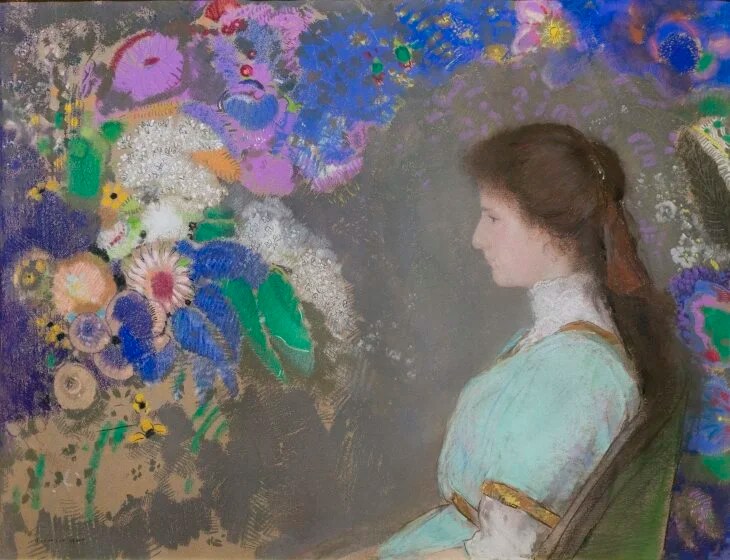
Violette Heymann by Odilon Redon, 1910, The Cleveland Museum of Art
Symbolism is a genre that often is over-looked for Surrealism or Impressionism. It has roots in literature, the author Baudelaireis credited with its formation and being influenced by Poe. Many of the 19th century artists whose work is having a renaissance recently: Klimt, Moreau, Munch, to name a few, are considered to be part of the Symbolist category.
Odilon Redon, is best known for his prints and pastels, and his work is full of symbolism and he is quoted as having said he wanted to “place the visible at the service of the invisible.” This is a portrait, so much more straight forward than some of his other works, but the sitter seems to be surrounded by floating flowers, who make her seem dour in comparison.
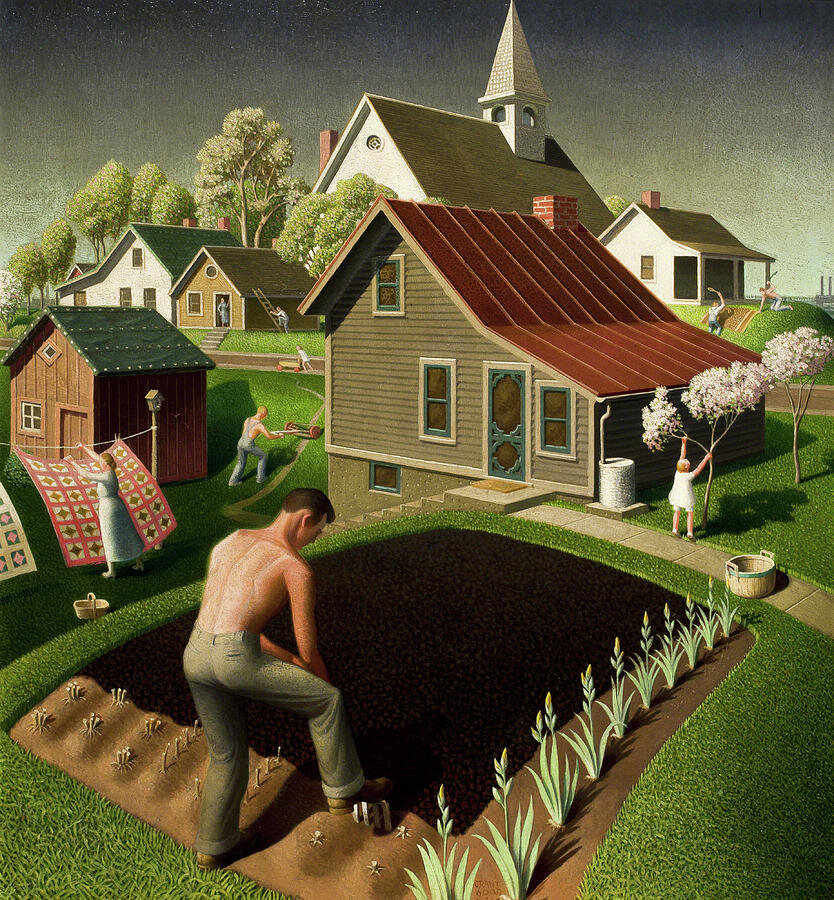
Spring in Town by Grant Wood, 1942
Two of my favorite Iowa artists,
Grant Wood and William Bailey.
Both of them capture brilliantly the straight-forward simplicity Iowa stands for, to me. Simplicity, with under-layers of pride, truthfulness, and appreciation for life. Take care and stay safe Iowa.
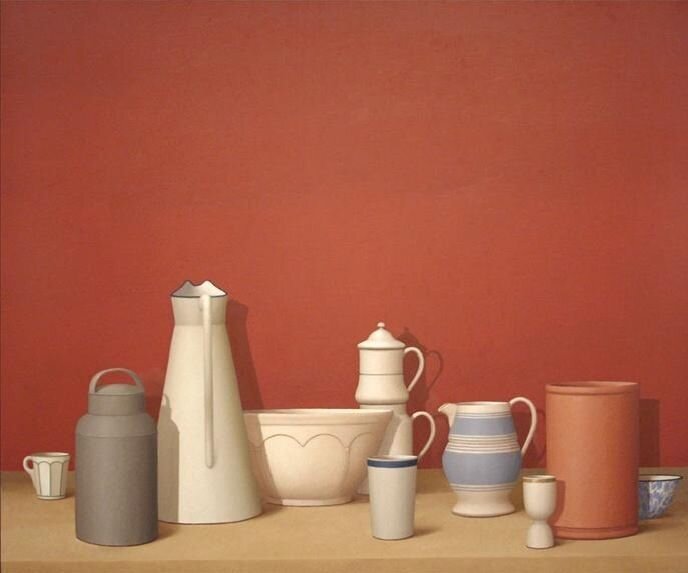
Red Wall by William Bailey, 2007.

