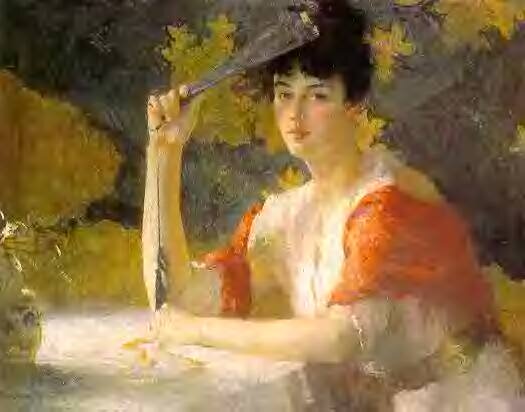
Red and Gold, 1915 by Frank Weston Benson.
One of the leaders in the American Impressionist style, Benson had a very long and prosperous career as a leader in the American Impressionist movement.
Red and Gold, 1915 by Frank Weston Benson.
One of the leaders in the American Impressionist style, Benson had a very long and prosperous career as a leader in the American Impressionist movement.
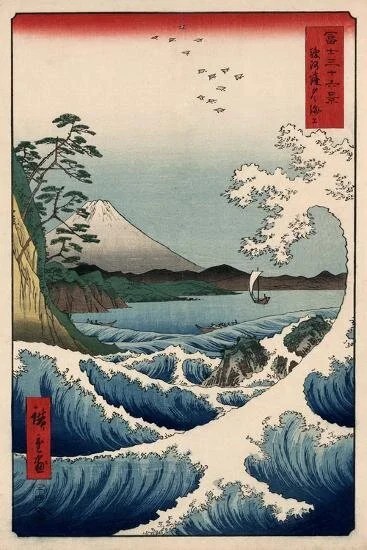
View From Satta Suruga, 1858 by Ando Hiroshige.
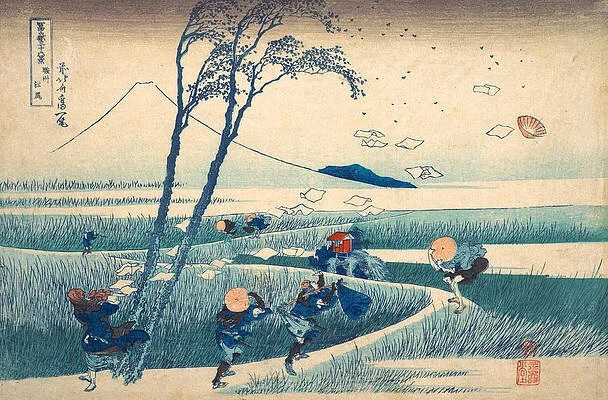
Hiroshige is the other famous name in Ukiyo-e printmaking. Younger than Hokusai, his work quickly became just as popular. His style is very appealing to a broad range of people while Hokusai liked to portray similar images with a slight edge to them.
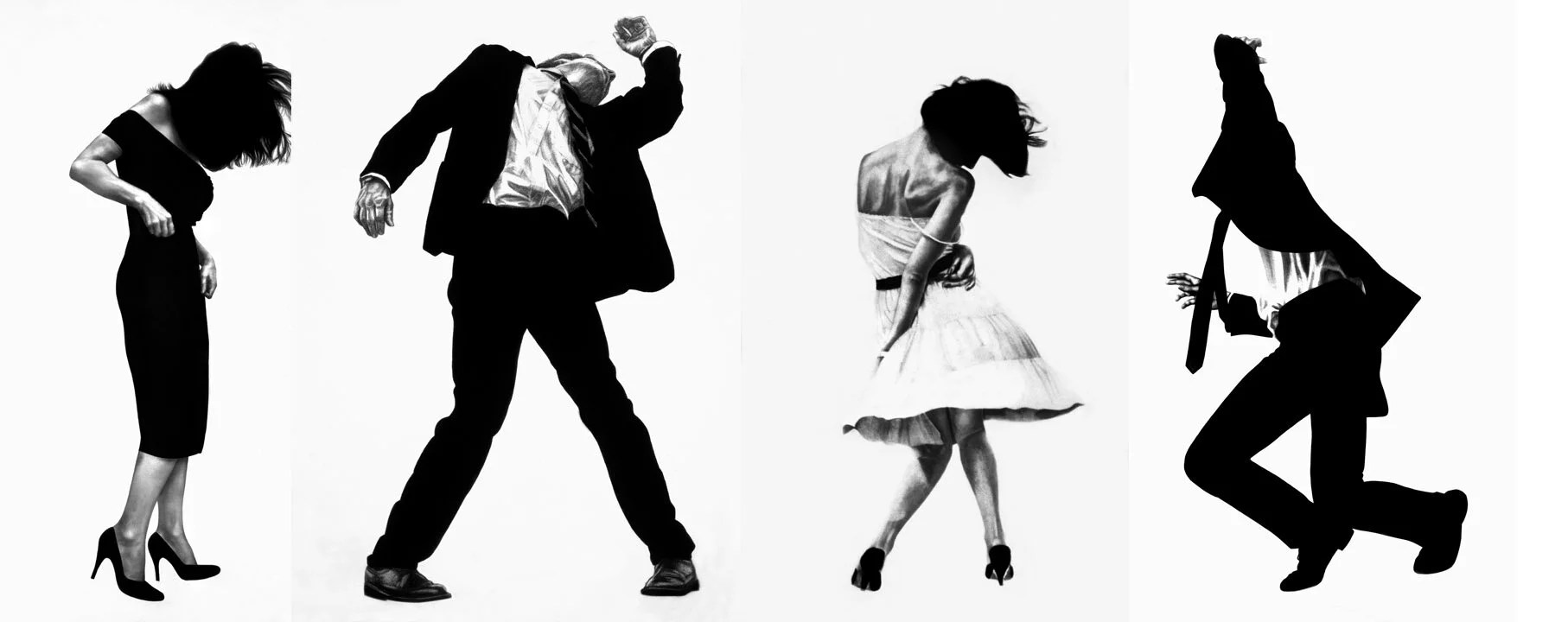
Men in the Cities series, 1984 by Robert Longo.
The Men in the Cities series first brought Robert Longo to the public’s attention when it was featured in movies, television and magazines in the 1980’s.
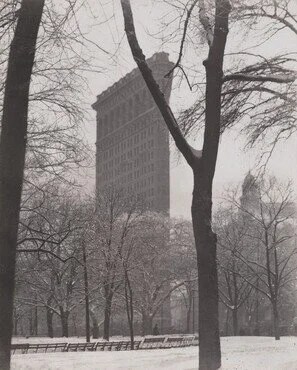
The Flatiron, 1920 by Alfred Stieglitz.
Stieglitz and Georgia O’Keeffe were married in 1924. By this time his career as an innovative photographer had been established and hers as a painter, was beginning.
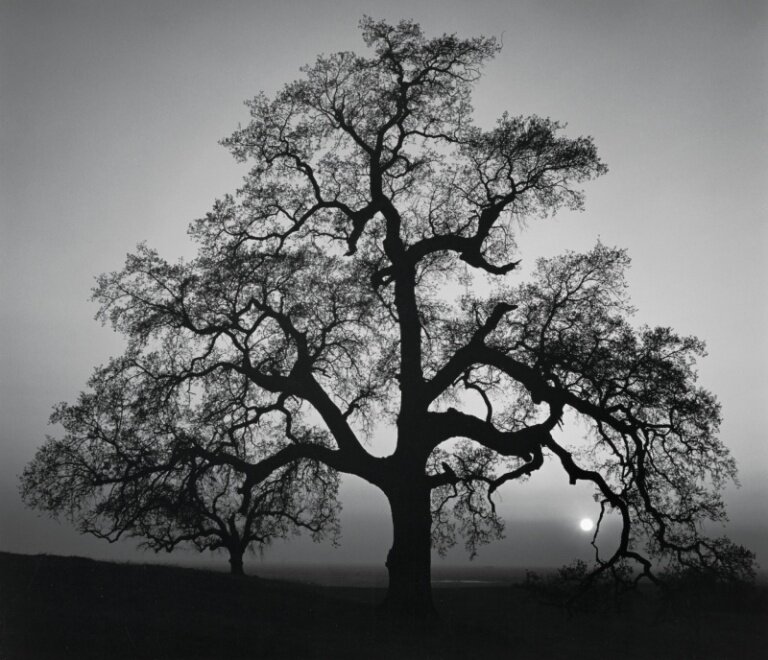
Oak Tree Sunset City by Ansel Adams,© The Ansel Adams Gallery.
Ansel Adams is best known for his black and white photographs of sweeping landscapes, however he also did portraits and smaller still lifes.
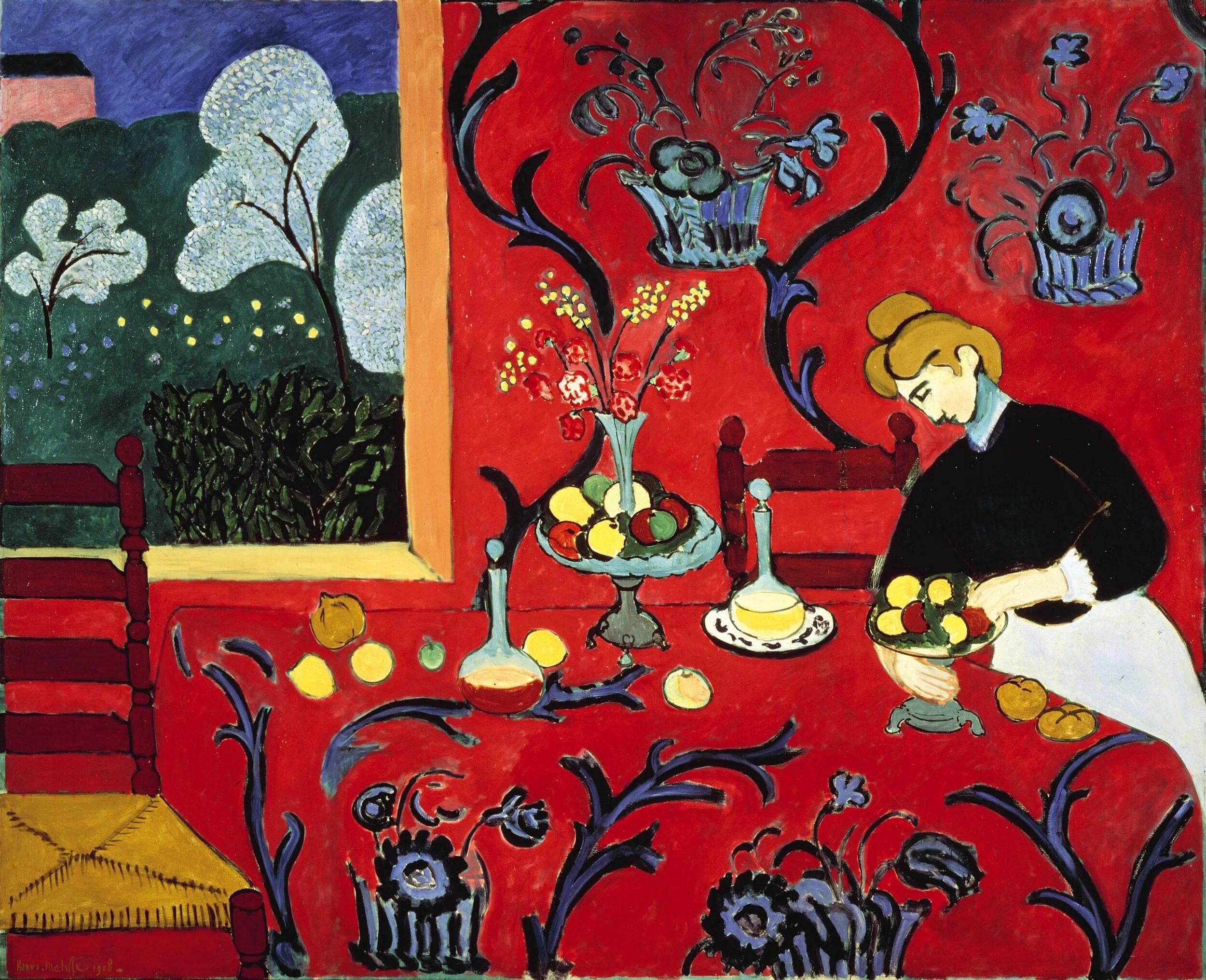
The Dinner Table (Harmony in Red) by Henri Matisse.
Matisse is part of the art movement known as the Fauvists. Color is the central focus of the short-lived movement but they also concentrated on movement and primitive form. Matisse continued to use strong color throughout his career while exploring different mediums.
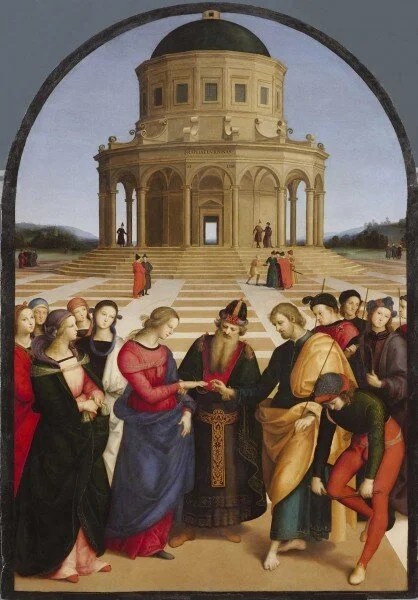
The Engagement of Virgin Mary, 1504 by Raffaello Sanzio(Raphael), Pinacoteca di Brera, Milan.
This painting is an early work by the famous Italian Renaissance artist Raphael. The work is a study in receding space. Raphael signed his early paintings with his birth name.
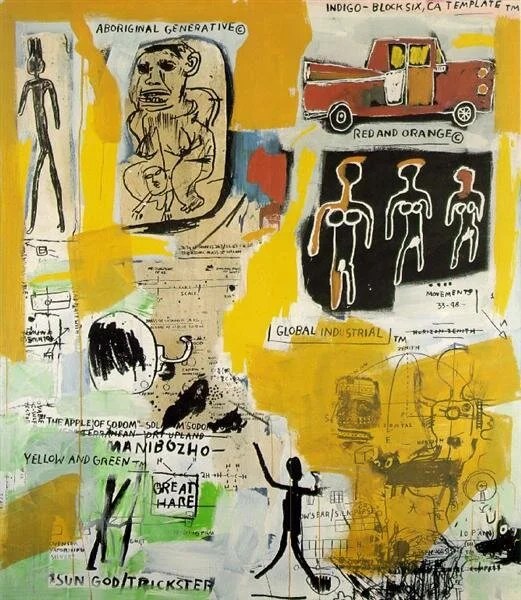
Aboriginal, 1984 by Jean-Michel Basquiat.
One of the popular artists of the 1980’s who rose to prominence and was considered the star of the group that included Julian Schnabel, Keith Haring, Robert Longo, and Mark Kostabi (among others). Basquait died at age 28 of a drug overdose. Recently, his artwork has become highly desirable and this has brought the sale prices for his work to new heights.
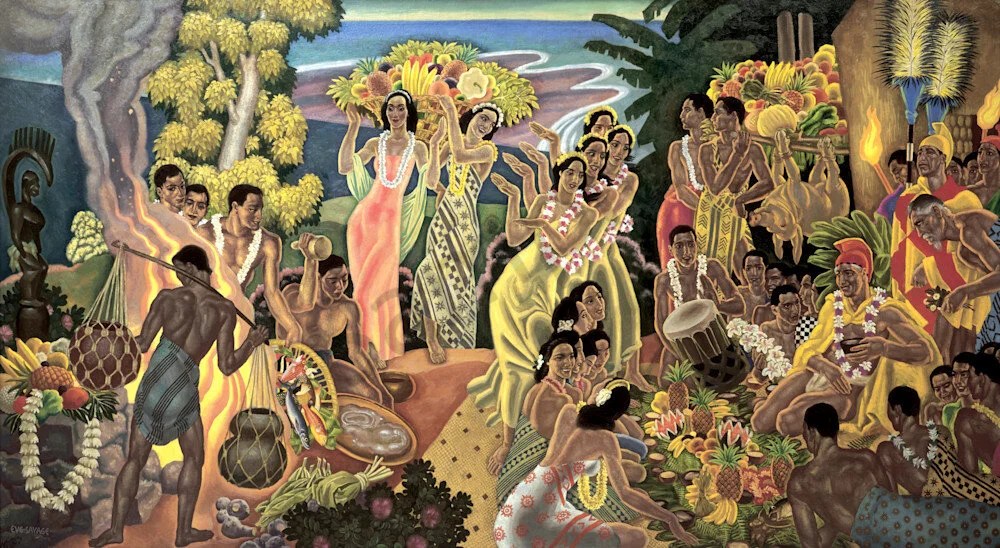
Island Feast, 1940 published 1953 by Eugene Savage, S.S. Lurline, Matson Line.
Savage created a set of nine murals for the Matson ship line (which sailed to Hawaii) in 1940 but they were not used until the early 1950’s because the ships had been requisitioned for service in WWII. Savage received awards for his artwork which was so popular among the tourists it was reproduced in a set of prints and as Aloha attire.
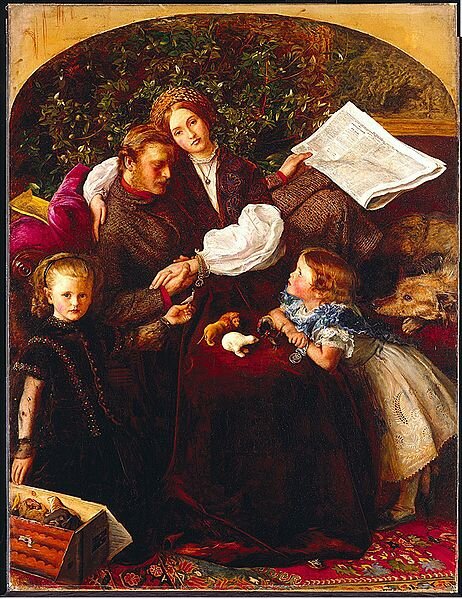
Peace Concluded, 1856 by John Everett Millais.
This scene marks the end of the Crimean War and the return home of the soldier to his family.
On the mother’s lap, four animals from the toy Noah’s Ark represent the four belligerents: Britain (lion), Russia (bear), the Ottoman Empire (turkey), and France (rooster).
The father holds the newspaper that announces the end of the war.
This post is in honor of all the fathers (and mothers) who sadly cannot celebrate with their families because they are still fighting a war.

