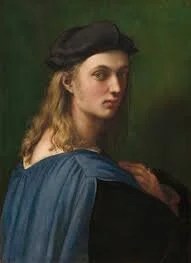
Bindo Altoviti, c. 1515 by Raphael.
Earlier interpretations thought that this work was a self-portrait. It is now generally agreed that it is an early portrait of the prominent Florentine banker, Bindo Altoviti.
Bindo Altoviti, c. 1515 by Raphael.
Earlier interpretations thought that this work was a self-portrait. It is now generally agreed that it is an early portrait of the prominent Florentine banker, Bindo Altoviti.
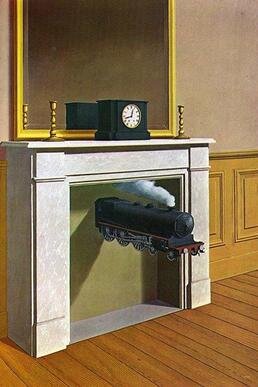
Time Tranfixed, 1938 by René Magritte.
The world of dreams that came out of Surrealist paintings is presented by Magritte in a straightforward and clear manner. This allows the viewer to concentrate on the image and what it means rather than looking at the image and spending time figuring out what it is, what it is is immediately evident – so that leaves, what does it mean.
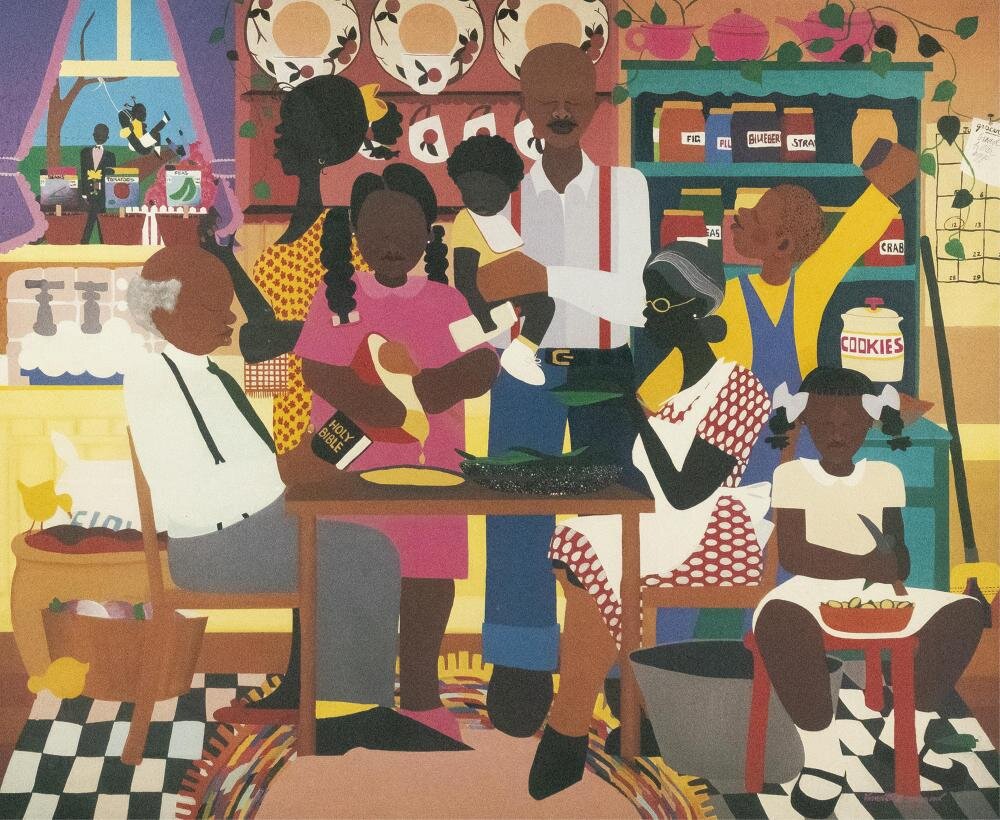
Old Fashioned Dinner Party, by Varnette Honeywood.
Although the two images of Honeywood’s work I have depicted here on YDA have revolved around church life, she actually chooses to portray a lot of different types of settings in her artwork, such as this extended family preparing a meal together.
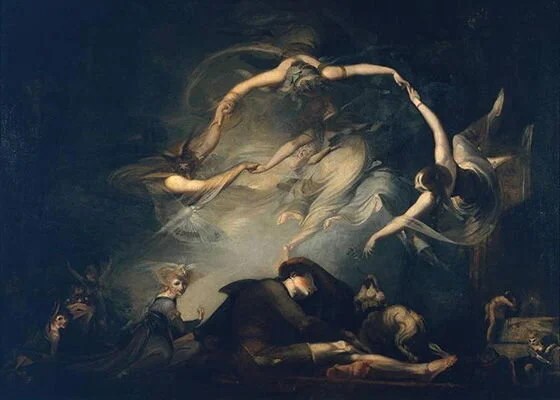
The Shepard’s Dream from Paradise Lost 1893 by Henry Fuseli.
Fuseli’s depiction of fallen angels inhabiting the dreams of the shepherd as he sleeps comes from John Milton’s Paradise Lost. At once with joy and fear his heart rebounds.
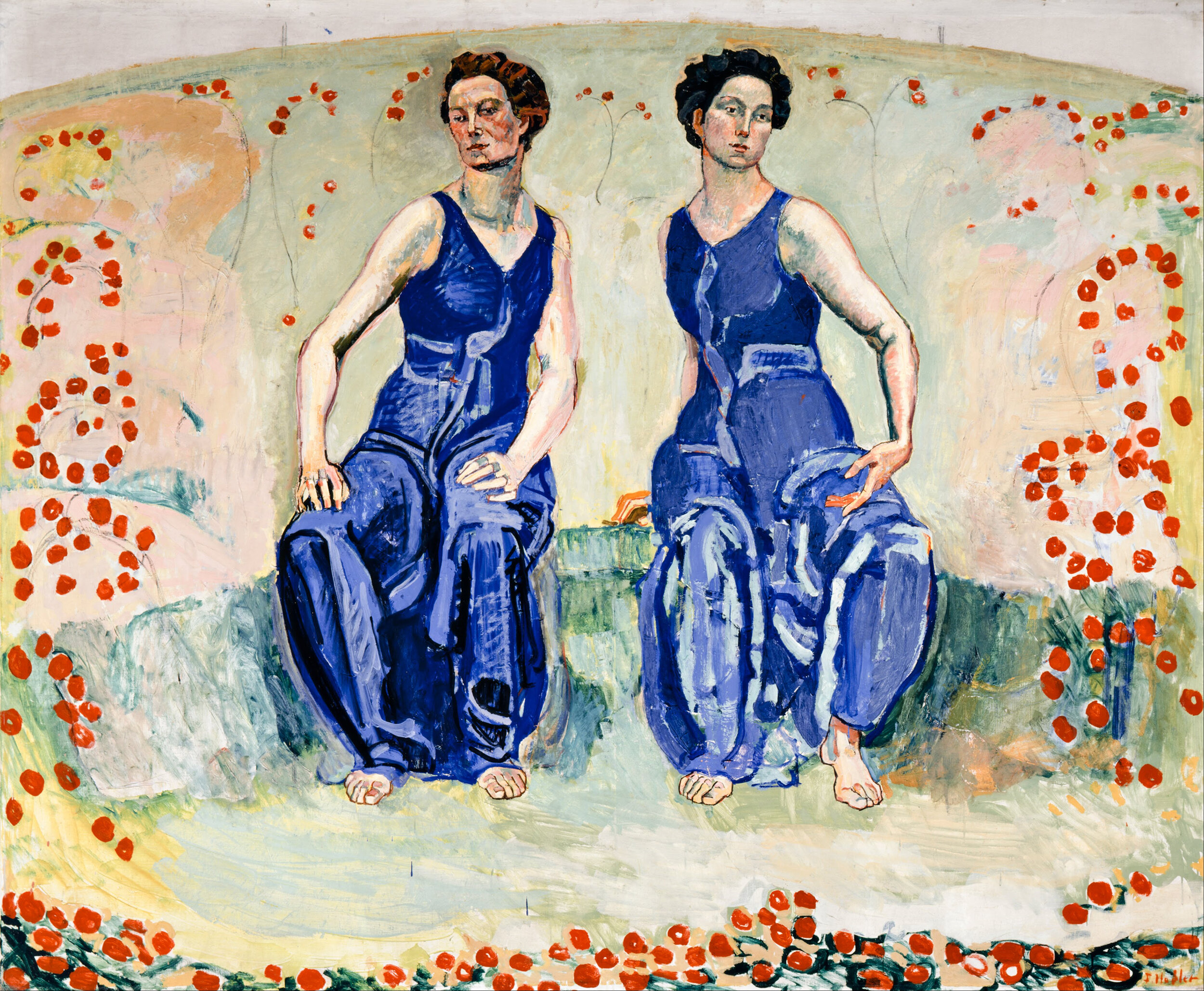
The Sacred Hour, ca. 1907-77 by Ferdinand Hodler.
Early in his career Hodler painted mostly landscapes but as he became exposed to more styles such as symbolism and expressionism. his work became more complex however, near the end he returned to landscapes.
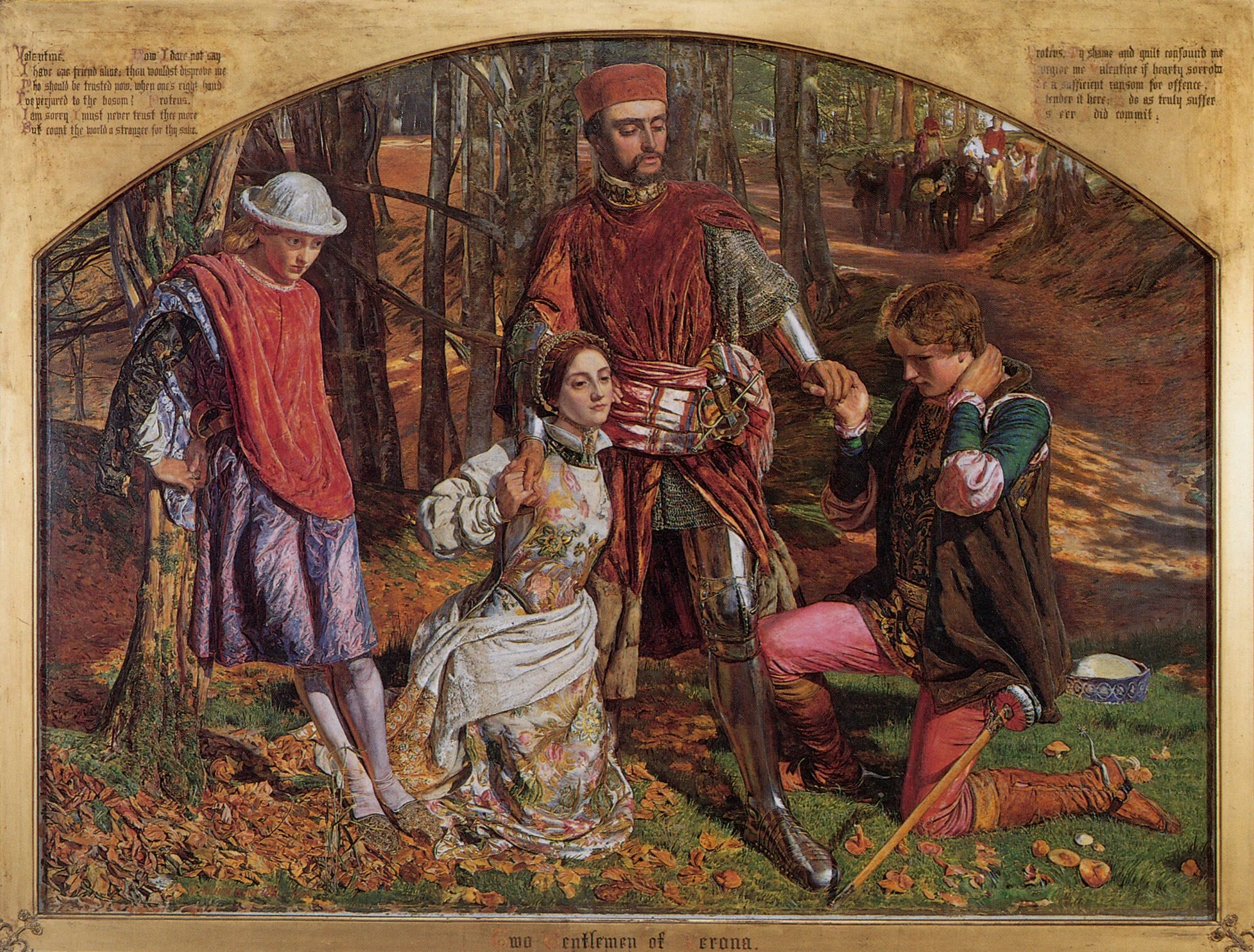
The Two Gentleman of Verona Valentine Rescuing Sylvia from Proteus by William Holman Hunt.
One of the original Pre-Raphaelites, Hunt takes his subject from a Shakespeare play. The PRB liked to get their subjects from literature and to paint out of doors in natural light. I’m sure the model for Sylvia Elizabeth Siddal, had sore knees.
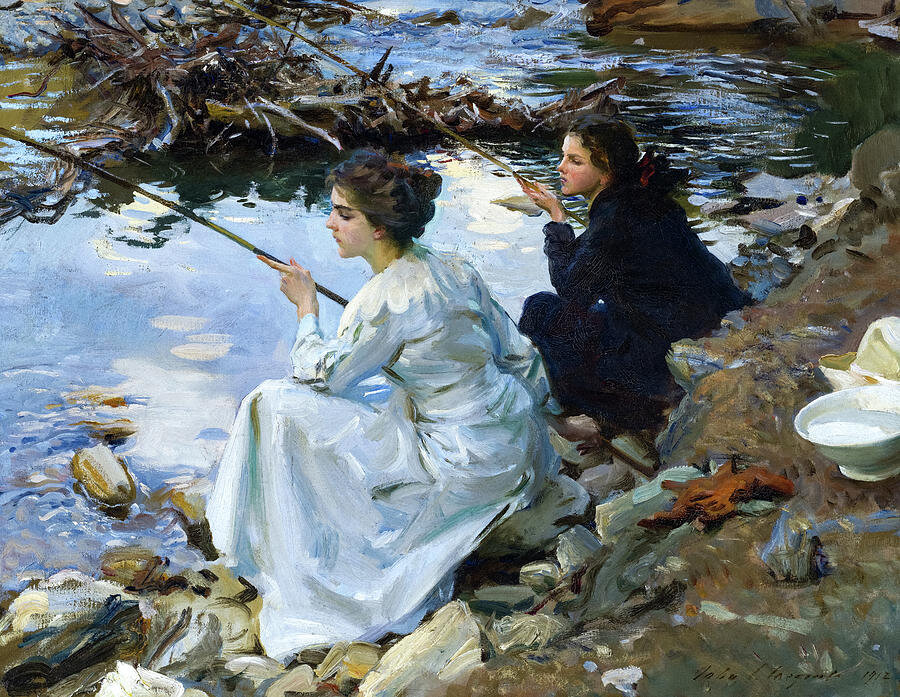
Two Girls Fishing, 1912 by John Singer Sargent.
Sargent frequently choses women as subjects and although he painted many on commission, he also painted them when the work he was doing was for himself. He seems to empower them through the beauty with which he portrays them.
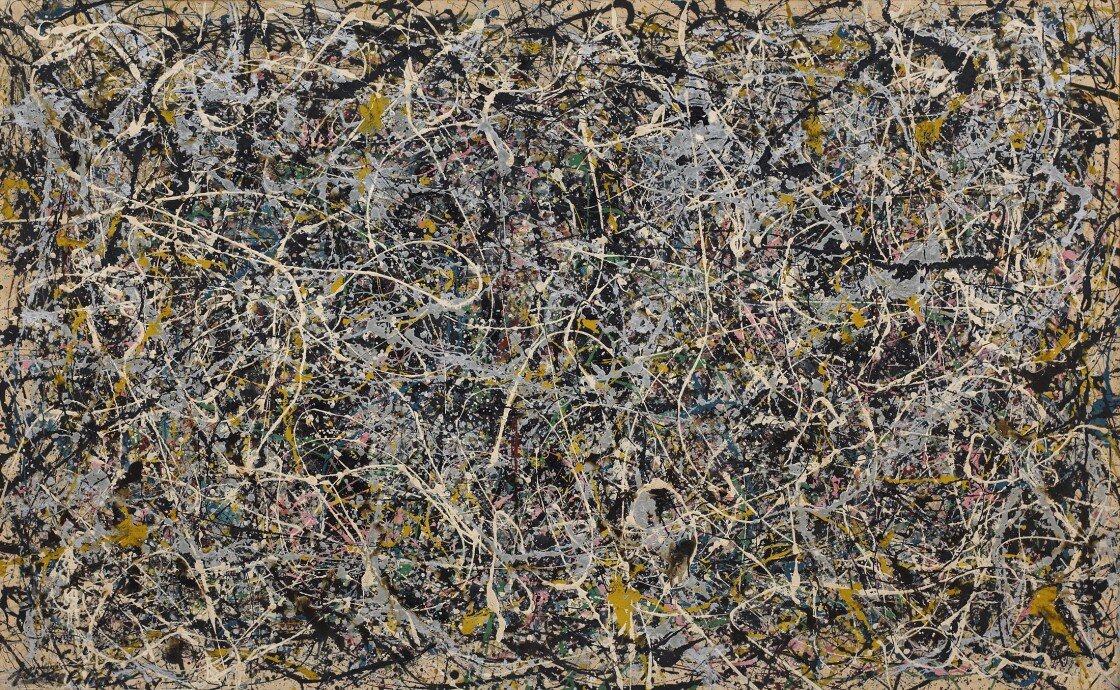
Number 1, 1950 by Jackson Pollock.
There is a lot of controversy surrounding a recent collection of Jackson Pollock’s work. Read more about the paintings to be attributed to him. Provenance
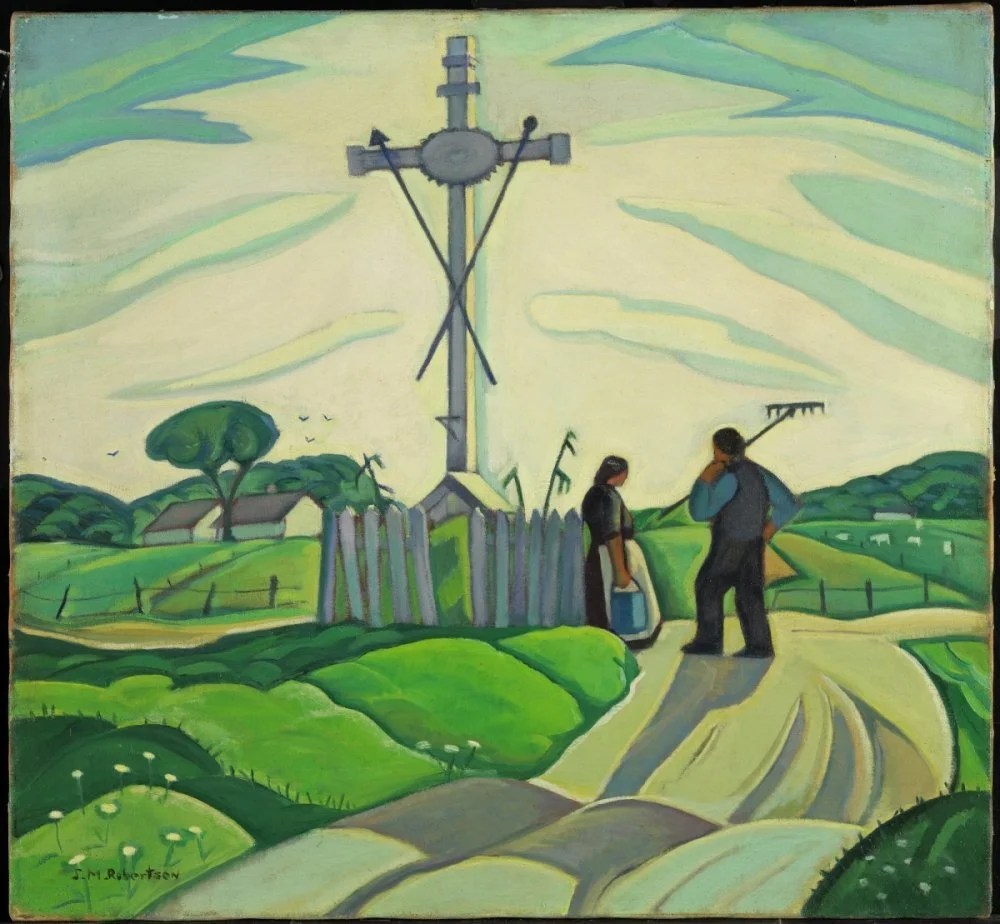
Joseph and Marie-Louise by Sarah Robertson.
Sarah Robertson was a Canadian artist and member of the woman’s painting group known as the Beaver Hall Group . They were friends and contemporaries of the men’s group “The Seven” but never achieved the same level of recognition. Wayside crosses.
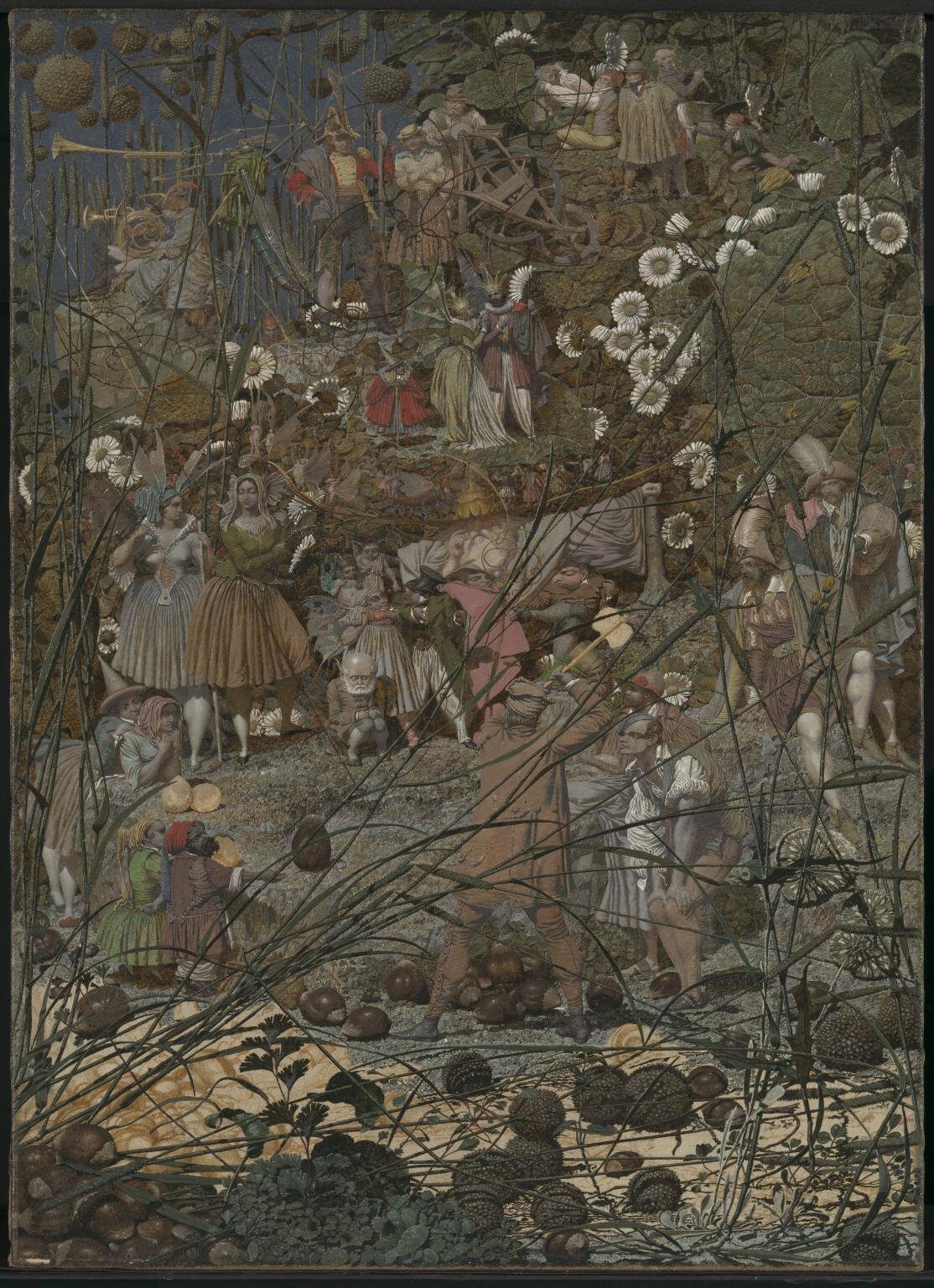
The Fairy Feller’s Master-Stroke, 1855-64 by Richard Dadd.
Richard Dadd was known as “Mad Dadd” he spent much of his life in an insane asylum after murdering his father whom he was convinced was the devil. His intricate paintings took him years to complete.

