Category: Uncategorized

  • Spring Is Here

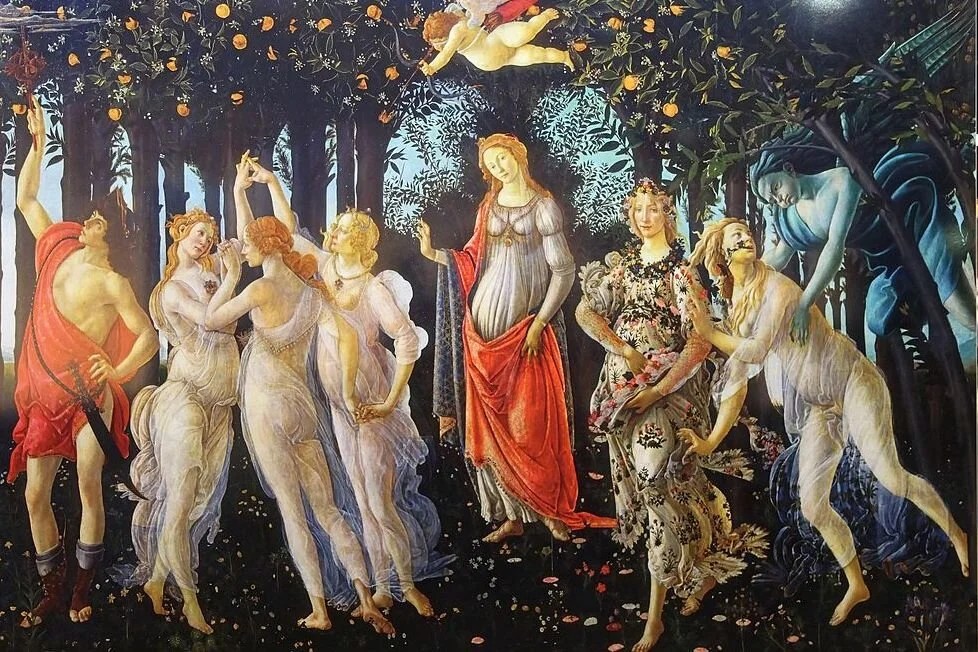
       Primavera   by  Sandro Botticelli , circa 1470-1480,  Uffizi Gallery , Florence, Italy.
    Primavera by Sandro Botticelli , circa 1470-1480, Uffizi Gallery , Florence, Italy.

    This is a painting depicting a personification of the beginning of the spring season by an Italian artist named Sandro Botticelli. He lived during the 15th century in the city of Florence. Primavera is Italian for Spring. The painting the re-newel and the reappearance of the leaves on the trees and the flowers by depicting them in human form. As Italy endures the outbreak of the Corona virus we need to appreciate all they have given the world, some of the most beautiful art and music humans have ever created. Seek out people on Social Media and send them good wishes.

  • Your Daily Art Jewelry

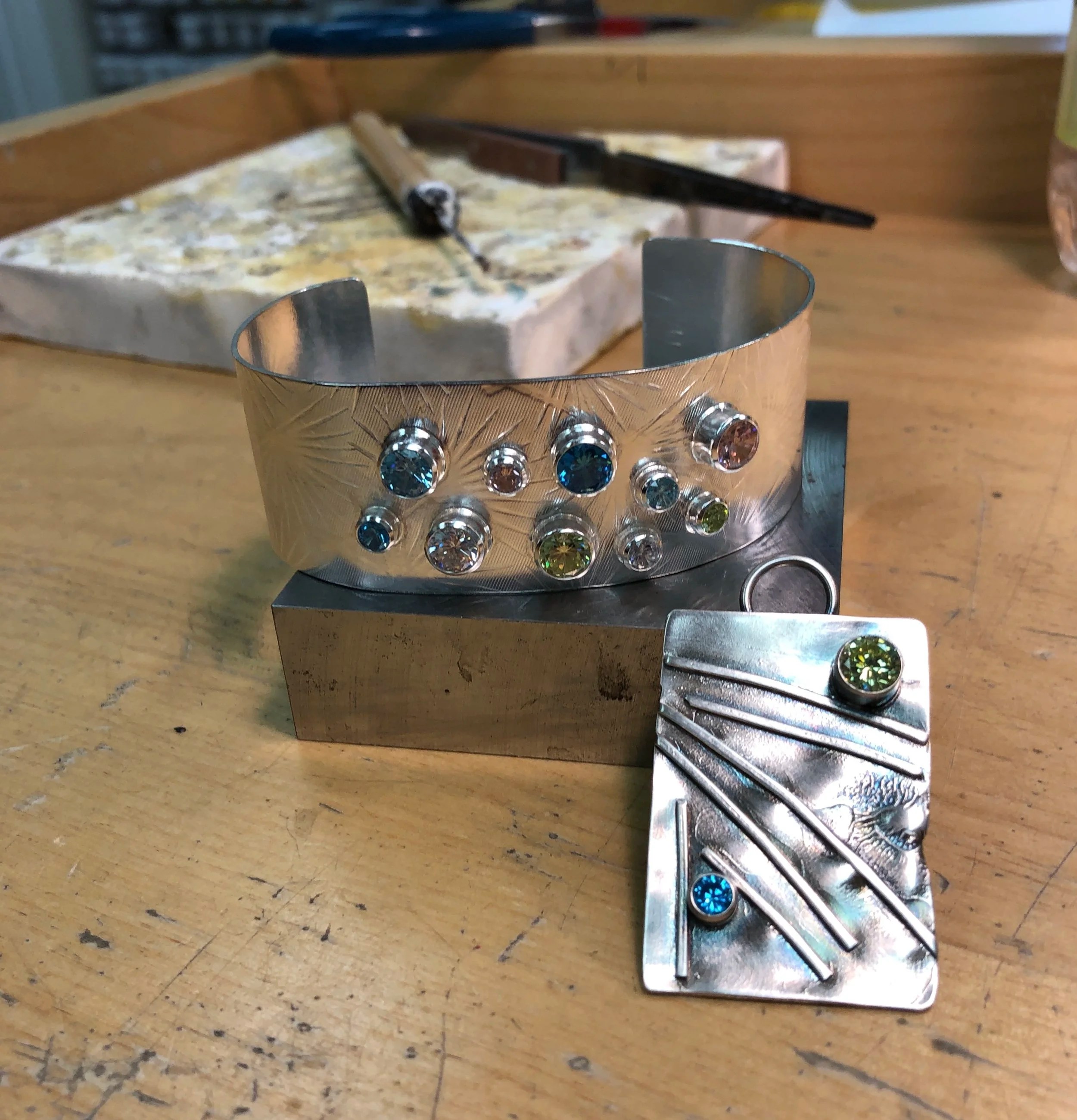
    Your Daily Art Jewelry is my handmade line of jewelry. I have been metal smithing for about four years and before that I created beaded jewelry.

  • London Archaeology

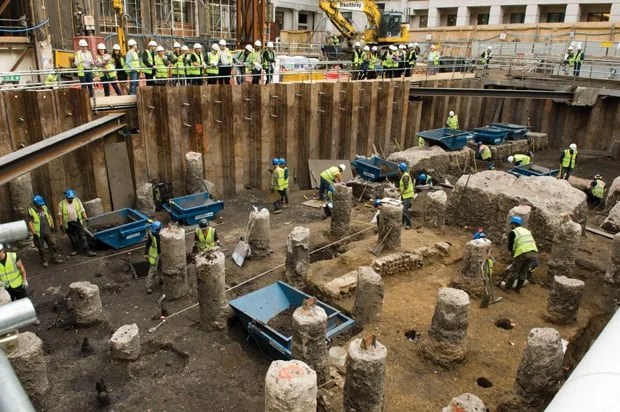
      Stanhope’s 8-10 Moorgate, London, where Museum of London Archaeology recently investigated
    Stanhope’s 8-10 Moorgate, London, where Museum of London Archaeology recently investigated

    With many ongoing building projects in the works, archaeologists in London are quite busy as remnants of Roman occupation, the Bedlam cemetery, and other yet to be determined sites are uncovered during construction. They have found many skeletons and are doing DNA testing to determine cause of death, background, etc. It is hard to believe that such a busy modern city is also a very active archaeological site.

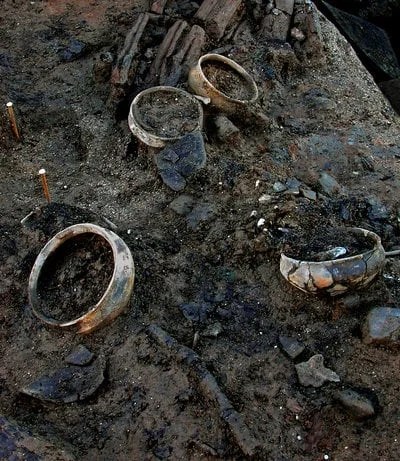
      Whole pots were preserved inside timber dwellings destroyed by fire. Archaeologists discovered there was still food in some of them.
    Whole pots were preserved inside timber dwellings destroyed by fire. Archaeologists discovered there was still food in some of them.

  • Looking Beyond the Traditional

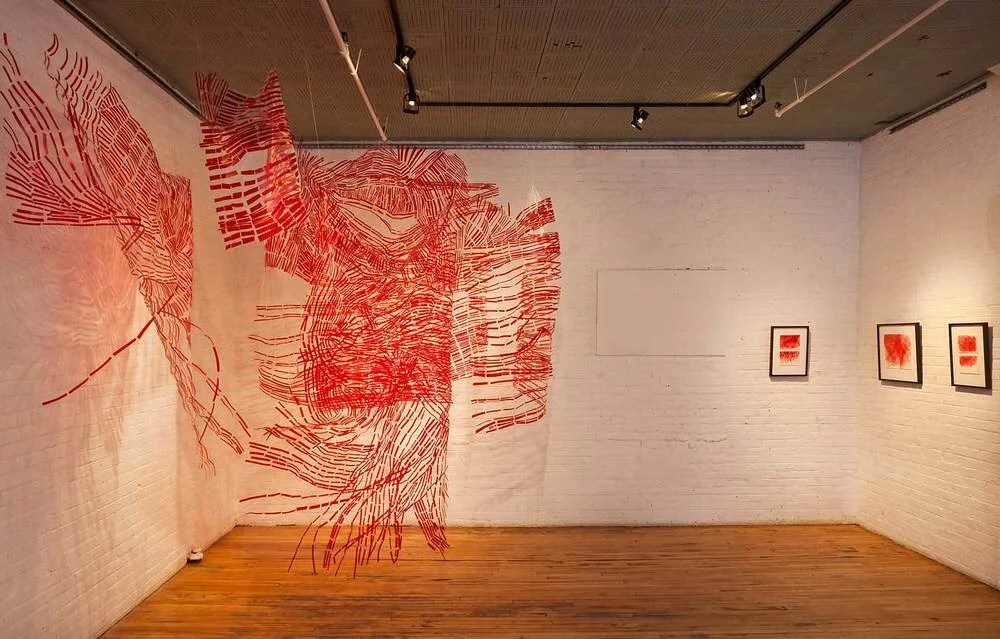
      Timelines  by Christine Mauersberger, 2015
    Timelines by Christine Mauersberger, 2015

    Christine Mauersberger

    The exhibition Beyond Materials: Woven Values . The show features artwork that reflects the history of fiber work (which has traditionally been viewed as a “craft”) as textile based art moves forward as an ever evolving, viable art medium. The exhibition is up until October 3, 2015. 

    Timelines

    by

    Christine Mauersberger

    . Photo by the artist.

  • Kehinde Wiley in Cleveland

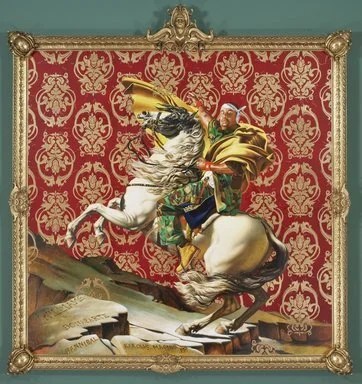
      Kehinde Wiley,

    Napoleon Leading the Army Over the Alps (Self-Portrait),

    Oil on canvas, 2005

     Artist

    Kehinde Wiley

    will speak at

    Cleveland Museum of Art’s Gartner Auditorium, Saturday August 29th

    at 2:00. His beautiful work harks back to an earlier style while creating very modern portraits. Wiley’s recent one man exhibition at the

    Brooklyn Museum

    was very well received by the art world and the public, alike. The Cleveland lecture is part of the

    Cleveland Public Library’s The Lockwood Thompson Dialogues

    .

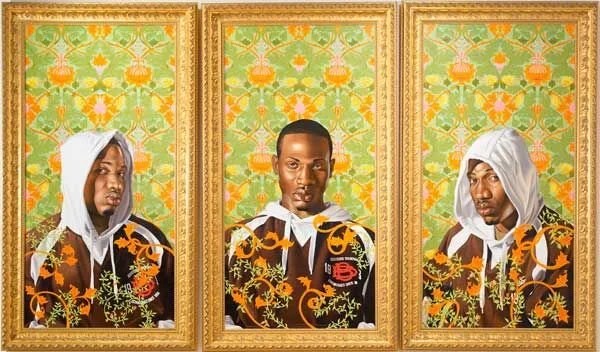
    Kehinde Wiley

    Triple Portrait of Charles I

    , oil and enamel on canvas. Triptych, 2007, 

    Rubell Family Collection, Miami

  • The Last Hurrah

    Rooms to Let in Slavic Village in Cleveland
    There was a uplifting art happening in Cleveland last weekend called “Rooms to Let.”  It was the second such event where foreclosed and abandoned houses in a hard hit area of Cleveland (houses that are scheduled to be demolished) are turned over to artists, who give them one last celebratory and dignified, send-off.
     Artist: Dana Depew
     Artist: Dana Depew

    The houses are all roughly a hundred years old and the last few years have been less then their best years. They are filled with character, beautiful wood, built-in china cabinets, window seats, etc., but what the artists focus on, for the most part, are that the houses are also filled with the lives of their former occupants. The houses sheltered people whose lives cry out to be celebrated before the tangible evidence of their exsistence is gone forever. We as a society, especially one hard hit by its changes like Cleveland’s Slavic Village, are too quick to erase the past as we rush toward the future and we often don’t realize what has been lost until it is no longer there. “Rooms to Let” stops us in our tracks and makes us look at these places, see the beauty, enjoy some music, laugh and talk with people, honor these structures and the families who lived and loved in them.

     Artist: Christine Mauersberger
     Artist: Christine Mauersberger
     Artist: Christine Mauersberger

    Having become blighted and a burden on the neighborhood, the city has no choice but to tear them down. This has been the story for many rust belt cities who deal with a loss of population and aging housing stock. For one more weekend though, people filled rooms, created music, gathered around them and enjoyed life. It was a celebration of the service of the houses as dwellings and the lives of the people who lived in them.

     Artist: Jeff Chiplis
     Artist: Paul Sydorenko
  • Good News

    The Wedding Dance by Pieter Bruegel the Elder, c. 1566, Detroit Institute of Arts.
    The New York Times reports that the collection of the Detroit Institute of Arts is no longer in danger of being sold as part of the Bankruptcy filed by the City of Detroit. This is very good news for not only the DIA, Detroit and Michigan, but for any art lover that enjoys access to masterpieces through public museums. Do yourself a favor and visit this collection if you can, there are some very fine pieces and you won’t regret it.
  • Capturing Beauty

    There is an exhibition of the work of Sandusky, OH artist Charles Courtney Curran at The Frick Art and Historical Center in Pittsburgh, now through February 1, 2015. He studied in Paris and split his time between New York and North Central Ohio on the shores of Lake Erie. The exhibition is titled Charles Courtney Curran: Seeking the Ideal and his definitely captures an idealized and beautiful life full of lovely settings and people, but don’t we all like a look into an ideal world once in a while?
  • The Price We Pay

    Isabella and the Pot of Basil by William Holman Hunt, 1868
    Many years ago a friend and I attempted to visit The Delaware Art Museum. We drove up from Baltimore during the day and when we arrived at the museum, we found the building was closed because a protestor had chained himself to the front entrance to protest the DuPont Annual Meeting taking place inside the museum. Now, at that time in the early 1990’s the DAM had the best collection of Pre-Raphaelite art in the US and having just completed a thesis on the Pre-Raphaelite Brotherhood, I was anxious to see their collection – I never got to.
    I read an article in the New York Times in August that the Delaware Art Museum was arbitrarily and against the advice of the American Association of Museum Directors, divesting themselves of many of the most important pieces in their collection based on monetary, rather than curatorial, decisions. My feelings about the museum came to the surface again, disappointment and disbelief.
    The image above is the painting they sold which they anticipated getting upwards of 13 million for, but it only realized 4.2 million (before auction commissions) I wonder if they think it was worth it now. The word is that two more pieces of the collection will go up for sale soon to pay a debt incurred for a construction project, soon there will be less to adorn those new walls.
  • Side by Side

    The West Wind by Tom Thomson, 1916-17, Art Gallery of Ontario, Toronto, Canada
    The National Gallery of Canada in Ottawa, Ontario is hosting a study of two iconic Canadian artworks  by artist Tom Thomson through January 4, 2015. Tom Thomson’s The Jack Pine and his The West Wind are examined side-by-side. I first came to know of Thomson after marrying my Canadian husband and visiting his relatives in Toronto when we went to the AGO (Art Gallery of Ontario) and I was introduced to the Group of Seven. They were a loosely tied group of landscape artists all choosing to focus on their surroundings as subject matter and thereby created the first major Canadian art movement.
    The Jack Pine by Tom Thomson, 1916-17, The National Gallery of Canada, Ottawa, Ontario