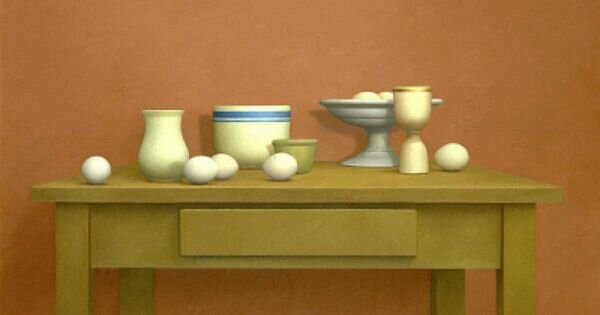
Still Life with Rose Wall and Compote 1973 by William Bailey.
Bailey still lifes are among my favorites. The simplicity appeals to me and the compositions look random, but you can tell are studied.
Still Life with Rose Wall and Compote 1973 by William Bailey.
Bailey still lifes are among my favorites. The simplicity appeals to me and the compositions look random, but you can tell are studied.
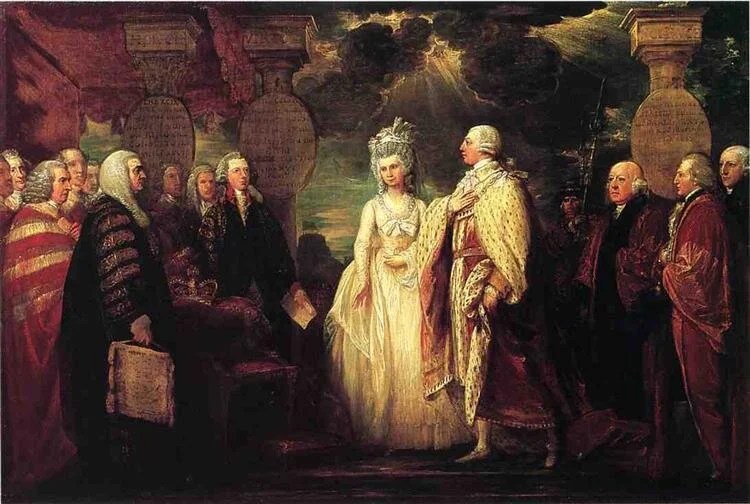
The Recovery of his Majesty in the Year 1789 by Benjamin West.
West was born in Philadelphia and was largely self-taught, although he did study painting. He was a friend of Benjamin Franklin, whose portrait he painted and eventually moved to England to paint for King George III who is pictured here. Don’t you love the heavens shining as the he returns to the throne.
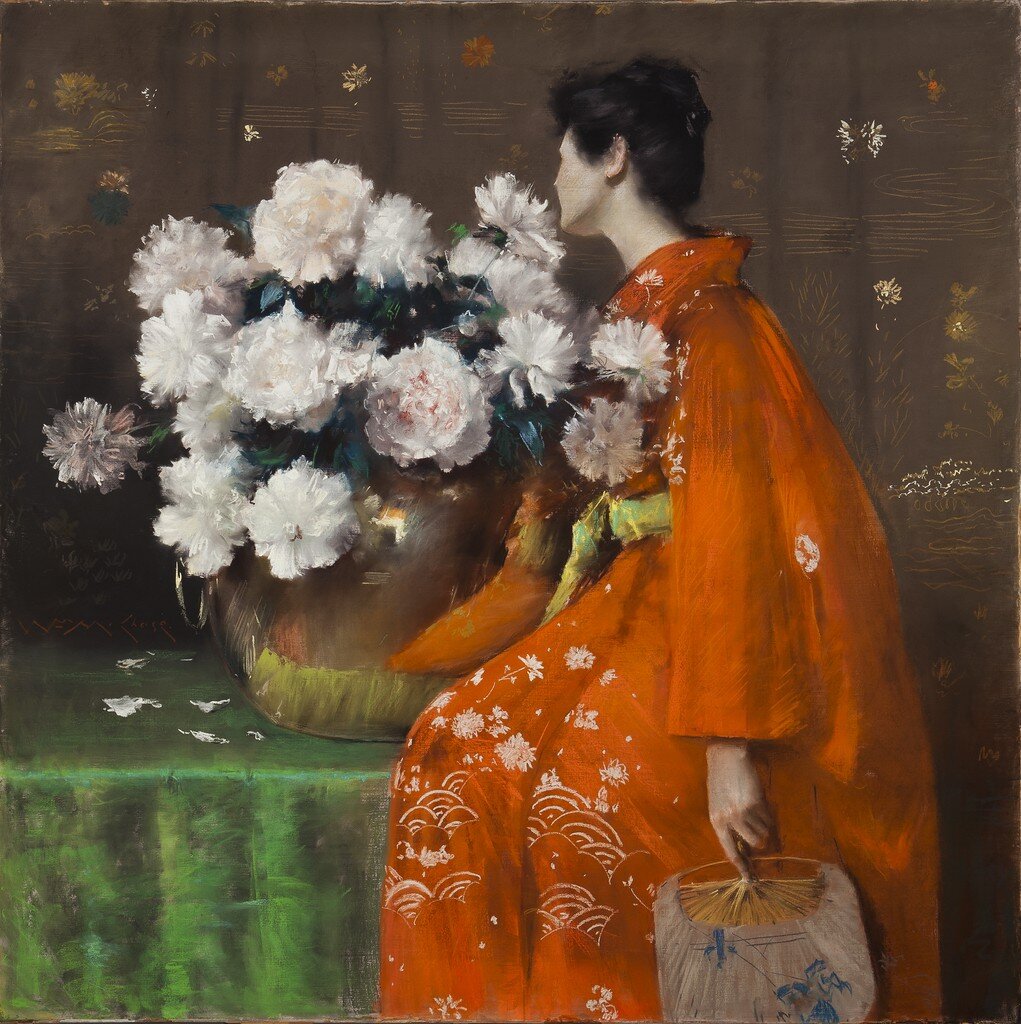
Spring Flowers, c. 1889 by William Merritt Chase.
Chase considered himself an observer of life and which was a French method he applied to American landscapes and settings. This work also refers to the fashion of Japanese styles adapted in American households.
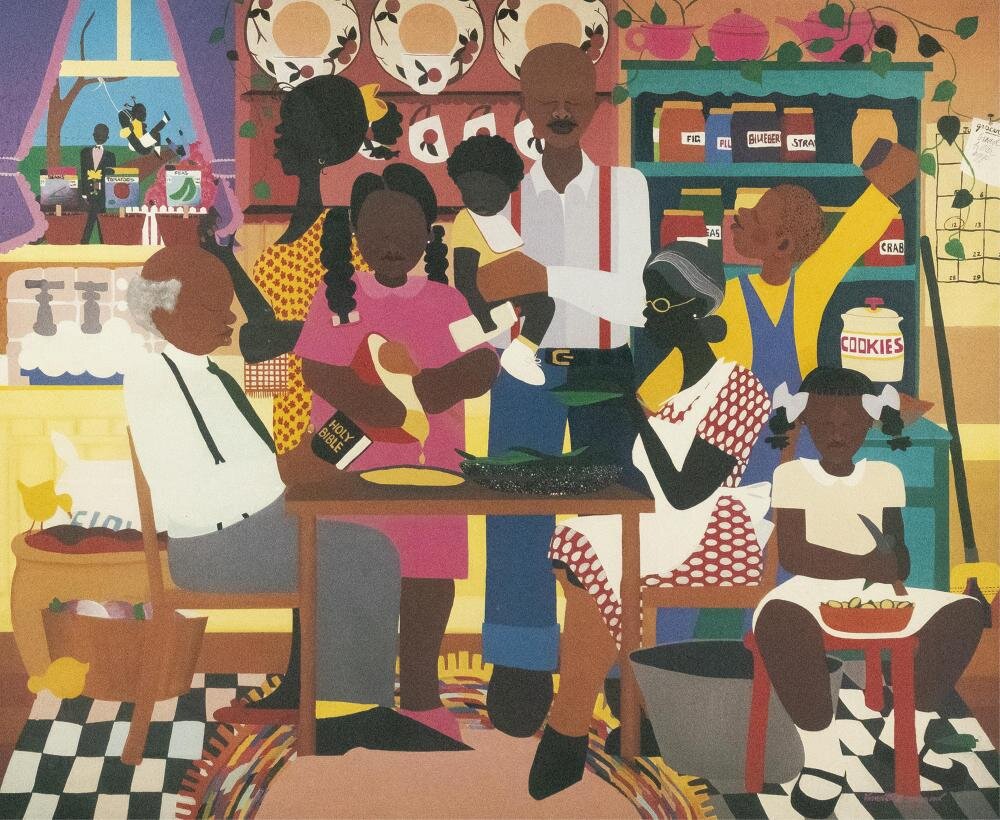
Old Fashioned Dinner Party, by Varnette Honeywood.
Although the two images of Honeywood’s work I have depicted here on YDA have revolved around church life, she actually chooses to portray a lot of different types of settings in her artwork, such as this extended family preparing a meal together.
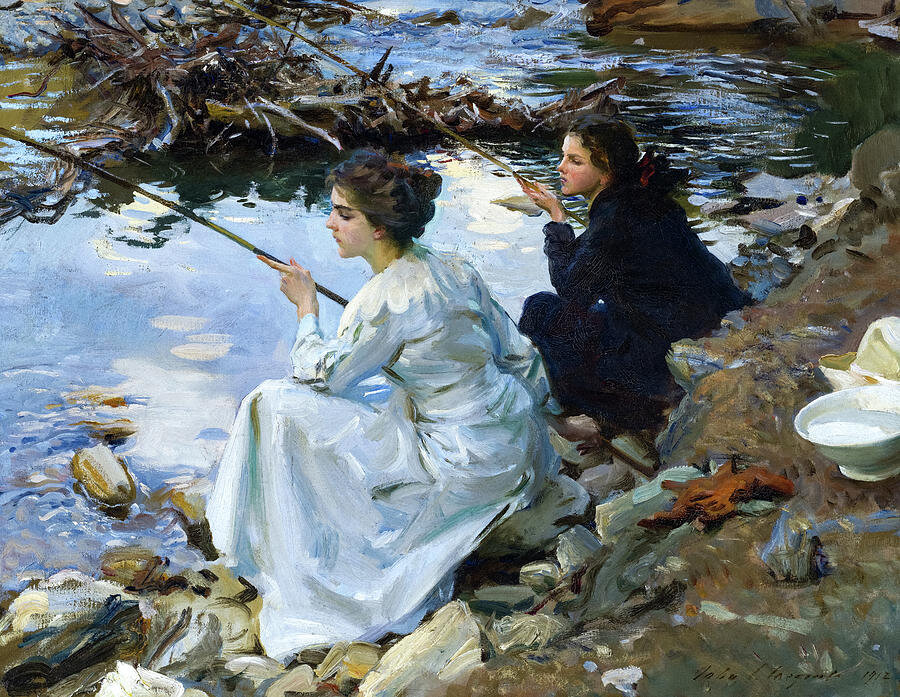
Two Girls Fishing, 1912 by John Singer Sargent.
Sargent frequently choses women as subjects and although he painted many on commission, he also painted them when the work he was doing was for himself. He seems to empower them through the beauty with which he portrays them.
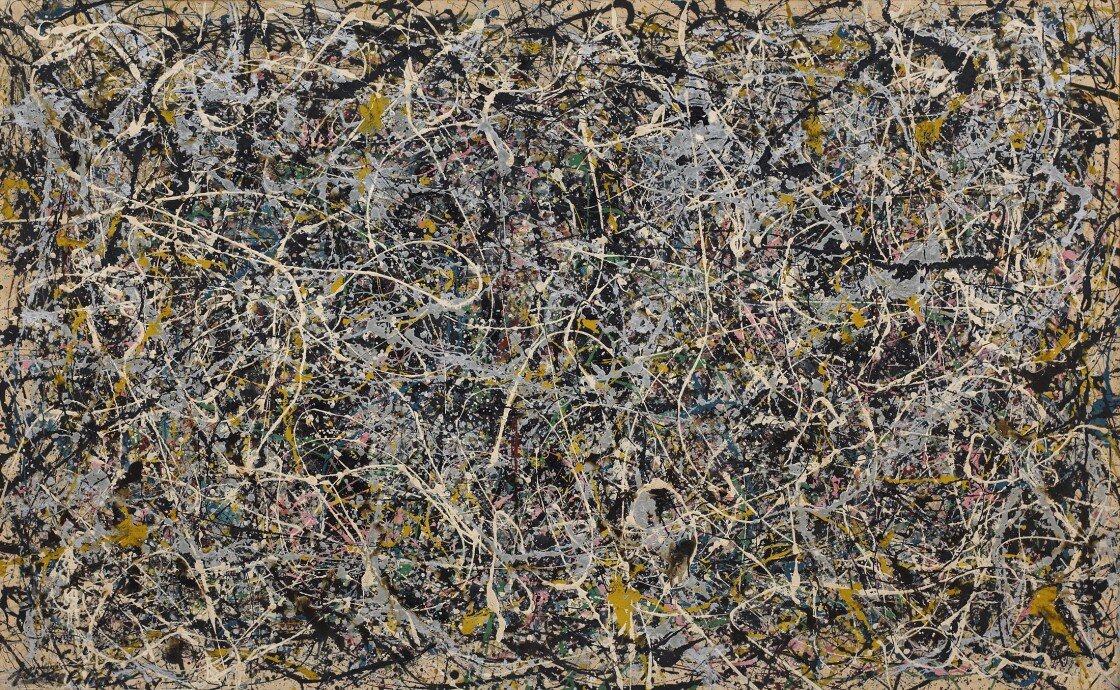
Number 1, 1950 by Jackson Pollock.
There is a lot of controversy surrounding a recent collection of Jackson Pollock’s work. Read more about the paintings to be attributed to him. Provenance
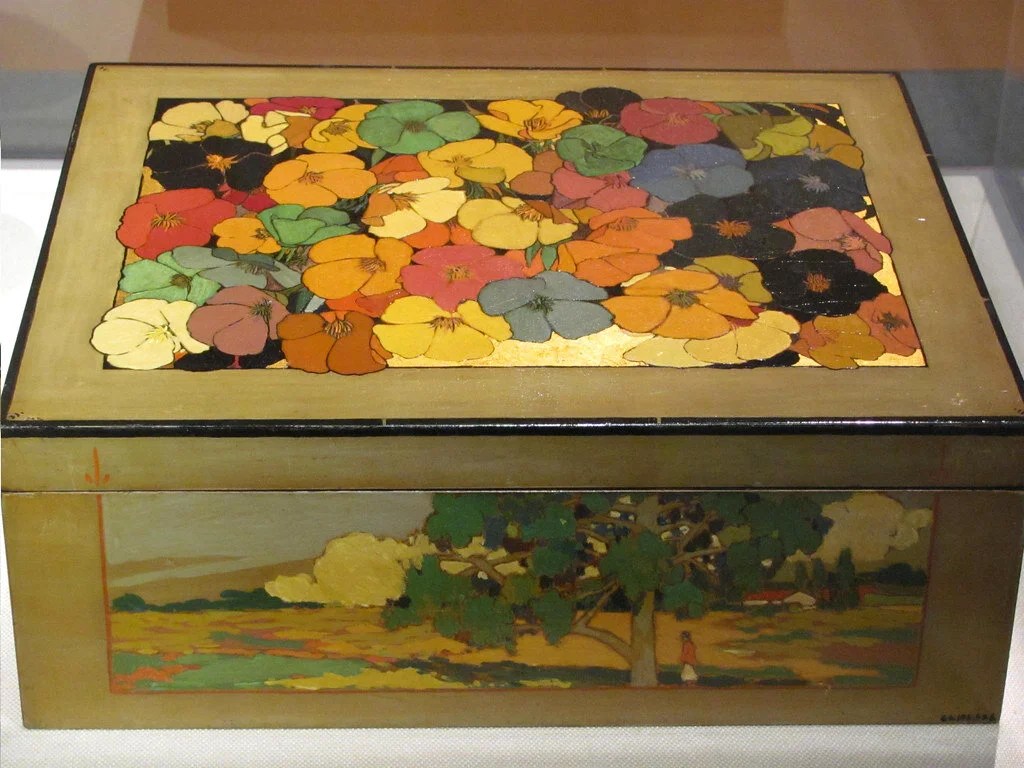
Covered Box by Lucia K. Mathews.
The Arts & Crafts movement began in England in the late 19th century and became popular in the United States a few years later. The followers of the movement sought-out the hand-made production methods of the past, as a reaction to the industrial age. California had their own take on the Arts & Crafts philosophy which manifested itself in the architecture of Greene & Greene and the work of many small artisans like Mathews.
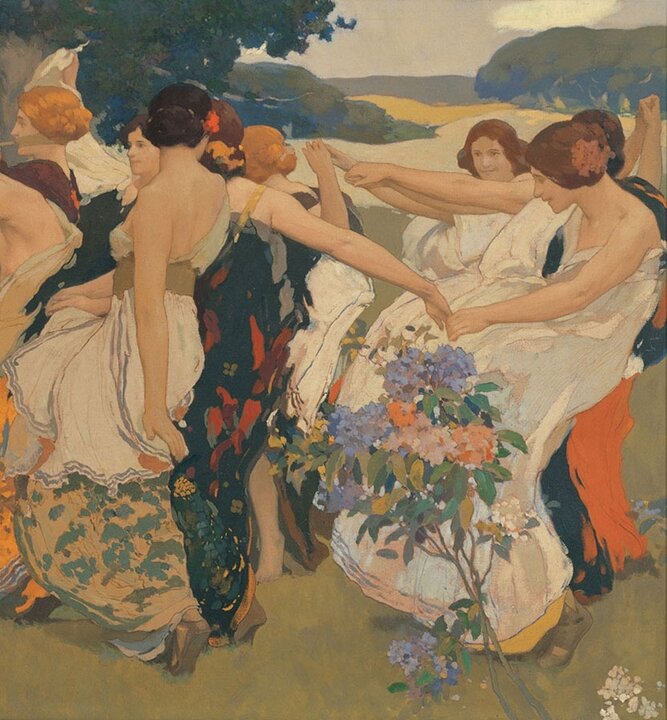
Arthur Frank Mathews, Spring Dance c. 1917.
Mathews and his wife Lucia were followers of the Arts and Crafts movement as it manifested in California. His training as both an artist and an architect led to beautiful painting surrounded by equally beautiful frames of his design.
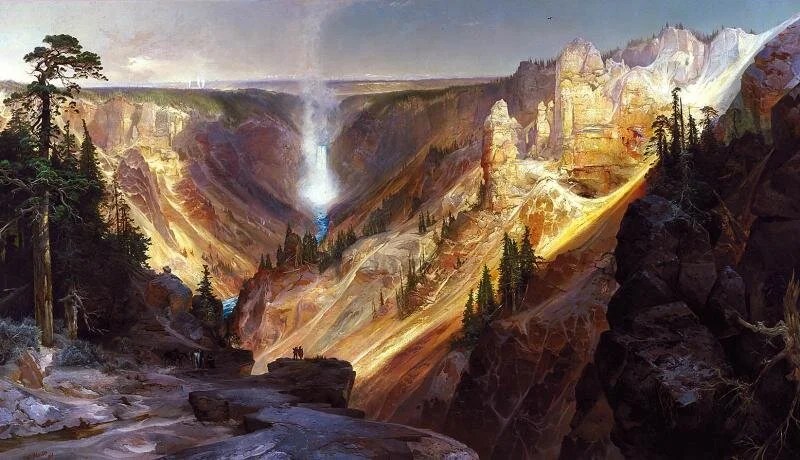
Grand Canyon of the Yellowstone, 1872 by Thomas Moran, Yellowstone National Park Museum.
Moran was another artist working in the same vein as Bierstadt. His paintings of the American West were even more idealized. His work was presented to Congress as evidence that Yellowstone needed to be protected as a National Park which caused them to establish the National Park Service in 1916.
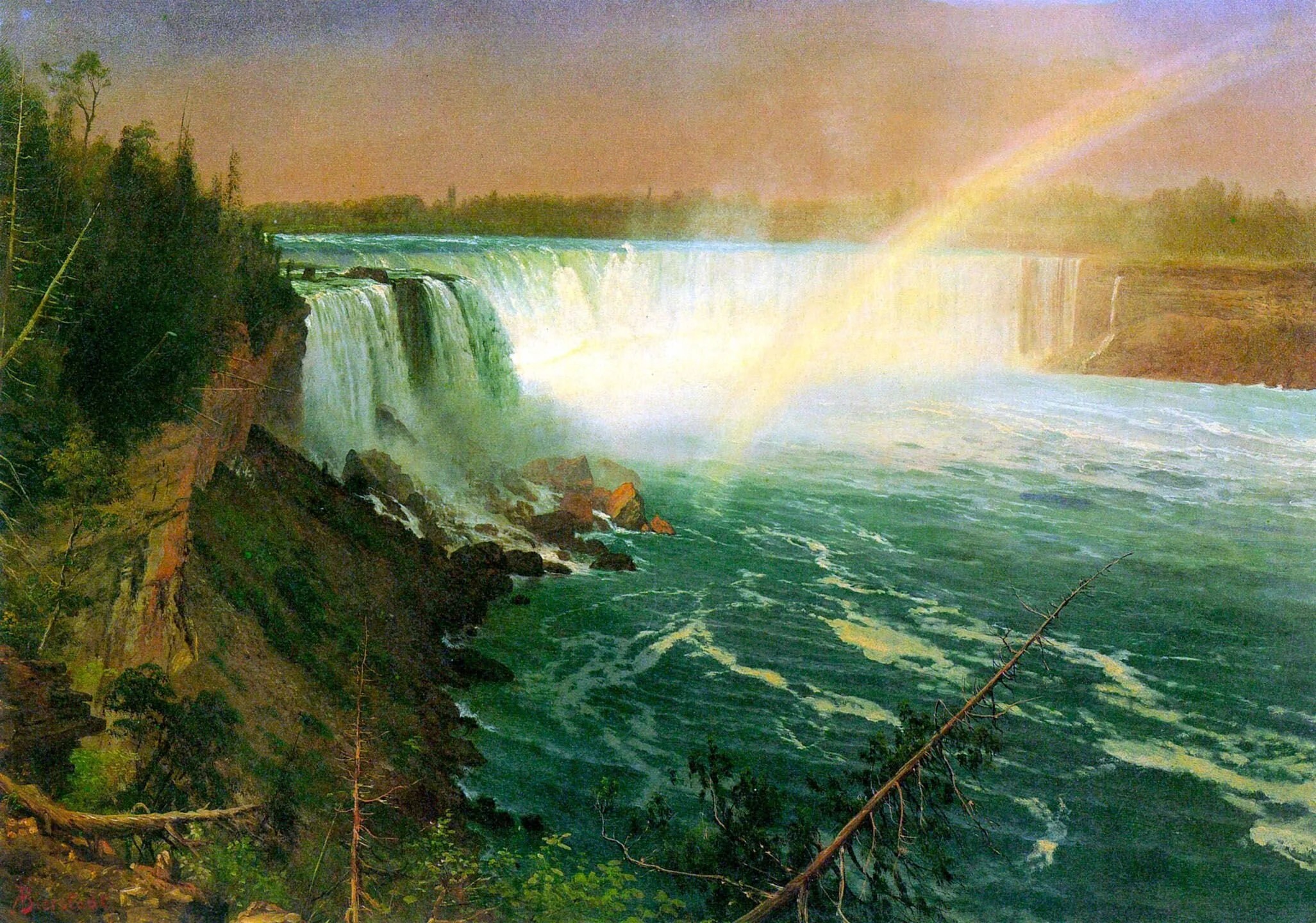
Niagra Falls, by Albert Bierstadt.
Bierstadt painted panoramic, idealized scenes of the United States. His main subjects were places in the the American West which was being touted as the promised land and his beautiful landscapes helped to sell it as the place to explore and settle. Manifest Destiny

