
Mystery of the Missing Migrants by Charley Harper, various galleries.
Charley Harper is best known for his book illustrations from the mid 20th century.
Mystery of the Missing Migrants by Charley Harper, various galleries.
Charley Harper is best known for his book illustrations from the mid 20th century.
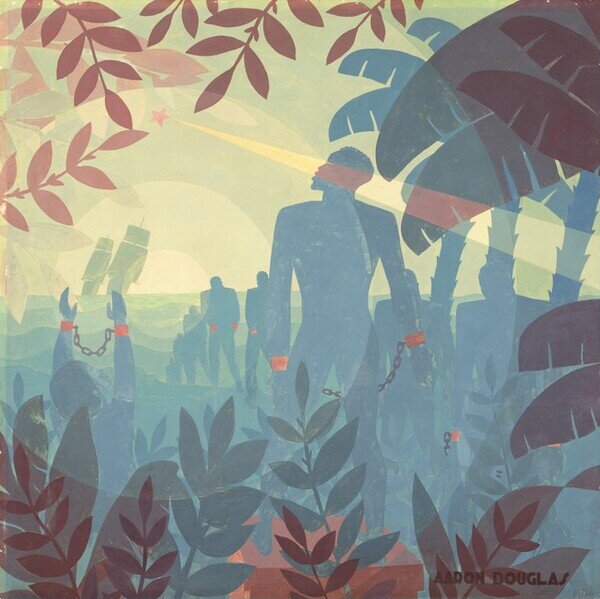
Into Bondage, 1936 by Aaron Douglas, Corcoran Museum of Art, Washington D.C.
This work is part of a mural Douglas created that marks the history of the Black people in North America from slavery to 1936. They were displayed in the Hall of Negro Life at the Texas Centennial Exposition in Dallas.
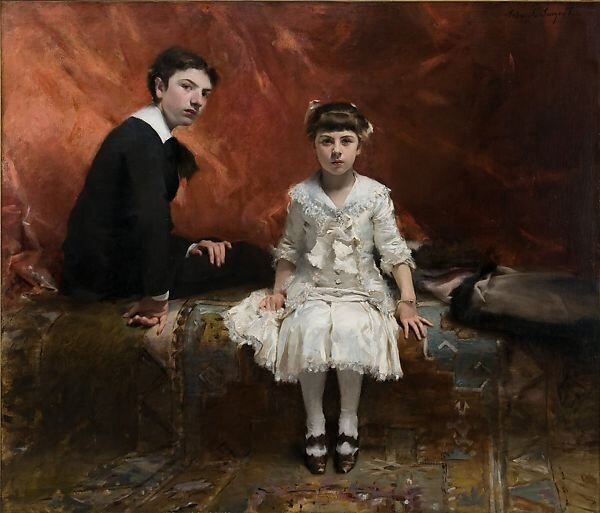
Portraits of Edouard and Marie-Louise Pailleron by John Singer Sargent.
Sargent was one of the primer portrait painters of the 19th century. His work brought out the very best in his sitters and therefore made him very popular. These children’s father is Edouard Pailleron, a famous 19th century French playwright and his wife.
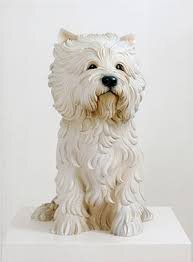
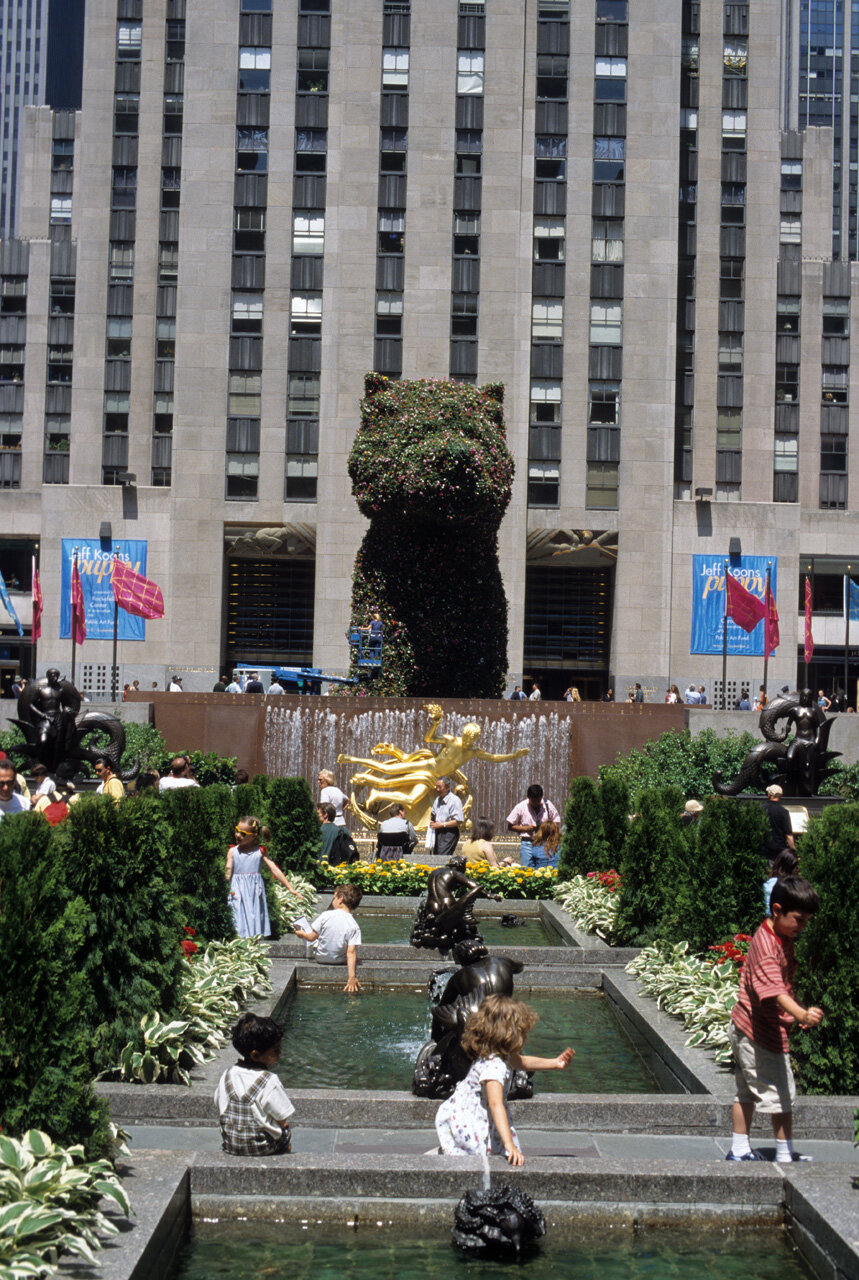
White Terrier, 1991 by Jeff Koons, multiple collections.
In 2000 Koons carried this image of the terrier to a huge scale when he created a giant floral version of the dog in Rockefeller Center. His work is always controversial and often outrageous, just as he intends it to be.
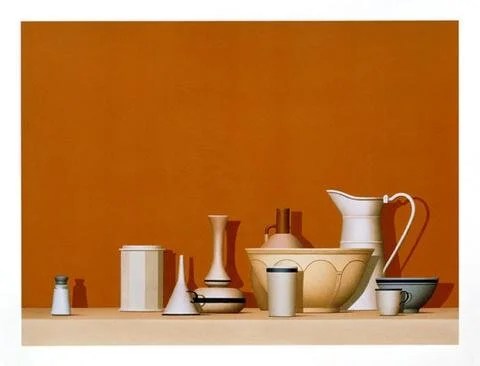
Soliloquy by William H. Bailey.
The first time I saw one of William Bailey’s still life paintings I instantly fell in love with the combination of starkness and the items he featured.
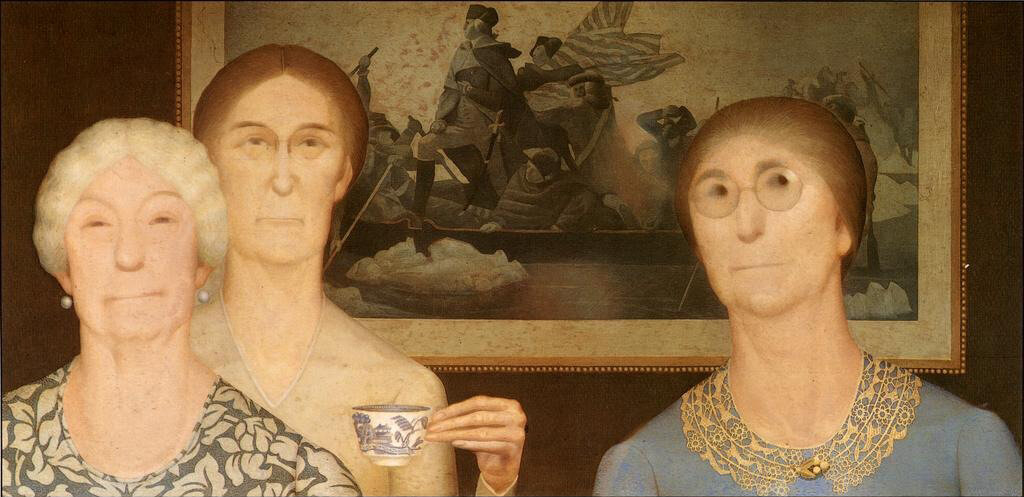
Daughters of the Revolution by Grant Wood, Cincinnati Art Museum.
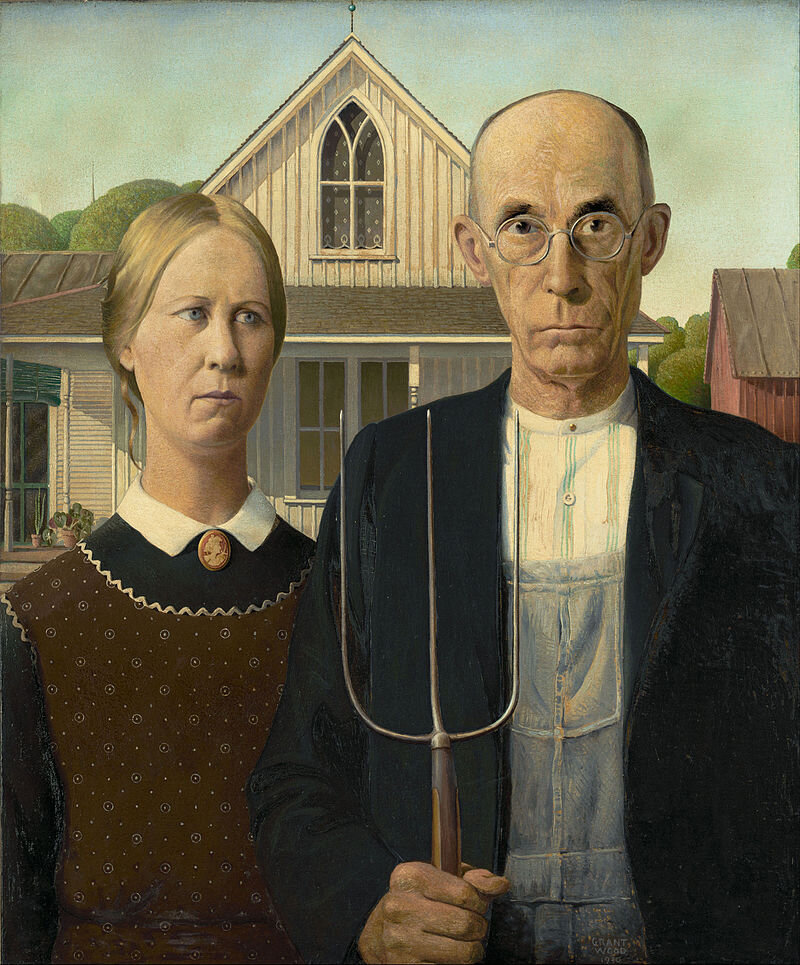
Wood pokes fun at the prim and proper ladies and their intolerance. This is the only “satire” Wood owned up to, but many of his other works fit that definition too, even the beloved American Gothic.
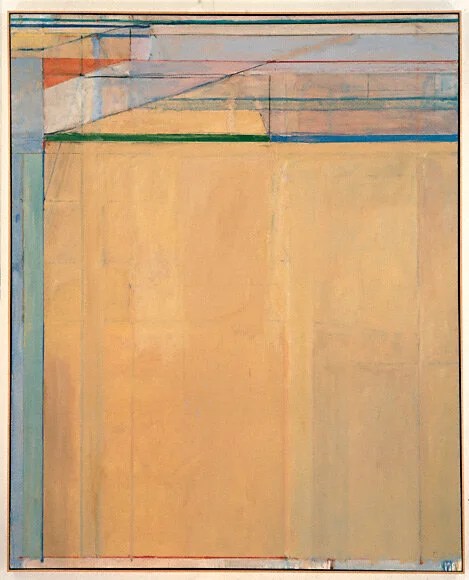
Ocean Park No. 67 by Richard Diebenkorn, SFMoMA
Diebenkorn taught at the California School of Fine Arts in San Francisco where one of his students was Mark Rothko. This is part of the Ocean series which features paintings constructed with large blocks of colors influenced by nature.
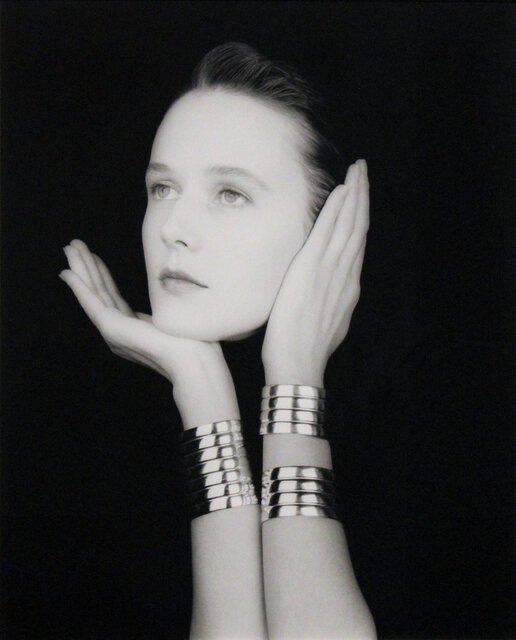
Lucy Ferry, 1986 by Robert Mapplethorpe© The Robert Mapplethorpe Foundation.
Mapplethorpe’s work created a huge controversy when some of his work was deemed obscene in Cincinnati in 1990.
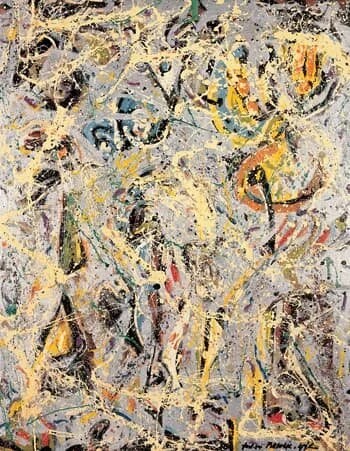
Galaxy, 1947 by Jackson Pollock, Joslyn Art Museum, Omaha, NE.
One of Pollock’s earliest “drip” paintings this work incorporated house paint and automobile paint mixed with sand and ashes.

The Trappers Return, 1851 by George Caleb Bingham, Detroit Institute of Arts.
Bingham made a living painting portraits early in his career as an artist, but eventually switched to genre paintings like this. In this version you can see more of a resemblance to a bear cub.

