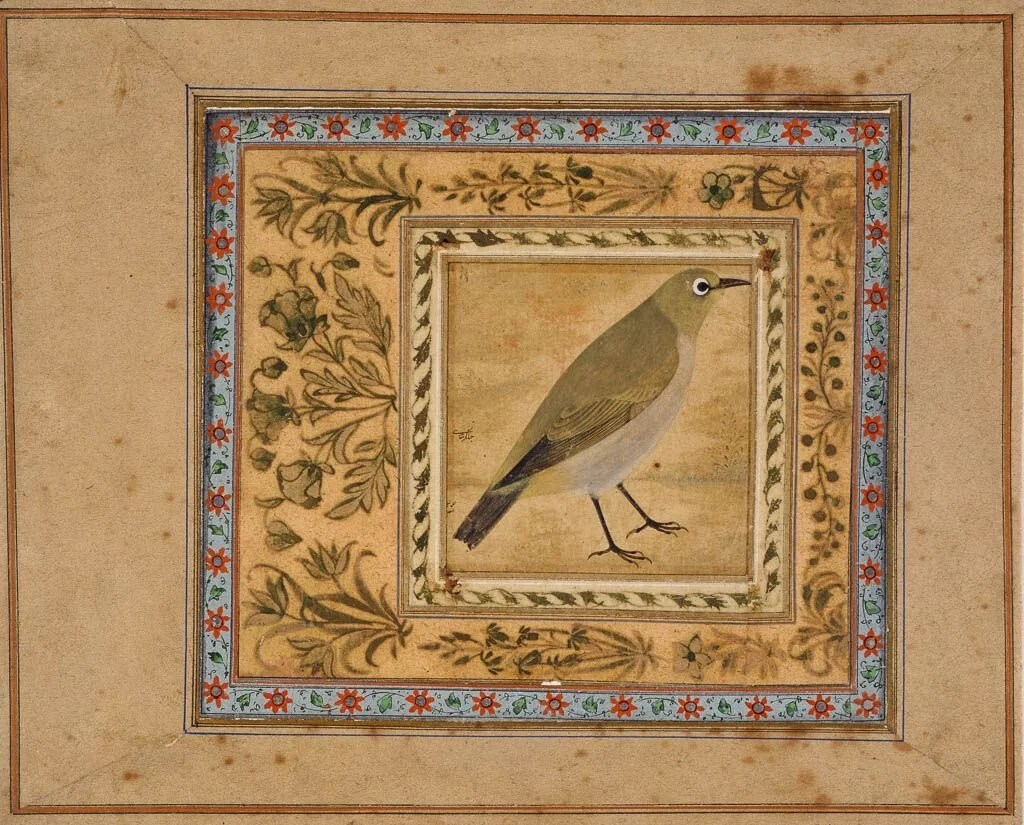
White-eye, Manuscript Mughal Period.
The Mughal empire a line of Indian Muslim emperors who ruled from 1526 to 1828. The most famous work to come out of this period is the Taj Mahal.
.
White-eye, Manuscript Mughal Period.
The Mughal empire a line of Indian Muslim emperors who ruled from 1526 to 1828. The most famous work to come out of this period is the Taj Mahal.
.
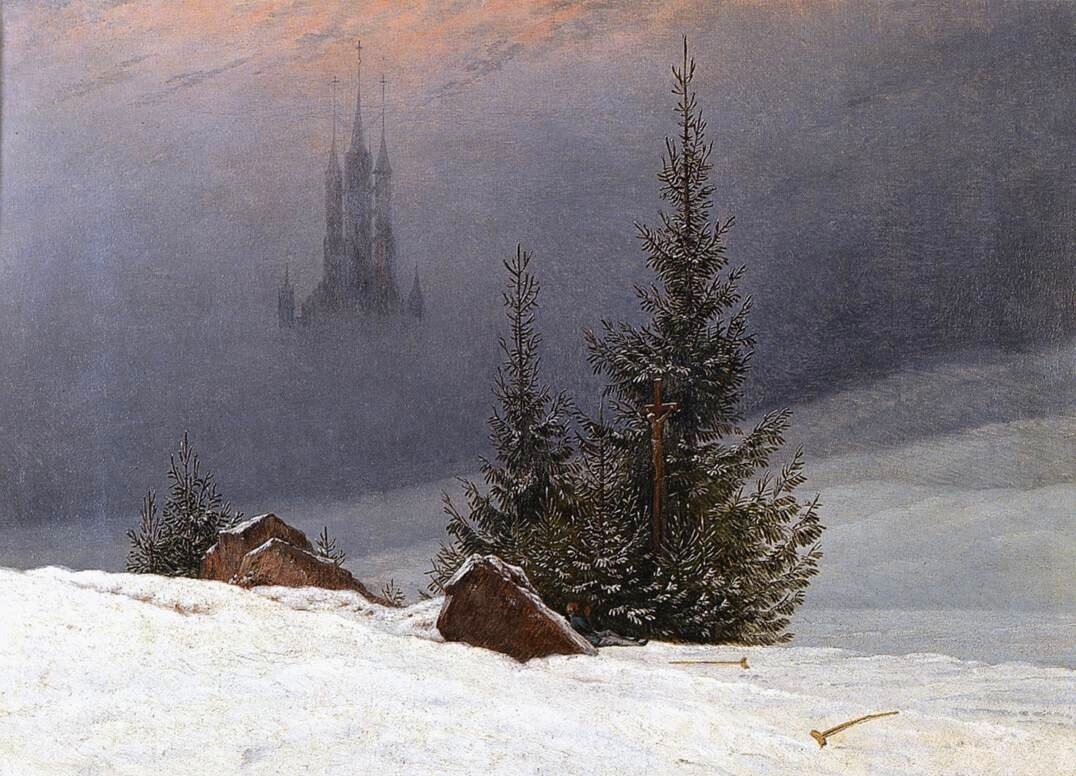
Winter Landscape, probably 1811 by Casper David Friedrich.
There is a man sitting down against the rocks and praying, he has abandoned his crutches as he approached the shrine. The serenity of the scene with the church in the background is a favorite theme of Friedrich.
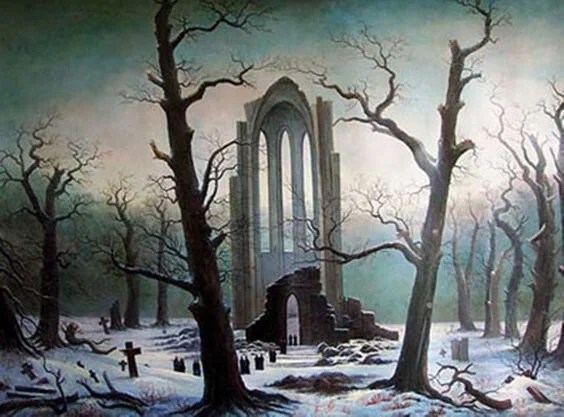
Monastery Graveyard in the Snow, 1819 by Casper David Friedrich.
Friedrich’s ethereal landscapes have an uncanny calmness. People have very personal reactions to his art. For example, if you are religious, you might concentrate on the ruined church and what that means. If you are feeling isolated or lonely, the winter scene and bare trees, may be what you feel most moved by.
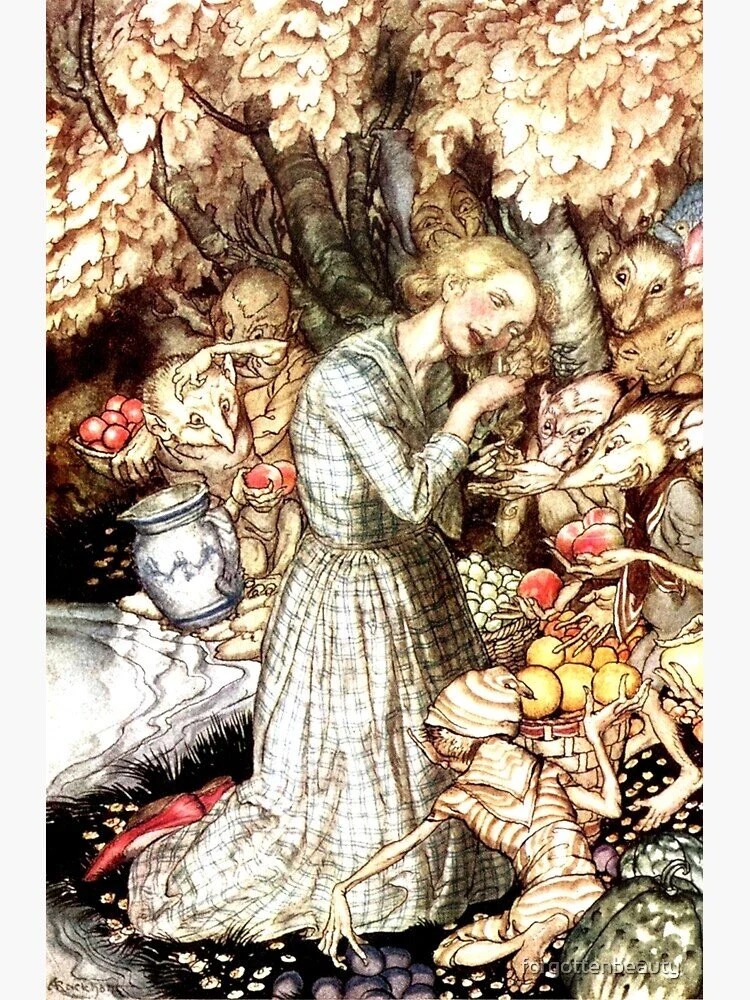
Frontispiece for Goblin Market, 1933 by Arthur Rackham.
Rackham’s illustrations for Christina Rossetti’s poem are full of the detail that make his artwork popular with young and old, alike.

Autumn, 1999 by Alex Katz, Carnegie Museum of Art, Pittsburgh.
Katz was influenced by Jackson Pollock early in his career but in the 1960’s his work became more realistic and representational. He concentrated on portraits and figural images, but also did some landscapes and florals.
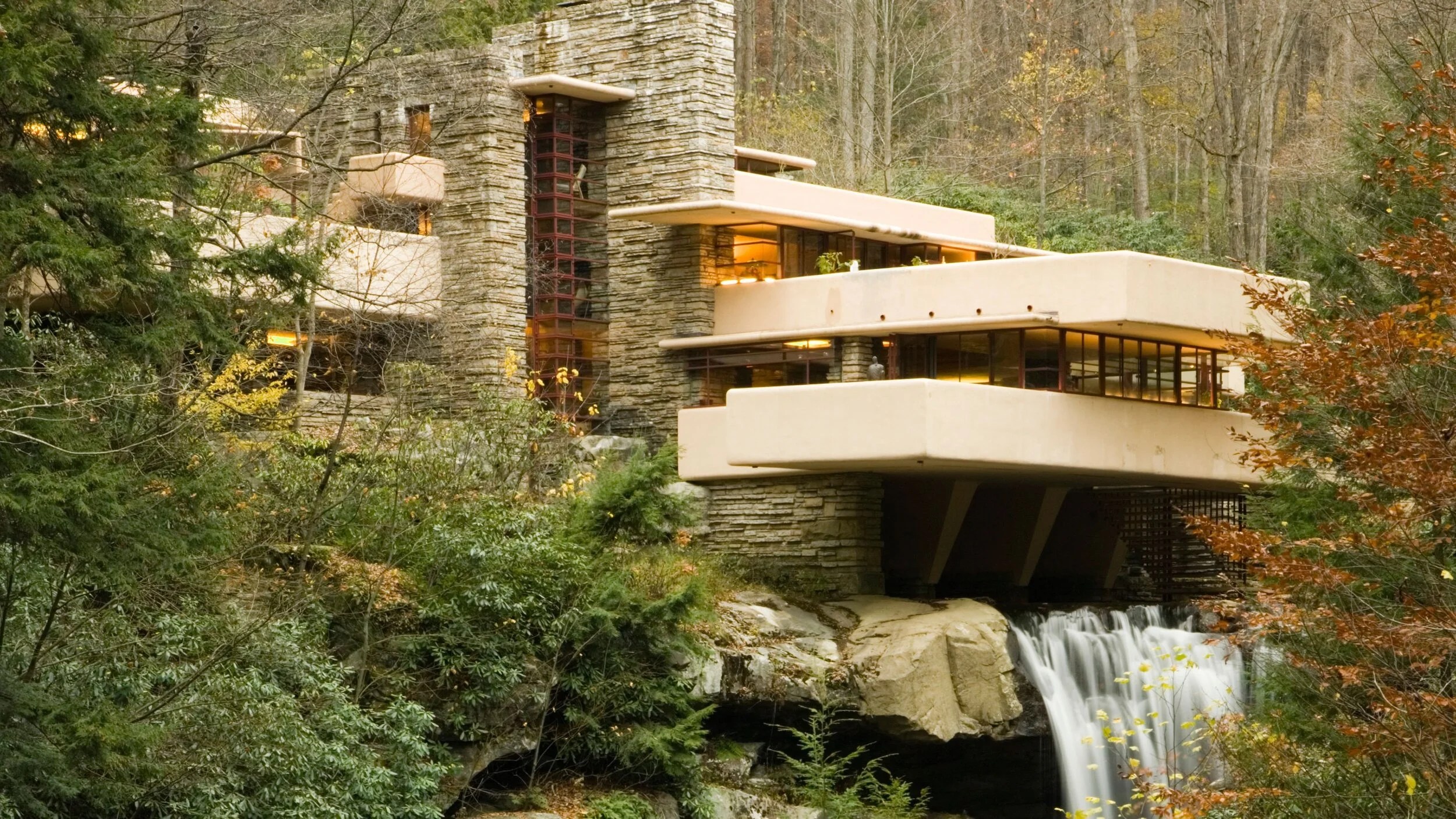
Fallingwater, 1936-38 by Frank Lloyd Wright, Bear Run, PA. Western Pennsylvania Conservancy.
Considered Wright’s masterpiece, Fallingwater is found deep in the PA woods and was built as a retreat for the Kaufman family of Pittsburgh.
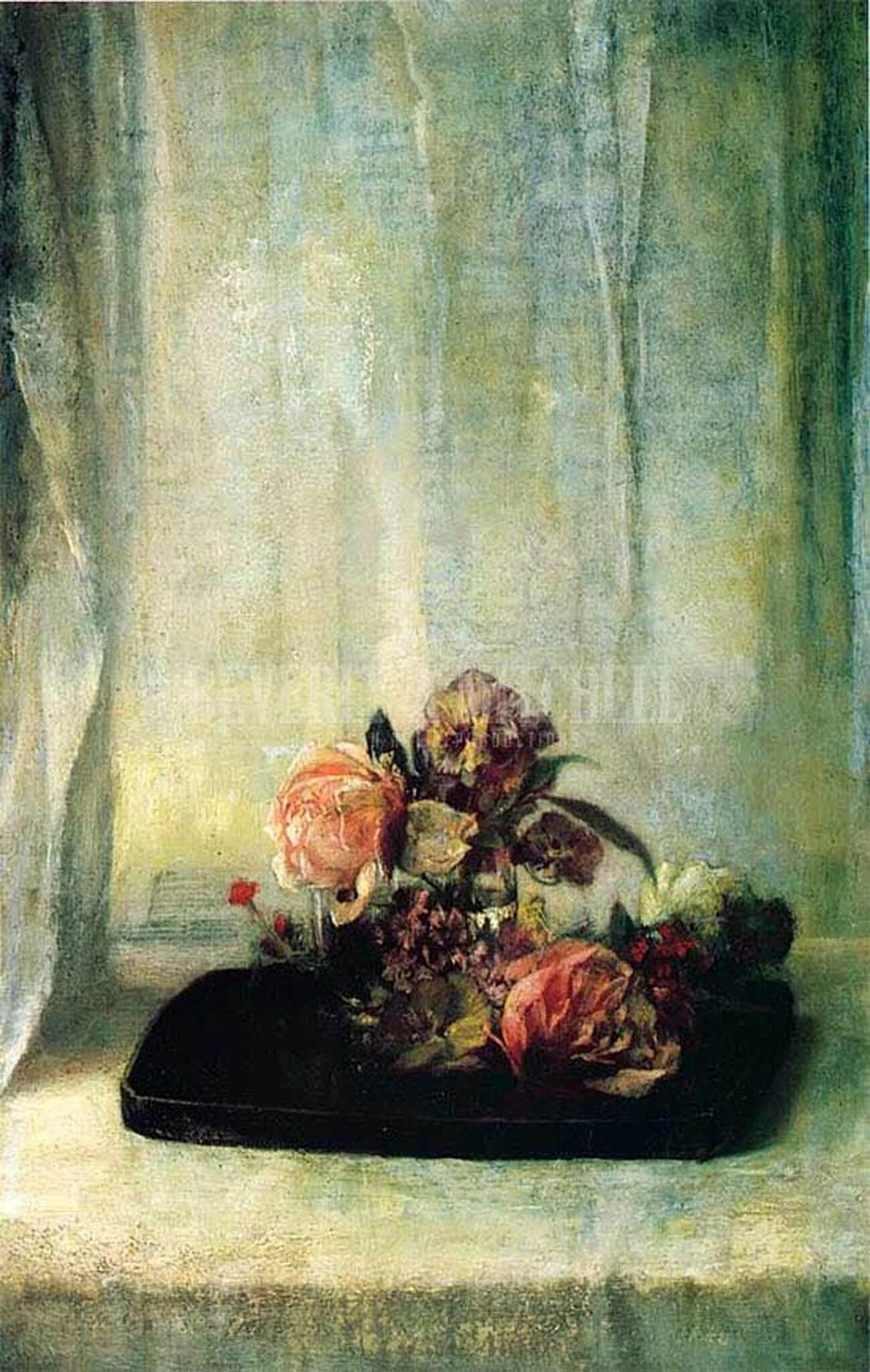
Roses on a Tray, c.1861 by John La Farge, Museum of Art, Carnegie Institute, Pittsburgh.
La Farge began his career as a painter, but became most famous for this work in stained glass. Second only to Louis Comfort Tiffany. He also created decorative for a number of churches and private residences.
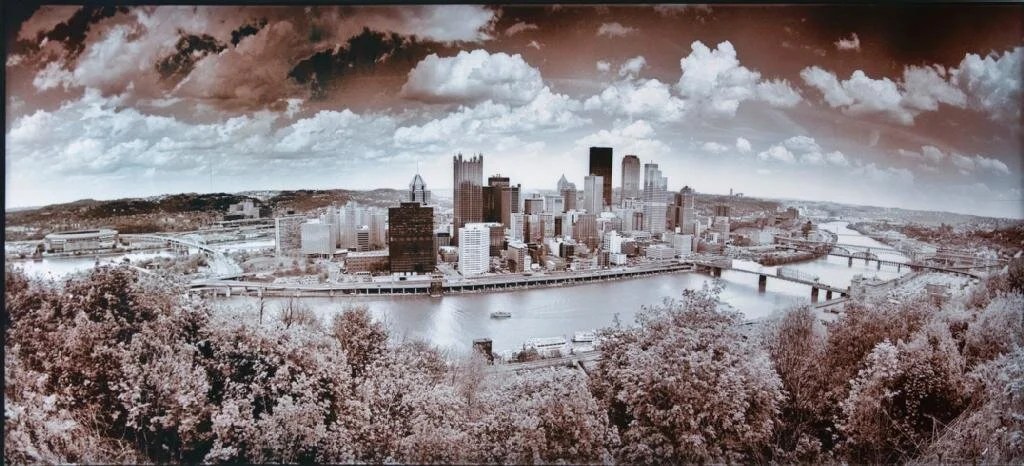
Downtown Pittsburgh Skyscrapers from Mount Washington, 1996 by Aaronel de Roy Gruber, Collection of the Artist.
A Pittsburgh artist who created paintings, sculpture and photos. Her work can be found in many museum collections. Many of her panoramic shots were also hand tinted.
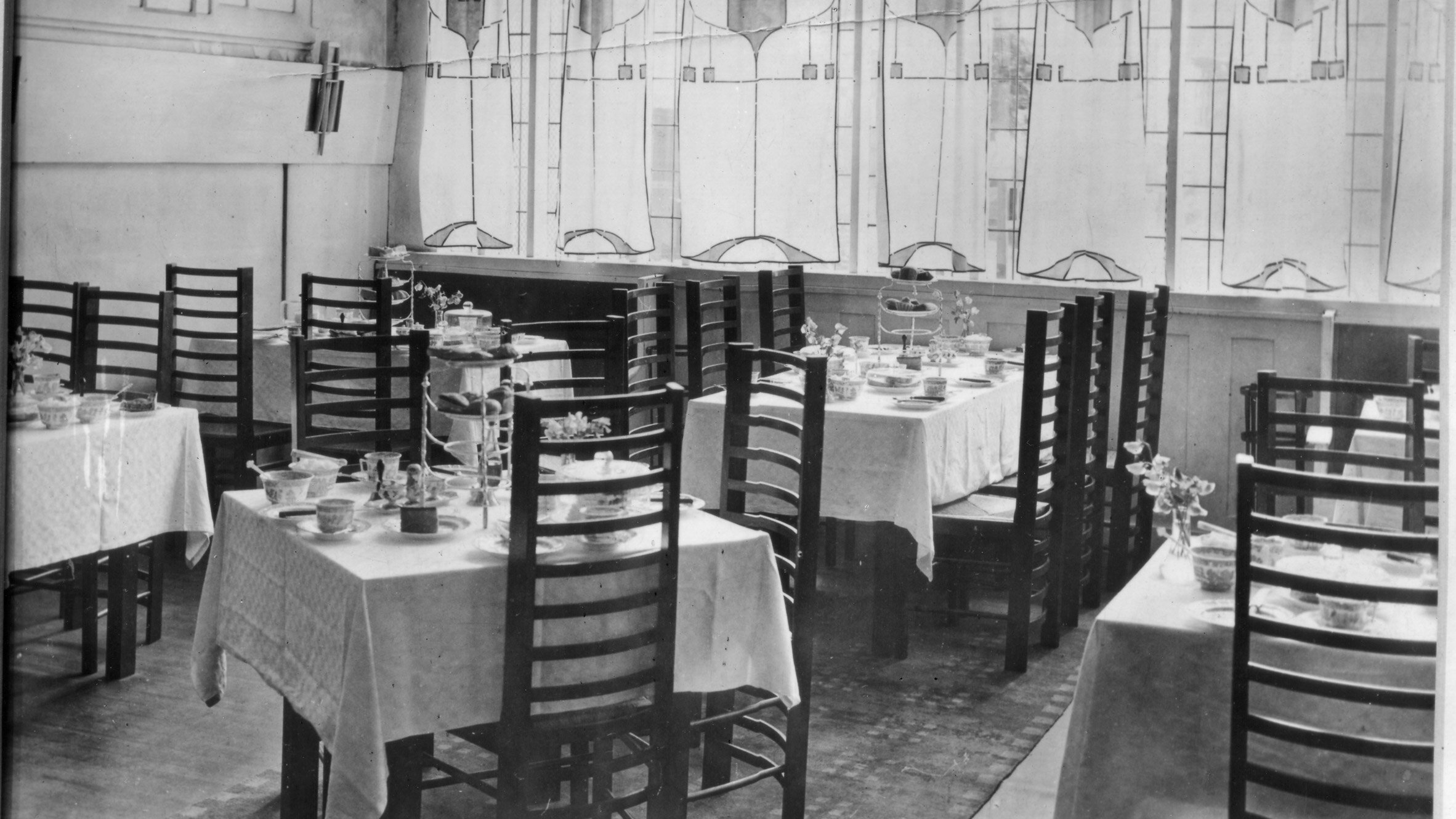
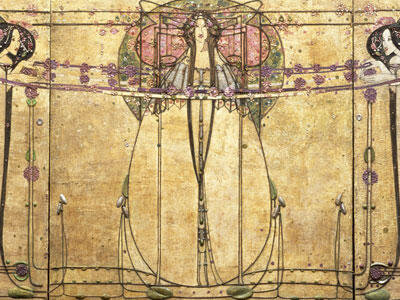
Ingram Street Tea Rooms by Charles Rennie Mackintosh et al.
Here is an example of Charles Rennie Mackintosh’s architectural and Margaret Macdonald Mackintosh’s design work. His wife worked with him on his interior designs. Charles, Margaret, her sister Frances and Herbert MacNair all formed a design group known as “The Four.”
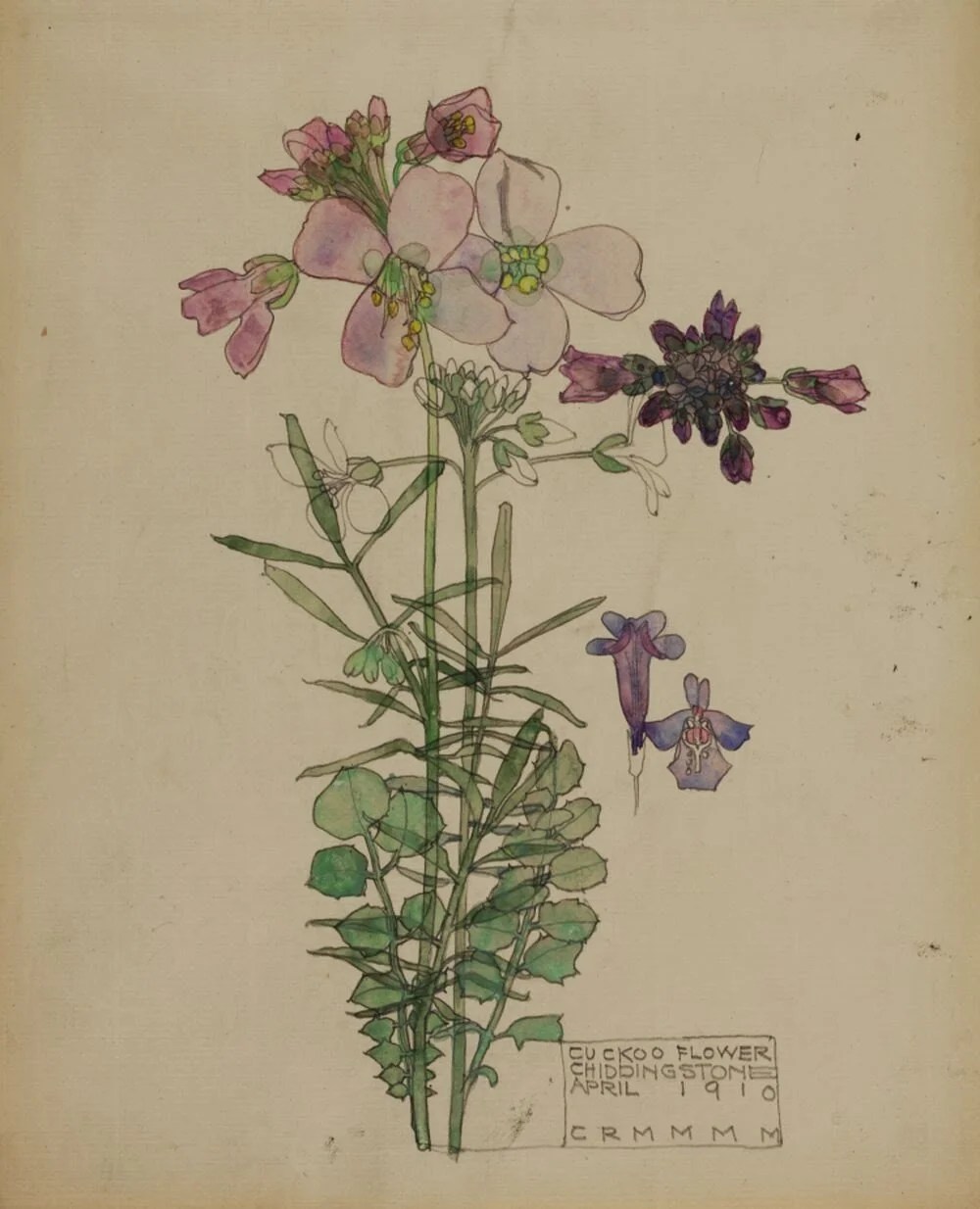
Cuckoo Flower, 1910 by Charles Rennie Mackintosh, Hunterian Art Gallery, University of Glasglow, Scotland.
Mackintosh’s interest in plants began at a young age and continued throughout his life. Although he is most famous as an architect, his talent in painting watercolors should also be appreciated.
“Art is the flower-life is the green leaf. Let every artist strive to make his flower a beautiful living thing – something that will convince the world that there may be – there are – things more precious – more beautiful – more lasting than life.”
Charles Rennie Mackintosh ‘Seemliness,’ 1902.

