• Paradise Revisited

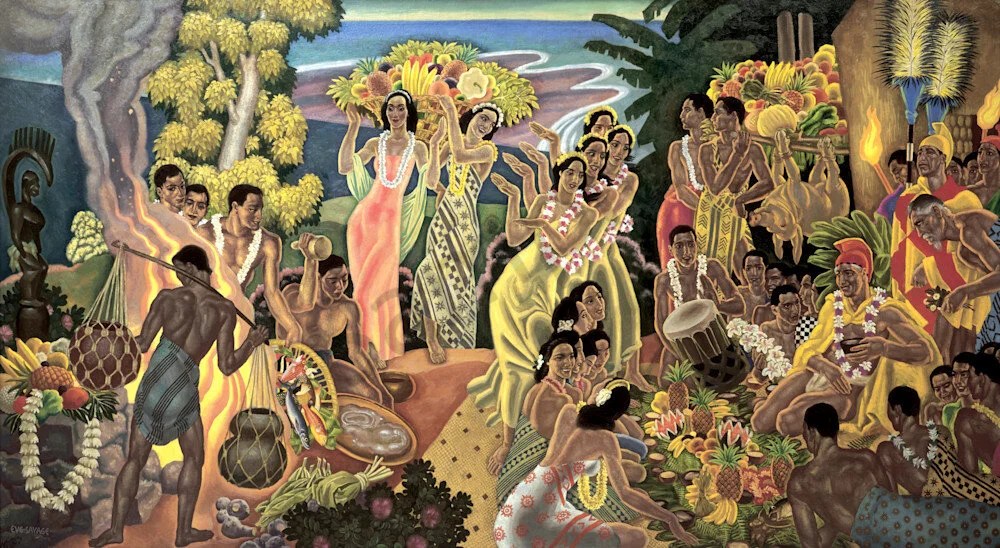
    Island Feast, 1940 published 1953 by Eugene Savage, S.S. Lurline, Matson Line.

    Savage created a set of nine murals for the Matson ship line (which sailed to Hawaii) in 1940 but they were not used until the early 1950’s because the ships had been requisitioned for service in WWII. Savage received awards for his artwork which was so popular among the tourists it was reproduced in a set of prints and as Aloha attire.
  • The Return

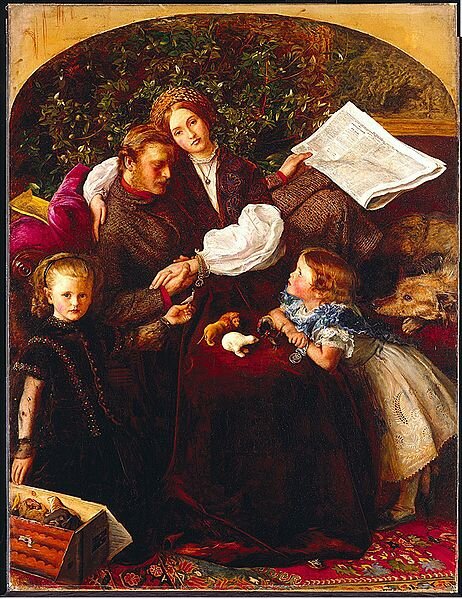
    Peace Concluded, 1856 by John Everett Millais.

    This scene marks the end of the Crimean War and the return home of the soldier to his family.

    On the mother’s lap, four animals from the toy Noah’s Ark represent the four belligerents: Britain (lion), Russia (bear), the Ottoman Empire (turkey), and France (rooster).

    The father holds the newspaper that announces the end of the war.

    This post is in honor of all the fathers (and mothers) who sadly cannot celebrate with their families because they are still fighting a war.

  • Green Dress

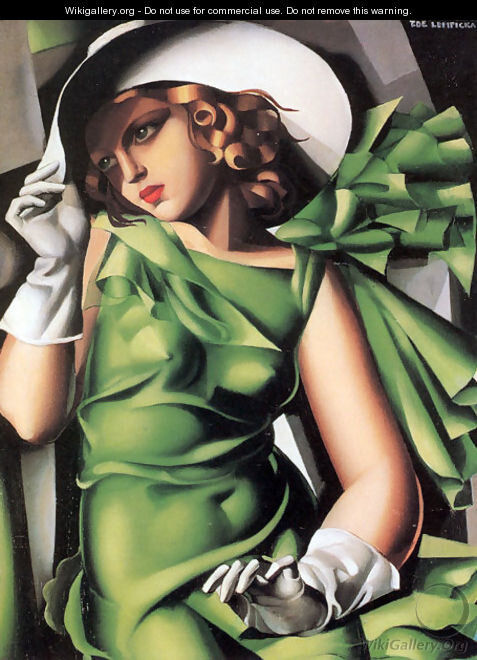
    Jeune fille en vert, 1930 by Tamara de Lempicka.

    Lempicka has come to represent the Art Deco period in painting because of the fluid lines, rich colors, and sensuousness of her paintings. She was inspired by, and part of, the bohemian scene in Paris in the 1920’s and the Hollywood scene in the late 1930’s and 40’s. She liked socializing and being a part of the most popular groups. She disliked the 1970’s era, feeling it was inferior to the ones that preceded it, but ironically, in the 1970’s her artwork was discovered once again, after a retrospective of her work was shown in Luxembourg and she has remained popular with collectors, since then.

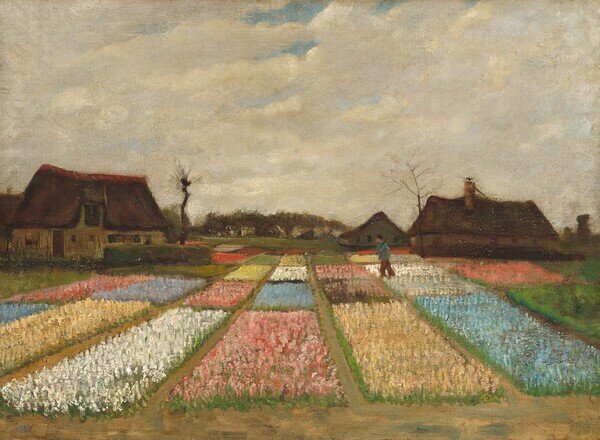
  • Art Therapy

    Flower Beds in Holland, 1889 by Vincent Van Gogh.

    One of the 150 paintings the Van Gogh produced while living in the psychiatric hospital in Saint-Rémy. He had converted a cell next to his into a studio so he could continue to work.

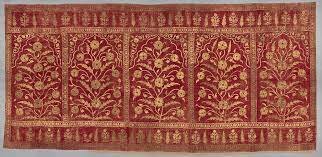
  • Nature in Fabric

    Various Indian Textiles India has created beautiful textiles from the earliest days of their civilization and the tradition continues today. Quite often the designs are based on the natural fauna as are the materials used to create them.

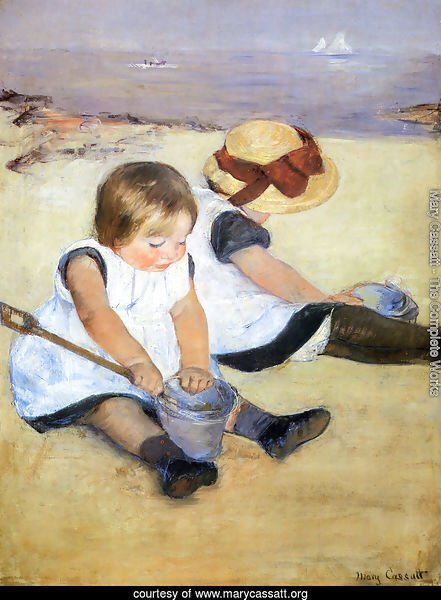
  • Sand in Your Shoes

    Children Playing on the Beach, 1884 by Mary Cassatt.

    Mary Cassatt is well known for her paintings of children where she presents the children naturally as opposed to being idealized or as mini adults.

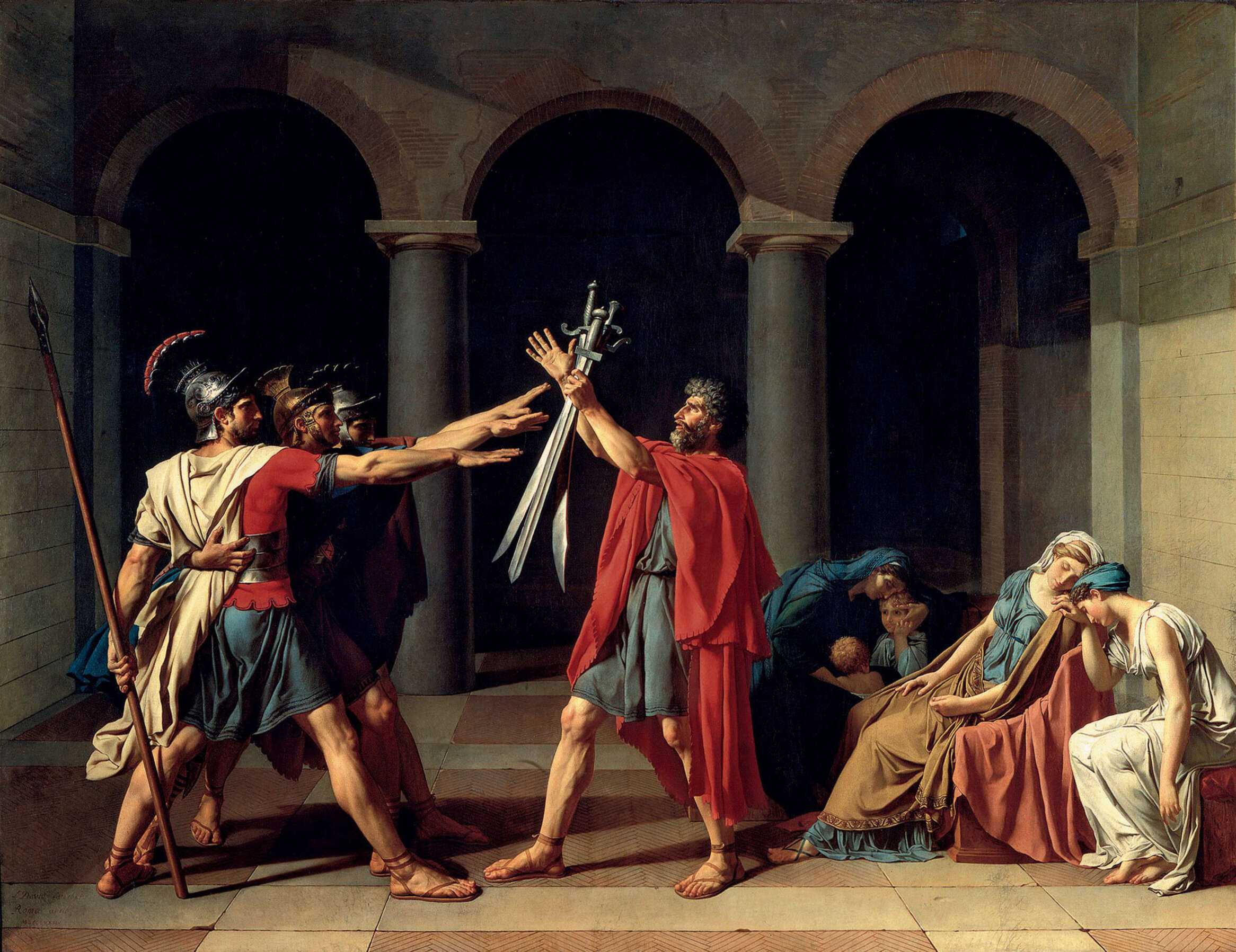
  • Honor

    Oath of the Horatii, 1785 by Jacques-Louis David.

    By painting an ancient historical subject, David was hoping to encourage people to look back at the ancient world and model their actions on that society which had been held-up by many at this time as an example to be emulated. This work helped launch the Neoclassical movement.

  • Bad Hair Day

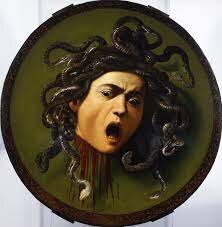
    Medusa, c. 1598 by Caravaggio.

    Medusa has always been a popular character in art. The combination of female and monster seems to have been so tantalizing that most ancient and Renaissance artists had to take their turn. This work is a depiction of a ceremonial shield where the Gorgon is used to frighten enemies; a usage common in ancient art.

  • The Simple Life

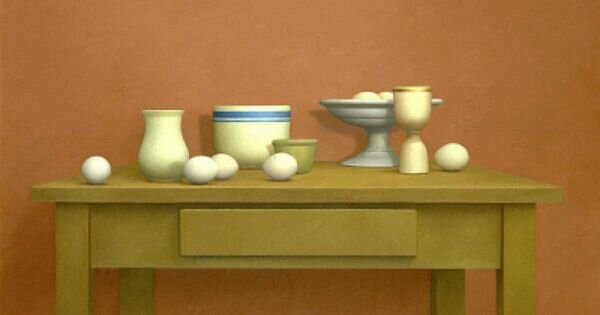
    Still Life with Rose Wall and Compote 1973 by William Bailey.

    Bailey still lifes are among my favorites. The simplicity appeals to me and the compositions look random, but you can tell are studied.

  • Protection

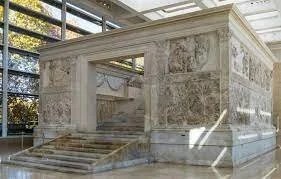
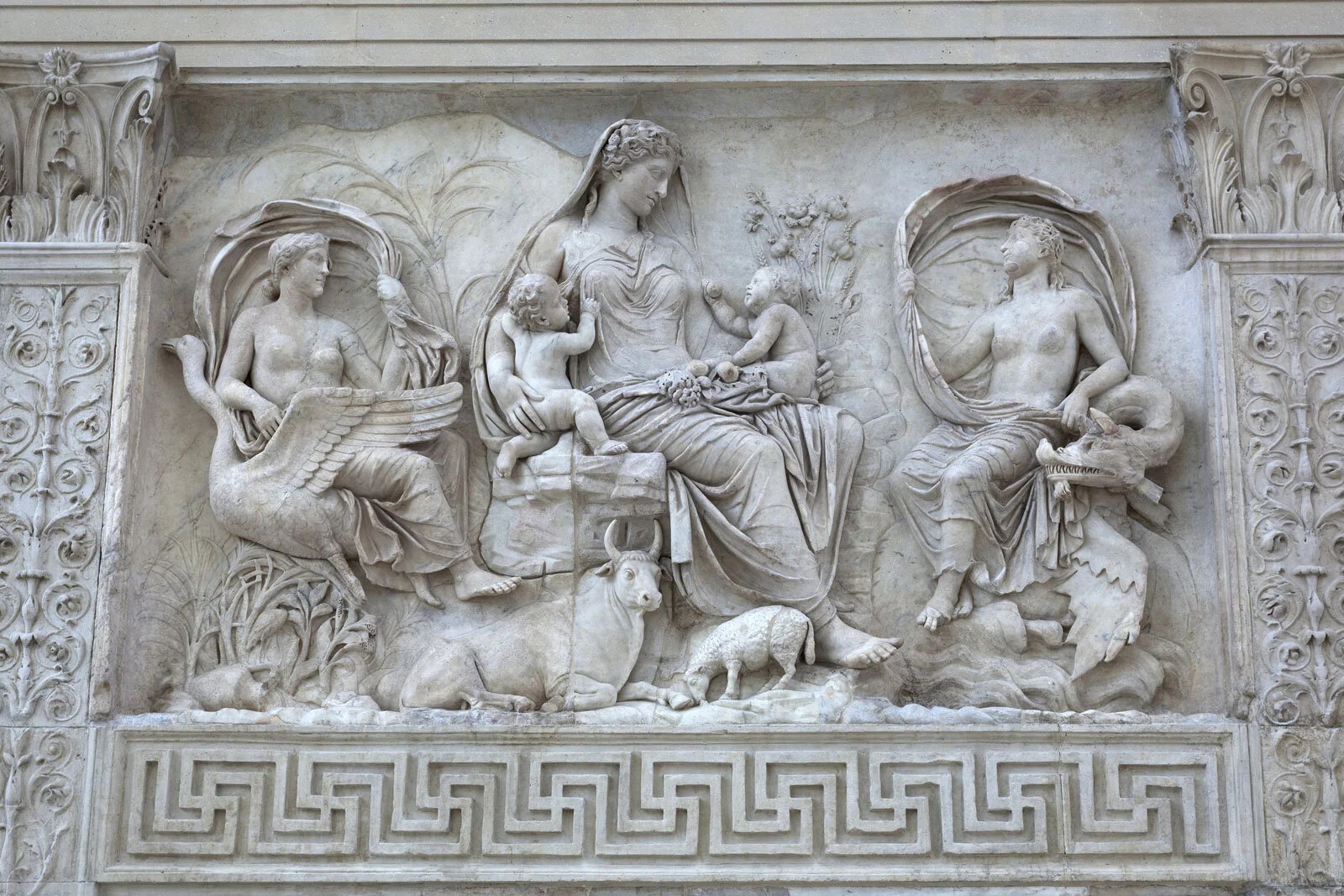
    Ara Pacis, Roman Temple built for Augustus, 30-9 BCE, Rome.

    Built to honor Augustus’ battles in Spain and Gaul, the Ara Pacis was built as a celebration to the power of the Roman Empire and “peace” their dominance brought to them. Over the years it was buried as the city grew and was finally excavated in the 20th century.