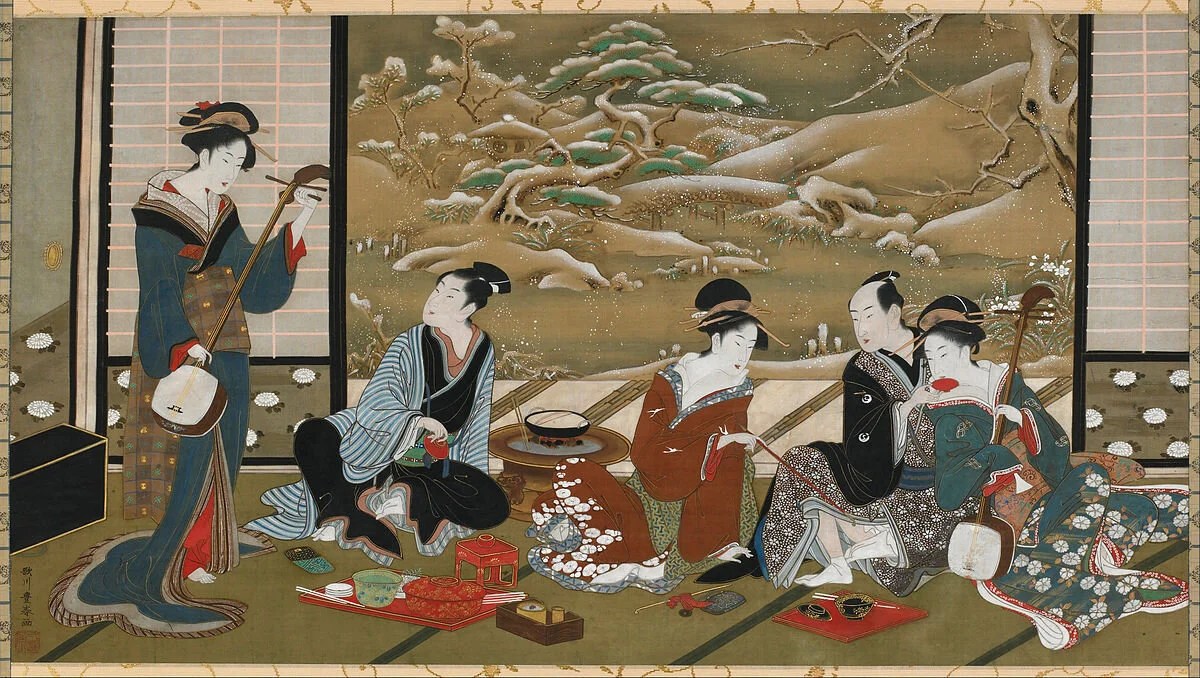
Winter Party, Edo Period (18th – 19th Century) by Utagawa Toyoharu.
The folding screens of Japanese art served as architectural features as well as decorative.
Winter Party, Edo Period (18th – 19th Century) by Utagawa Toyoharu.
The folding screens of Japanese art served as architectural features as well as decorative.
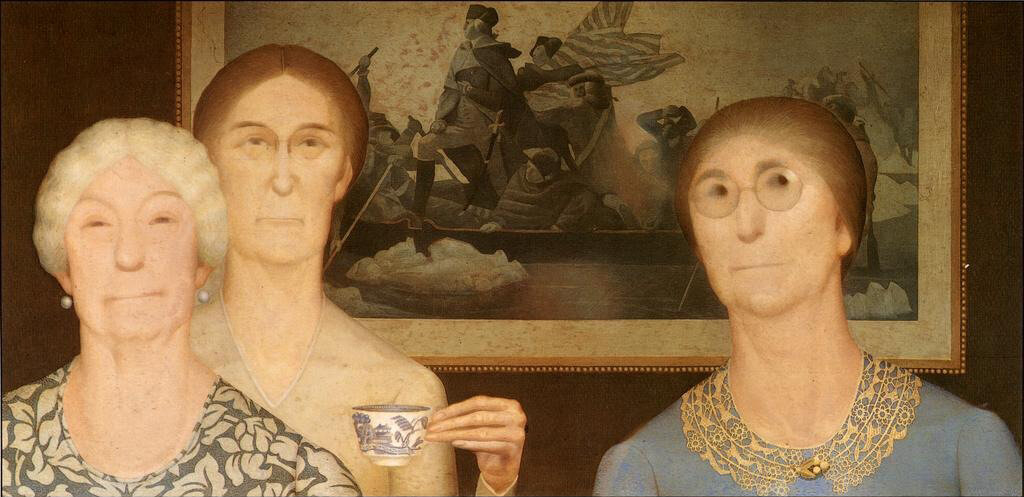
Daughters of the Revolution by Grant Wood, Cincinnati Art Museum.
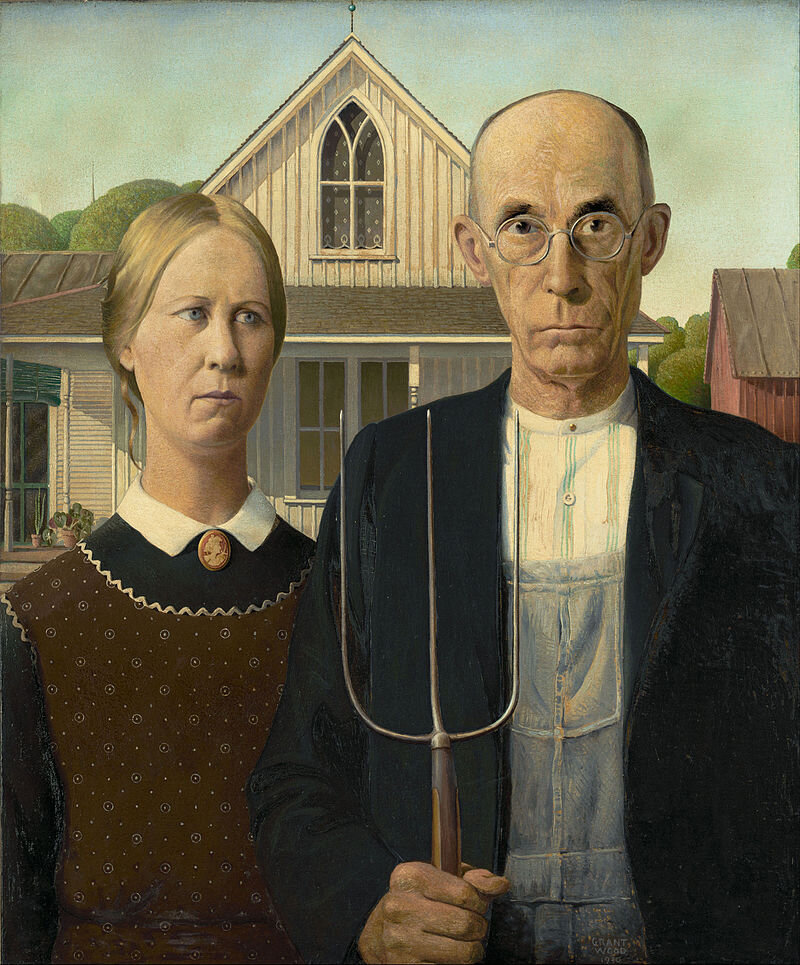
Wood pokes fun at the prim and proper ladies and their intolerance. This is the only “satire” Wood owned up to, but many of his other works fit that definition too, even the beloved American Gothic.
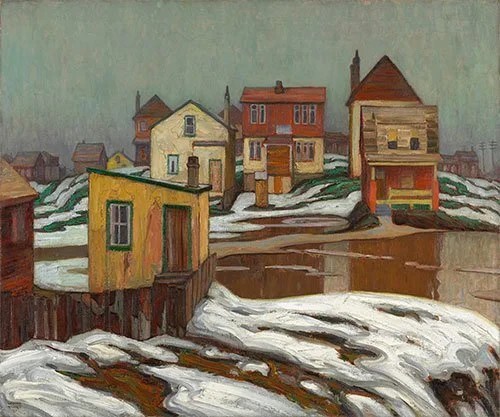
January Thaw, Edge of Town, 1921 by Lawren S. Harris, National Gallery of Canada
Harris was a member of the Canadian group of early twentieth century artists known as the Group of Seven. They had a Studio, which Harris primarily built and where many of the group created their artwork. Harris was from a wealthy family and wanted to build a space where the less fortunate members of the group could have studio space.
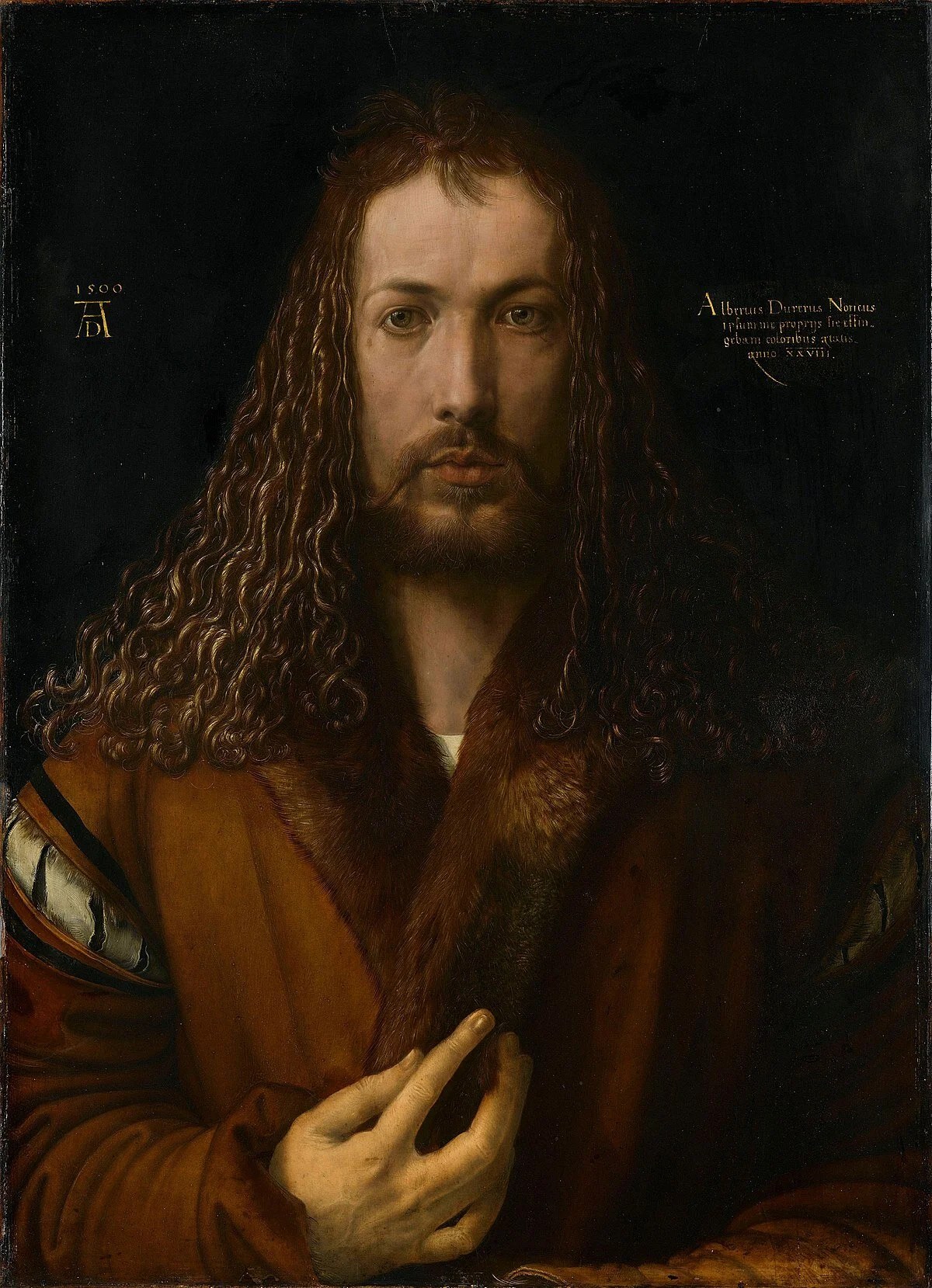
Self-Portrait with Fur-Trimmed Robe, 1500 by Albrecht Dürer.
Dürer was fully aware of his reference to paintings of Jesus Christ when he created this self-portrait. He did a series of self-portraits through-out his career. He writes in Latin “Thus I, Albrecht Dürer from Nuremberg, portrayed myself with characteristic colors in my 28th year.”
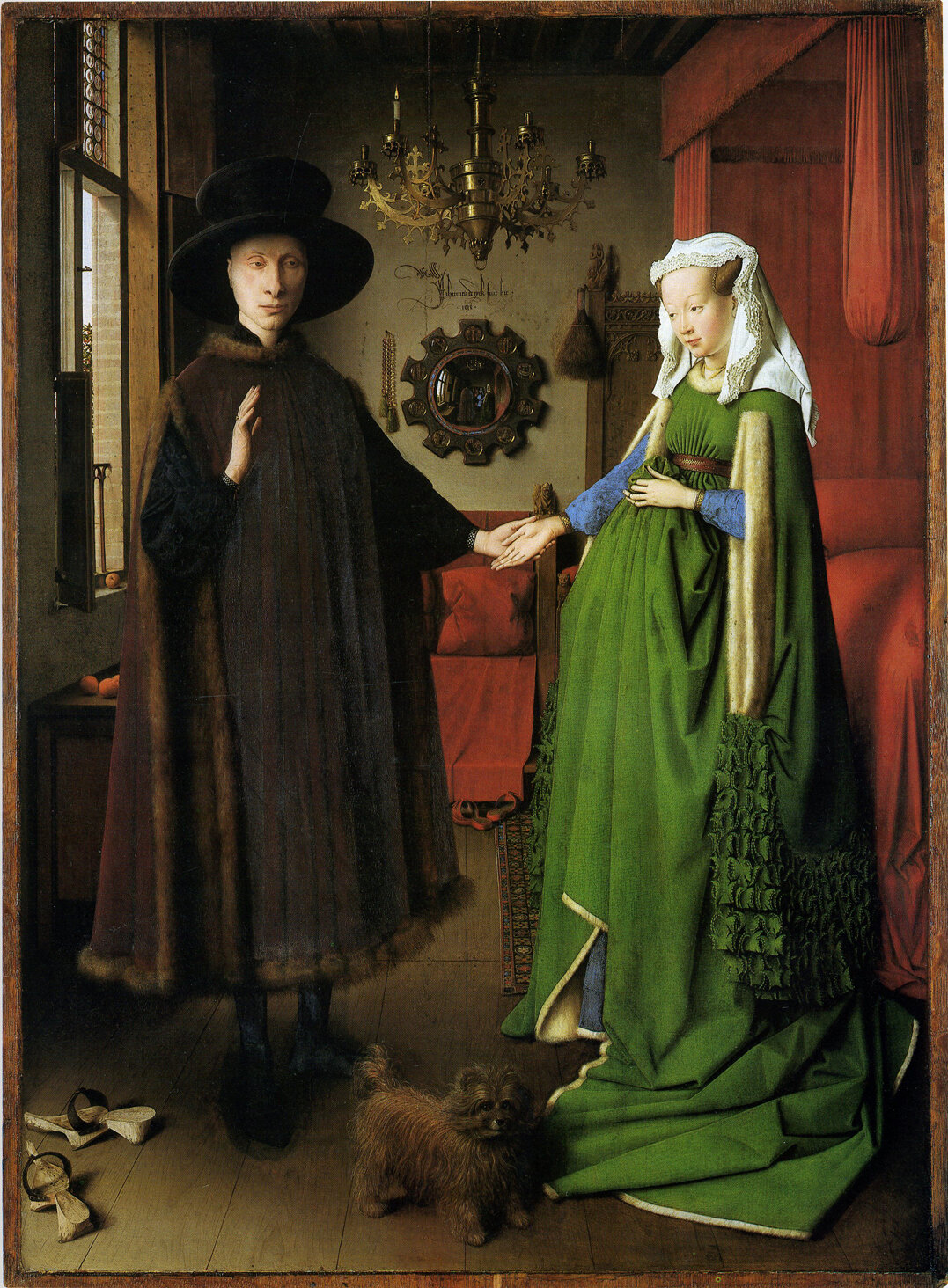
The Arnolfini Portrait by Jan van Eyck, National Gallery London.
Painted in the 15th century, this work is full of symbolism all meant to bring good luck to the marriage of this couple. van Eyck and his brother Hubert are often credited with inventing oil painting.
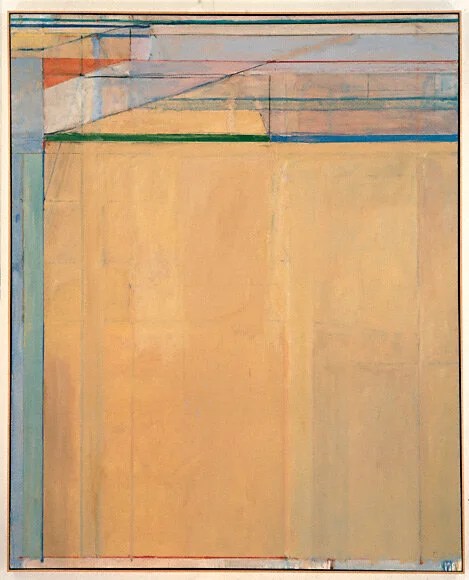
Ocean Park No. 67 by Richard Diebenkorn, SFMoMA
Diebenkorn taught at the California School of Fine Arts in San Francisco where one of his students was Mark Rothko. This is part of the Ocean series which features paintings constructed with large blocks of colors influenced by nature.
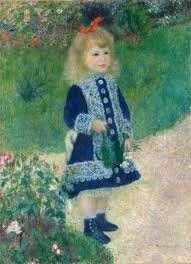
Girl with a Watering Can, 1876 by Pierre Auguste Renoir.
Renoir painted this young girl to attract people and some portrait business. Portraiture was the 19th century artist’s bread and butter.
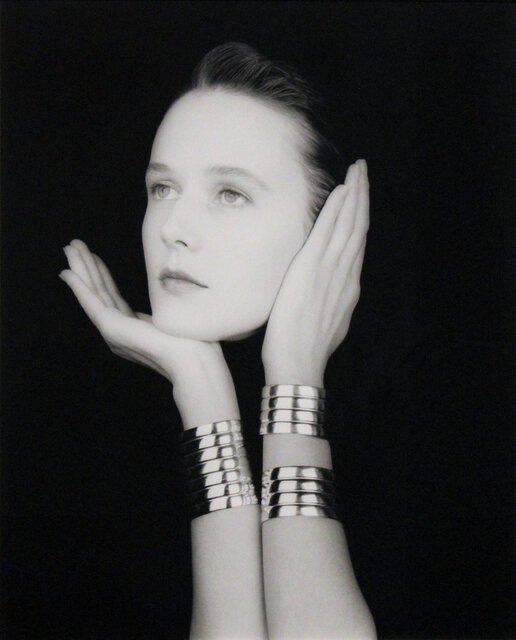
Lucy Ferry, 1986 by Robert Mapplethorpe© The Robert Mapplethorpe Foundation.
Mapplethorpe’s work created a huge controversy when some of his work was deemed obscene in Cincinnati in 1990.
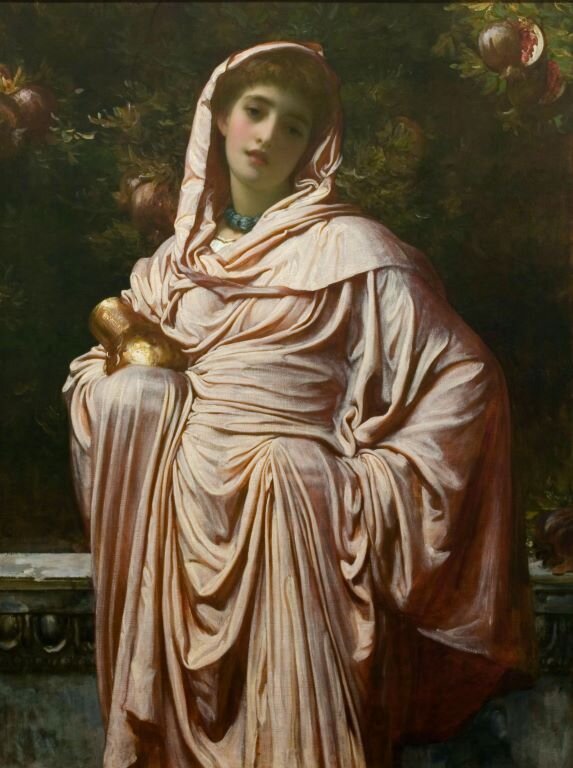
Melittion, 1882 by Frederic Lord Leighton.
Although this figure is dressed in the classical style, a clear reference to a Greek character could not be found. In a play from 1818 by Austrian Franz Grillparzer called Sappho there is a character called Melitta, who vies with Sappho for the love of the young man Phaon.
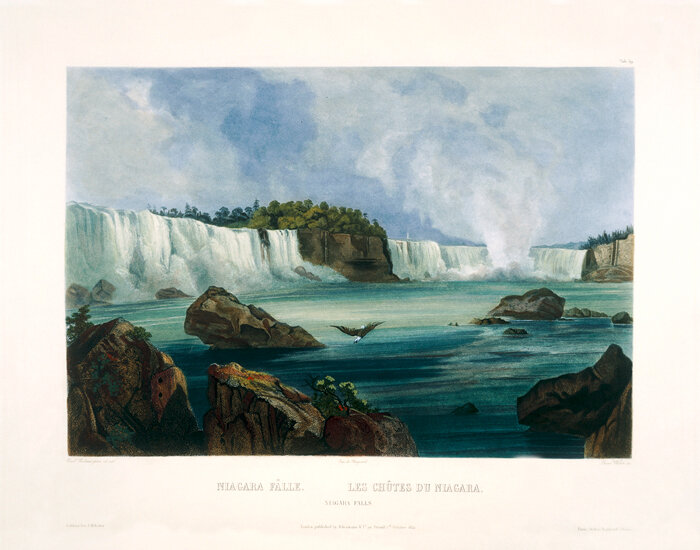
Niagara Falls, 1843 by Karl Bodmer, Joslyn Art Museum, Omaha NE.
Karl Bodmer traveled with Prince Maximilian of Wiedneuwied as he explored the Missouri river. Bodmer was in charge of capturing images of the new and wonderful people, animals and places they encountered.

