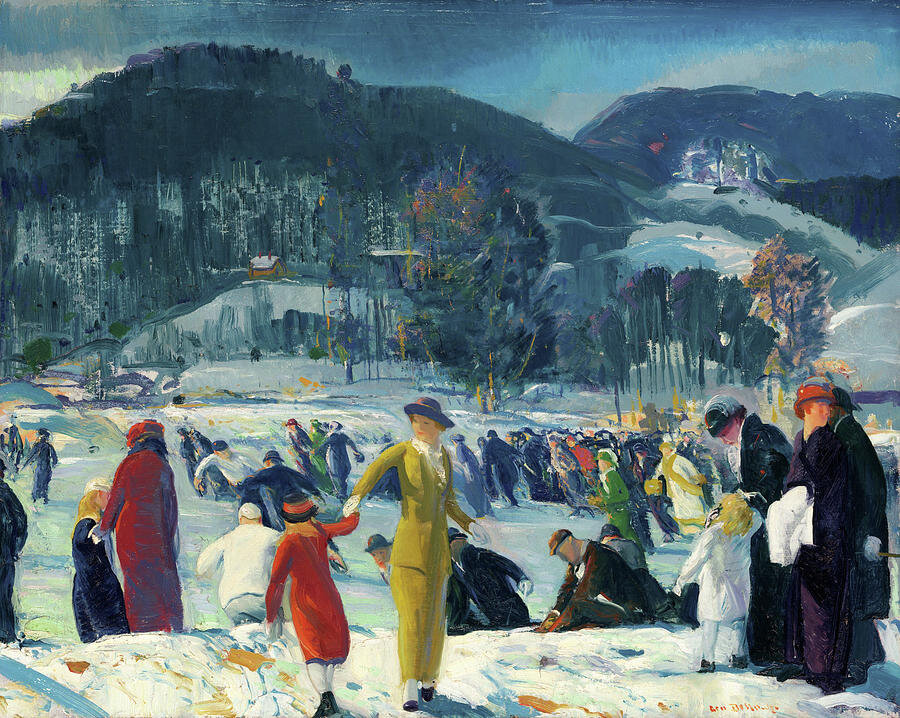
Love of Winter, 1914 by George Wesley Bellows, The Art Institute of Chicago.
A member of the Ashcan School and student of Robert Henri, Bellows began studying art at Ohio State.
Love of Winter, 1914 by George Wesley Bellows, The Art Institute of Chicago.
A member of the Ashcan School and student of Robert Henri, Bellows began studying art at Ohio State.
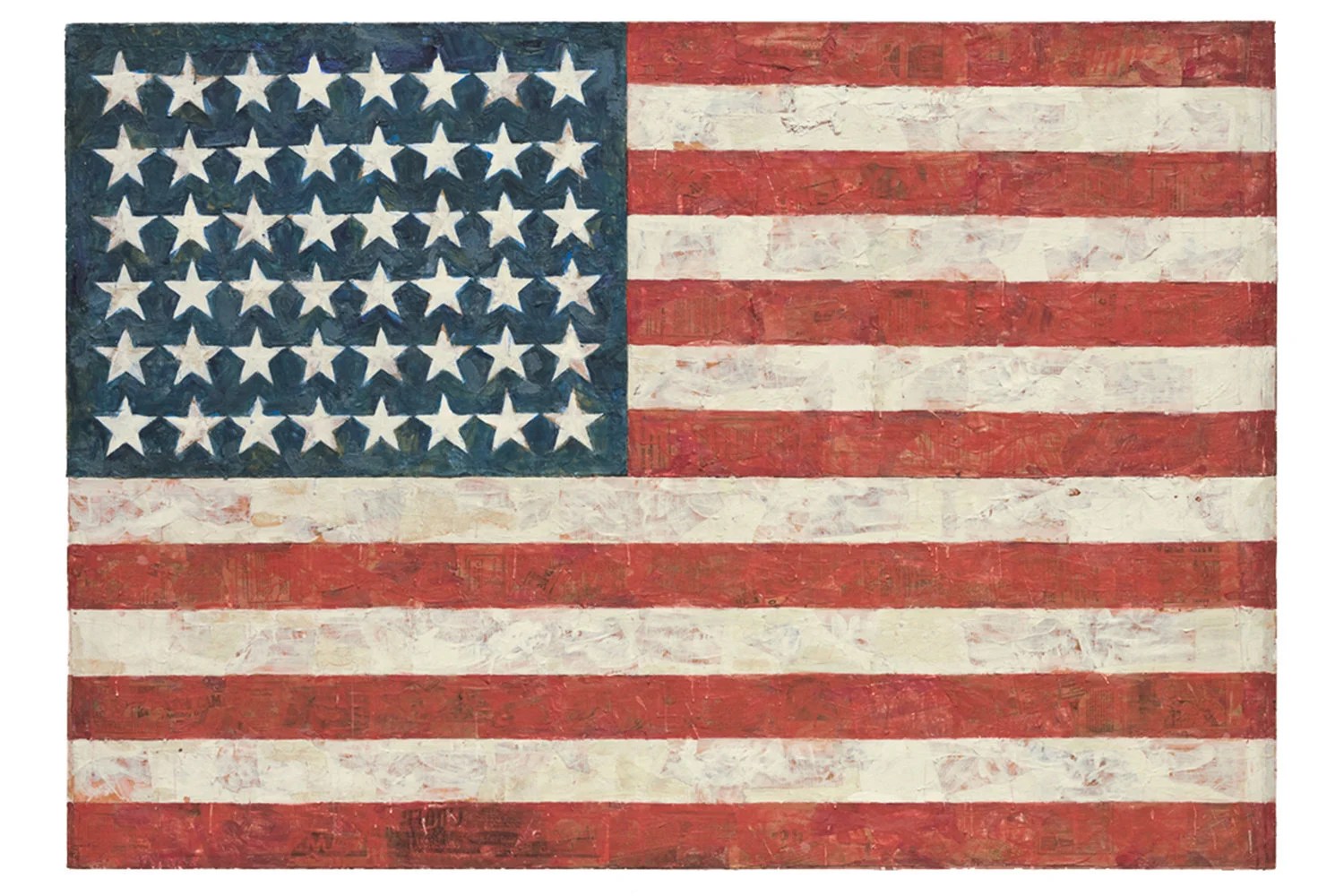
Flag, 1954-55 by Jasper Johns, The Museum of Modern Art, New York /VAGA.
Johns representative artwork was a contrast to the work of the Abstract Expressionists before him. His re-worked images of everyday objects led the way for Pop Art.
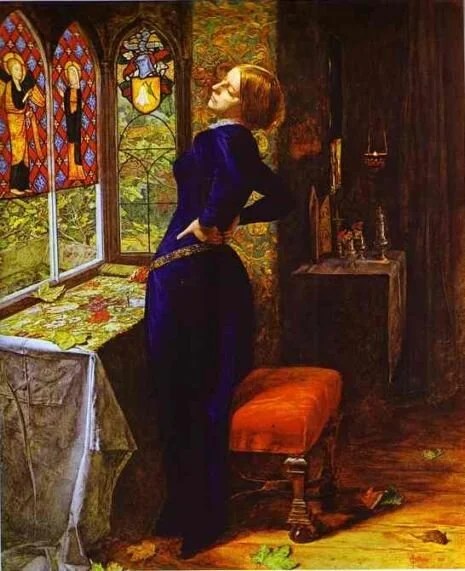
Mariana by John Everett Millais, Private Collection.
Mariana is the main character in a poem by Tennyson that deals with a woman “trapped” in her life. She is surrounded in a perfect Victorian setting by the dictates of the Arts & Crafts movement. The movement was a reaction to the increased industrialization of the world and sought to emulate a time when everything was created by hand.
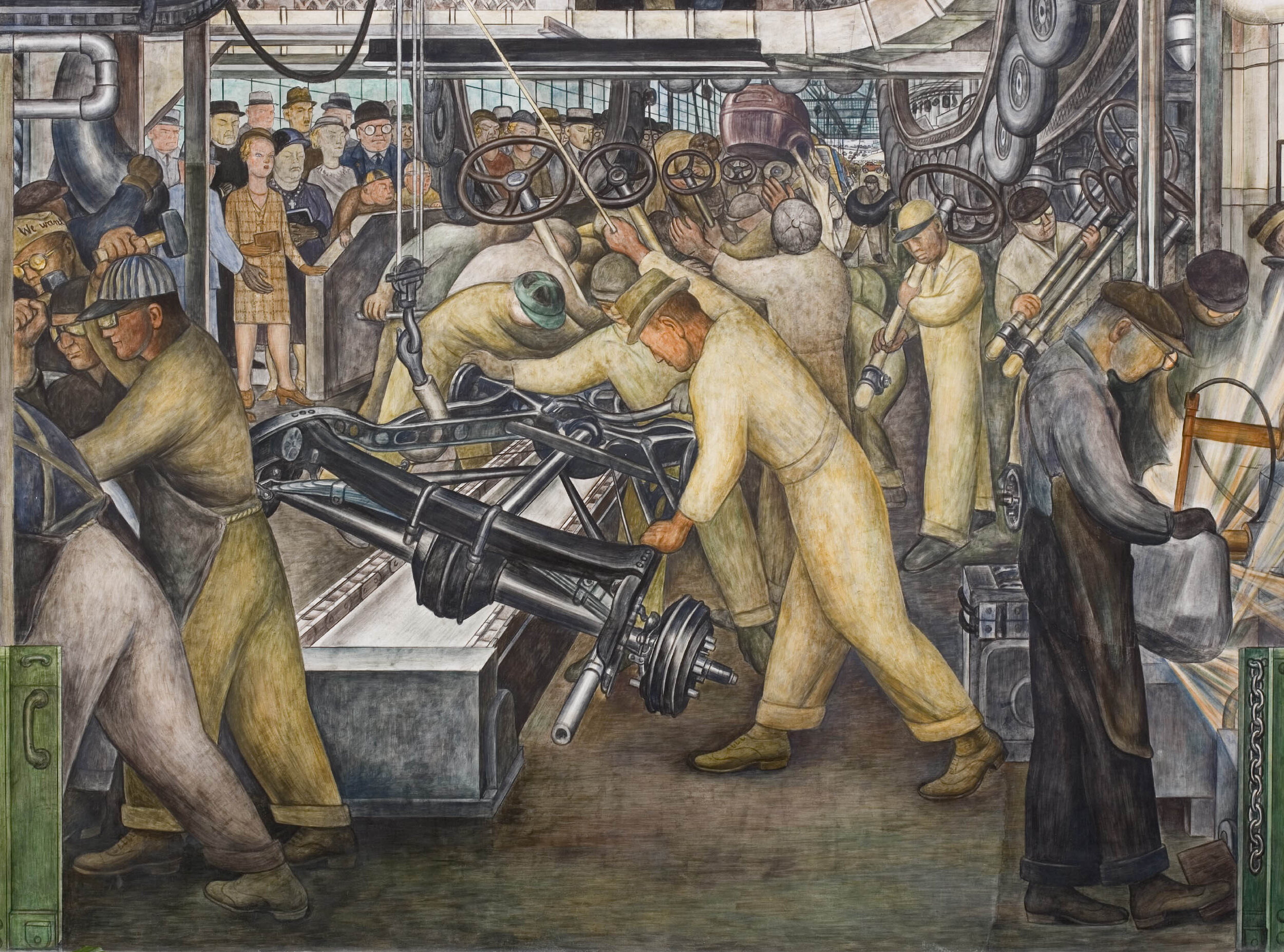
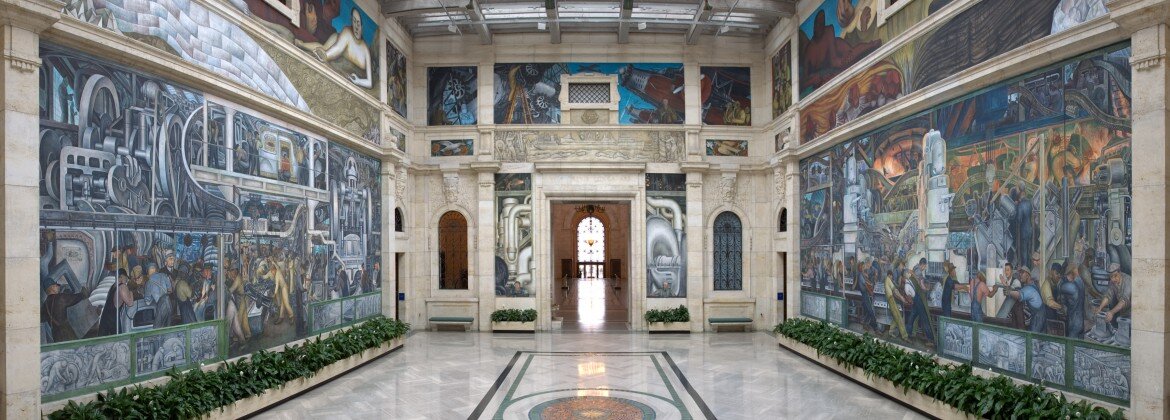
Detroit Industry, South Wall detail, 1932-33 by Diego Rivera, The Detroit Institute of Arts.
Rivera was at the height of his popularity when he was commissioned to create two large murals representing the auto industry. As a follower of Trotsky, Rivera took the opportunity to celebrate all workers and their important contribution to American Industry.
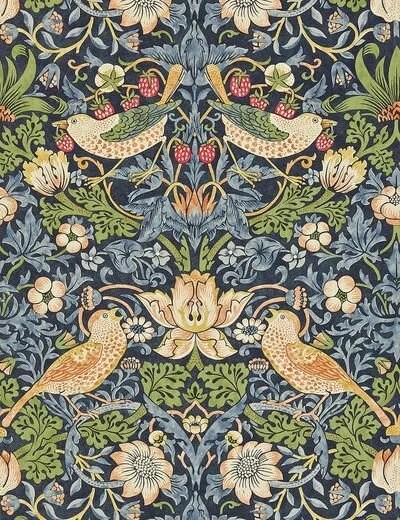
The Strawberry Thief by Morris & Co., 1883 drawn by Philip Webb.
As William Morris and his family tried to grow strawberries at their home, Kelmscott, thrushes would climb under the barriers they erected and steal the strawberries.
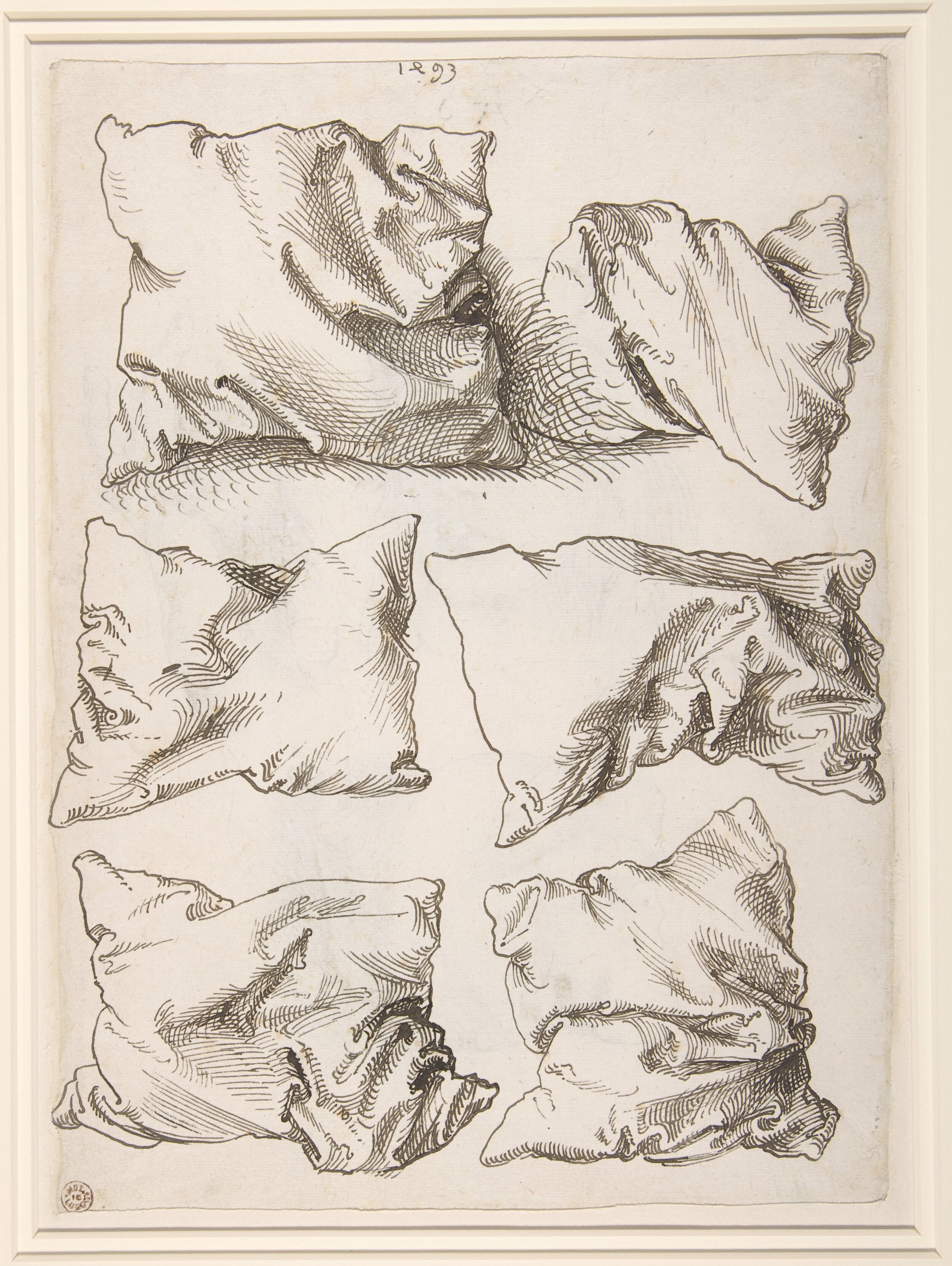
Sechs Kissen (Six Pillows), 1493 by Albrecht Dürer, The Metropolitan Museum of Art.
Dürer created this drawing as a study of shading by using cross-hatching, but it is also a study in drawing drapery.
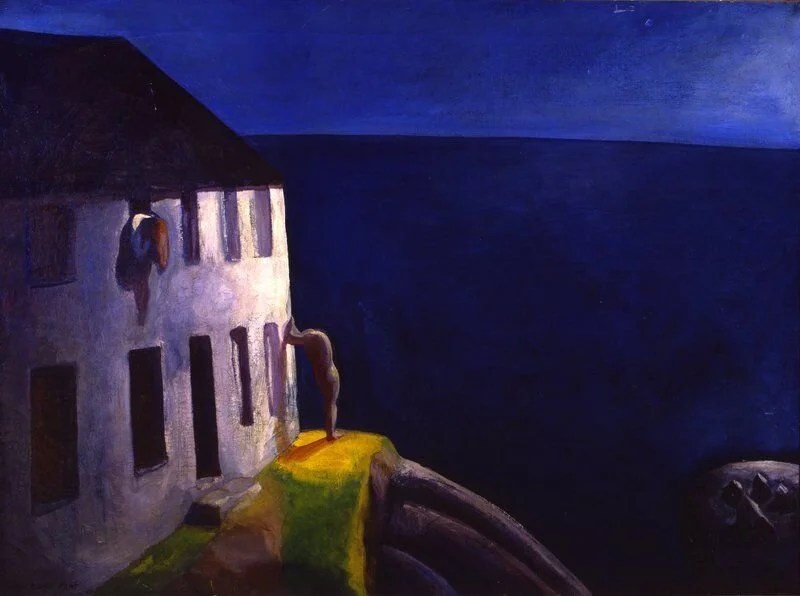
House of Dread, Newfoundland, 1915 by Rockwell Kent, Plattsburgh State University of New York.
“Upon a bleak and lofty cliff’s edge, land’s end, stands a house; against its corner and facing seawards leans a man, naked even as the land, and sea, and house; his head is bowed as though in utter dejection; and from an upper window leans a weeping woman. It is our cliff, our sea, our house stripped bare and stark, its loneliness intensified. It is ourselves in Newfoundland, our hidden but prevailing misery revealed.” p. 290,
Its Me O Lord by Rockwell Kent
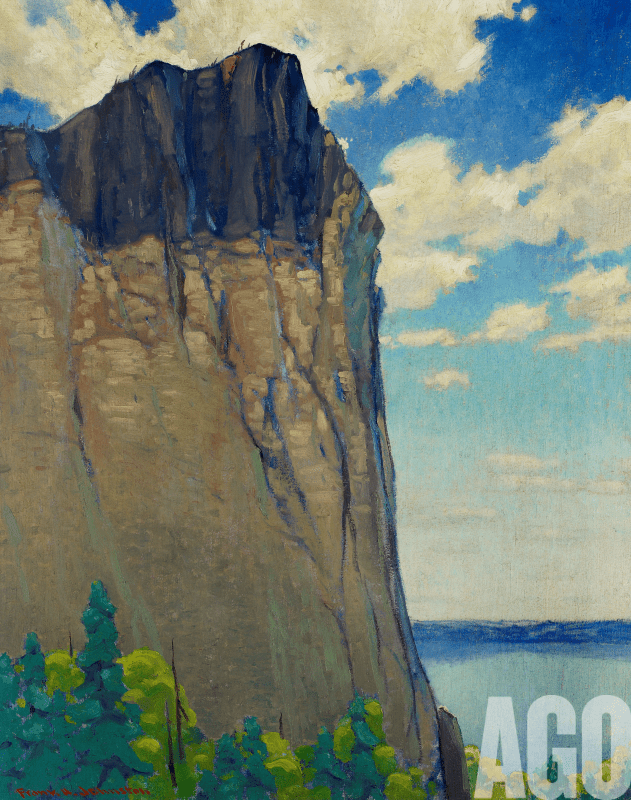
Where the Eagles Soar (date unknown) by Franz Johnston, Art Gallery of Ontario.
Also known as “Frank” Johnston, he was a member of The Group of Seven but loosely associated after he moved to the United States in 1910. His work concentrates on the wilderness around Northwest Ontario. Plein Air
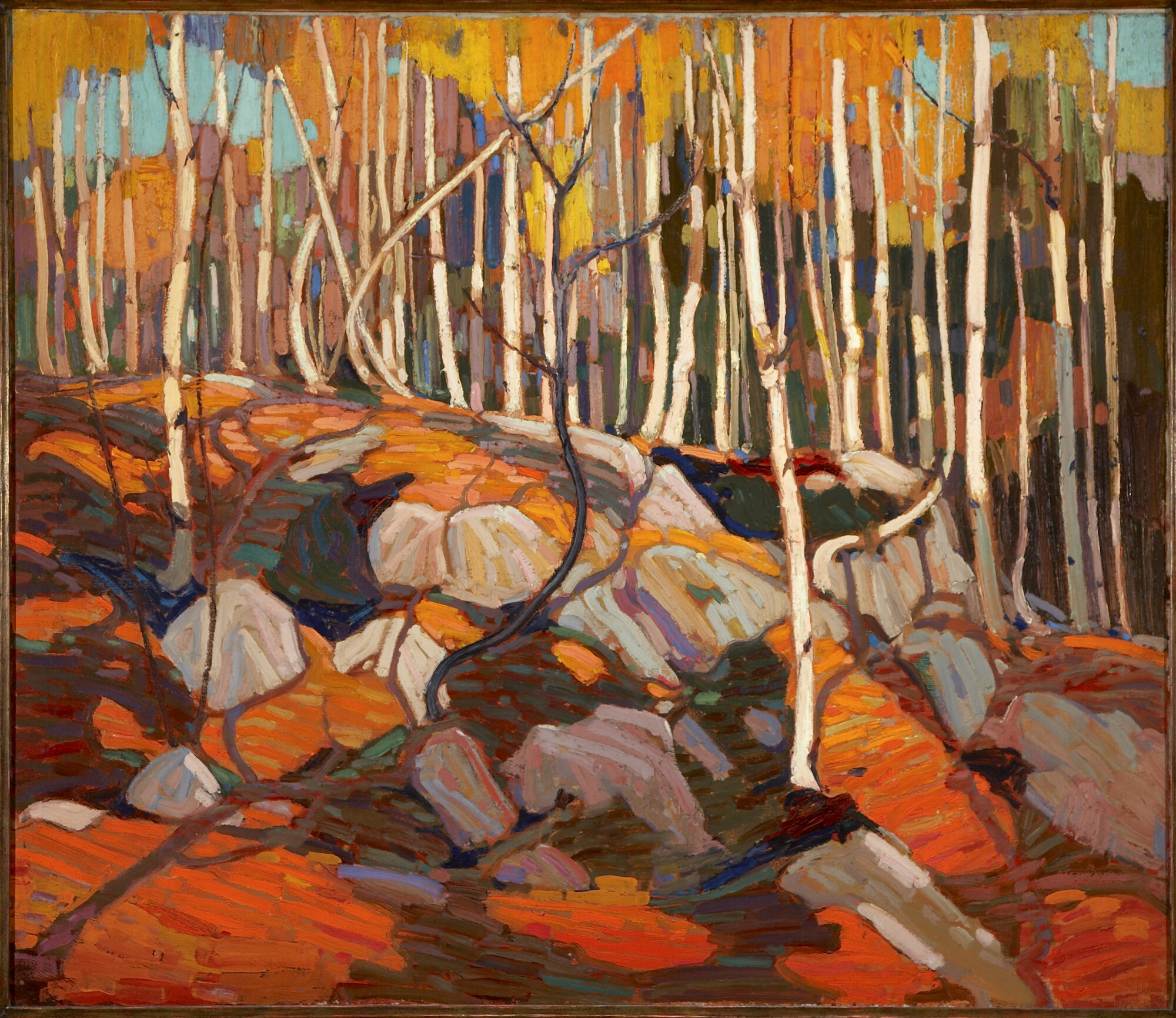
The Birch Grove, 1915-16 by Tom Thomson.
A unofficial member of the Group of Seven artists but only because he passed away before the group was established. He was an avid outdoors man whose work reflects his love of nature.
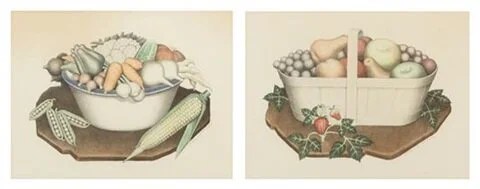
Fruits and Vegetables, 1938 by Grant Wood.
Another publication from Associated American Artists. Wood hired his sister Nan and her husband to hand-tint the flower and fruits watercolors.

