Tag: art

  • Influence from Afar

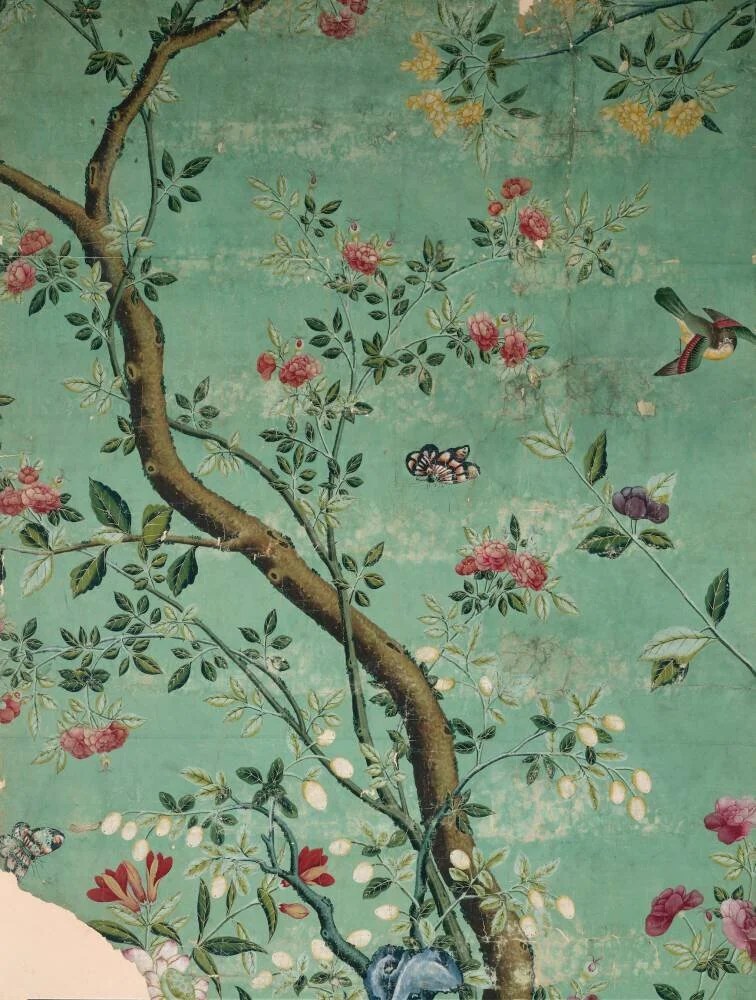
    Chinese Wallpaper design, 18th century, Victoria and Albert Museum, London.

    Chinese produced wallpapers that were made for export, primarily to Europe in the 18th century as part of the movement known as Chinoiserie, in which Chinese porcelains, and in this case wallpaper, were collected and displayed. They were beautiful objects in themselves, but also prized because they were expensive and difficult to obtain.
  • Patchwork

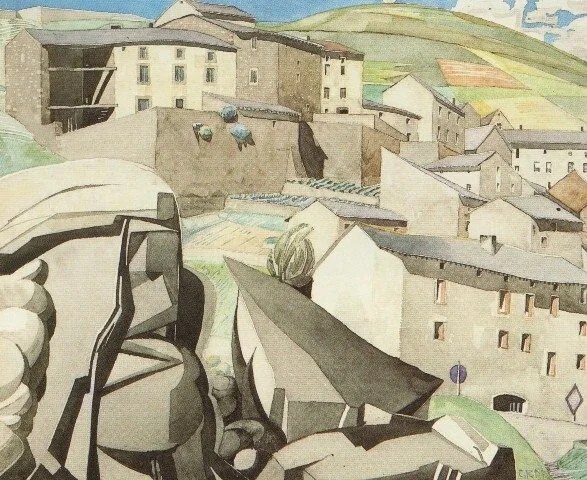
    The Boulders by Charles Rennie Mackintosh, c. 1923-26, Hunterian Art Gallery, U of Glasgow.

    This C.R. Mackintosh watercolor was done after he had arrived in the south of France on the  Mediterranean coast where he was struck by the natural rock formations and sets them up in this painting as a contrast to the roofs of the buildings.

  • You Know the Work, Now Meet the Woman

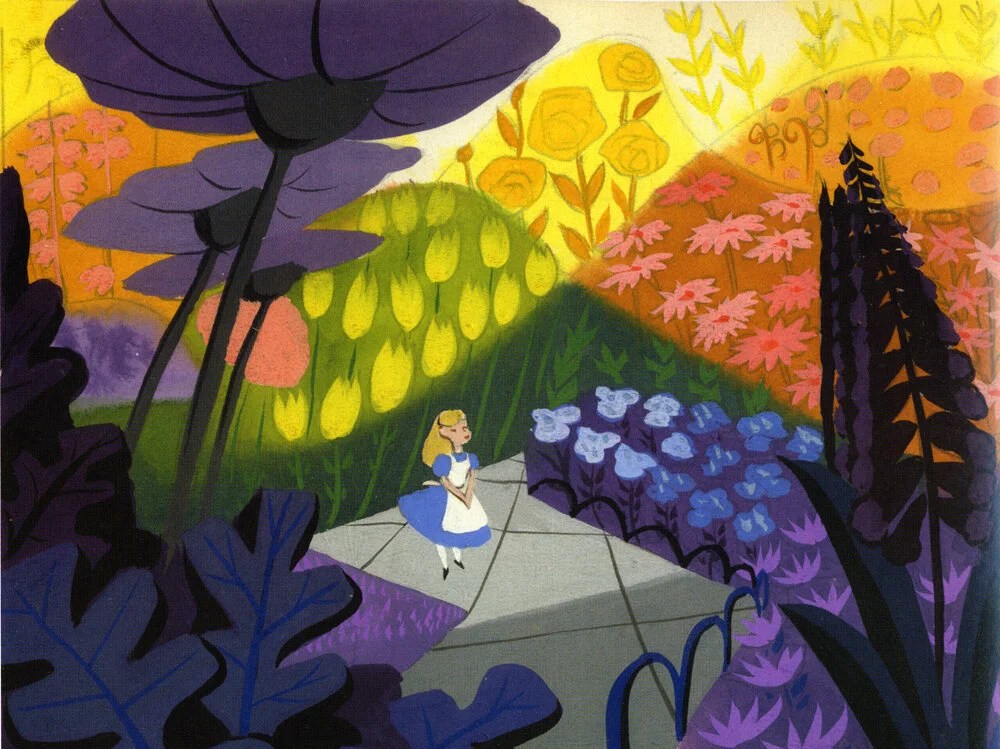
    Mary Blair conceptual drawing for Disney’s Alice in Wonderland.

    Mary Blair was one of the most important artists to work at Disney and yet most know her work, but not her name. She brought that iconic mid-century style to such work as Alice in Wonderland, Peter Pan, Cinderella and she did set designs for Small World and Tomorrowland at Disneyland.

    Article about Blair from OrangeReview.com.

  • Favorite Sons

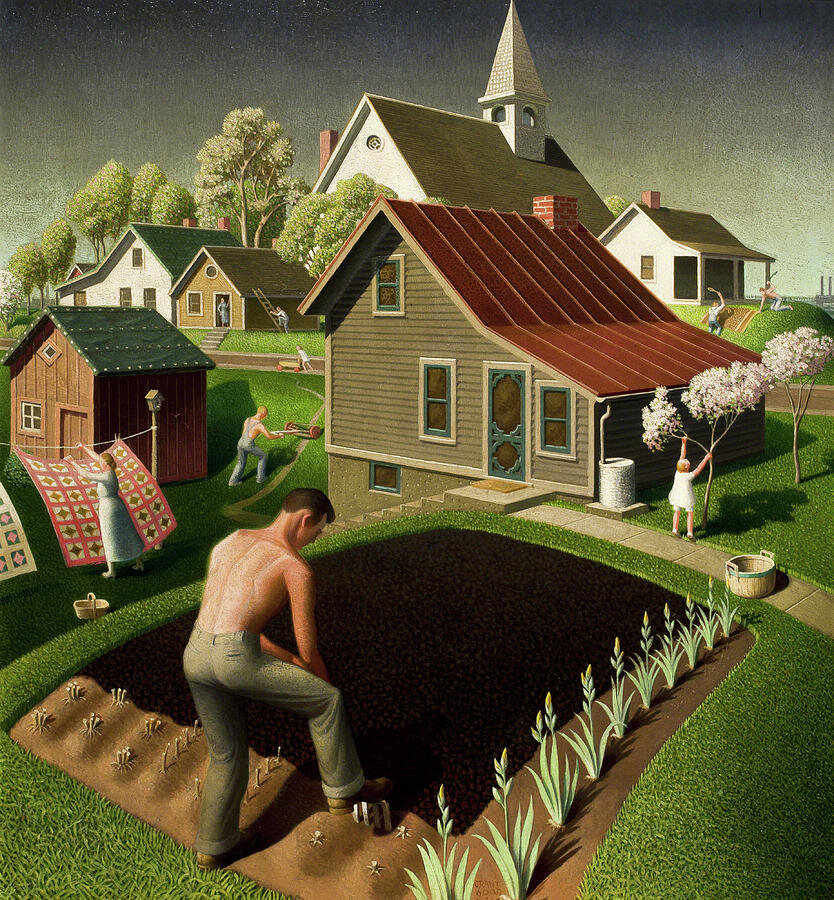
    Spring in Town by Grant Wood, 1942

    Two of my favorite Iowa artists,

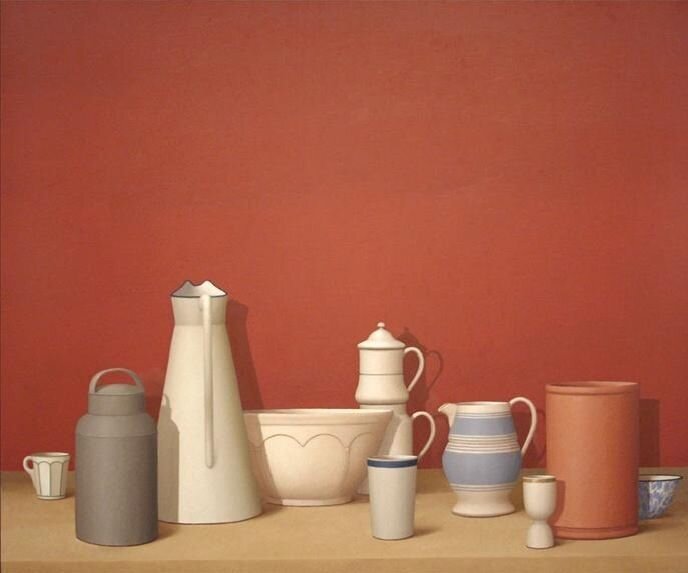
    Grant Wood and William Bailey.

    Both of them capture brilliantly the straight-forward simplicity Iowa stands for, to me. Simplicity, with under-layers of pride, truthfulness, and appreciation for life. Take care and stay safe Iowa.

    Red Wall by William Bailey, 2007.

  • Follow the Seal

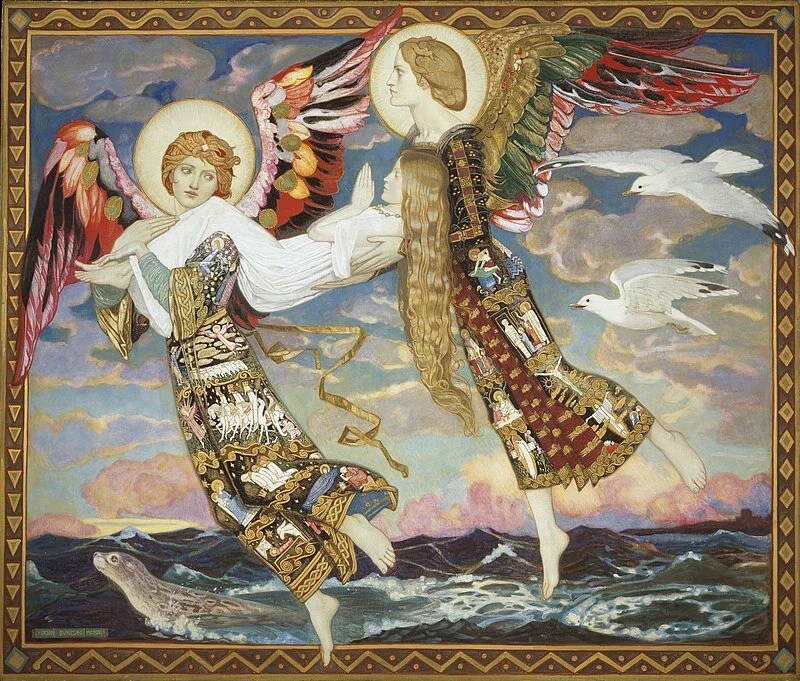
    Saint Bride by John Duncan, 1913, National Gallery of Scotland.

    Two angels transporting the Saint Bride to Bethlehem to witness the Nativity. Scenes of the life of Christ are sewn into the garments of the angels. John Duncan is often characterized as a Symbolist artist because of his style, but also because he had a strong desire to understand the mysteries of nature as they relate to the divine.

  • Object as Communication

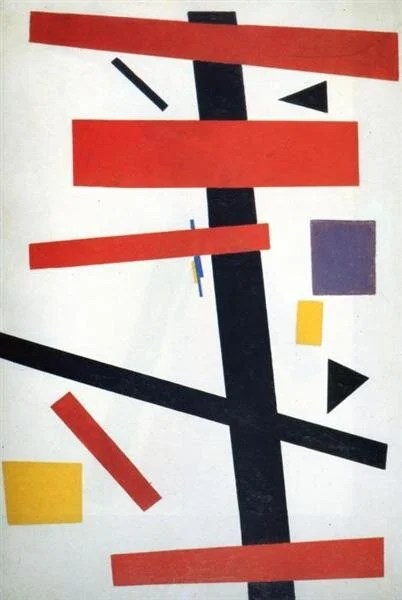
    Suprematism, 1915 by Kasimir Malevich, Stedelijk Museum, Amsterdam

    Malevich is the Father of the Suprematist movement which led to Abstraction. He considered his ultimate goal to be communication through “non-object” representation, culminating in a final “white on white” painting. He considered the conveying the feeling of a work more important than portraying an object. After the Russian revolution in 1917, he became a teacher and was quite influential on the Bauhaus artists, architects, and designers.

  • For Liz

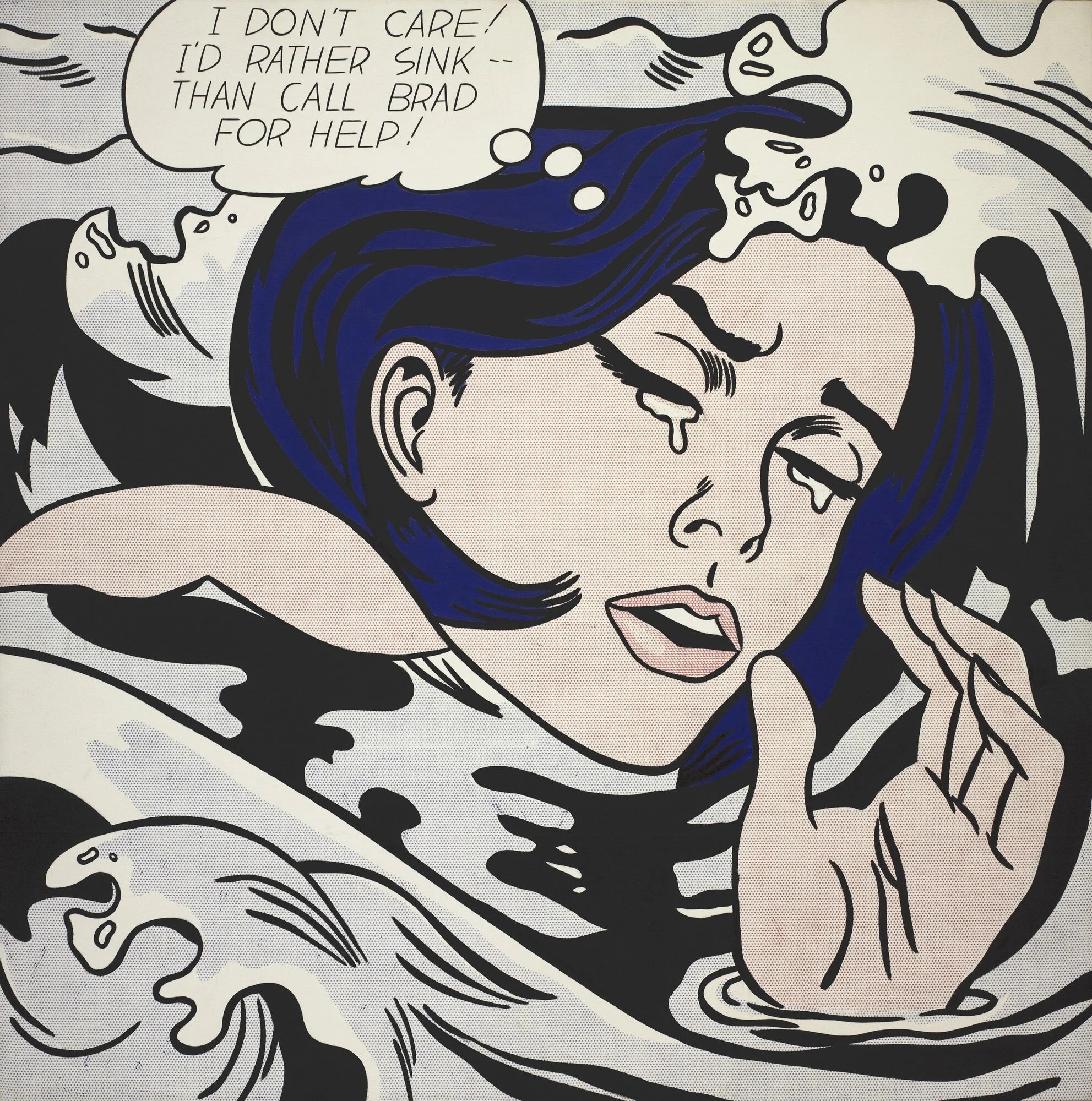
    Drowning Girl by Roy Lichtenstein, 1963, MOMA, NYC

    The controversy about Lichtenstein’s work stems from his “lifting” images from 1950’s and 60’s comic books, enlarging them, and rendering them in paint. This part of his career is only the tip of the iceberg, as his work went in many other directions through-out his long career.

  • God is in the Details

    Gone by Isabella Kirkland, 2004.

    Influenced by the exacting reality of the Dutch Still-life, artist Isabella Kirkland studies the plants and animals she depicts in her detailed artwork. In Gone, she shows us species lost to man’s expansion through colonization by both hunting and our tendency toward being oblivious to everything but ourselves. 

  • Nympheas

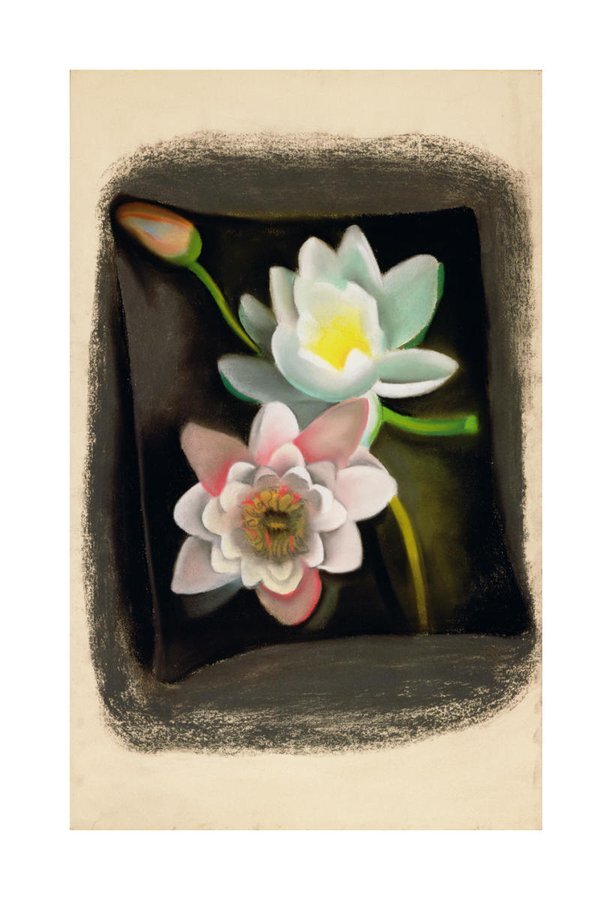
    Water Lily by Georgia O’Keeffe, 1921, Georgia O’Keeffe Museum

    I saw this lovely pastel drawing by Georgia O’Keeffe today and had to feature it. It is different from her larger, closer, interpretations of flowers, but no less striking. The

    Georgia O’Keeffe Museum is located in Santa Fe, New Mexico and features not only her work, but that of many of her contemporaries.

    Thank you @KellyResists on Twitter for better image.

  • Site Specific

    Ahuja Azure, Cirtron and Amber Persian Wall by Dale Chihuly, 2010, The University Hospitals’ Ahuja Medical Center, Beachwood, OH

    Dale Chihuly is the most famous glass artist in the world. Since the later part of the 20th century, his installations have been gaining in popularity and recognition.

    Chihuly himself no longer blows the glass in his pieces, but he conceives and designs them and oversees their installation.