• Foresight

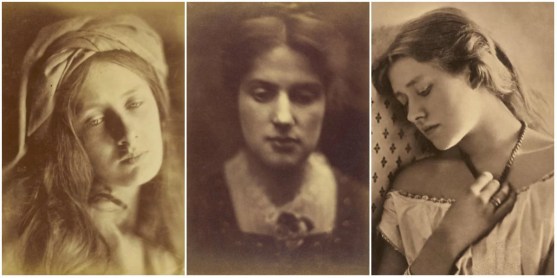
    Julia Margaret Cameron, Photographer.

    Julia Margaret Cameron began taking photos on her 48 birthday and when photography was still in its infancy. Not only was she among the first to use photography as an art, but she also copyrighted and kept excellent records of her photographs. Julia Jackson was her niece and namesake, and later Jackson would become the mother of the author Virginia Woolf.
  • Dignity

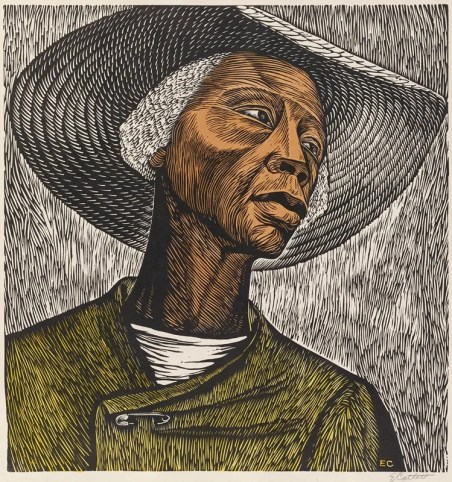
    Sharecropper by Elizabeth Catlett, 1957.

    Elizabeth Catlett has always felt it was very important for her to present images of Black America with a straight forward dignity and pride so other people around the world could see what she sees.

  • No Hesitation

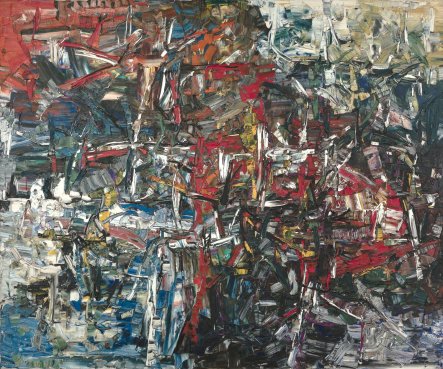
    Jean-Paul Riopelle, Chicago II 1958

    One of Canada’s best known 20th century artists, Riopelle’s career took him all over the world. His work was strongly influenced by the Surrealists and was known for it’s innate spontaneity which he achieved by constantly experimenting with new techniques.

  • You Never Know Who’s Canadian

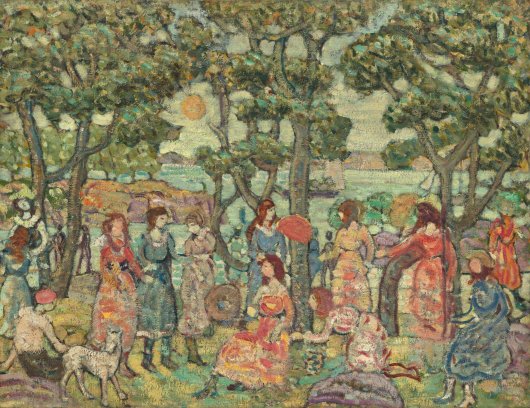
    Maurice Prendergast, Landscape with Figures, 1921.

    Originally posted in 2010.

    I am currently getting ready to make a trip up to Nova Scotia and Québec and in looking-up Canadian artists I discovered that one of my favorites, Maurice Prendergast was born in St. John, Newfoundland. His family eventually settled in Boston and he was part of the Ashcan School but usually with a lighter tone, a brighter palette, and a more abstract hand.

  • Shell Game

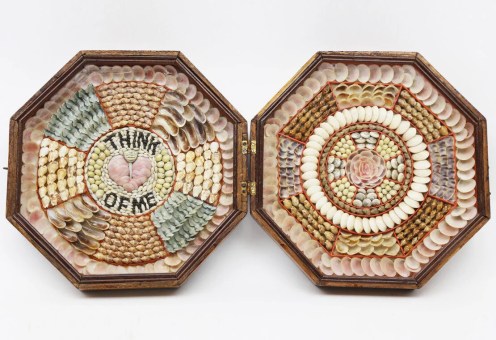
    Sailor’s Valentine.

    The story goes that 19th century sailors made these for their loved ones while they were out at sea, but in reality most of them were made by women on the islands that the sailors visited and they brought them back to their homes. Regardless of who made them they became treasured items and many different examples have survived. They are still being created today using the traditional methods.

  • Strength in Subtlety

    Burn by Kara Walker, 1998.

    Kara Walker takes a close look at race in America and makes strong statements about what she sees. In this instance, her artwork is done as a silhouette and at first glance may not seem to be a harsh a look as it really is; her use of a traditional and mostly innocuous medium makes her message even stronger.

  • “Miss Perry’s Pottery”

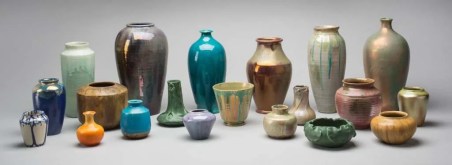
    Classic shape and colors, Pewabic Pottery, Detroit, MI

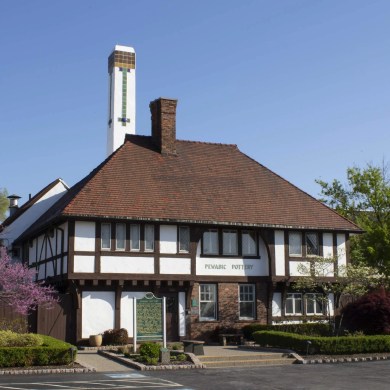
    The Pewabic pottery was founded by Mary Chase Perry Stratton in 1903 in Detroit and the building they built to house the pottery in 1915 is still being used today. They have a museum, they offer classes, and they run a retail shop out of the original building. It is the only arts & crafts pottery still in continuous production in the Midwest.

     Pewabic Pottery, Detroit MI

  • Floating

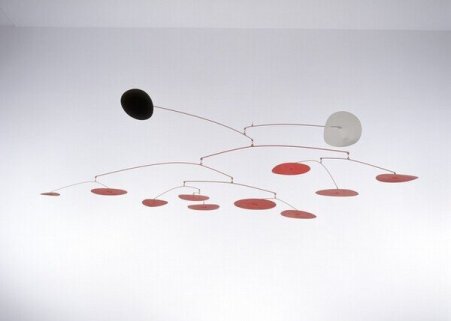
    Black, White, and Ten Red by Alexander Calder, 1957, NGA, Washington.

    Calder was from a family of artists but chose to himself to train as an engineer; skills that would serve him well when he changed course and began to study art at the Art Students League in NYC.

  • Save the Wrapping

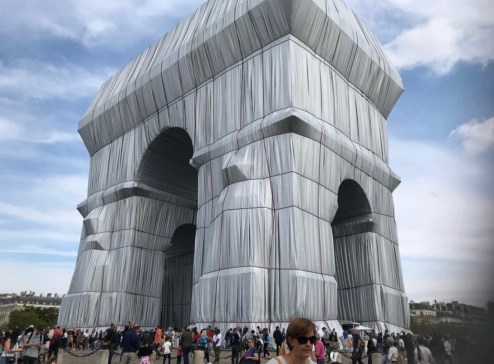
    Christo and Jeanne-Claude, Arc de Triomphe, Paris 2021

    Conceived and proposed in 1961, the vision of the artist’s has finally been realized. Unfortunately, neither of them are still alive to see it complete. It was their wish that their work would continue after their deaths which is very possible as they conceived and planned for many projects that have not yet been installed.

  • Resting

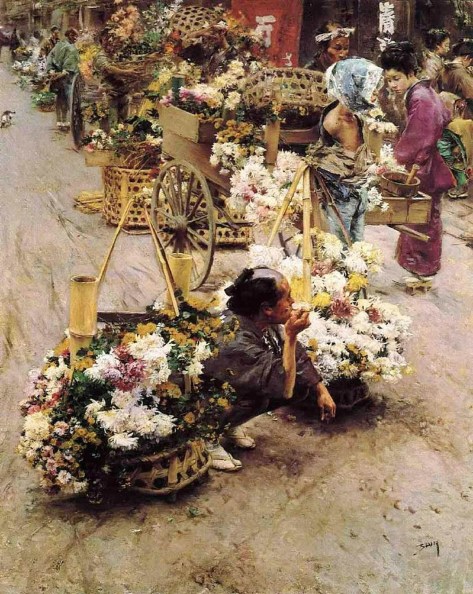
    Flower Market, Tokyo by Robert Frederick Blum, c. 1892.

    Blum was born in Cincinnati where he worked for a lithographer before he began to take classes in drawing. He had a strong interest in all things Japanese as did many other artists at the time such as Whistler and Monet. Blum’s preferred medium was pastels and he and W.M. Chase founded the Society of Painters in Pastel in New York.