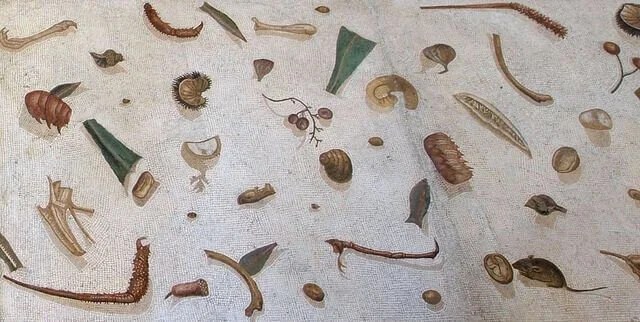
Sosus of Pergamon: The Unswept Floor, Roman Mosaic, 2nd century CE
A Roman mosaic based on an earlier painting. It depicts the remnants of a dinner party scattered all over the floor of a dining room. Do you see the mouse?
Sosus of Pergamon: The Unswept Floor, Roman Mosaic, 2nd century CE
A Roman mosaic based on an earlier painting. It depicts the remnants of a dinner party scattered all over the floor of a dining room. Do you see the mouse?
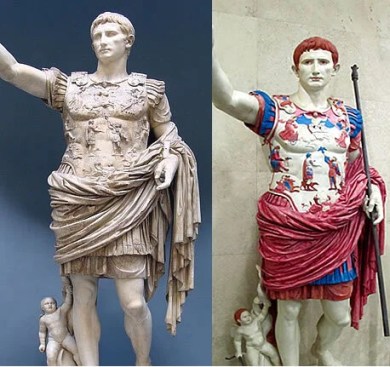
Augustus of Primaporta, Early 1st century CE, reconstructed copy of marble, that is a copy of bronze, with paint.
Sometimes as we look at the art left behind by ancient civilizations we expect that they intended their sculpture to be viewed as the bleached white examples we see today however, that is not the case. The sculpture of the Greeks and the Romans was painted. We know this because remnants of the color survive and in rarer cases, sculpture with the paint still applied survives.
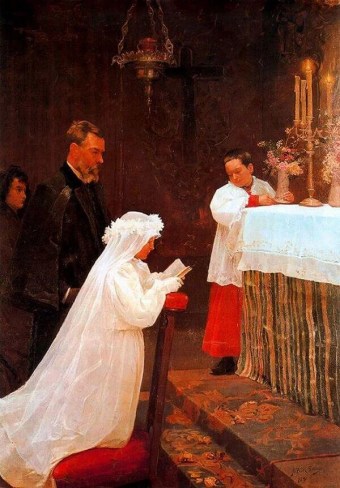
First Communion by Pablo Picasso, 1895-96.
Picasso’s father was a painter who taught his son the skills of an artist at a young age. That allowed him to complete this work at the age of 15.
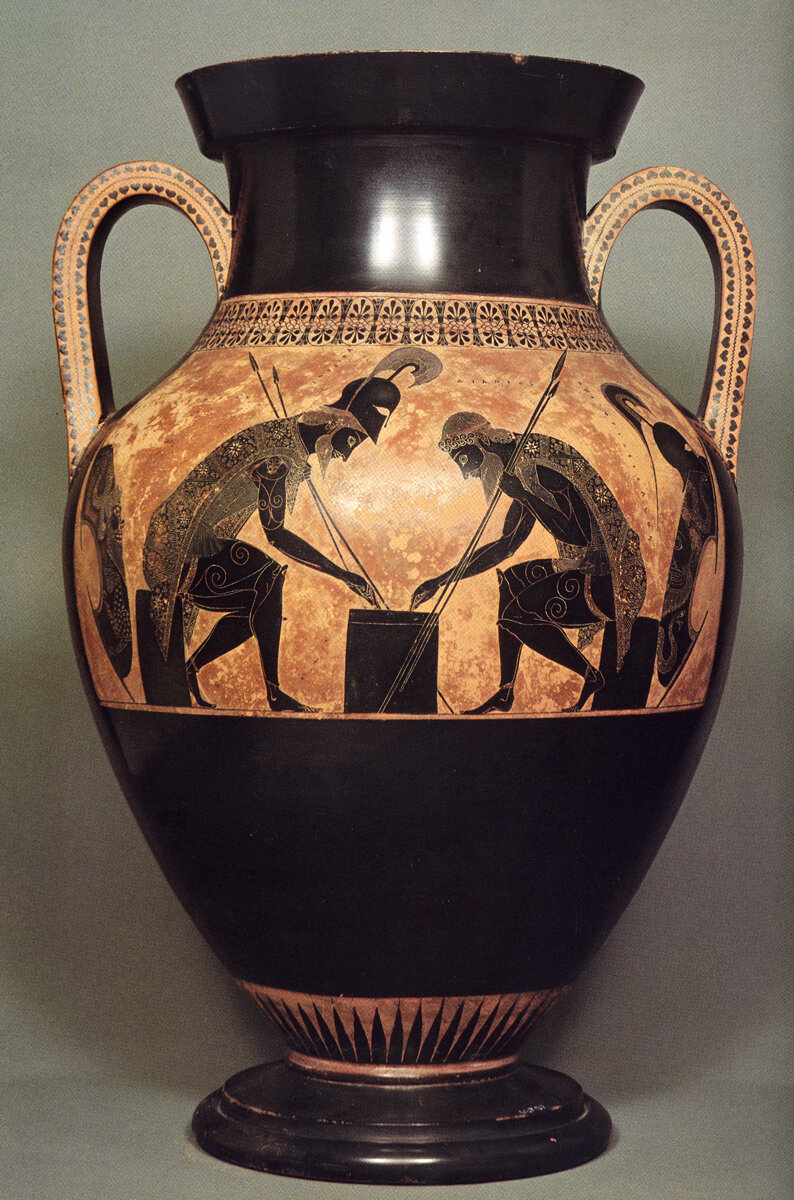
Achilles and Ajax Playing a Game by Exekias, Greek amphora c. 540 BCE.
In this scene on a Greek pot we see warriors of the Trojan battle taking time out to play a quick game of dice. We know who they are because the artist put their names by them and signed the pot with “Exekias made me.”
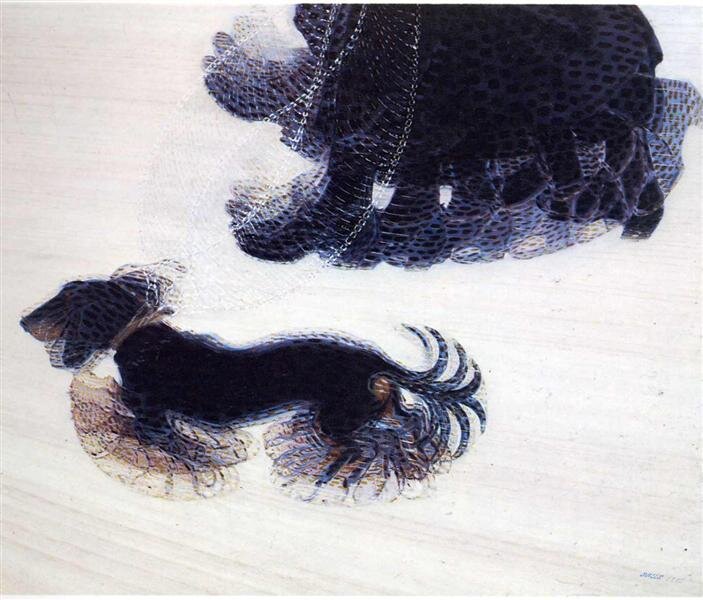
Dynamism of a Dog on a Leash, Giacomo Balla, 1912.
A member of a group of Italian artists who struck by the changing world around them at the dawn of the 20th century, Balla vowed to paint dynamically and to portray movement on canvas. The movement was known as “Futurism.”
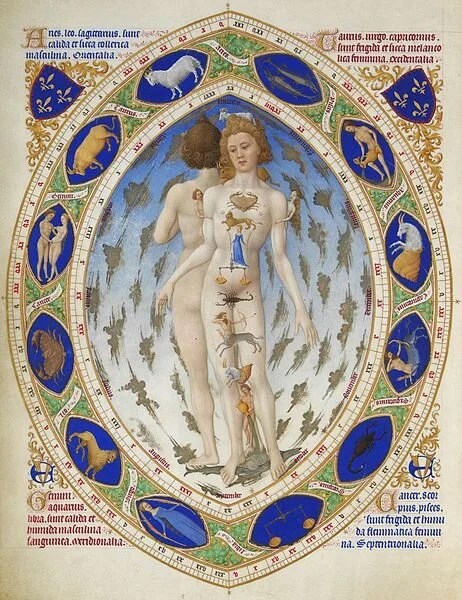
“Zodiac Man” from the calendar pages of the Tres Riches Heures of Jean Duc de Berry, 15th Century, France.
Found at the end of the calendar pages in this beautifully illustrated Book of Hours, the “zodiac man” illustrates the alignment on the body of the signs of the Zodiac.
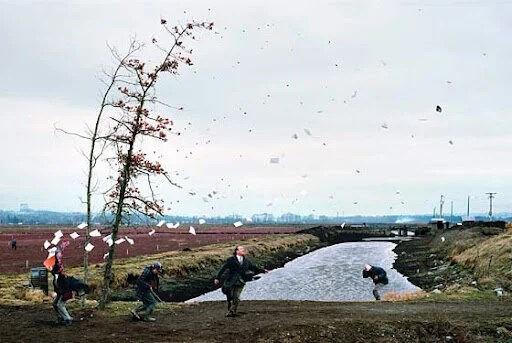
A Sudden Gust of Wind (after Hokusai), Jeff Wall, 1993.
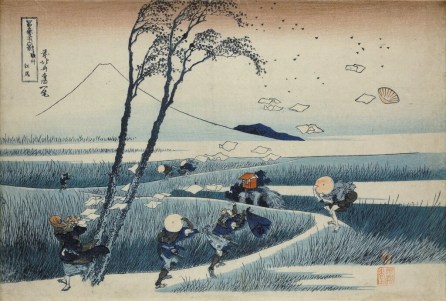
Ejira in Suruga Province, Hokusai, from Thirty-six Views of Mt. Fuji, c, 1831.
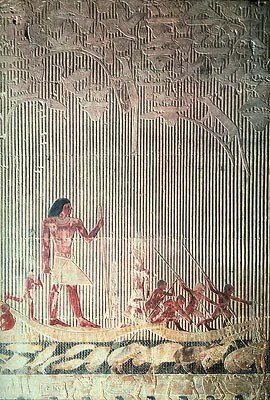
Ti Watching a Hippopotamus Hunt, Tomb of Ti, Fifth Dynasty, Old Kingdom Egypt, c. 2450 – 2325 BCE.
Ti was a commoner, but a very rich commoner since he was able to build a large tomb for himself that contained this wonderful painting/sculpture. Ti is the large figure standing on the boat with all of the “river creatures” depicted below and the “land creatures” among the papyrus on the shore.
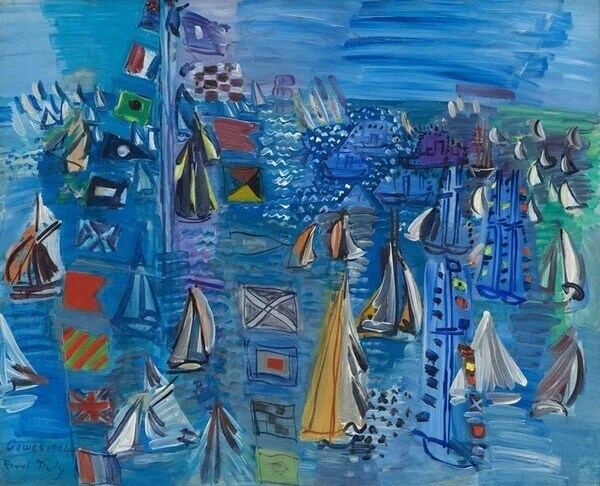
Regatta at Cowes, Raoul Dufy, 1934, National Gallery of Art, Washington D.C.
I could not resist posting this, it is so wonderful with the colors and the boats. Dufy is one of the fauve painters and each piece of his is better than the last.