The Reception of Christopher Columbus by Ferdinand of Aragon and Isabella, c.1830-1850 by Eugene Deveria.
Romantic painter on a grand scale of historical paintings. Considered a Romantic painter because of the scale, subjects, and emotion.

Your Custom Text Here
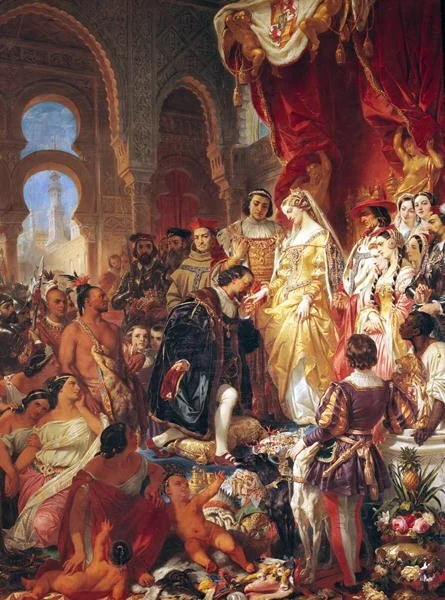
The Reception of Christopher Columbus by Ferdinand of Aragon and Isabella, c.1830-1850 by Eugene Deveria.
Romantic painter on a grand scale of historical paintings. Considered a Romantic painter because of the scale, subjects, and emotion.
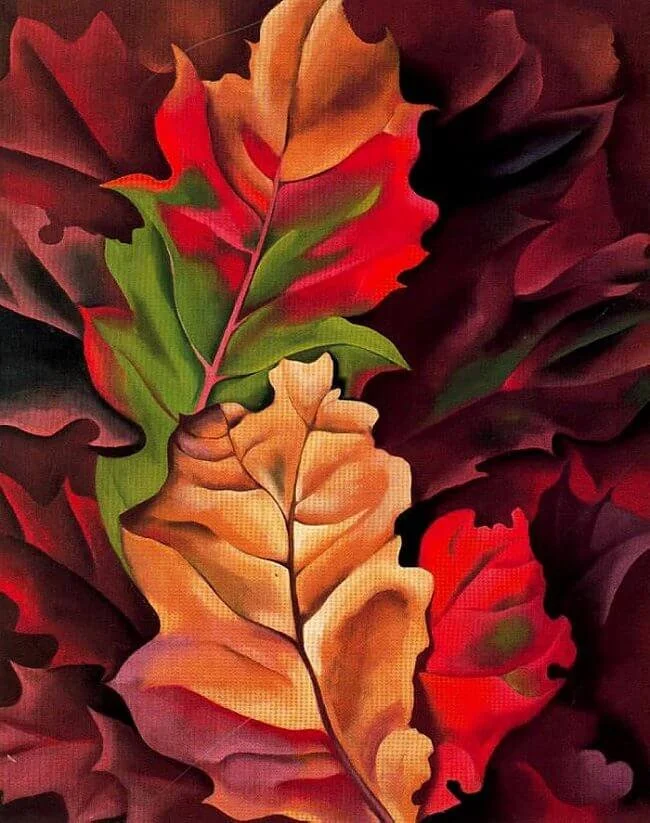
Autumn Leaves, Lake George, NY, 1924 by Georgia O'Keeffe.
It was in the fall of 1924 that Alfred Stieglitz divorced his wife and asked Georgia O'Keeffe to marry him even though they had been together for at least six years by this time. They visited his family's home at Lake George every year.
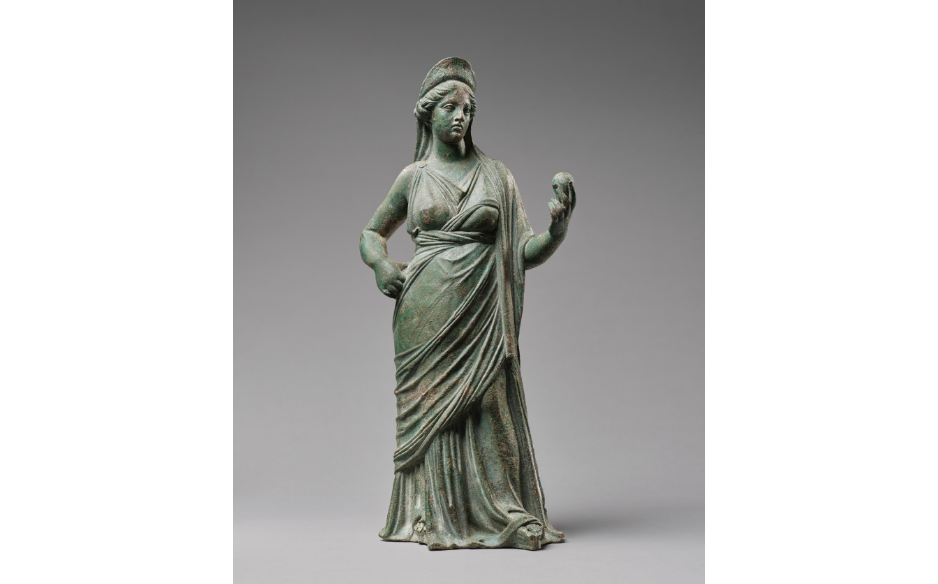
Statue of Aphrodite, c. 2nd century BC, The J. Paul Getty Museum.
It is assumed that this statue represents Aphrodite (or Venus) because she holds and apple, one of the goddesses attributes (see Judgement of Paris), but it could also be the image of a noblewoman posing in the guide of Aphrodite.

Pacific Spirit, 2003 by Susan Point.
The work of the Inuit people of Western Canada is a very compelling and thriving community of artists who draw upon their heritage and environment for inspiration.
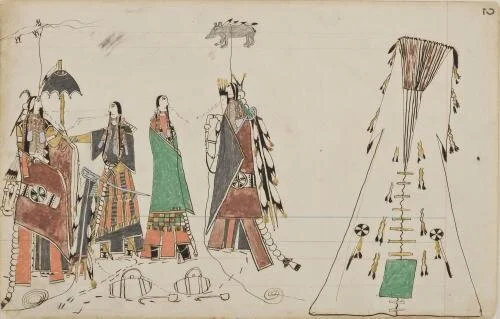
Howling Wolf, Southern Cheyenne, 1849-1927. Oberlin Ledger, Allen Memorial Art Museum, Oberlin, OH.
Plains Native Americans used ledgers as sources of paper to create artistic records of battles and other important events.
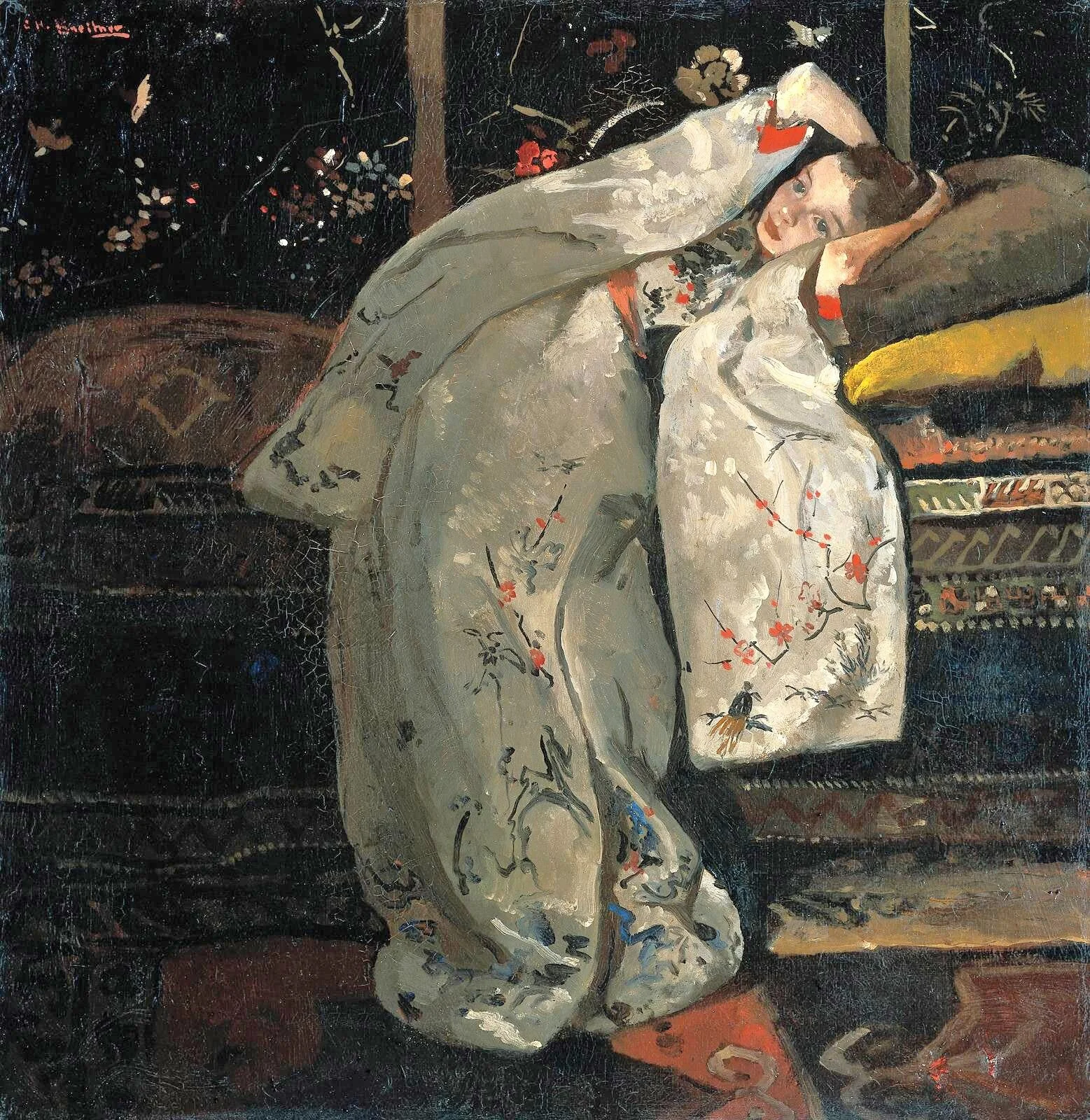
Girl in a White Kimono (Geesje Kwok), 1894 by George Breitner.
As an example of the influence of Japan in Europe at this time, the young girl wears a kimono in front of a floral screen. Van Gogh was fascinated with Japanese art and culture and was a contemporary (if not necessarily an admired one) of Breitner.
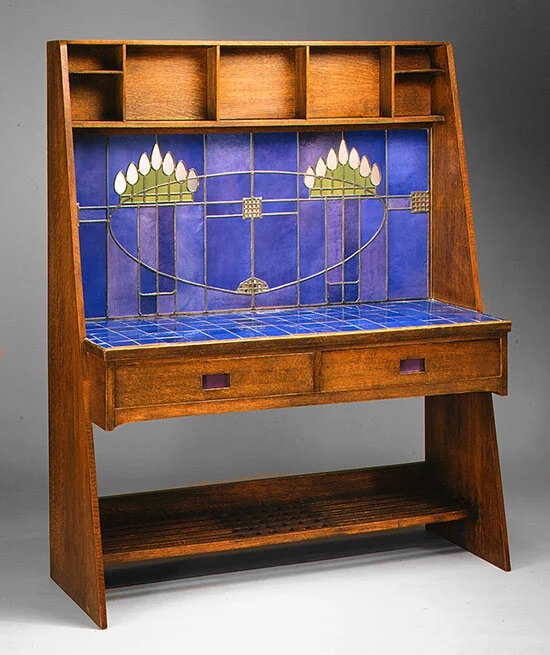
Washstand, 1904 by Charles Rennie Mackintosh.
This beautiful washstand was designed as part of the furnishings for a house he designed called Hill House. The owner of the house also owned a series of tea rooms that were designed by Mackintosh and company.

Wokey Hole, near Wells, Somerset, c.1794 by Michael Angelo Rooker.
Rooker helped make watercolor a viable medium for serious artists. Before he concentrated on it, it was considered beneath a serious artist.
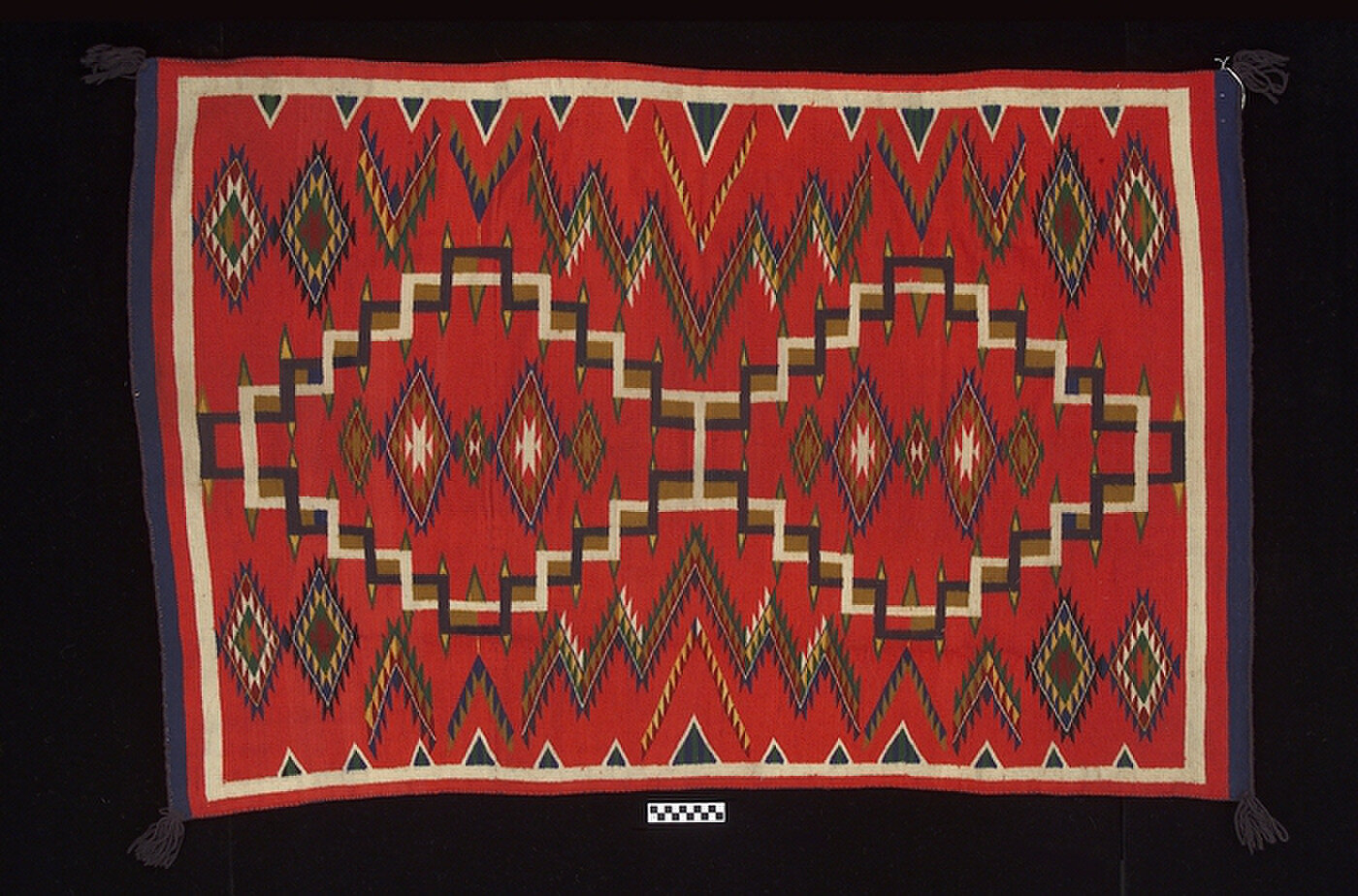
Navajo Blanket, 1881 from New Mexico, Smithsonian Center for Education and Museum Studies.
In the 17th century sheep were introduced to the American Southwest by the Spanish. Navajo women used designs learned from Mexico and expanded upon them until they created their own unique designs.
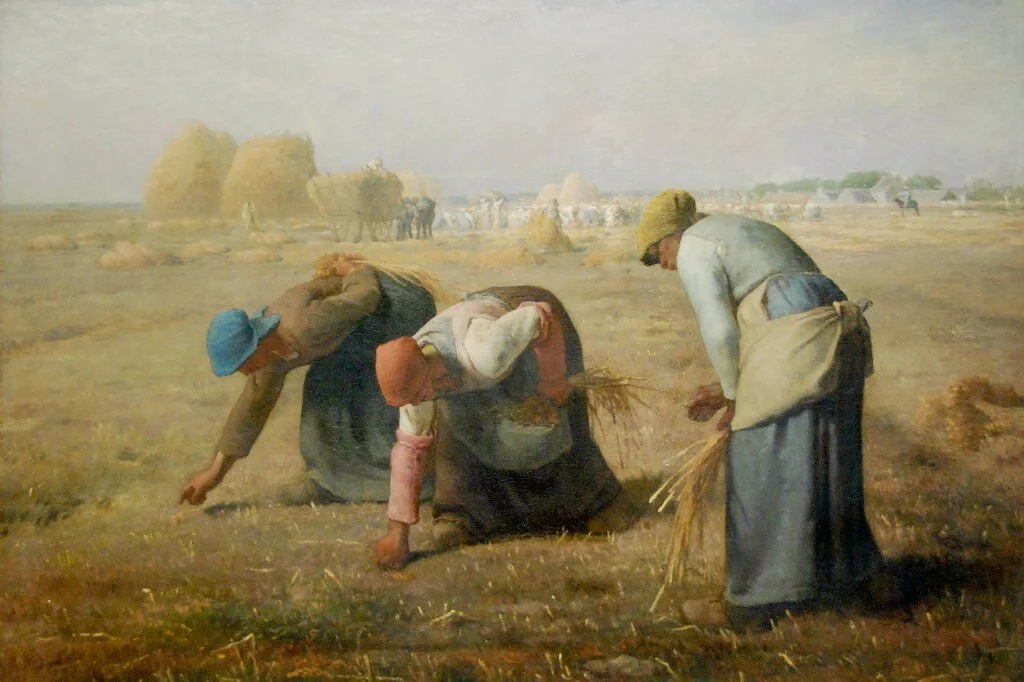
The Gleaners by Jean-Francois Millet.
The Gleaners are picking up the last little remains of the harvest. Millet sets the women against a broad horizon and thereby lends a majesty to their work. This was on purpose as Millet saw the work as a social commentary against the rich vs. the poor in society.
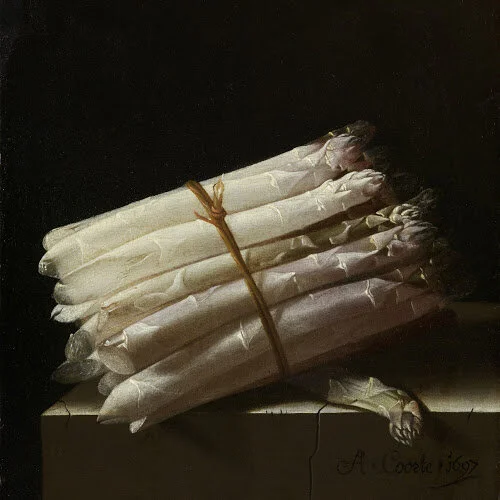
Asparagus by Adrian Coorte (active 1683-1707).
Sometimes still life painters concentrated on a particular item in order to give it their complete attention and immerse themselves in rendering it as close to the real thing as possible.

Sir Thomas More by Hans Holbein, The Frick Collection
Holbein was a 16th century German artist who became the court painter under Henry VIII. His style, with its attention to detail, was well suited for his later work in miniature. The Tudor Rose
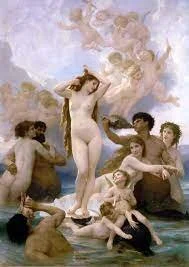
La Naissance de Vénus (Birth of Venus)1879 by William-Adolph Bouguereau.
Very similar in composition to Botticelli's work. Bouguereau had a very successful career. His realistic style appealed to a large number of people. A contemporary of Degas and Monet; they even conceded his extreme popularity.

Birth of Venus, c. 1485-86 by Sandro Botticelli.
One of the most famous of the Italian Renaissance paintings it is one of the most frequent images, out of thousands, when a likeness of the Greek goddess Venus (Aphrodite) is referenced.
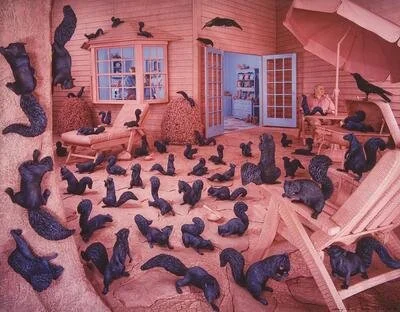
Gathering Paradise by Sandy Skoglund
Installation art creates an environment within a museum or gallery that brings the viewer into the artwork. It began in the 1970's and reached it's zenith in the 1980's, today it is often termed "site specific." Skoglund’s use of animals and color make her work popular and memorable for viewers.

Still Life with Strawberries, no date by Levi Prentice (Amerian 1851-1935), Carnegie Museum of Art, Pittsburgh.
Prentice is known for painting still lifes, often with fruit. He worked as a carpenter and an art teacher.

Oriental Poppies, 1927 by Georgia O'Keeffe,
Frederick R. Weisman Art Museum.If someone asks, buy a poppy, but why a poppy?
- Happy Memorial Day Weekend.

White-eye, Manuscript Mughal Period.
The Mughal empire a line of Indian Muslim emperors who ruled from 1526 to 1828. The most famous work to come out of this period is the Taj Mahal.
.
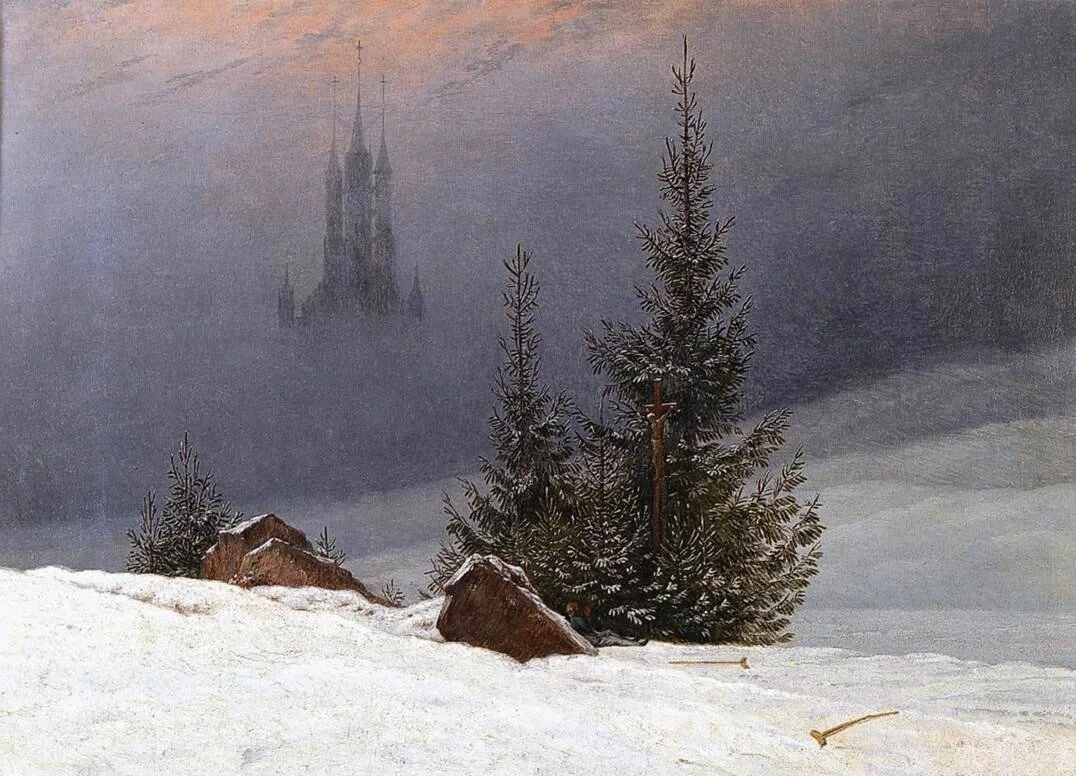
Winter Landscape, probably 1811 by Casper David Friedrich.
There is a man sitting down against the rocks and praying, he has abandoned his crutches as he approached the shrine. The serenity of the scene with the church in the background is a favorite theme of Friedrich.
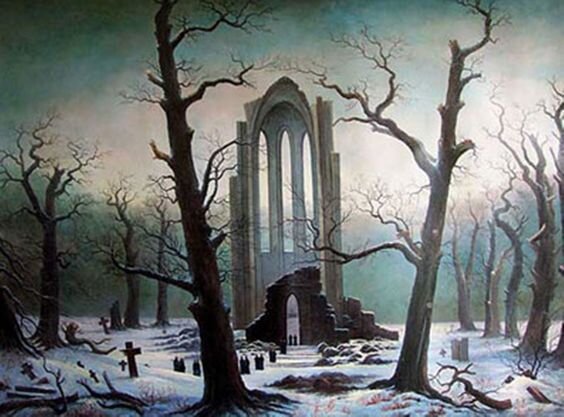
Monastery Graveyard in the Snow, 1819 by Casper David Friedrich.
Friedrich's ethereal landscapes have an uncanny calmness. People have very personal reactions to his art. For example, if you are religious, you might concentrate on the ruined church and what that means. If you are feeling isolated or lonely, the winter scene and bare trees, may be what you feel most moved by.