Wokey Hole, near Wells, Somerset, c.1794 by Michael Angelo Rooker.
Rooker helped make watercolor a viable medium for serious artists. Before he concentrated on it, it was considered beneath a serious artist.

Your Custom Text Here

Wokey Hole, near Wells, Somerset, c.1794 by Michael Angelo Rooker.
Rooker helped make watercolor a viable medium for serious artists. Before he concentrated on it, it was considered beneath a serious artist.
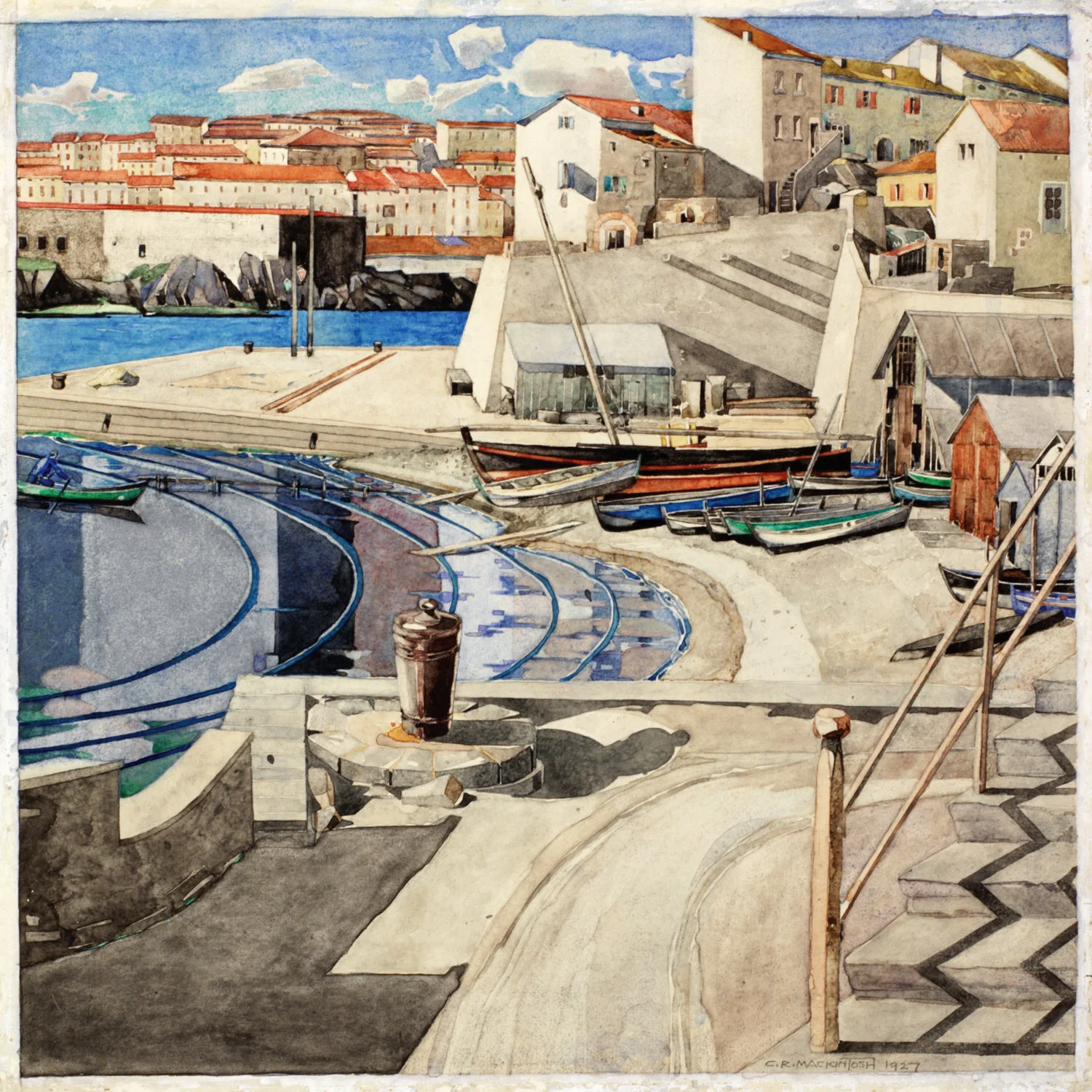
The Little Bay, Port Vendres by Charles Rennie Mackintosh.
In the last four years of his life Mackintosh left Scotland for France. Although he painted some beautiful watercolors of the area he is not well known there. Exhibitions of his work, including his architecture and furniture designs, have been organized to show the people of the area the work of the architect/artist/designer who lived in their town.
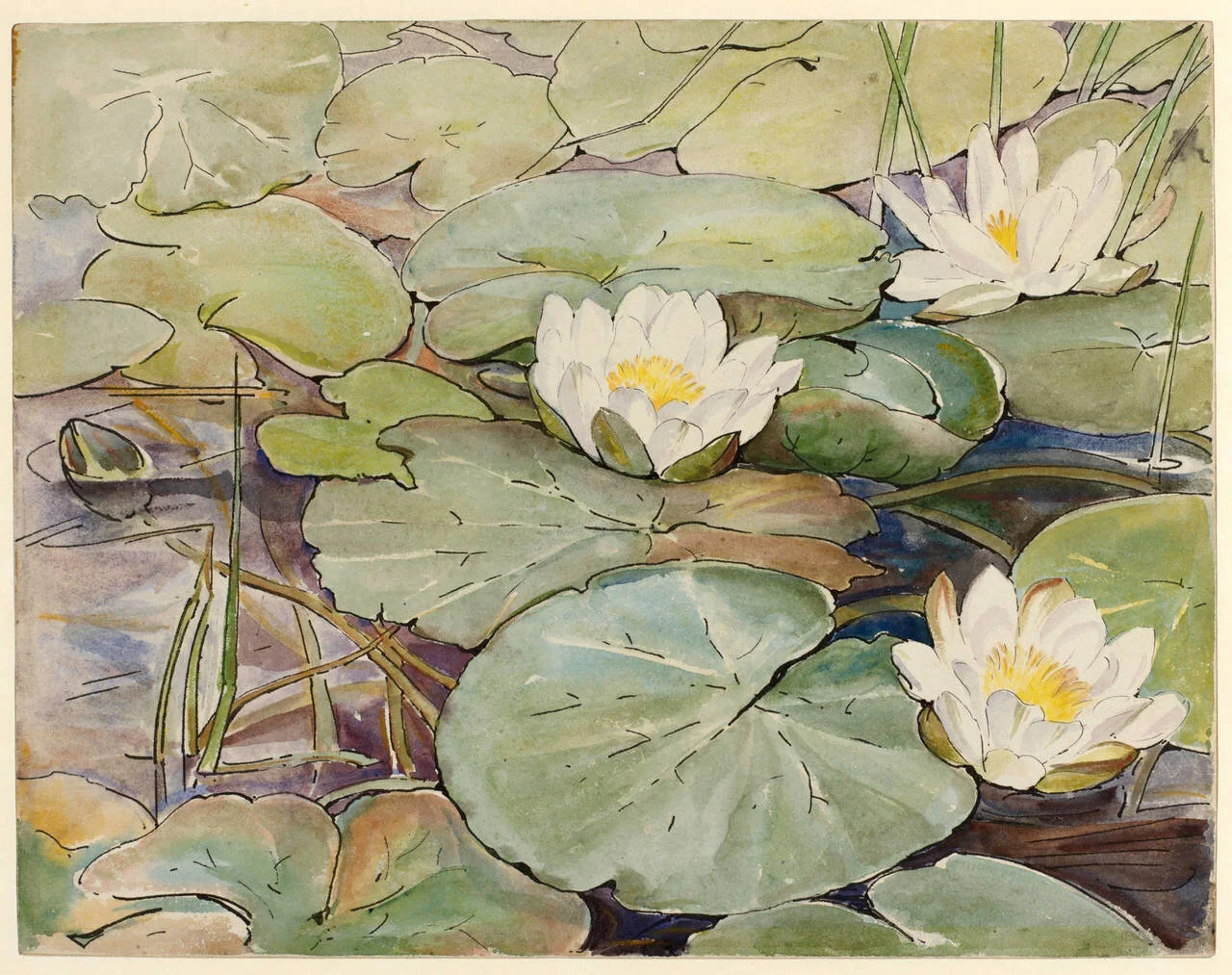
Waterlilies, 1903 by Beatrix Potter, ©Beatrix Potter Trust, U.K.
Most people have heard of Peter Rabbit and Tom Kitten and their creator Beatrix Potter, but they are not as aware of her botanical studies of nature and her accomplished watercolor paintings.

The Hill House, south-west perspective, c.1903 by Charles Rennie Mackintosh, Glasgow School of Art.
Mackintosh's most famous private residence is Hill House. The style is a combination of Art & Crafts, Art Nouveau and old Scottish manor. It was built for Walter Blackie, a Glasgow publisher. Mackintosh designed the entire thing including furnishings, outbuildings, lawn decorations, lighting, etc.
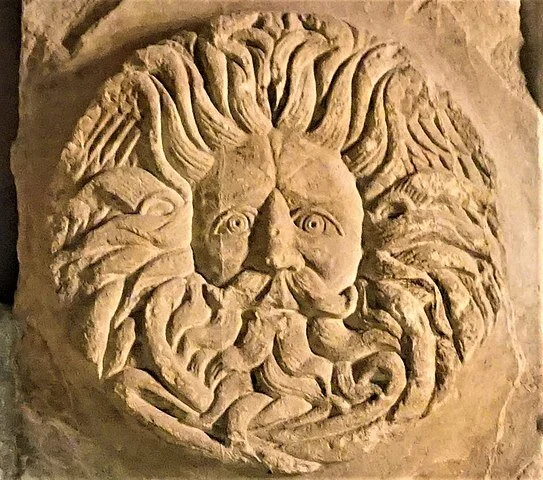
Medusa or Gorgon, 1st Century A.D., From the Temple of Sulis Minerva at the Roman Bath in Bath, England.
This representation of the Gorgon Medusa was part of the pediment decoration from the Temple of Sulis Minerva at Bath. Sulis Minerva was a goddess of healing and the sulfur infused waters found at Bath were thought to have healing powers. Usually Medusa is depicted as a woman and this representation looks more like a man which makes it seem that it may be a mistaken attribution and that this representation might actually be of a river god from local folklore.
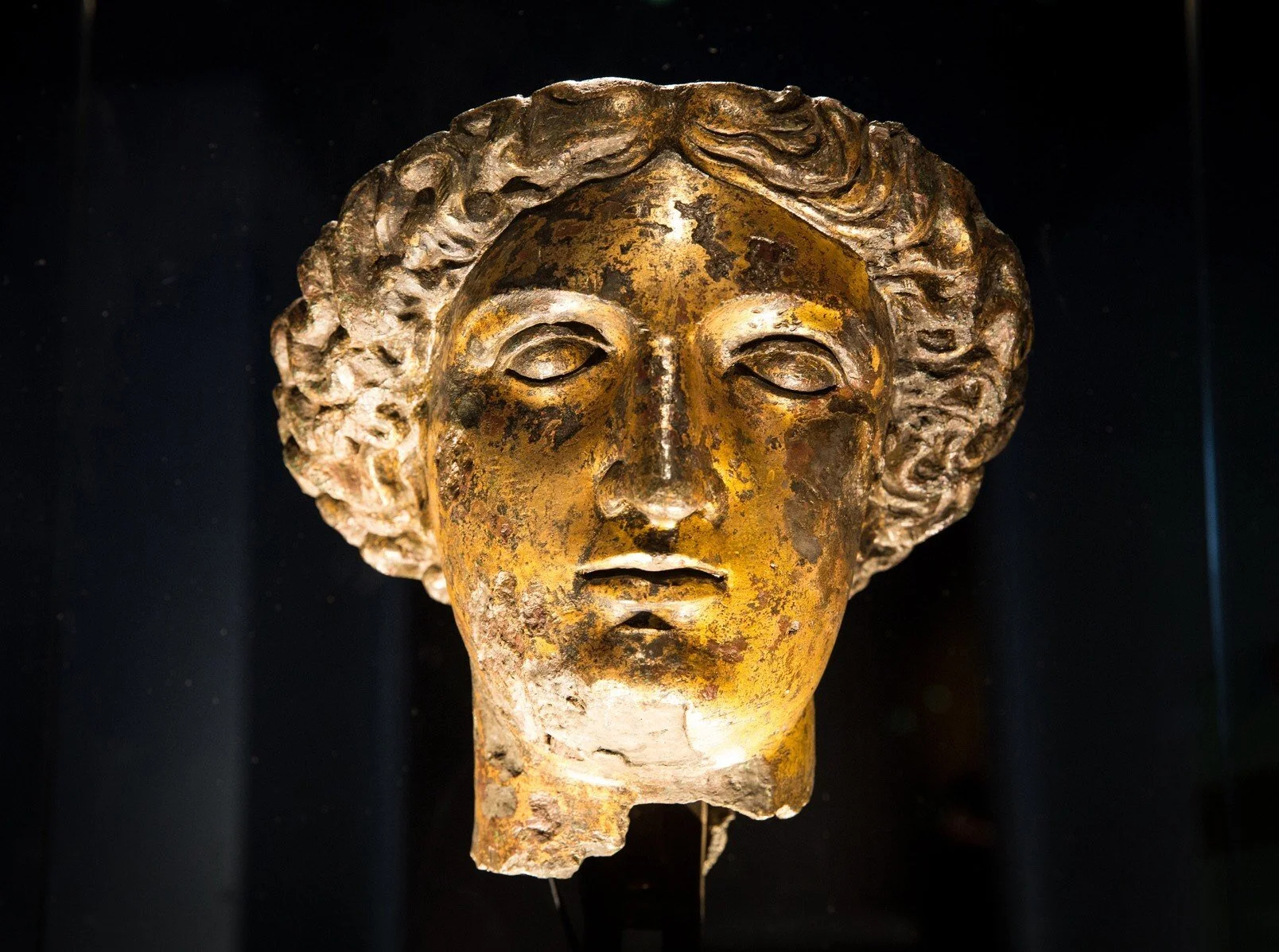
Head of the Goddess Sulis Minerva from Bath, England.

Peacock tiles by William De Morgan and Co., c. 1888-97, The Fitzwilliam Museum, University of Cambridge, UK.
William De Morgan was closely associated with William Morris the British Arts and Crafts movement, like Morris, De Morgan believed that looking to the skilled crafts of the past would greater enrich the lives of the people of Victorian Britain, as the hand-made work was both fulfilling and beautiful. His work was influenced by the ornate and colorful ceramics of the Middle East.

Chinese Wallpaper design, 18th century, Victoria and Albert Museum, London.
Chinese produced wallpapers that were made for export, primarily to Europe in the 18th century as part of the movement known as Chinoiserie, in which Chinese porcelains, and in this case wallpaper, were collected and displayed. They were beautiful objects in themselves, but also prized because they were expensive and difficult to obtain.